Key Parts of CNC Machine Mill-Turn Centers: Buying Guide
Evaluate critical parts of CNC machine mill-turn centers. Compare spindles, B-axes, and tooling to select the right multitasking platform for your shop.
The Architecture of Done-In-One Machining
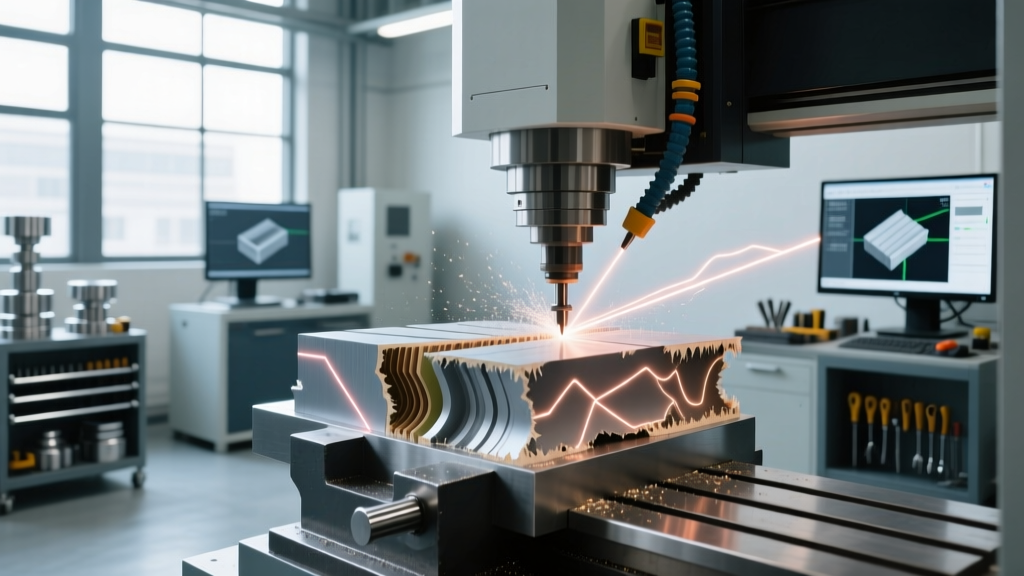
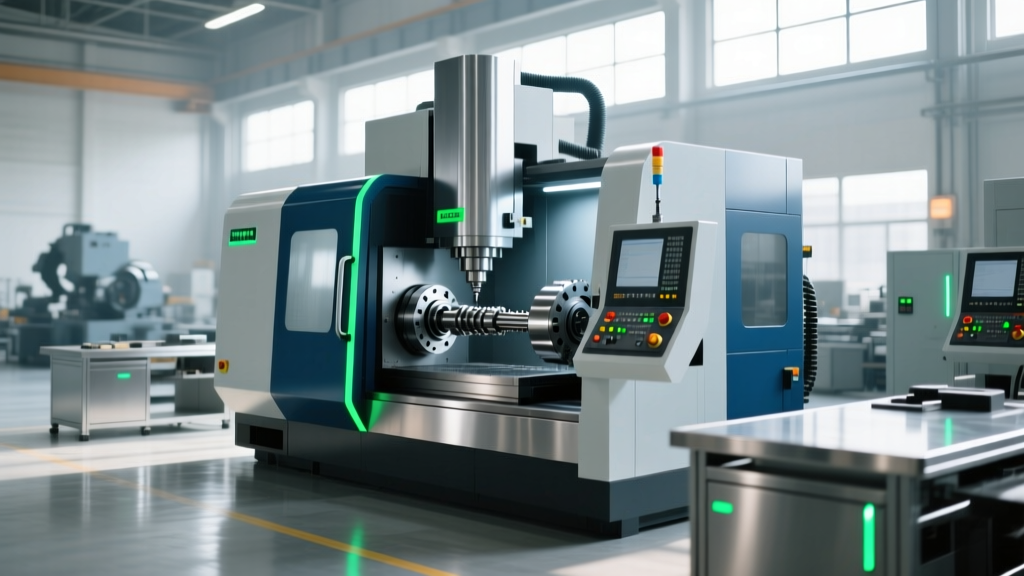
Multi-function CNC machines, commonly known as mill-turn or turn-mill centers, consolidate turning, milling, drilling, and tapping into a single setup. For shops machining complex aerospace, medical, or automotive components, these platforms reduce part handling, slash lead times by up to 70%, and dramatically improve concentricity. However, the financial commitment is substantial. Entry-level dual-spindle machines start around $180,000, while fully equipped 5-axis mill-turn centers easily exceed $750,000.
To justify this capital expenditure, buyers must look beyond basic axis travel and evaluate how the specific parts of cnc machine architectures interact under heavy cutting loads. A mill-turn center is only as capable as its weakest mechanical component. This guide dissects the critical subsystems you must scrutinize when selecting a multi-tasking platform in 2026.
Quick Spec Baseline for Mid-Range Mill-Turns (2026)
- Main Spindle: 4,000+ RPM, 30+ kW peak power, integrated C-axis braking.
- B-Axis: Direct-drive motor (DDM) with minimum 600 Nm torque.
- Tool Interface: Coromant Capto C6 or HSK-A63 for rigidity.
- Coolant: 1,000 PSI standard, upgradable to 3,000 PSI for superalloys.
Evaluating the Core Spindle Configurations
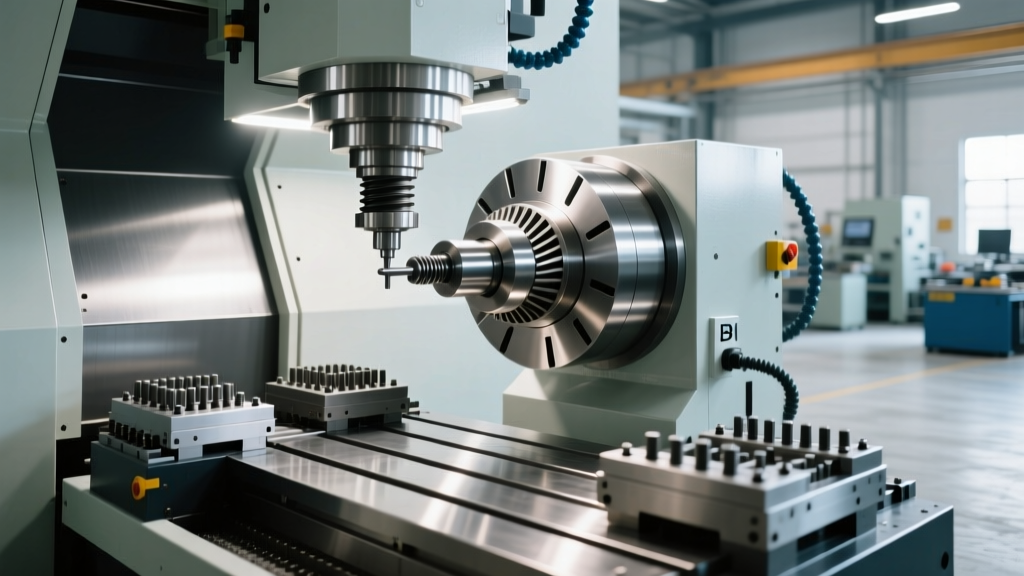
The spindle arrangement dictates the machine's workflow efficiency. While a single-spindle mill-turn handles complex geometries, a dual-spindle (main and sub) configuration enables simultaneous cutting and back-working, effectively doubling productivity for batch production.
Main Spindle and C-Axis Braking
When the main spindle transitions from turning to milling mode, the C-axis must lock rigidly to handle off-center milling forces. Look for spindles utilizing built-in direct-drive motors rather than belt-driven setups, which introduce backlash and maintenance overhead. For heavy milling operations—such as cutting deep keyways in 4140 steel—the C-axis braking torque must exceed 1,500 Nm to prevent the spindle from chattering or shifting under load.
Sub-Spindle Synchronization
For automated part-off and back-machining, the sub-spindle must synchronize with the main spindle at high speeds. Modern platforms, such as the Haas DS-Series or Mazak INTEGREX lines, achieve synchronous rotation up to 6,000 RPM, allowing seamless part transfer without stopping the spindles. Verify the sub-spindle's Z-axis thrust; a minimum of 1,500 lbf (6.6 kN) is required to securely pull parted components from the main chuck without slipping.
The B-Axis and Milling Spindle: The Heart of Multi-Tasking
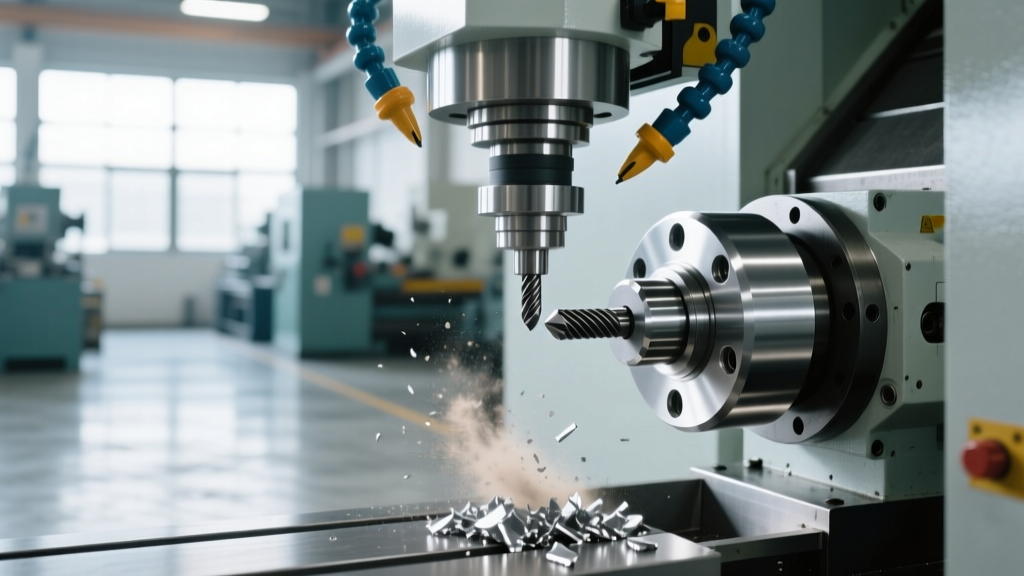
The B-axis (the tilting axis of the milling spindle) is the most complex and expensive of all parts of cnc machine assemblies in a turn-mill center. It dictates the machine's 5-axis contouring capability and angular milling precision.
Direct Drive vs. Gear-Driven B-Axes
Historically, gear-driven B-axes provided high torque but suffered from backlash and required regular maintenance. In 2026, direct-drive B-axis motors are the industry standard for high-precision multitasking. They eliminate mechanical transmission errors, offer infinite positioning resolution, and lock via massive internal disc brakes. When evaluating a B-axis, demand a continuous torque rating of at least 800 Nm and a rapid traverse tilt speed of 30 RPM or higher to minimize non-cutting time during tool changes.
Thermal Stability and Growth
The milling spindle inside the B-axis generates immense heat. If the spindle housing expands asymmetrically, tool center point (TCP) accuracy degrades. Premium builders like Okuma and DMG MORI integrate internal spindle chillers and thermal displacement compensation algorithms directly into the CNC control. Always ask the builder for their ISO 230-3 thermal distortion test data before purchasing.
Tooling Interfaces: Rigidity Meets Quick Change
The tooling interface connects the cutting tool to the B-axis milling spindle. Selecting the wrong interface limits your cutting parameters and increases tooling costs. Below is a comparison of the dominant interfaces used in modern mill-turn centers.
| Interface Type | Clamping Mechanism | Best Application | Drawbacks |
|---|---|---|---|
| Coromant Capto (C6) | Polygonal taper + face contact | Heavy milling, turning, high torque transfer | Higher initial toolholder cost |
| HSK-A63 / HSK-T63 | Hollow shank taper + face contact | High-speed 5-axis contouring, aerospace aluminum | Lower torsional rigidity vs. Capto |
| VDI (DIN 69880) | Serrated shaft clamping | Lower turret live-tooling, standard turning | Poor for heavy B-axis milling, runout issues |
For primary B-axis milling, the Coromant Capto C6 interface is superior due to its polygonal shape, which transmits high torsional forces without slipping. Reserve VDI tooling strictly for the lower turret's live-tooling operations.
Lower Turret Design and Y-Axis Integration
The lower turret supports the main spindle and performs secondary operations. When spec'ing the lower turret, prioritize a fully integrated Y-axis (typically ±50mm travel). A Y-axis allows the lower turret to machine off-center features, drill angled holes, and perform contour milling without requiring the main spindle to index.
Warning on Turret Interference: When simulating toolpaths in your CAM software, pay strict attention to the physical envelope of the lower turret. On machines with a compact footprint (like the Mazak INTEGREX i-200S), a fully extended B-axis milling head can collide with a lower turret holding long boring bars. Always request a 3D kinematic model of the specific machine configuration from the builder before finalizing your tooling package.Automation and Chip Management Subsystems
Multi-tasking machines are frequently deployed in lights-out manufacturing environments. The auxiliary parts of cnc machine setups must support uninterrupted automated operation.
High-Pressure Coolant (HPC) Systems
Machining heat-resistant superalloys (HRSA) like Inconel 718 or Titanium Ti-6Al-4V requires high-pressure coolant to break chips and lubricate the cutting edge. Specify a minimum of 1,000 PSI (69 bar) at the B-axis spindle, and 3,000 PSI (207 bar) at the lower turret for deep-hole drilling. Ensure the machine features programmable coolant nozzles that automatically adjust flow based on the active tool.
Chip Conveyor Architecture
Mill-turn operations generate a chaotic mix of stringy turning chips and fine milling dust. Standard hinge-belt conveyors will jam within hours. Insist on a scraper-type or auger-style conveyor paired with a steep-angle discharge chute. Additionally, the machine casting must feature polished, steeply angled internal walls (minimum 45 degrees) and strategically placed wash-down nozzles to prevent chip nesting around the sub-spindle.
"The true ROI of a multi-tasking machine is realized only when the chip management and automation interfaces are treated as primary design criteria, not afterthoughts. A $600,000 machine that requires manual chip clearing every four hours is functionally a $60,000 manual lathe." — Senior Manufacturing Engineer, Tier 1 Aerospace Supplier.
2026 Pricing Tiers and ROI Framework
Capital allocation for mill-turn centers falls into three distinct tiers based on component quality, thermal stability, and control sophistication.
- Entry-Level / Value ($150,000 - $250,000): Machines like the Haas DS-20Y. Feature belt-driven spindles, standard VDI turrets, and basic 150 PSI coolant. Ideal for job shops machining aluminum, brass, and mild steel in low volumes.
- Mid-Range Production ($350,000 - $550,000): Platforms like the Mazak INTEGREX i-200S or Okuma MULTUS U3000. Offer direct-drive B-axes, Capto tooling, 1,000 PSI coolant, and advanced thermal compensation. Required for aerospace and medical contract manufacturers.
- High-End / Heavy Duty ($650,000+): Systems like the DMG MORI NTX 2000. Feature massive torque spindles, integrated gantry loaders, 3,000 PSI HPC, and AI-driven spindle monitoring. Built for 24/7 lights-out machining of hardened steels and exotic alloys.
Final Selection Checklist
Before signing the purchase order, verify these critical specifications with your application engineer:
- Confirm the C-axis braking torque meets your heaviest off-center milling requirement.
- Validate the B-axis continuous torque and disc-brake locking mechanism.
- Ensure the high-pressure coolant pump is sized for the maximum simultaneous flow of all active nozzles.
- Check the sub-spindle Z-axis thrust for secure part-transfer operations.
- Run a full kinematic simulation in your CAM system to verify clearance between the B-axis head and lower turret.