CNC Machine Precision: Industrial vs Consumer Specs Compared
Compare CNC machine precision across industrial, prosumer, and consumer models. Analyze drive systems, thermal stability, and spindle runout metrics.
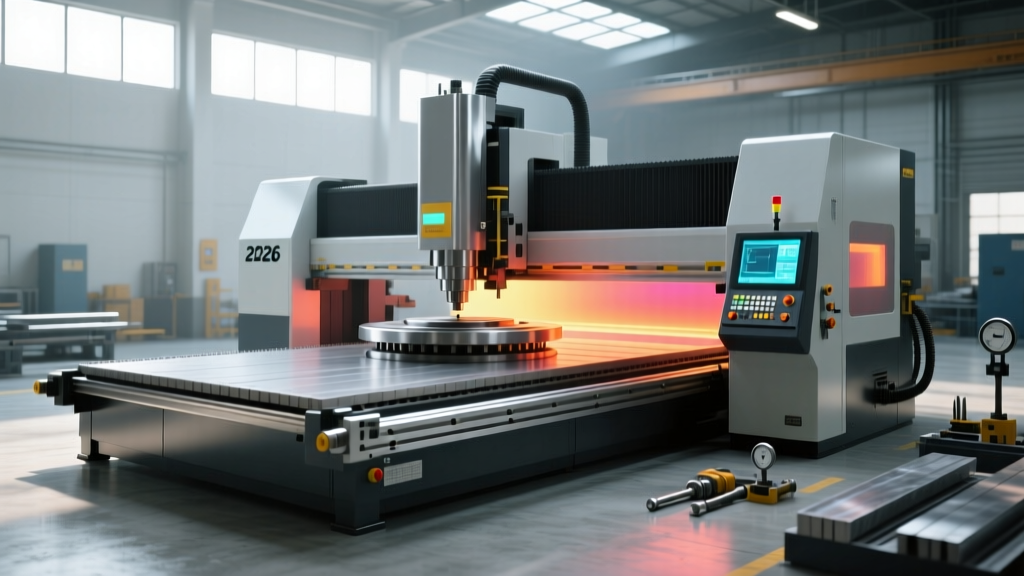
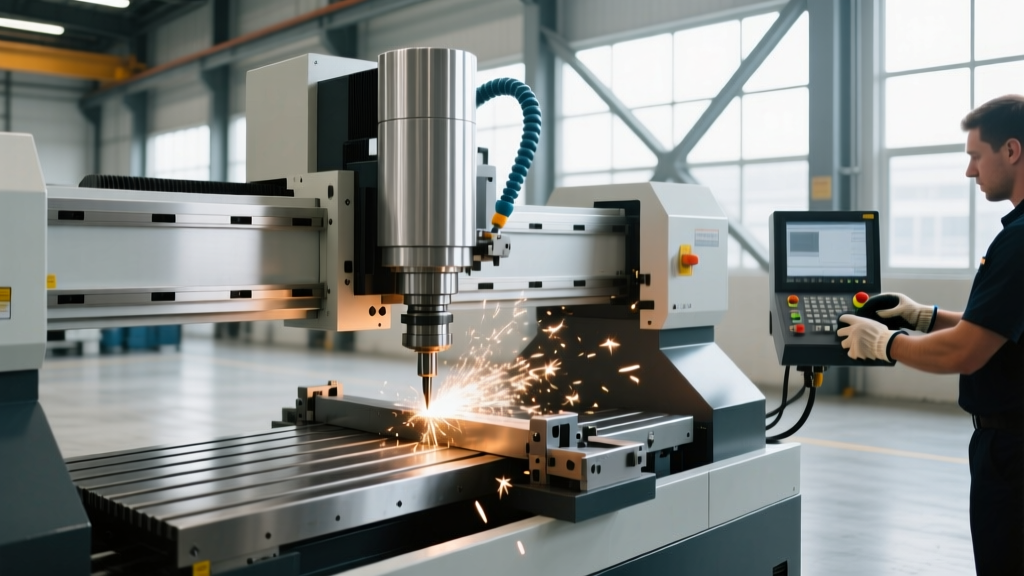
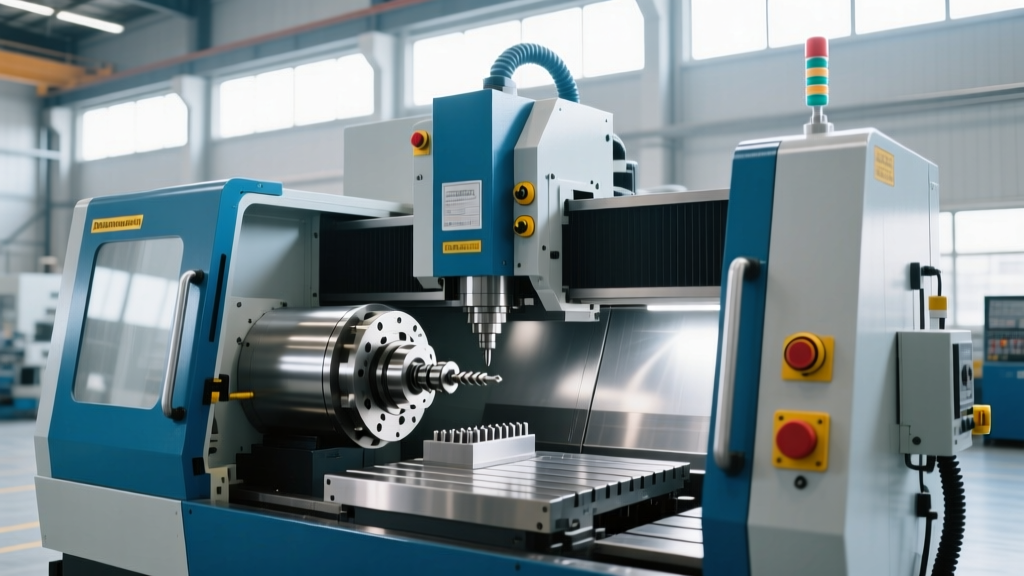
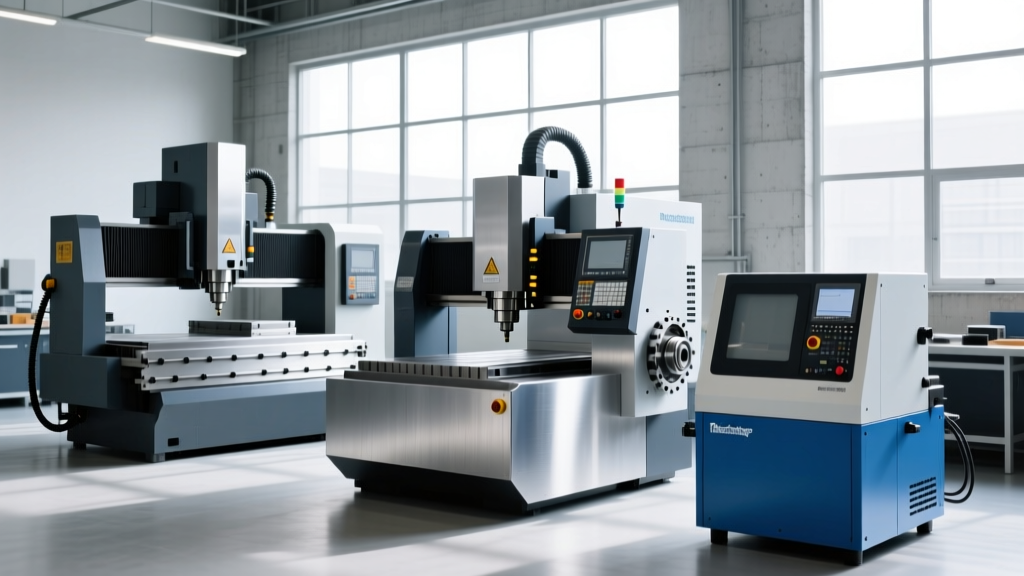
CNC machine precision is not a singular specification; it is a compound metric derived from static rigidity, dynamic stiffness, thermal stability, and control interpolation. When evaluating cnc machine precision across different market tiers, buyers often conflate positional resolution (the smallest increment a motor can step) with actual machining accuracy (the ability to hold a geometric tolerance under cutting loads). This technical breakdown dissects the mechanical and electronic realities separating industrial vertical machining centers (VMCs) from prosumer and consumer-grade desktop routers.
The Mechanical Foundation: Mass, Rigidity, and Damping
The physical mass and material composition of a machine frame dictate its resistance to deflection and vibration. Industrial CNC machines utilize heavy, ribbed cast iron or polymer concrete bases. Cast iron (typically Class 40 or Meehanite) offers a specific damping capacity up to 10 times greater than aluminum, absorbing high-frequency chatter generated during aggressive material removal.
Consumer-grade machines, such as the Carbide 3D Shapeoko 5 (starting around $2,100), rely on 6061-T6 aluminum extrusions and steel plates. While adequate for wood, plastics, and light aluminum passes, aluminum's lower modulus of elasticity (69 GPa vs. cast iron's 110-130 GPa) results in measurable frame flex under heavy radial loads.
Thermal Growth Coefficients
Precision degrades as ambient and operational temperatures fluctuate. The Coefficient of Thermal Expansion (CTE) dictates how much a machine's frame grows per degree of temperature change:
- Cast Iron (Industrial): ~10.4 µm/m·°C
- 6061-T6 Aluminum (Consumer): ~23.6 µm/m·°C
Insight: A 1-meter aluminum extrusion frame will expand more than twice as much as a cast iron column for every 1°C rise in shop temperature, directly altering the Z-axis tool center point (TCP).
Drive Systems and Positional Accuracy
The mechanism translating rotary motor motion into linear axis movement is the primary bottleneck for cnc machine precision. The market is segmented by three distinct drive technologies:
1. Preloaded Ground Ball Screws (Industrial)
Industrial VMCs like the Haas VF-2SS (base price ~$75,000) utilize C3-grade ground ball screws. The 'C3' designation guarantees a lead accuracy of ±8 µm per 300mm. More importantly, industrial axes use double-nut preloading, where two ball nuts are tensioned against each other to eliminate axial backlash entirely, maintaining <0.0002" (5 µm) repeatability even after years of use.
2. Rolled Ball Screws (Prosumer)
Prosumer machines like the Tormach 1100MX (~$14,000) often use C5 or C7 rolled ball screws. While significantly more accurate than lead screws, the rolling manufacturing process leaves microscopic helical imperfections. They typically employ single nuts with oversized balls to reduce backlash, yielding repeatability around ±0.0005" (12 µm).
3. ACME Lead Screws and Belts (Consumer)
Desktop CNCs frequently use ACME lead screws with Delrin anti-backlash nuts (which rely on spring tension and wear out) or steel-reinforced GT2/GT3 timing belts. Belt stretch under high acceleration introduces dynamic positional errors, limiting consumer machines to tolerances of ±0.005" (125 µm) or worse in hard materials.
Specification Comparison Matrix
| Technical Metric | Industrial (Haas VF-2SS) | Prosumer (Tormach 1100MX) | Consumer (Shapeoko 5) |
|---|---|---|---|
| Frame Material | Cast Iron / Steel Weldment | Cast Iron Column / Steel Base | 6061-T6 Aluminum Extrusions |
| Linear Guides | 45mm Roller Linear Guides | 30mm Ball Linear Guides | V-Wheels or MGN12 Miniature Rails |
| Drive System | C3 Ground Ball Screws (Direct) | C5 Rolled Ball Screws (Belt) | ACME Lead Screws / GT3 Belts |
| Positioning Accuracy | ±0.0002" (5 µm) | ±0.0005" (12 µm) | ±0.005" (125 µm) |
| Spindle Interface | BT40 / CAT40 Taper | TTS / BT30 Taper | ER11 Collet (Router Spindle) |
| Controller Look-Ahead | 1,000+ Blocks / High-Speed | ~200 Blocks / PathPilot | ~30-50 Blocks / Grbl |
| Approx. Base Cost | $75,000 - $95,000 | $12,000 - $15,000 | $2,100 - $2,800 |
Spindle Dynamics and Runout Tolerances
Spindle runout—the deviation of the tool's centerline from the spindle's axis of rotation—compounds with tool length. A mere 5 µm of runout at the spindle nose can translate to 20 µm of deflection at the tip of a long-reach end mill, destroying surface finish and altering cut dimensions.
Industrial machines use standardized taper interfaces (BT40, CAT40, or HSK63). The dual-contact geometry of these tapers ensures massive surface area engagement, pulling the toolholder deep into the spindle nose with high clamping force (often exceeding 2,500 lbs of retention knob pull). This results in total indicated runout (TIR) of less than 3 µm.
Consumer machines utilize ER collets (ER11 or ER32) chucked directly into a router spindle or a basic VFD spindle. ER collets are designed for tool retention, not high-precision alignment. Out-of-the-box ER32 collets routinely exhibit 10 to 15 µm of runout, which is acceptable for routing wood but catastrophic for holding tight GD&T (Geometric Dimensioning and Tolerancing) callouts in aerospace aluminum.
Control Systems and Interpolation Kinematics
The CNC controller dictates how smoothly the machine navigates complex 3D toolpaths. When machining contoured surfaces, the controller must calculate velocity changes thousands of times per second to maintain the programmed feed rate without overshooting corners.
Look-Ahead Processing and Jerk Control
Industrial controllers (like Fanuc 31i or Haas NGC) feature advanced look-ahead algorithms that analyze 1,000 to 2,000 G-code blocks ahead of the current position. This allows the machine to smoothly decelerate into tight radii and accelerate out of them without dwelling, maintaining a constant chip load.
Consumer controllers, predominantly running open-source Grbl firmware, typically process only 30 to 50 blocks of look-ahead. When executing complex CAM-generated 3D contouring (which breaks curves into thousands of micro-linear G1 moves), Grbl controllers frequently hit their processing ceiling. This causes 'micro-stutters'—fraction-of-a-second pauses at segment transitions that leave dwell marks on the workpiece and cause localized tool wear.
Shop Floor Insight: If you are machining 3D molds or complex organic shapes, cnc machine precision is heavily dependent on the controller's jerk (acceleration derivative) limits. An industrial VMC will machine a 3D turbine blade in 45 minutes with a 16 Ra micro-inch finish, while a consumer router executing the exact same G-code might take 4 hours and yield a 125 Ra finish due to micro-stuttering and forced feed-rate reductions.
Purchasing Decision Framework: Matching Machine to GD&T
Selecting the correct tier of equipment requires mapping your production requirements to the ASME Y14.5 GD&T standard. Use the following framework to determine the necessary machine class:
- Consumer-Grade (Shapeoko, X-Carve, Onefinity): Ideal for sign-making, woodworking, PCB isolation routing, and non-critical prototype enclosures. Choose this when your blueprint tolerances are ±0.010" (0.25mm) or looser, and surface finish requirements are secondary to material removal speed.
- Prosumer-Grade (Tormach, Pocket NC, Precision Matthews): Suited for job shops producing low-volume fixtures, scientific instrument components, and aftermarket automotive parts. Capable of holding ±0.001" to ±0.002" (25-50 µm) true position tolerances on holes, provided the operator utilizes high-quality tooling and manages thermal warm-up cycles.
- Industrial-Grade (Haas, DMG Mori, Mazak, Doosan): Mandatory for aerospace, medical implant, and high-volume automotive production. Required when blueprints demand ±0.0002" (5 µm) tolerances, strict profile of a surface callouts, and simultaneous 4/5-axis interpolation where tool center point management (RTCP) is non-negotiable.
The Hidden Cost of Consumer Precision
Attempting to hold industrial tolerances on a consumer machine results in a compounding tax on labor. Operators must manually tram the spindle weekly, shim V-wheels to eliminate play, machine parts in multiple setups to avoid Z-axis deflection, and scrap up to 20% of parts due to thermal drift. When calculating ROI, the $70,000 delta between a consumer router and an industrial VMC is often recovered within 14 months through reduced scrap rates, eliminated secondary finishing operations, and unattended lights-out machining capabilities.