Safety Compliance for ATC Systems in German CNC Machines
Explore safety standards, DIN/ISO compliance, and failure modes for Automatic Tool Changer (ATC) systems in German CNC machines like DMG MORI and Hermle.
The Kinetic Hazards of High-Speed Tool Exchange
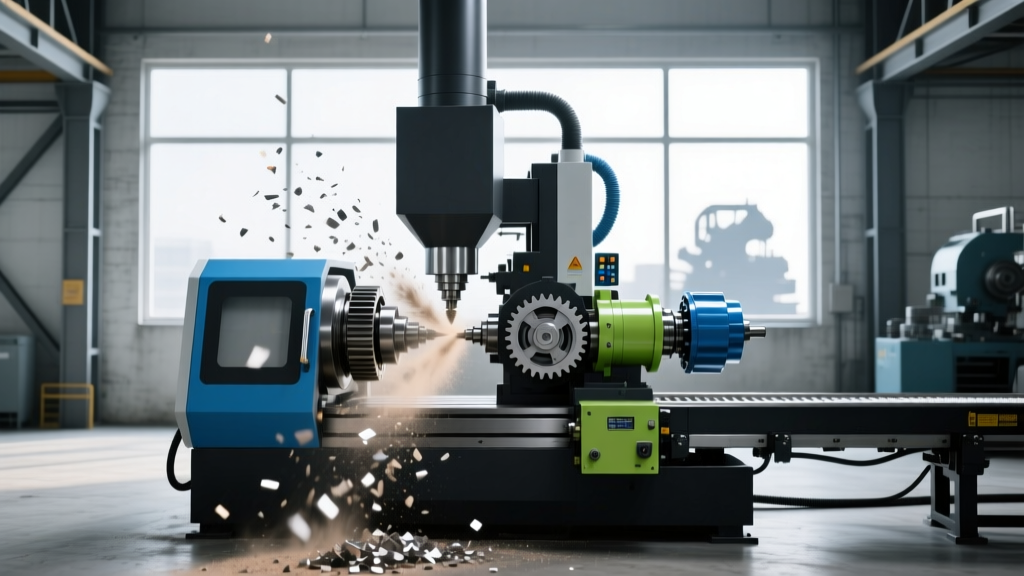
German CNC machining centers—engineered by manufacturers such as DMG MORI, Hermle, and Grob—are globally recognized for their structural rigidity and precision. A critical component enabling their high-mix, high-volume productivity is the Automatic Tool Changer (ATC). Modern German ATCs execute tool exchanges in under 4.5 seconds while supporting spindle speeds exceeding 24,000 RPM. However, the intersection of rapid mechanical actuation and extreme rotational kinetic energy introduces severe safety hazards. Compliance with European and German safety frameworks is not merely a bureaucratic exercise; it is an operational imperative to prevent catastrophic tool ejection, crushing injuries in the magazine zone, and unintended spindle starts.
⚠️ CRITICAL SAFETY WARNING: Never bypass the Z-axis safe-position interlock to manually clear a jammed tool in the ATC cam-box. German safety standards mandate that the spindle must be in the absolute Z-home position and mechanically locked before the ATC shutter opens. Bypassing this via PLC override codes risks severe crush injuries from the magazine rotation arm.The Regulatory Framework: DIN, EN, and ISO Standards
Designing and operating an ATC on a German-manufactured CNC machine requires strict adherence to a layered hierarchy of safety standards. As of 2026, the integration of IO-Link safety sensors and smart RFID tool tracking has updated how these standards are enforced at the machine control level.
| Standard | Scope & ATC Requirement | Compliance Verification Method |
|---|---|---|
| ISO 16090-1:2017 | Safety of machining centers. Mandates enclosed ATC zones and interlocked access doors to prevent operator entry during cam-box rotation. | Physical barrier testing; PLC interlock logic audit. |
| EN 12417:2001+A2:2009 | Specific to machining center safety. Requires monitoring of tool clamping status and pneumatic pressure thresholds before permitting spindle rotation. | Pressure switch calibration; drawbar sensor verification. |
| DIN 69893 (HSK Interface) | Governs the hollow shank taper (HSK) tool interface. Dictates retention force parameters to prevent centrifugal ejection at high RPMs. | Drawbar force measurement using a calibrated HSK force gauge. |
Facility managers must cross-reference these standards with guidelines published by the Bundesanstalt für Arbeitsschutz und Arbeitsmedizin (BAuA), which provides the German federal interpretation of the European Machinery Directive. Furthermore, the German Social Accident Insurance (DGUV) enforces strict operational protocols regarding operator proximity to ATC shutters and chip conveyor integration points.
Anatomy of a Compliant German ATC Interlock System
A compliant ATC system on a machine like the Hermle C 42 U or DMG MORI DMC 80 H duoBLOCK relies on a network of redundant safety interlocks. Understanding these mechanisms is essential for maintenance teams troubleshooting faults without compromising safety.
1. Pneumatic Pressure Monitoring
German ATCs typically utilize pneumatic cylinders to actuate the drawbar unclamping sequence and the cam-box rotation. Safety standards require a minimum operating pressure—usually 5.5 to 6.0 bar. A dedicated Festo or SMC pressure switch monitors this line. If pressure drops below the threshold mid-cycle, the PLC must trigger an immediate M00 (program stop) and halt magazine rotation to prevent a tool from being dropped into the spindle taper or the work envelope.
2. RFID Tool Identification and Data Integrity
Modern German CNCs utilize Balluff BIS RFID systems embedded in the tool holders. From a safety perspective, this is not just for tool life management; it is a critical interlock. If the RFID chip data (tool length, diameter, and weight) does not match the programmed parameters, the machine's collision-avoidance software will inhibit the ATC from loading the tool. This prevents catastrophic crashes caused by loading a 300mm drill when the CAM program expects a 50mm end mill, which could result in spindle bearing destruction and flying debris.
3. Spindle Orientation and Taper Purge
Before a tool change, the spindle must orient to a precise angular position (typically via a high-resolution encoder) to align the drive keys. Simultaneously, an air-blast purge sequence activates to clear the HSK taper of chips. If the proximity sensor fails to confirm the spindle orientation lock, the ATC arm is mechanically inhibited from entering the exchange zone.
Failure Mode and Effects Analysis (FMEA) for ATC Mechanisms
Maintenance personnel must be trained to recognize specific ATC failure modes that directly compromise operator safety. Below is an analysis of the most critical edge cases found in German machining centers.
- Belleville Spring Stack Fatigue (Drawbar Degradation): The HSK-A63 interface requires a minimum clamping force of 18 kN to maintain the dual-contact face-and-taper seal. Over time, the Belleville washer stacks in the drawbar fatigue. If the clamping force degrades to 14 kN, the tool will unclamp under centrifugal load at approximately 14,000 RPM. Action: Mandate bi-annual drawbar force audits using a calibrated HSK force gauge.
- Shutter Seal Degradation: The ATC shutter separates the machining envelope from the tool magazine. Coolant and fine cast-iron dust can degrade the polyurethane seals. If the shutter fails to close completely, the safety interlock should prevent spindle start. However, micro-switch misalignment can sometimes allow the machine to cycle with a partially open shutter, exposing the operator to high-pressure coolant spray and chip ejection.
- Cam-Box Arm Timing Drift: In chain-type or matrix-type magazines, the robotic exchange arm relies on precise timing belts or servo-driven cams. Wear in the harmonic drive gearing can cause the arm to arrive at the spindle 2-3 milliseconds late, resulting in a partial tool grip. If the tool retention sensor fails to detect the incomplete seating, the spindle will accelerate, leading to tool ejection.
Actionable Compliance Audit Protocol for Facility Managers
To ensure ongoing compliance with DIN and ISO safety standards, maintenance managers should implement the following step-by-step audit protocol every 500 operating hours or every 6 months, whichever comes first.
- Pneumatic Threshold Verification: Artificially bleed the ATC air supply line using the manual exhaust valve. Confirm that the CNC control registers a pneumatic fault alarm and physically inhibits the ATC arm when pressure drops below 5.5 bar.
- Drawbar Retention Force Test: Insert an HSK-A63 test arbor equipped with a digital force sensor. Actuate the clamping mechanism. Record the peak retention force. If the reading is below 17.5 kN, schedule immediate drawbar spring replacement.
- Interlock Bypass Check: With the machine in E-Stop, attempt to manually open the ATC access door. Verify that the physical latching mechanism (e.g., Euchner or Schmersal safety switch) remains engaged and cannot be defeated without the authorized maintenance release tool.
- RFID Read/Write Cycle Audit: Load a tool with a deliberately corrupted RFID chip into the magazine. Command the machine to execute a tool change. The machine must reject the tool, return it to the magazine, and trigger an HMI alarm without attempting to load it into the spindle.
- Shutter Proximity Sensor Calibration: Inspect the inductive proximity sensors monitoring the ATC shutter. Ensure the sensing distance is strictly within the OEM specification (typically 1.0mm to 1.5mm). Clean the sensor faces of ferrous dust accumulation, which can cause false-positive "closed" signals.
Maintaining the safety integrity of an Automatic Tool Changer on a German CNC machine requires moving beyond reactive troubleshooting. By understanding the precise mechanical thresholds of HSK retention systems, enforcing strict adherence to EN 12417 interlock logic, and executing rigorous, data-driven FMEA audits, manufacturing facilities can protect their operators while maximizing the uptime of their high-precision capital equipment.