Desktop CNC Machine Car Parts: 2026 Prototyping Guide
Explore top desktop CNC machine car parts prototyping setups for 2026. Compare Tormach, Bantam, and Pocket NC for automotive aluminum and polymer milling.
The Shift to In-House Automotive Prototyping
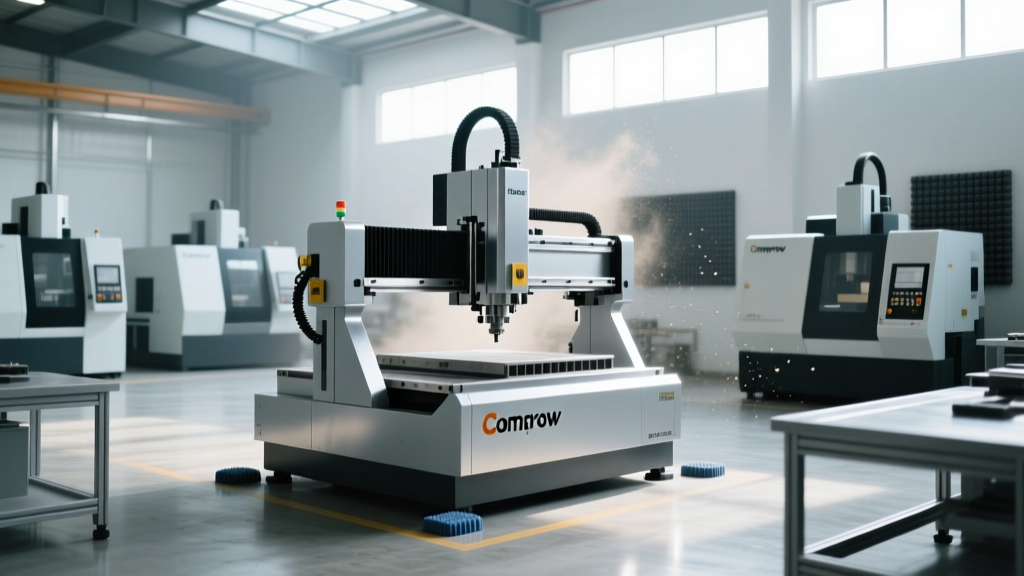
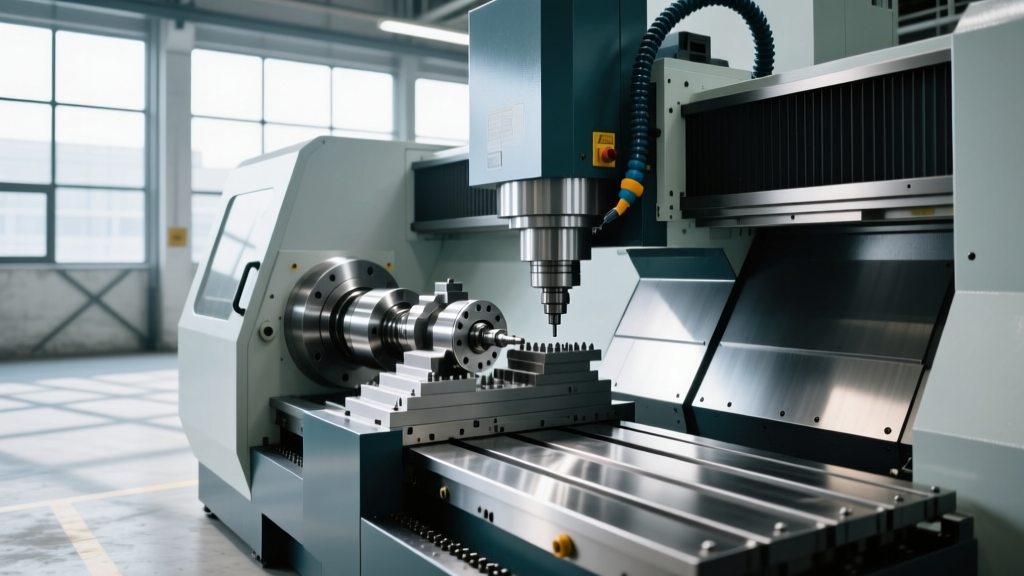
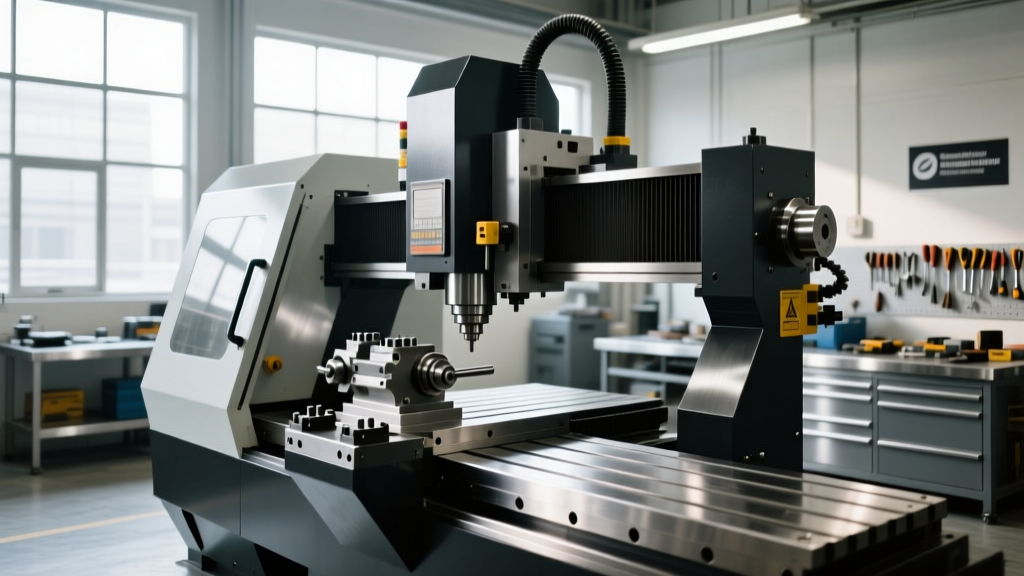
Automotive aftermarket developers, motorsport teams, and OEM R&D departments are aggressively shrinking lead times by bringing functional prototyping in-house. When developing custom suspension brackets, intake manifolds, throttle body spacers, or sensor housings, relying on external machine shops introduces weeks of delay and high iteration costs. Establishing a desktop CNC machine car parts workflow bridges the critical gap between 3D printed concept models and full-scale VMC (Vertical Machining Center) production.
However, not all benchtop mills are capable of holding the tight tolerances (±0.001 inches) required for automotive mating surfaces, nor do they possess the rigidity to remove material from 6061-T6 aluminum efficiently. This guide dissects the exact hardware, tooling, and workflow requirements for prototyping functional automotive components on a desktop footprint in 2026.
Quick Material Reference for Automotive Prototyping:- 6061-T6 Aluminum: Structural brackets, throttle spacers, heat sinks.
- Delrin (POM / Acetal): Suspension bushings, interior clips, wear pads.
- Carbon-Fiber Reinforced Nylon: Under-hood intake components, high-heat sensor housings.
- UHMW-PE: Skid plates, low-friction guide rails, mudflaps.
2026 Desktop CNC Machine Car Parts Comparison Matrix
Selecting the right machine requires matching the work envelope and spindle characteristics to your specific automotive sub-assemblies. Below is a technical comparison of the three dominant desktop platforms used in automotive R&D labs today.
| Machine Model | Work Envelope (XYZ) | Spindle Power & Speed | Best Automotive Application | 2026 Est. Price |
|---|---|---|---|---|
| Tormach PCNC 440 | 10" x 6.25" x 10" | 3/4 HP, 10,000 RPM | Heavy aluminum brackets, steel pins | $5,800 - $7,500 |
| Bantam Tools Desktop CNC | 7" x 9" x 3.3" | 1/4 HP, 20,000 RPM | Delrin bushings, PCB sensors, light aluminum | $4,000 - $4,500 |
| Pocket NC V5-50 | 4.5" x 5" x 3.5" | 125W, 50,000 RPM (5-Axis) | Complex 5-axis impellers, intake runners | $5,000 - $5,500 |
For general automotive bracketry and structural components, the Tormach PCNC 440 remains the industry standard due to its mass and rigidity, which dampen the harmonic vibrations inherent in milling aluminum. Conversely, if your prototyping focuses on complex 5-axis geometries like turbocharger compressor wheels or custom intake manifolds, the Pocket NC V5-50 provides multi-axis capabilities previously restricted to $150,000+ industrial machines.
Material Realities: Polymers vs. Aerospace Aluminum
Machining Delrin and UHMW for Automotive Interiors and Bushings
Automotive interiors and suspension systems rely heavily on engineering plastics. Delrin (Acetal) is the premier choice for custom suspension bushings and window regulator gears due to its low friction and high dimensional stability. When machining Delrin on a desktop CNC, the primary challenge is heat management; excessive heat causes the material to melt and re-weld to the cutting tool.
Actionable Parameters for Delrin:
- Tooling: Use O-flute (single flute) carbide endmills designed for plastics to maximize chip evacuation.
- Feeds and Speeds: Maintain high feed rates (40-60 IPM) and moderate spindle speeds (8,000 - 12,000 RPM) to cut rather than rub.
- Coolant: Compressed air blast is mandatory. Liquid coolant is generally unnecessary and can interfere with the swarf clearing.
Tackling 6061-T6 Aluminum on a Benchtop
Milling 6061-T6 aluminum on a desktop machine requires respecting the machine's torque limitations. Unlike industrial VMCs with 20 HP spindles, desktop machines rely on high RPMs and light radial depths of cut. According to machining experts at Harvey Tool, preventing Built-Up Edge (BUE) on aluminum requires polished flute surfaces and specific helix angles.
Invest in 3-flute carbide endmills with a 35-degree helix angle and an uncoated or Zirconium Nitride (ZrN) coating. Avoid standard TiAlN coatings meant for steel, as they have a chemical affinity for aluminum that promotes chip welding. Utilize Adaptive Clearing toolpaths in CAM software (like Fusion 360 or Mastercam) to maintain a constant tool engagement angle, allowing a desktop machine to achieve high material removal rates (MRR) without stalling the spindle.
⚠️ Workholding Warning: Standard 3D-printed jigs will fail under the lateral cutting forces of aluminum milling. For automotive prototyping, invest in a precision ground machinist vise (such as the Tormach 3" Precision Vise) or use Mitee-Bite TalonGrip clamping straps directly to the sacrificial spoilboard. Never rely solely on double-sided tape for structural automotive components.Step-by-Step: Prototyping a 6061-T6 Throttle Body Spacer
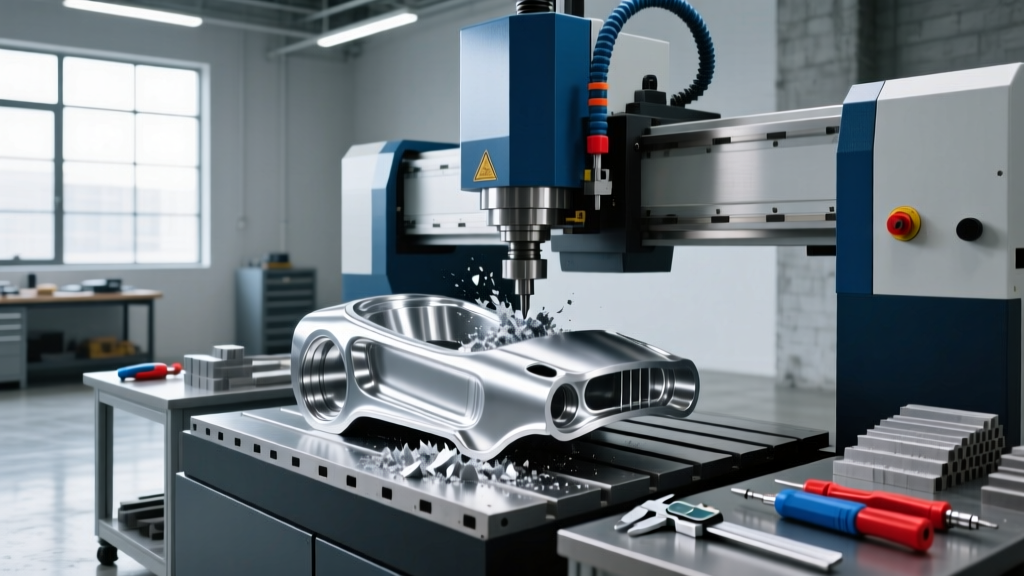
To illustrate a real-world desktop CNC machine car parts workflow, consider the fabrication of a custom throttle body spacer—a common aftermarket modification used to alter intake air velocity. This part requires a flat mating surface, precise bolt hole patterns, and a smooth internal bore.
- CAD Modeling & Tolerance Assignment: Model the spacer with a 0.002" interference fit for the O-ring groove. Ensure the bolt circle diameter matches the OEM throttle body flange exactly (e.g., 68mm for many common 4-cylinder applications).
- CAM Setup & Stock Preparation: Purchase pre-cut 1" thick 6061-T6 aluminum plate. Face the top and bottom manually or via a fly cutter to ensure parallelism before loading into the CNC vise.
- Operation 1 (Top Side): Use a 1/4" 3-flute carbide endmill for 2D contouring and pocketing the O-ring groove. Drill the bolt holes using a peck drilling cycle (G83) to clear aluminum chips and prevent bit breakage.
- Operation 2 (Bore & Flip): Use a 1/2" endmill to rough out the central airflow bore, leaving 0.010" of stock. Flip the part, indicate it using a dial test indicator to within 0.001", and perform a final spring pass on the bore for a mirror finish.
- Deburring & Anodizing Prep: Hand-deburr the edges with a chamfer tool or Scotch-Brite wheel. Send the raw aluminum to a local Type II anodizer for corrosion resistance and aesthetic coloring.
Safety and Environmental Controls
Automotive prototyping generates hazardous byproducts that standard office environments are not equipped to handle. When machining carbon-fiber reinforced polymers (CFRP) for lightweight racing components, the resulting dust is highly abrasive and a severe respiratory hazard. Furthermore, fine aluminum swarf can become explosive if suspended in high concentrations.
Every desktop CNC setup in an R&D lab must be equipped with an enclosed polycarbonate shell and a HEPA-filtered dust extraction system. For aluminum milling, a mist coolant system (using a water-soluble fluid like Mobilmet) is preferred over flood coolant on desktop machines to prevent the work area from becoming saturated with sticky emulsions.
Final Procurement Framework
When allocating budget for a desktop CNC machine car parts lab, do not exhaust your capital on the mill itself. A well-balanced procurement strategy dictates that 30% of your total budget should be reserved for metrology and tooling. You will need a digital height gauge, a set of pin gauges for verifying bolt hole tolerances, and a high-quality dial indicator for part zeroing.
For teams focused primarily on polymer bushings, interior trim, and sensor brackets, the Bantam Tools Desktop CNC offers the cleanest software-to-hardware workflow and excels at high-RPM plastic cutting. For teams engineering structural aluminum suspension components or powertrain brackets, the Tormach PCNC 440 provides the necessary mass and torque. By matching the machine's physical capabilities to your specific automotive material requirements, you can achieve production-grade tolerances on a desktop footprint.