CNC Machine Rentals: Vibration Damping & Noise Reduction Compared
Compare non-destructive vibration damping and noise reduction alternatives for CNC machine rentals. Protect your shop, improve finishes, and avoid OSHA fines.
The Hidden Liabilities of Rented CNC Assets
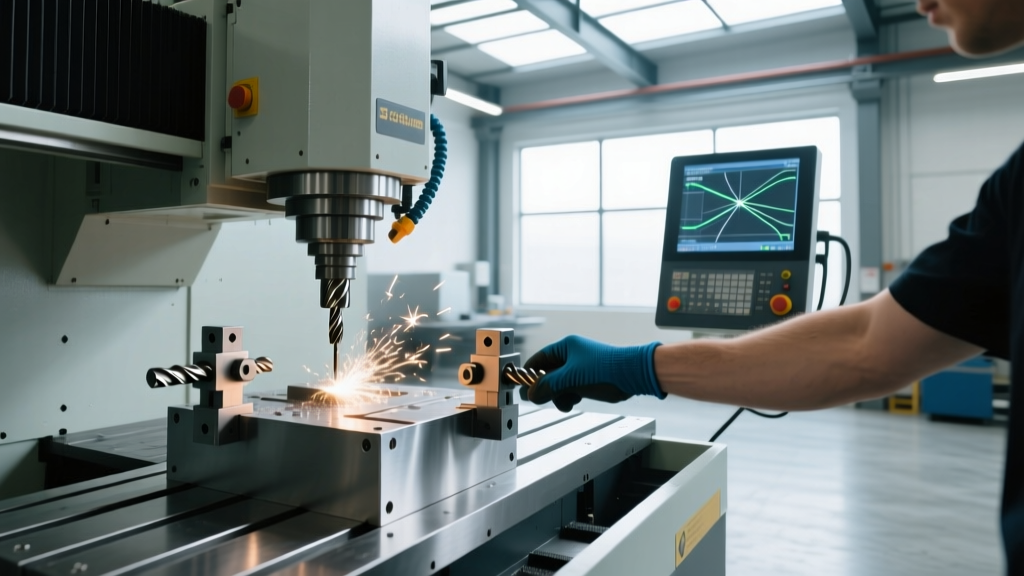
Securing a short-term CNC machine rental—such as a Haas VF-2SS or a DMG Mori CMX 600V—is a standard tactic for clearing production bottlenecks in 2026. However, rental agreements strictly prohibit permanent facility modifications. You cannot pour isolated concrete foundations, weld acoustic enclosures to the machine base, or drill into the shop floor for seismic anchors. This limitation creates two immediate liabilities: harmonic chatter that ruins surface finishes on tight-tolerance aerospace parts, and spindle/coolant pump noise that frequently exceeds the OSHA Permissible Exposure Limit (PEL) of 90 dBA for an 8-hour time-weighted average.
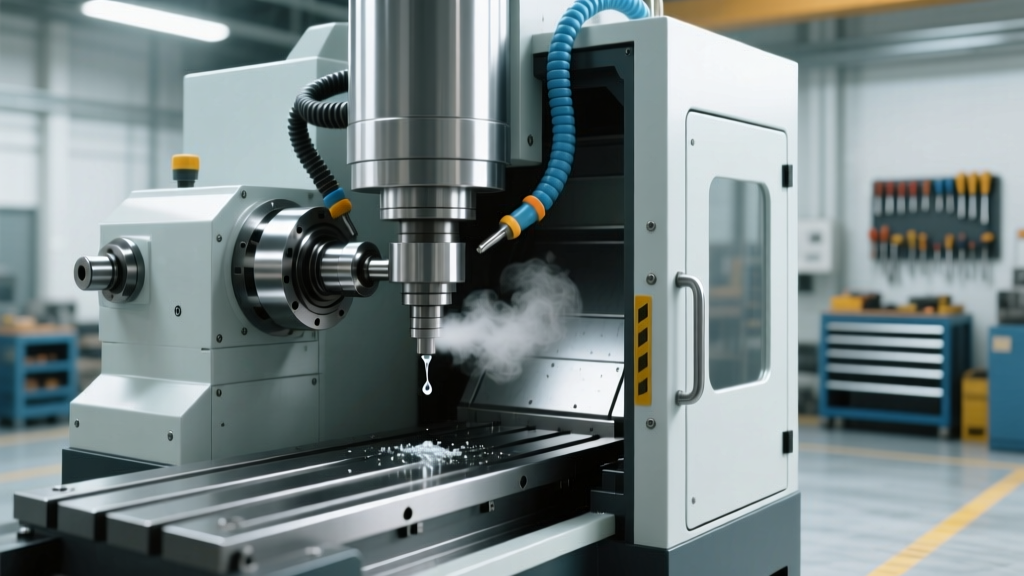
When a rented 12,000 RPM vertical machining center operates in a shared or urban facility, vibrational energy transfers directly through standard steel leveling feet into the floor, while acoustic energy reflects off hard surfaces, compounding operator fatigue and regulatory risk. To mitigate this without violating your rental contract, you must deploy non-destructive, modular damping and acoustic alternatives.
⚠️ Rental Warranty Warning: Never use rigid epoxy grout or weld custom brackets to a rented machine's casting. Doing so will void the rental agreement and result in severe refurbishment penalties (often exceeding $8,000 for a standard VMC). All solutions below are 100% reversible.Non-Destructive Vibration Damping Alternatives
Vibration in CNC rentals typically manifests as forced vibration (from unbalanced tooling or spindle runout) or self-excited chatter (regenerative chatter during heavy radial cuts). Because you cannot alter the machine's mass or foundation, you must isolate the machine from the floor or dampen the tooling itself. Below is a comparison of the three primary non-destructive isolation methods.
| Isolation Method | Specific Product Example | Cost (Approx.) | Deflection / Damping Capacity | Best Rental Scenario |
|---|---|---|---|---|
| Elastomeric Pads | Fabreeka 50100 Pad | $45 - $65 / sq. ft. | 0.05" at 100 psi; high internal friction | 1-3 month rentals; standard job shop floors |
| Pneumatic Isolators | Bilz FAEBI Air Mounts | $2,400 - $3,200 / set of 4 | 10-15mm; active leveling via shop air (90 psi) | 6-12 month rentals; high-precision aerospace work |
| Tuned Mass Dampers | Sandvik Silent Tools (Tooling) | $1,200 - $2,800 / adapter | Absorbs chatter at the cutting edge (up to 7x overhang) | Any term; deep cavity milling & boring operations |
Deep Dive: Elastomeric vs. Pneumatic Base Isolation
For a standard 6-month rental of a 10,000 lb machine, Fabreeka 50100 elastomeric pads are the most cost-effective baseline. Cut to fit the machine's leveling foot pads, these high-density, non-woven polyester fiber pads absorb high-frequency spindle vibrations before they transmit to the floor. However, they do not provide active leveling. If your facility floor has a 1-degree slope, the machine will twist, potentially causing geometric errors in boring operations.
Conversely, pneumatic isolators like the Bilz FAEBI series require a connection to your shop's compressed air line. They automatically level the machine within 0.0005 inches and isolate low-frequency floor vibrations (like nearby stamping presses or forklifts) from reaching the rented CNC's linear scales. While the $3,000 upfront cost is steep for a short-term rental, it is entirely justified if you are holding 0.0002" true-position tolerances on rented equipment.
Acoustic Enclosures vs. Suspended Baffles
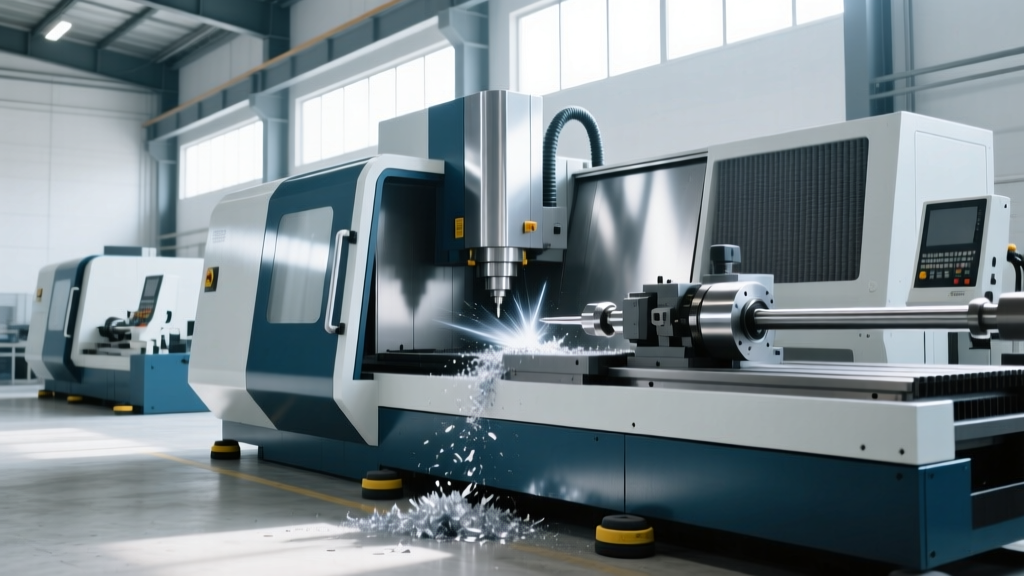
Machining hardened steel or running high-pressure coolant (70+ bar) on a rented VMC routinely generates 95-105 dBA at the operator console. According to OSHA's occupational noise standards, exposure at 100 dBA requires mandatory hearing protection and limits continuous exposure to just 2 hours without engineering controls. Because building a permanent cinder-block acoustic room is impossible for a rental, you must choose between modular enclosures and suspended treatments.
Option A: Modular Drop-In Acoustic Enclosures
- Technology: Interlocking panels featuring a 2-inch layer of acoustic fiberglass faced with a 1 lb/sq ft mass-loaded vinyl (MLV) barrier.
- Cost: $18,000 - $25,000 for a standard VMC footprint (e.g., eNoise Control or Singer Safety modular systems).
- Noise Reduction: 15-22 dBA drop outside the enclosure.
- Pros: Drastically reduces noise; contains coolant mist; complies with strict urban zoning ordinances.
- Cons: Expensive; requires forklift assembly; restricts overhead crane access for loading heavy vise fixtures.
Option B: Suspended Acoustic Baffles & Directional Curtains
- Technology: Vertically hanging 24" x 48" fiberglass baffles (NRC 0.85) combined with heavy-duty vinyl acoustic curtains on three sides of the operator station.
- Cost: $2,500 - $4,500 installed.
- Noise Reduction: 5-8 dBA drop (primarily reduces reverberation, not direct source noise).
- Pros: Cheap; installs in 4 hours; preserves full crane access; easily moved to the next rental location.
- Cons: Will not bring a 102 dBA process down to the 85 dBA NIOSH recommended limit without operator PPE.
The Zero-Mod Route: Toolpath and Toolholder Damping
If your rental term is under 90 days, investing in base isolation or enclosures is financially illogical. Instead, attack the vibration and noise at the cutting edge. As detailed in Sandvik Coromant's Silent Tools engineering guidelines, utilizing toolholders with internal tuned mass dampers allows you to eliminate chatter without altering the machine.
When performing deep cavity milling or boring on a rented machine that lacks the rigidity of a permanent, epoxy-grouted foundation, standard solid carbide endmills will deflect and scream. Swapping to a damped boring bar or a damped milling adapter (like the Haimer Duo-Lock with anti-vibration shanks) absorbs the kinetic energy internally. Furthermore, utilizing CAM software's trochoidal milling toolpaths maintains a constant radial engagement angle, preventing the sudden shock loads that trigger harmonic ringing in lightly-damped rental setups.
Decision Framework: Matching Damping to Rental Terms
Selecting the right alternative requires aligning the cost of the damping solution with the duration and precision requirements of your rental contract.
- The 1-3 Month Sprint (High Volume, Standard Tolerances):
Do not buy base isolators. Use $40 neoprene pump pads, hang $3,000 in suspended acoustic baffles to reduce shop reverberation, and mandate PPE for operators. Rely on CAM toolpath optimization (trochoidal/adaptive clearing) to prevent chatter. - The 6-9 Month Precision Run (Aerospace/Medical, Tight Tolerances):
Invest $3,000 in pneumatic active isolators (Bilz FAEBI). This guarantees the rented machine's geometry remains true despite shop floor forklift traffic. Pair this with Sandvik Silent Tools ($2,000+) for critical finishing passes to guarantee surface finish Ra values without rework. - The 12+ Month Urban Placement (Strict Noise Ordinances):
If the rental is situated in a mixed-use zoning area where nighttime noise limits are strictly enforced, lease a modular acoustic enclosure ($1,500/month). This prevents municipal shutdowns and allows 24/7 lights-out machining without violating local decibel limits at the property line.
By treating vibration and noise as controllable variables rather than fixed traits of the rented equipment, manufacturing facilities can maximize the ROI of short-term capacity expansions while safeguarding both part quality and operator compliance.