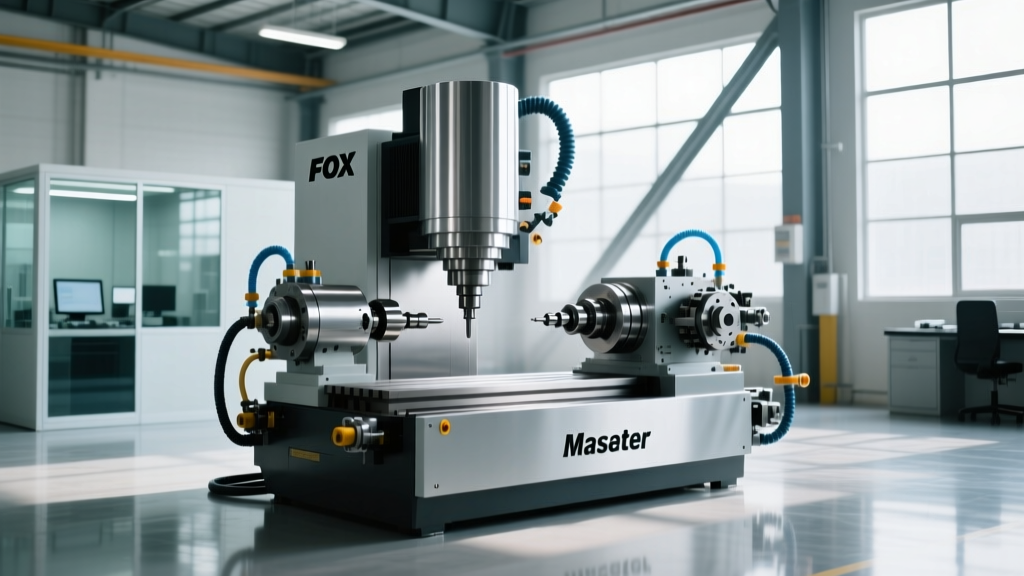
CNC Door Machine Bed Size & Work Envelope Trends 2026
Compare CNC door machine bed sizes and work envelopes. Explore 2026 trends in 5-axis clearance, shuttle tables, and oversized door manufacturing.
The Architectural Shift: Why Standard 4x8 Envelopes Are Failing
The North American and European millwork markets are undergoing a radical dimensional shift. While the traditional 36-inch by 80-inch (3' x 6'8") interior door remains a baseline for commercial construction, high-end residential and luxury commercial projects are heavily favoring oversized pivot doors and solid-core exterior entries. Dimensions such as 42" x 96" and 48" x 108" are now standard requests for custom millwork shops. This architectural evolution exposes a critical bottleneck in manufacturing: the physical work envelope of the CNC door machine.
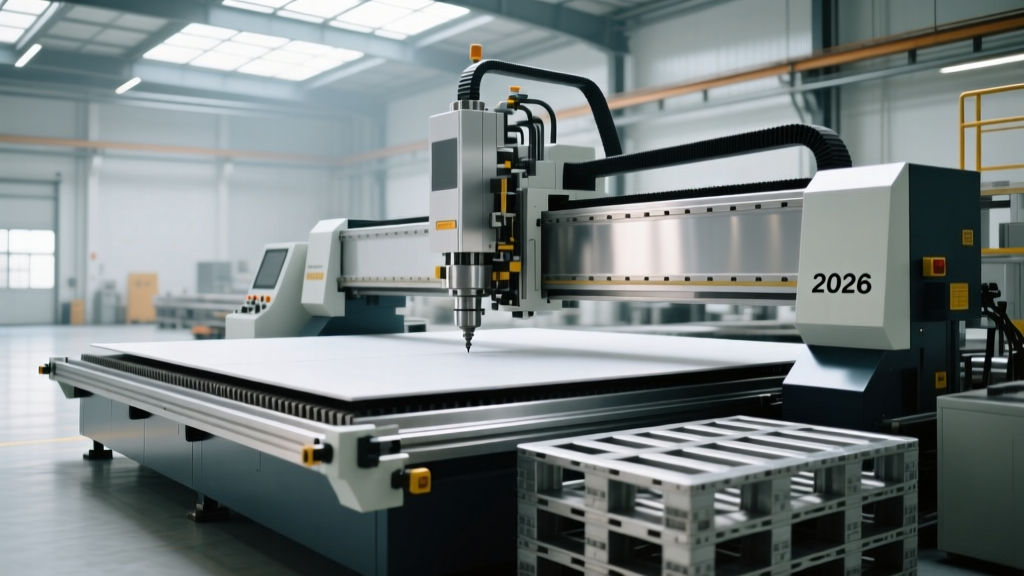
A standard 4x8 (1250 x 2500 mm) CNC router bed leaves virtually zero tolerance for fixturing, vacuum pod placement, or toolpath overtravel when machining a 42" x 96" door blank. In 2026, forward-thinking manufacturers are migrating toward 5x10 (1500 x 3100 mm) and 5x12 (1500 x 3700 mm) bed configurations to accommodate these oversized panels without sacrificing hold-down stability or spindle clearance.
📏 Dimensional Tolerance Reality Check:- Standard Door (36" x 80"): Requires 915 x 2032 mm. Fits easily on a 4x8 bed with 150mm perimeter for vacuum pods.
- Oversized Pivot (48" x 108"): Requires 1219 x 2743 mm. Exceeds standard 4x8 Y-axis travel; mandates a minimum 5x10 bed to allow for 100mm spoilboard edge clearance and pod placement.
Work Envelope Matrix: 2026 Machine Class Comparison
When evaluating a CNC door machine, the XY footprint is only half the equation. The Z-axis travel, table configuration, and automation compatibility dictate the true usable work envelope. Below is a comparison of the three primary machine classes dominating the door manufacturing sector this year.
| Machine Class | Bed Size (mm) | Max Door Capacity | Z-Axis Travel | ATC Capacity | 2026 Price Range |
|---|---|---|---|---|---|
| Entry 3-Axis (Nested) | 1250 x 2500 | 36" x 80" | 150 mm | 12 Tools | $75,000 - $95,000 |
| Mid-Tier Pod & Rail | 1300 x 2800 | 42" x 96" | 200 mm | 18 Tools | $120,000 - $160,000 |
| High-End 5-Axis Shuttle | 1500 x 3100+ | 48" x 108"+ | 300+ mm | 24+ Tools | $240,000 - $340,000 |
The Hidden Bottleneck: Z-Axis Clearance in 5-Axis Machining
As hardware complexity increases, so does the need for multi-axis machining. Modern concealed hinge systems, such as the Simonswerk Tectus series, require deep, angled pocketing that cannot be achieved with standard 3-axis routing. When a 5-axis CNC door machine tilts its spindle to 45 degrees to route these pockets, the physical housing of the spindle head extends significantly beyond the tool center point (TCP).
If the machine's Z-axis clearance is limited to 150mm, the spindle housing will collide with the edge of a 1-3/4" or 2-1/4" thick solid wood door blank during the tilt operation. In 2026, specifying a minimum Z-axis travel of 250mm to 300mm is non-negotiable for shops machining premium architectural doors. This extended Z-envelope ensures the 5-axis head has the vertical clearance to tilt fully without requiring complex, custom-built riser fixtures that compromise part stability.
⚠️ Collision Warning: Never assume a machine's stated Z-travel equals usable clearance. A machine with 200mm Z-travel may only yield 140mm of usable clearance once the 5-axis head length, tool holder, and cutting tool are subtracted. Always demand the usable part height under the spindle nose at maximum tilt from the OEM.Automation Integration: Expanding the Envelope via Shuttle Tables
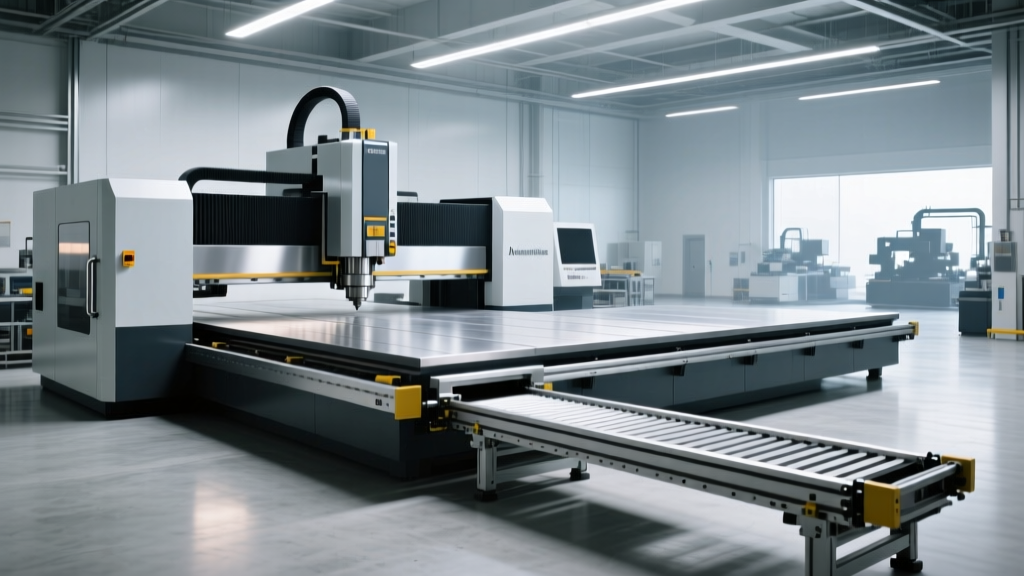
The physical bed size of a CNC door machine dictates the maximum part dimension, but the effective work envelope is increasingly defined by automation. High-volume manufacturers are abandoning single-zone flat tables in favor of dual-zone pendulum processing and automated shuttle tables.
With a dual-zone setup on a 5x10 bed, the machine is divided into two 5x5 zones. While the spindle is routing hardware mortises and edge profiles on a door in Zone A, the operator is safely loading the next raw blank and repositioning vacuum pods in Zone B. This effectively doubles the machine's throughput envelope without requiring a larger physical footprint in the shop.
Leading manufacturers like Biesse and SCM Group have integrated automated laser projection systems directly into the gantry. Instead of relying on physical hard-stops and manual measurement to place vacuum pods—which restricts the usable envelope to predefined grid lines—laser projection maps the exact pod placement for any custom door size in seconds. This software-defined envelope allows a single machine to transition from a 30" x 80" interior door to a 48" x 108" pivot door with zero mechanical reconfiguration.
"The work envelope is no longer just a physical boundary; it is a software-managed asset. Shops that rely on manual pod placement are artificially shrinking their machine's capabilities. Laser-guided pod positioning and vision-system part alignment have effectively added 15% more usable bed space by eliminating the safety margins operators used to leave for manual fixturing errors."
Decision Framework: Selecting Your Envelope Configuration
Choosing the right CNC door machine bed size requires aligning your capital expenditure with your specific production mix and hardware requirements. Use the following framework to determine the optimal envelope for your facility.
Scenario A: The Custom Millwork Shop (Low Volume, High Mix)
- Typical Output: 5 to 15 doors per day, highly customized designs, frequent size changes.
- Recommended Envelope: 4x9 (1300 x 2800 mm) Pod and Rail with 200mm Z-clearance.
- Why: The slightly extended Y-axis accommodates 96" doors comfortably while keeping the machine footprint small. The 200mm Z-clearance handles most standard 3-axis hardware routing and basic 4-sided edge profiling. Laser projection is essential here to minimize setup time between drastically different door sizes.
- Estimated ROI Timeline: 18-24 months based on reduced manual hinge-routing labor.
Scenario B: The High-Volume Architectural Manufacturer
- Typical Output: 50+ doors per day, standardized oversized pivot doors, complex 5-axis concealed hardware.
- Recommended Envelope: 5x10 (1500 x 3100 mm) Dual-Zone Shuttle Table with 300mm Z-clearance and 24-tool ATC.
- Why: The 5x10 bed is mandatory for 108" doors. The 300mm Z-clearance prevents spindle collisions during 5-axis Tectus hinge routing. The shuttle table ensures the spindle is cutting 85% of the time, eliminating the loading/unloading bottleneck. The 24-tool ATC supports complex tooling requirements (roughing, finishing, chamfering, and specialized boring heads) without manual intervention.
- Estimated ROI Timeline: 12-14 months based on massive reductions in non-cut time and secondary machining operations.
The Future of the Envelope: Gantry-Free Kinematics
Looking toward the late 2020s, the traditional overhead gantry design that limits the Z-axis and Y-axis work envelope is being challenged by robotic-arm CNC cells and moving-column architectures. While moving-column machines have existed for metalworking, their adaptation to woodworking and composite door manufacturing is accelerating. By moving the part on a fixed bed while a multi-axis robotic arm manipulates the spindle, manufacturers can achieve virtually unlimited Z-axis clearance and wrap-around edge profiling without the physical constraints of a gantry bridge. Until these systems reach price parity with traditional 5-axis routers, optimizing your current bed size, Z-clearance, and software-driven fixturing remains the most reliable path to maximizing your CNC door machine's productive envelope.