How the Biggest CNC Machine in the World Compares to Consumer Models
Explore the extreme technical specifications of the biggest CNC machine in the world and contrast its industrial engineering with consumer-grade desktop routers.
The biggest CNC machine in the world belongs to the Waldrich Siegen Mastermill family, with custom aerospace and marine installations reaching 42 meters (137.8 feet) in length, 14 meters (45.9 feet) in width, and weighing over 1,200 metric tons. These colossal portal milling machines are engineered to machine single-piece titanium and steel components for submarine hulls and commercial aircraft fuselages. This analysis is designed for manufacturing engineers, industrial procurement specialists, and CNC enthusiasts comparing extreme heavy-duty machining capabilities with consumer-grade specifications.
Key Takeaways
- Maximum Scale: The largest Computer Numerical Control (CNC) machines exceed 42 meters in X-axis travel and weigh over 1,200 metric tons.
- Power Output: Industrial giant spindles deliver up to 120 kilowatts of continuous milling power.
- Consumer Contrast: Standard prosumer CNC routers max out at 3 meters in length and 5 kilowatts of spindle power.
The World's Largest CNC Machines
Heavy industry requires monolithic structural components that cannot be assembled from smaller welded parts. To accommodate these massive workpieces, manufacturers deploy custom-built gantry and portal systems.
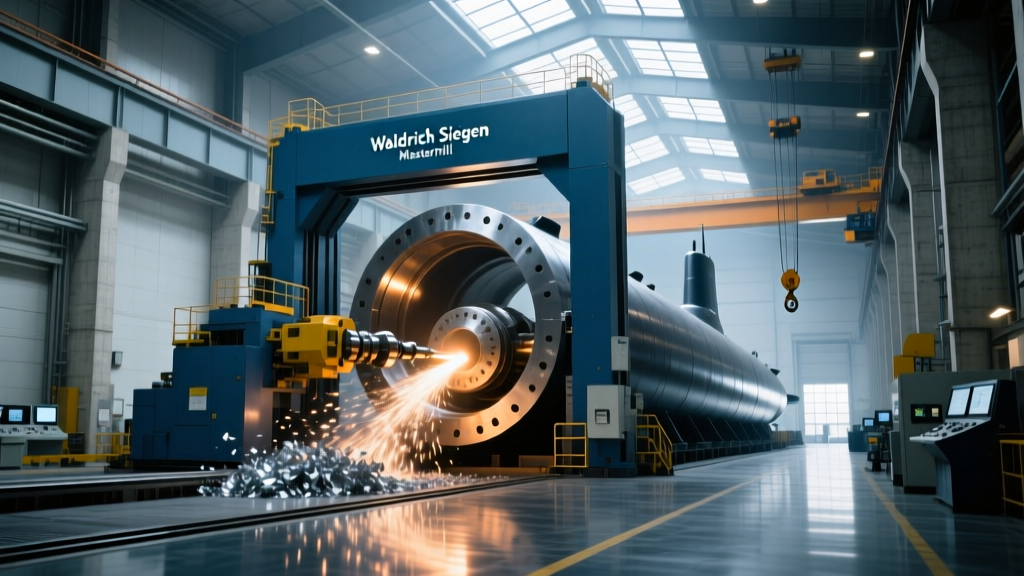
Waldrich Siegen Mastermill Specifications
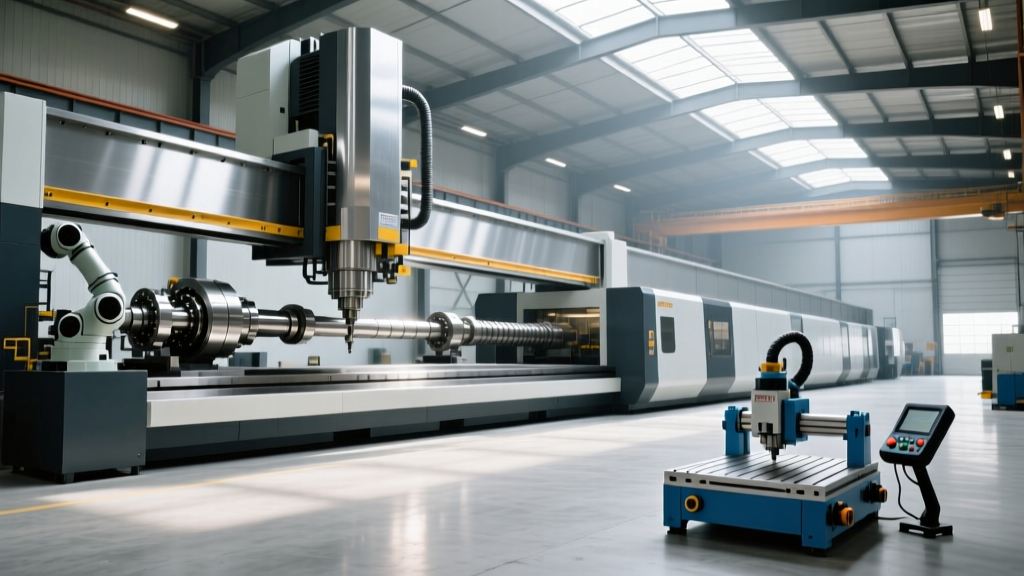
The Waldrich Siegen Mastermill series represents the pinnacle of large-scale subtractive manufacturing. Custom installations for the marine and energy sectors feature an X-axis travel of 42 meters and a Y-axis crossrail width of 14 meters. The structural mass of these machines exceeds 1,200 metric tons to dampen vibrations during aggressive roughing passes.
Spindle motors on these units generate up to 120 kilowatts of continuous cutting power. Despite their immense size, the linear scales and hydrostatic guideways maintain a positioning tolerance of 0.02 millimeters across the entire 42-meter envelope. You can view their heavy-duty machining centers directly on the Waldrich Siegen official website.
Ingersoll Mammoth Milling Machines
Ingersoll Machine Tools produces similarly scaled gantry mills, often utilized in the aerospace sector for machining composite wing spars. Their Mammoth series frequently incorporates automated multi-axis heads capable of 5-axis simultaneous contouring on parts weighing up to 300 metric tons. Further technical specifications are available via the Ingersoll Machine Tools official portal.
Definition: Portal Milling Machine
A portal milling machine is a massive Computer Numerical Control (CNC) system featuring a fixed or moving bridge-like structure (portal) that spans over the workpiece. This design provides extreme rigidity for machining exceptionally wide and heavy industrial components without deflection.
Consumer and Prosumer CNC Specifications
The consumer CNC market prioritizes accessibility, footprint efficiency, and affordability over raw material removal rates. Prosumer machines bridge the gap between desktop hobbyist tools and light industrial vertical machining centers.
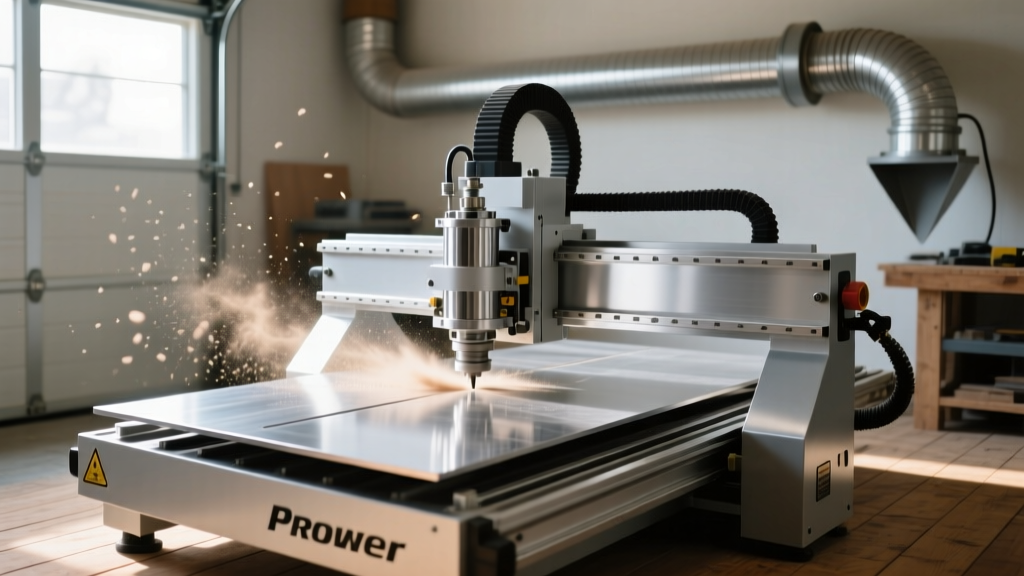
Desktop and Garage-Scale Limits
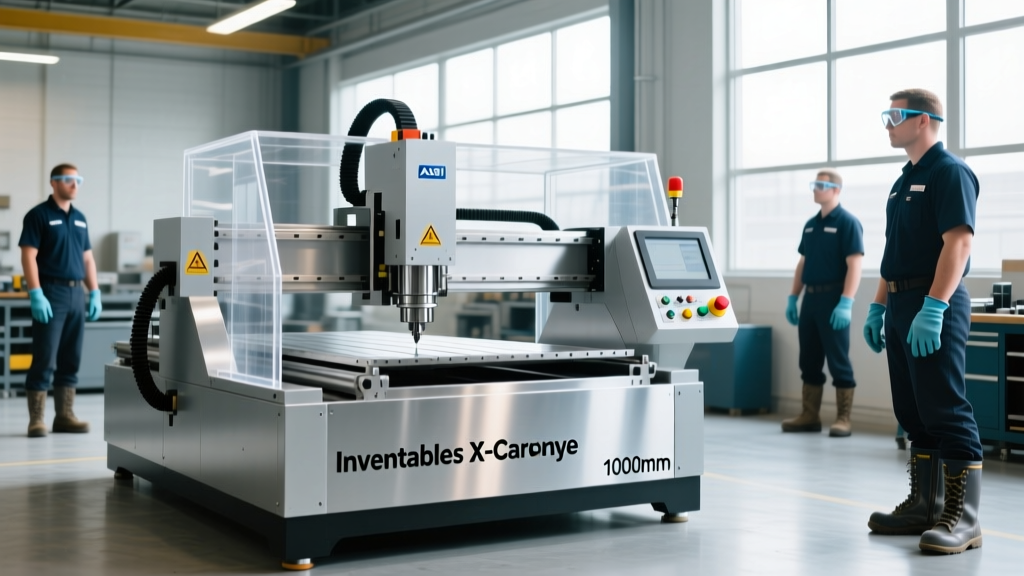
Standard consumer CNC routers, such as the Shapeoko or X-Carve series, typically offer a maximum cutting area of 1.2 meters by 1.2 meters. These machines utilize NEMA 23 stepper motors and air-cooled spindles rated between 1.5 kilowatts and 3 kilowatts.
Larger prosumer flatbed routers max out at approximately 3 meters in length. The structural frames rely on extruded aluminum or welded steel tubing, limiting the machine's total weight to under 500 kilograms. Feed rates on these consumer models rarely exceed 600 millimeters per minute when cutting dense metals like aluminum.
Industrial vs. Consumer CNC Comparison Matrix
Use the following decision framework to understand the dimensional and performance gaps between the biggest CNC machines and standard consumer models.
| Specification | Largest Industrial CNC (Waldrich Siegen) | Standard Consumer CNC (Prosumer Router) |
|---|---|---|
| Maximum X-Axis Travel | 42 meters | 1.2 to 3 meters |
| Total Machine Weight | 1,200 metric tons | 150 to 500 kilograms |
| Spindle Power | 120 kilowatts | 1.5 to 5 kilowatts |
| Positioning Tolerance | 0.02 millimeters | 0.1 to 0.5 millimeters |
| Typical Capital Cost | $15,000,000+ USD | $3,000 to $25,000 USD |
Frequently Asked Questions
What is the largest CNC milling machine used in aerospace?
The largest CNC milling machines in aerospace are typically 5-axis gantry mills produced by Ingersoll Machine Tools or Zimmermann. These machines feature X-axis travels exceeding 30 meters to accommodate full-length commercial aircraft fuselage sections and composite wing structures.
How much does the biggest industrial CNC router cost?
Custom heavy-duty portal milling machines cost between $10,000,000 and $25,000,000 USD. This price includes the foundation engineering, hydrostatic guideway systems, high-torque spindle heads, and proprietary Computer Numerical Control (CNC) integration required for massive-scale operations.
Can a consumer CNC machine be scaled up to industrial sizes?
Consumer CNC architectures cannot be safely scaled to industrial dimensions. Extruded aluminum frames and stepper motor drive systems lack the structural rigidity and closed-loop servo feedback required to maintain precision across spans larger than 4 meters.
Definition: Gantry CNC
A Gantry Computer Numerical Control (CNC) system utilizes a bridge-like structure that moves along parallel rails to support the machining head. This configuration allows the machine to process extremely wide and heavy workpieces while keeping the overall factory footprint optimized.
Conclusion and Next Steps
The biggest CNC machine in the world, the Waldrich Siegen Mastermill, operates on a scale of 42 meters and 1,200 metric tons to serve heavy marine and aerospace manufacturing, contrasting sharply with the 3-meter, 500-kilogram limits of the consumer market. Understanding these extreme specifications clarifies the engineering boundaries of subtractive manufacturing. If you are evaluating equipment for a large-scale fabrication facility, your next step is to commission a geotechnical survey to ensure your factory floor can support the immense point-loads of industrial portal mills.