Table Type CNC Plasma Cutting Machine: 2026 Buyer's Guide & Sizing Specs
Discover how to select the ideal table type CNC plasma cutting machine for your fabrication shop. Compare sizes, power sources, and 2026 pricing.
Purchasing a table type CNC plasma cutting machine represents a significant capital expenditure for any metal fabrication shop. Unlike open-gantry systems that require extensive floor-mounted rail installations, table-type configurations integrate the cutting bed, gantry, and drive mechanics into a single, unified footprint. This design minimizes installation time, ensures factory-calibrated alignment, and optimizes floor space. However, selecting the right system requires navigating a complex matrix of table dimensions, plasma power sources, drive mechanisms, and fume extraction methods.
Defining the Table-Type Configuration
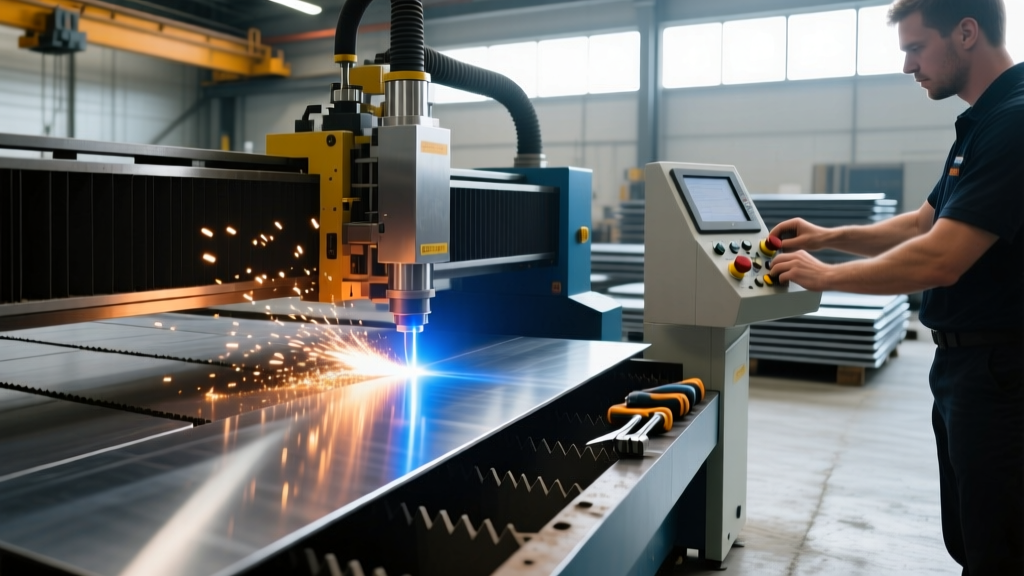
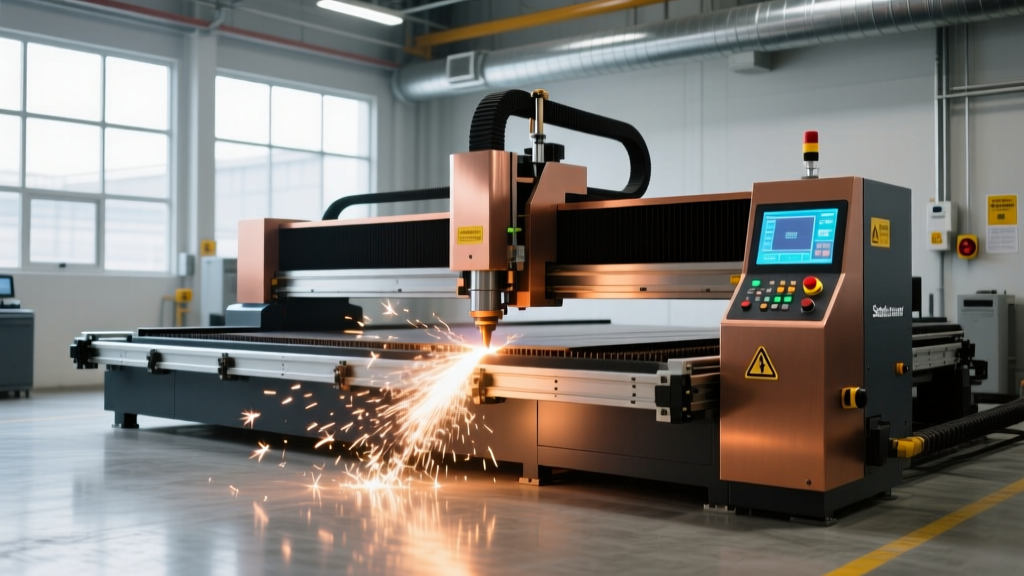
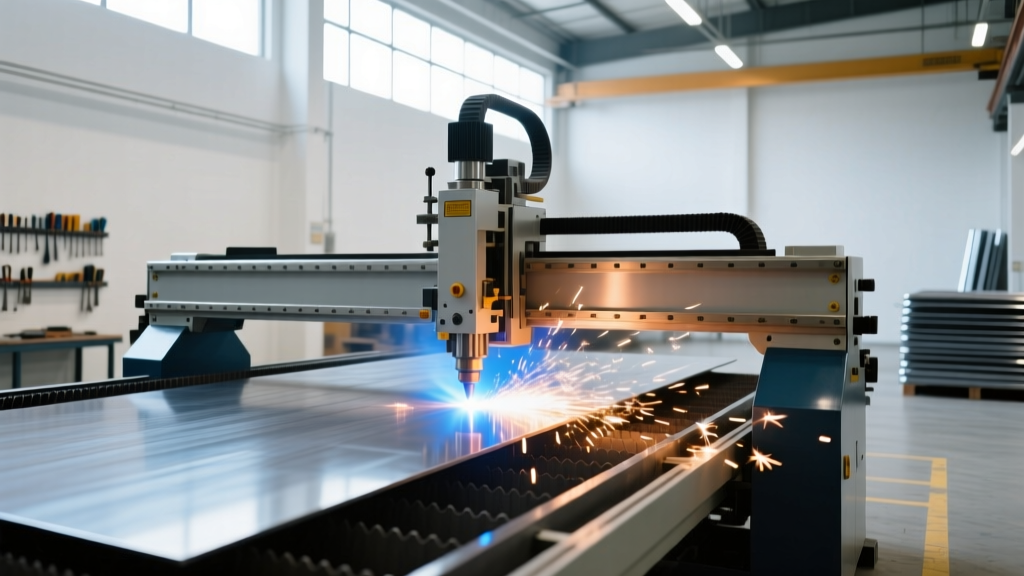
A true table-type CNC plasma cutter features a self-contained structural base. The X-axis rails are mounted directly to the table's side pans, while the Y-axis bridge (gantry) traverses across the bed. This unified construction eliminates the positional drift common in modular rail systems installed on uneven concrete floors. For job shops producing HVAC ductwork, structural brackets, or custom automotive panels, the table-type design offers rapid deployment—often requiring only electrical and compressed air hookups upon delivery.
⚠️ Footprint vs. Cutting Area Warning: A common purchasing mistake is equating table size with required floor space. A machine advertised as a '4x8 table type CNC plasma cutting machine' requires a minimum floor footprint of 6x11 feet. You must account for the gantry overhang, the CNC controller pedestal, and the plasma power supply clearance. Always request the manufacturer's 'total footprint footprint diagram' before pouring concrete pads.2026 Sizing & Pricing Matrix
System pricing in 2026 has stabilized following previous supply chain disruptions, though high-definition plasma components carry a premium. The table below outlines standard industrial configurations and estimated turnkey pricing (including table, CNC controller, and power supply).
| Table Size | Ideal Application | Typical Power Supply Match | Est. 2026 Price Range (USD) |
|---|---|---|---|
| 4x4 ft (Entry) | HVAC, light signage, prototyping | Hypertherm Powermax 45-65 SYNC | $9,500 - $16,000 |
| 4x8 ft (Standard) | General fab, structural plates, art | Hypertherm Powermax 105/125 | $24,000 - $42,000 |
| 5x10 ft (Heavy) | Full sheet processing, heavy machinery | Hypertherm XPR300 (High-Def) | $85,000 - $125,000+ |
Selecting the Plasma Power Source
The cutting table is merely the delivery mechanism; the plasma power supply dictates cut quality, speed, and consumable life. Buyers must choose between conventional air plasma and high-definition (HFO/O2) plasma systems.
Conventional Air Plasma (Up to 125 Amps)
Systems utilizing compressed air as the plasma and shield gas are ideal for mild steel up to 1 inch thick. Modern units like the Powermax105 SYNC feature automated gas pressure tuning and RFID-enabled consumables that prevent operator error. Expect a kerf width of 0.060 to 0.080 inches and a bevel angle of 3 to 5 degrees on 1/2-inch material.
High-Definition Plasma (130 to 400 Amps)
For shops demanding laser-like edge quality on thick plate, high-definition systems use specialized gas mixtures (e.g., O2 plasma with H35 shield gas). According to Hypertherm's plasma cutting fundamentals, high-definition systems constrict the plasma arc through a specialized copper nozzle, yielding energy densities that produce square cuts (1-2 degree bevel) and minimal dross on materials up to 2 inches thick. The trade-off is the requirement for bulk gas cylinders and significantly higher initial capital outlay.
Drive Mechanics and Torch Height Control
A table type CNC plasma cutting machine must maintain strict positional accuracy while traversing warped or uneven sheet metal. Two critical subsystems govern this performance:
- Drive Systems: Avoid belt-driven systems for any table larger than 4x4. Industrial 4x8 and 5x10 tables must utilize helical rack and pinion drives on the X-axis. Helical gears maintain constant tooth engagement, eliminating the backlash and chatter associated with straight-cut spur gears. Look for servo motors (e.g., Yaskawa or Panasonic) rather than stepper motors to prevent lost steps during high-speed directional changes.
- Torch Height Control (THC): A robust THC is non-negotiable. While older systems rely on arc voltage sampling, modern setups require Ohmic Sensing. Ohmic sensing uses a low-voltage circuit to physically detect the material surface before firing the arc. This is mandatory for wet cutting (water tables) and essential for piercing heavily rusted or painted plates where voltage-based THC would fail to establish the correct pierce height.
Fume Extraction: Downdraft vs. Water Bath Tables
Plasma cutting vaporizes metal, generating hazardous particulates and gases. Managing these emissions is a primary design factor for table-type machines. OSHA's Hexavalent Chromium standards mandate strict permissible exposure limits (PEL) for stainless steel cutting, making extraction selection a compliance issue, not just a comfort feature.
"Water tables remain the most cost-effective method for particulate suppression, capturing over 95% of heavy dust. However, they require weekly sludge removal and prevent the use of ohmic sensing if the water level is not precisely controlled via pneumatic bladders. Downdraft tables paired with 2000+ CFM cartridge collectors offer cleaner operation but require expensive filter replacements and ductwork."
Extraction Decision Matrix
- Choose a Water Bath Table if: You primarily cut carbon steel under 3/4 inch, have limited budget for dust collection, and can dedicate labor to periodic water/sludge maintenance.
- Choose a Zoned Downdraft Table if: You cut high volumes of stainless steel or aluminum, require dry material handling for immediate welding, and have the capital for a high-static-pressure cartridge dust collector.
The Buyer's Decision Framework
Use this step-by-step framework to finalize your equipment specification:
- Audit Material Thickness: If 90% of your work is under 1/2 inch, a 105-amp conventional air system on a 4x8 downdraft table is the optimal ROI.
- Verify Floor Capacity: A fully loaded 5x10 water table can exceed 8,000 lbs. Ensure your concrete slab is rated for at least 3,000 PSI and 6 inches thick.
- Specify the CNC Controller: Ensure the controller supports native nesting software integration (e.g., SheetCam or ProNest) and features a breakaway torch mount to prevent $3,000+ damage if the torch crashes into a tipped workpiece.
Frequently Asked Questions
Can I upgrade a conventional table-type machine to high-definition later?
Mechanically, yes. However, you must verify that the table's Z-axis carriage can support the heavier high-definition torch body and that the CNC controller has the necessary I/O ports for high-definition gas console communication. Additionally, the electrical service must often be upgraded from single-phase 220V to three-phase 480V to support high-amperage HFO power supplies.
What is the expected consumable cost per hour of cutting?
For a 105-amp conventional air system cutting 1/2-inch mild steel, expect consumable costs (electrode, nozzle, swirl ring, shield) to average $2.50 to $4.00 per hour of arc-on time. High-definition systems cutting with O2/H35 mixes will see consumable costs rise to $8.00 to $15.00 per hour, offset by vastly superior cut speeds and reduced secondary grinding labor.
Do table-type machines require specialized software?
The machine requires two software layers: CAD/CAM for toolpath generation (creating the G-code) and the CNC control software (executing the G-code). While some entry-level tables bundle basic CAM software, industrial buyers typically purchase dedicated nesting software like Hypertherm ProNest to maximize material yield and integrate automated lead-in/lead-out protocols.