Sheet Metal CNC Laser Cutting Machine ROI: 2026 Aerospace Case Study
Analyze the ROI of upgrading to a 6kW sheet metal CNC laser cutting machine in aerospace fabrication, featuring real cut speeds, gas costs, and edge cases.
The Tier-2 Aerospace Bottleneck: Why Legacy CO2 Failed
Tier-2 aerospace and defense suppliers operate on razor-thin margins and unforgiving delivery schedules. In early 2026, a mid-sized fabrication facility in Ohio—specializing in structural brackets, avionics enclosures, and heat shields—faced a critical production bottleneck. Their legacy 4kW CO2 laser system, installed in 2014, could no longer keep pace with the volume of 6061-T6 aluminum and 304 stainless steel blanks required for next-generation UAV assemblies. The CO2 system was limited by slow cut speeds on reflective metals, high electrical consumption, and frequent downtime for mirror alignment and RF tube maintenance.
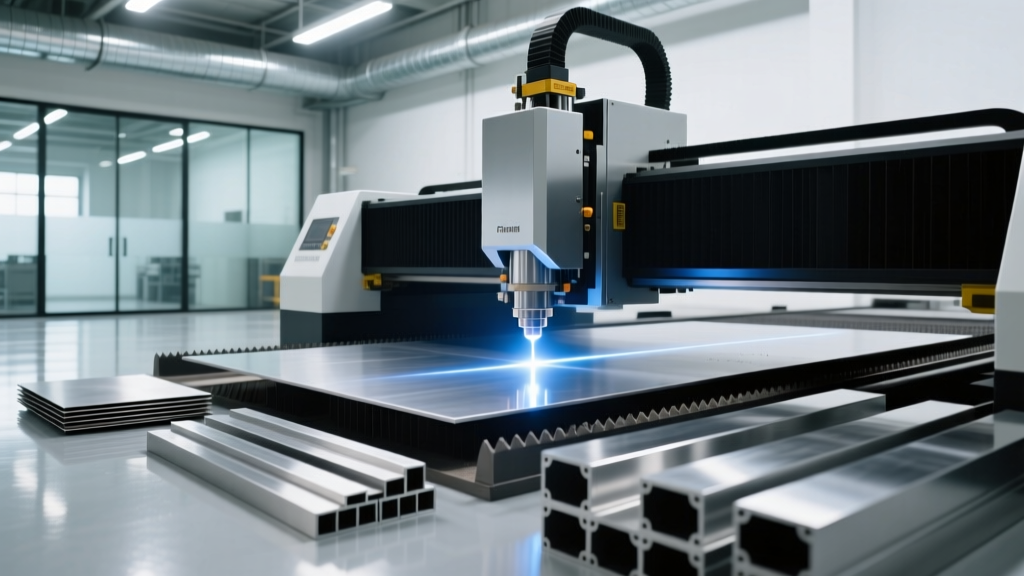
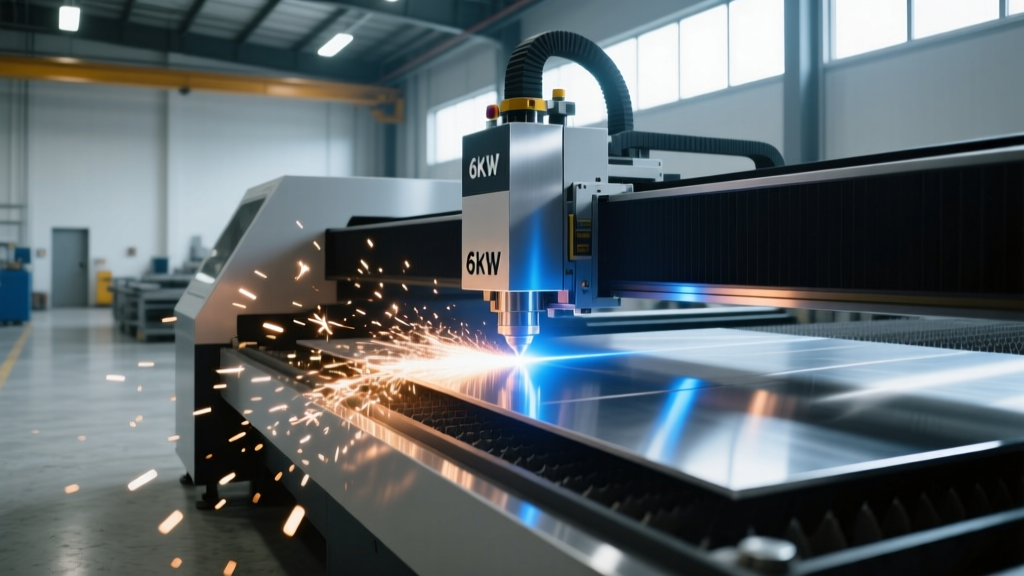
To eliminate the bottleneck, the facility retired the CO2 system and invested in a modern 6kW fiber sheet metal CNC laser cutting machine. This transition fundamentally altered their unit economics, floor space utilization, and metallurgical edge quality. Below is a technical and financial breakdown of the first 12 months of operation.
Equipment & Investment Profile
- Machine: TRUMPF TruLaser 5030 Fiber (6 kW TruDisk source)
- Bed Size: 5 ft x 10 ft (1500 mm x 3000 mm) with automated pallet changer
- Total Capital Cost: $745,000 (including LoadMaster automation, chiller, and dust extraction)
- Facility Upgrades: 480V/3-phase electrical drop ($12,000) and reinforced concrete pad ($8,500)
Head-to-Head: Cutting Parameters & Speed Matrix
The most immediate impact of the 6kW fiber upgrade was the exponential increase in traverse and cutting speeds, particularly on non-ferrous and reflective alloys. Fiber lasers operate at a 1.06 µm wavelength, which is absorbed by metals at a vastly higher rate than the 10.6 µm wavelength of CO2 lasers. This allows the 6kW source to process thin-gauge aerospace alloys with minimal thermal distortion.
| Material & Alloy | Thickness | Assist Gas & Pressure | Legacy CO2 Speed (IPM) | 6kW Fiber Speed (IPM) | Edge Quality / Dross |
|---|---|---|---|---|---|
| 304 Stainless Steel | 16 Gauge (0.059") | N2 @ 185 PSI | 45 IPM | 310 IPM | Oxide-free, ready for passivation |
| 6061-T6 Aluminum | 1/4" (0.250") | N2 @ 220 PSI | 22 IPM | 115 IPM | Minimal bottom dross, <5% kerf taper |
| Ti-6Al-4V Titanium | 0.060" | Argon @ 45 PSI | 15 IPM | 48 IPM | No alpha-case embrittlement |
| C110 Copper (Beryllium) | 1/8" (0.125") | O2 @ 15 PSI | Not Processable | 35 IPM | Requires specialized beam dump |
The "Fly Pierce" Advantage
Speed is not solely about cutting; it is about piercing. On a typical avionics enclosure nest featuring 450 ventilation holes, the legacy CO2 machine required 1.2 seconds per standard pierce. The 6kW fiber system utilizes a "fly pierce" (or fast pierce) algorithm, initiating the cut motion before the pierce is fully complete. This reduced pierce time to 0.3 seconds per hole, saving 6.7 minutes of non-cutting time per sheet. Across 40 sheets a week, this reclaimed 4.5 hours of machine capacity.
Hidden Costs & Edge Cases in Fiber Laser Operation
While fiber laser technology dominates modern metal fabrication, transitioning from CO2 introduces specific metallurgical and operational edge cases that fabricators must engineer around.
1. The Nitrogen Consumption Trap
Cutting 16-gauge stainless steel at 310 IPM requires a massive volume of high-purity nitrogen to blow molten metal out of the kerf and prevent oxidation. The facility initially relied on a standard liquid nitrogen bulk tank. However, the rapid vaporization required to sustain 220 PSI gas flow caused the ambient vaporizer to freeze over, dropping line pressure and resulting in dross-heavy edges mid-job.
The Fix: The shop installed a high-capacity ambient air vaporizer paired with an electric trim heater and a 1,000-gallon bulk tank. For non-critical internal brackets that would eventually be powder-coated, they switched to high-pressure compressed air cutting using a 400-PSI Kaeser screw compressor, reducing assist gas costs on those specific parts by 88%.
2. Titanium Alpha-Case Embrittlement
Cutting aerospace-grade Ti-6Al-4V titanium with standard nitrogen assist gas introduces nitrogen into the heat-affected zone (HAZ), forming a brittle "alpha-case" layer. This layer causes micro-cracking under fatigue loading and results in immediate rejection by Tier-1 QA inspectors.
The Fix: The machine was programmed to use high-purity Argon as the assist gas for all titanium aerospace parts. While Argon reduces the maximum cutting speed by roughly 20% compared to nitrogen and costs more per cubic foot, it entirely eliminates alpha-case formation, saving the facility an estimated $45,000 annually in scrapped titanium blanks and secondary heat-treat rejections.
3. Managing Back-Reflection on Copper
Highly reflective metals like copper and brass can reflect the 1.06 µm laser beam directly back into the cutting head, potentially destroying the collimation lens or the fiber optic cable. Modern 6kW machines mitigate this with specialized beam dumps and sacrificial protective windows. Operators must strictly adhere to pulsed-pierce parameters and ensure the protective window is inspected every 8 hours of reflective-metal cutting to prevent catastrophic optical failure.
Financial ROI & Payback Calculation
To calculate the true ROI, the facility tracked direct and indirect costs over a 12-month period, comparing the new 6kW fiber system against historical CO2 data. Wage data for CNC operators and material handlers was benchmarked against current Bureau of Labor Statistics manufacturing averages.
- Labor Reduction: The speed of the fiber laser, combined with the automated pallet changer, allowed one operator and one material handler to manage the machine, replacing the two dedicated operators required for the slower, manual-load CO2 system. Annual Savings: $84,000.
- Electrical Consumption: The 4kW CO2 system (including chillers and blowers) drew roughly 45 kW per hour. The 6kW fiber system draws approximately 14 kW per hour. Running 2,000 hours annually at $0.12/kWh. Annual Savings: $7,440.
- Maintenance & Consumables: CO2 lasers require periodic replacement of RF tubes, bending mirrors, and bellow ways. Fiber lasers have no moving optical parts and require only the replacement of brass nozzles, focus lenses, and protective glass. Annual Savings: $18,500.
- Secondary Operations Elimination: The oxide-free edges produced by high-pressure N2 fiber cutting eliminated the need for edge-deburring and grinding on 60% of stainless steel parts prior to TIG welding. Annual Savings: $32,000.
Total First-Year Hard Savings: $141,940
Factoring in the $745,000 capital expenditure and a 5% annual maintenance reserve, the machine achieved full payback in month 34. However, when factoring in the revenue gained from accepting 25% more contract volume due to freed-up capacity, the effective payback period compressed to 21 months.
Strategic Takeaways for Fabricators
Upgrading to a 6kW sheet metal CNC laser cutting machine is not merely a speed enhancement; it is a fundamental shift in manufacturing physics. Fabricators evaluating this transition in 2026 must look beyond the sticker price of the resonator. Success requires engineering the entire ecosystem around the machine: securing high-volume gas delivery, programming material-specific focal lengths (e.g., using a 200mm collimation lens for 1/4" aluminum to maintain kerf straightness), and retraining QA teams to evaluate fiber-laser edge profiles. When executed correctly, the transition permanently alters the competitive trajectory of a precision fabrication business.