CNC Plasma Flame Cutting Machine: Technical Specs & Operation
Explore how a CNC plasma flame cutting machine operates. Dive into technical specs, dual-torch mechanics, pricing, and troubleshooting thick-plate pierce failures.
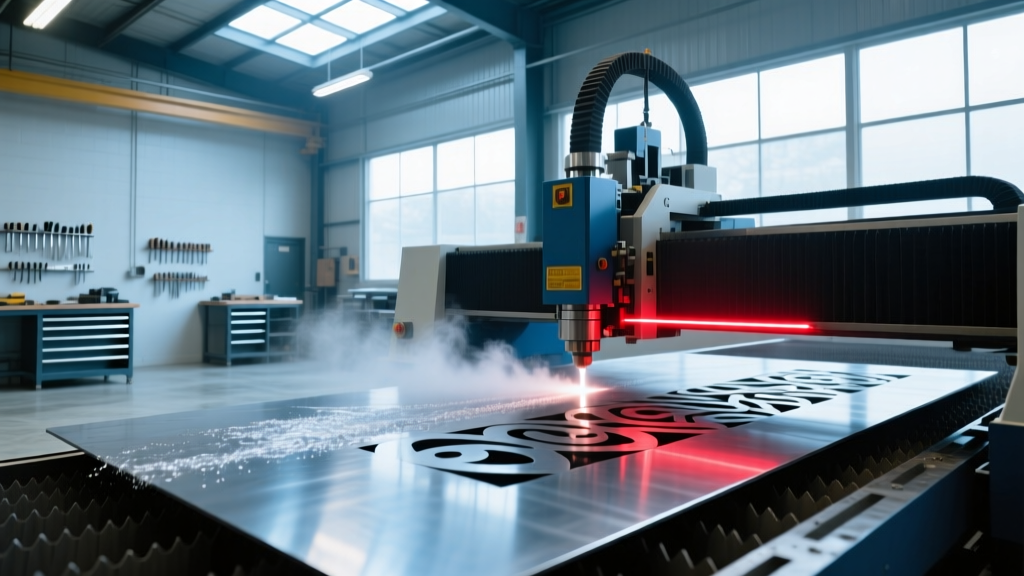
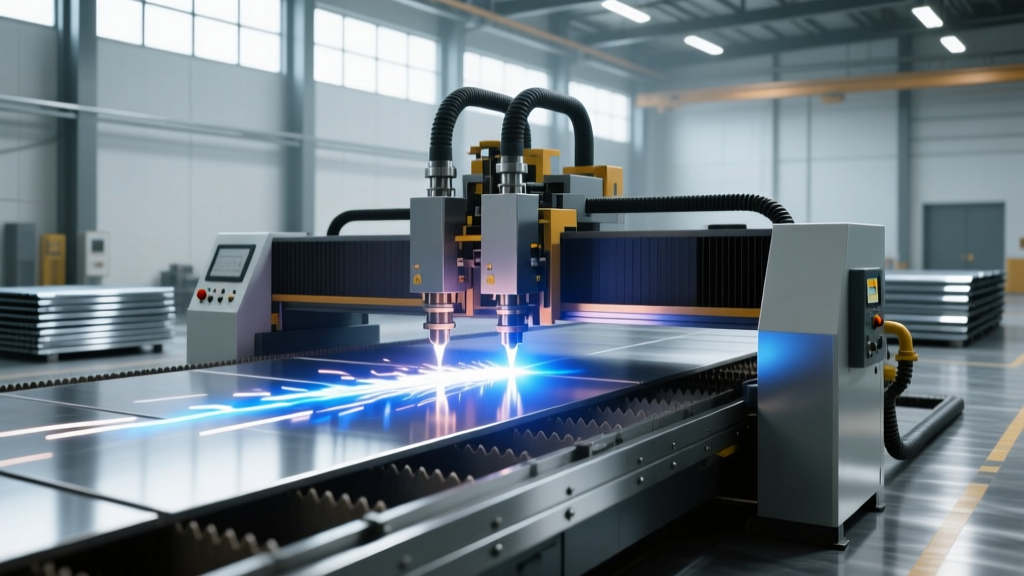
In heavy metal fabrication, the term CNC plasma flame cutting machine refers to a hybrid dual-process gantry system equipped with both a high-definition plasma torch and an oxy-fuel (flame) cutting torch. While plasma excels at high-speed cutting of thinner conductive metals and non-ferrous alloys, oxy-fuel remains unmatched for piercing and severing extreme-thickness carbon steel. Combining both on a single CNC chassis provides fabricators with maximum material versatility, ranging from 24-gauge sheet metal up to 12-inch thick structural plate.
Material Limitation Warning: Oxy-fuel flame cutting relies on the rapid oxidation of iron. It cannot cut stainless steel, aluminum, or brass because these metals form refractory oxides (like chromium oxide) that melt at higher temperatures than the base metal, halting the exothermic reaction. For these materials, the CNC controller must automatically default to the plasma torch.Core Technical Specifications & Performance Matrix
Modern dual-process gantry systems utilize helical rack-and-pinion drives with servo motors to maintain positional accuracy under heavy thermal loads. Below is a direct comparison of the operational parameters for both cutting methods on a standard industrial 10x5 foot CNC table.
| Parameter | Oxy-Fuel (Flame) Torch | High-Definition Plasma Torch |
|---|---|---|
| Compatible Materials | Carbon Steel Only | All Conductive Metals (Steel, Aluminum, Copper) |
| Effective Thickness Range | 0.25" to 12"+ | 0.04" to 2" (Pierce limit typically 1.25") |
| Cut Speed (0.5" Mild Steel) | 18 - 22 IPM | 110 - 140 IPM |
| Dimensional Tolerance | ±0.030" | ±0.010" to ±0.015" |
| Heat Affected Zone (HAZ) | Wide (up to 0.25") | Narrow (0.05" to 0.10") |
| Kerf Width | 0.040" to 0.080" | 0.050" to 0.150" (depending on amperage) |
Dual-Process Mechanics: How the System Operates
Operating a hybrid machine requires the CNC controller (such as the Hypertherm EDGE Connect or Burny Phantom II) to manage two entirely different physical cutting phenomena. Understanding these mechanics is critical for programming accurate cut files and setting feed rates.
1. Oxy-Fuel (Flame) Cutting Mechanics
Oxy-fuel cutting is essentially a controlled, rapid rusting process. According to The Welding Institute (TWI), the process occurs in three distinct stages:
- Preheating: A mixture of oxygen and a fuel gas (acetylene, propane, or natural gas) is ignited. The preheat flames raise the surface temperature of the carbon steel to its ignition point (approximately 1,600°F to 1,800°F).
- Oxidation (The Cut): Once the steel reaches the ignition temperature, the CNC controller opens the central cutting oxygen valve. A high-pressure stream of pure oxygen (typically 40-60 PSI) hits the red-hot metal, triggering a violent exothermic reaction that converts the solid iron into liquid iron oxide (slag).
- Slag Ejection: The kinetic energy of the oxygen jet blows the molten slag out of the bottom of the kerf, allowing the oxygen stream to penetrate deeper into the plate as the gantry moves forward.
2. CNC Plasma Arc Mechanics
Plasma cutting utilizes an electrically ionized gas to melt and eject material. As detailed in Hypertherm's plasma cutting principles, modern high-definition systems constrict the arc through a specialized copper nozzle to achieve extreme energy density.
- Pilot Arc Phase: A high-frequency spark or short-circuit ignition ionizes the gas inside the torch body, creating a low-current pilot arc between the electrode and the nozzle.
- Transferred Arc Phase: When the pilot arc touches the conductive workpiece, the electrical circuit transfers to the workpiece. The CNC system ramps up the DC current (e.g., from 130A to 300A).
- Constriction & Ejection: The gas (air, oxygen, or an argon/hydrogen/nitrogen mix) passes through a narrow nozzle orifice, constricting the arc to temperatures exceeding 30,000°F. The high-velocity gas stream melts the metal and blows the molten material away.
Component Breakdown & 2026 Pricing Realities
Building or purchasing a CNC plasma flame cutting machine requires balancing capital expenditure against cut quality and duty cycle. Below is a realistic breakdown of component costs for a mid-sized industrial 5x10 foot water-table or downdraft system.
Procurement Tip: Do not underestimate the cost of the Arc Voltage Height Control (AVHC). Plasma torches must maintain a strict distance from the plate (often 0.06") to prevent double-arcing and nozzle destruction. An AVHC monitors the arc voltage in real-time to adjust the Z-axis over warped plates.- Heavy-Duty Gantry & Drives: $18,000 - $28,000. Look for helical rack-and-pinion drives with planetary gearboxes (e.g., Neugart or Atlanta Gear) to eliminate backlash.
- CNC Controller & Software: $5,500 - $8,500. The Hypertherm EDGE Connect is the industry standard, offering integrated True Hole® technology for cutting small, precise holes in thick plate.
- Plasma Power Supply: $7,000 - $22,000. A 125-amp air plasma system (like the Powermax125 SYNC) costs around $8,500, while a 300-amp high-definition system (like the XPR300) pushes $22,000.
- Oxy-Fuel Torch Assembly & Manifolds: $1,500 - $3,000. Includes the automatic igniter, gas solenoids, and flashback arrestors required by OSHA standard 1910.252 for welding and cutting safety.
- AVHC (Arc Voltage Height Control): $2,500 - $4,000.
- Total System Investment: Expect to pay between $35,000 and $65,000 for a fully integrated, production-ready hybrid machine.
Edge Cases & Troubleshooting Thick-Plate Piercing
The most common failure mode on a CNC plasma flame cutting machine occurs during the pierce cycle on thick plate. When piercing 1-inch steel with a 200A plasma torch, the molten metal has nowhere to go but up. This 'splashback' coats the copper nozzle and front-end consumables, leading to catastrophic double-arcing within seconds.
Step-by-Step Pierce Optimization for 1-Inch Mild Steel
To prevent splashback damage without resorting to edge-starts (which waste material), program the following parameters into your CAM software:
- Pierce Height: Set the Z-axis pierce height to 0.18" (higher than the standard 0.06" cut height) to give the molten splashback room to deflect away from the nozzle.
- Pierce Delay: Program a 1.5 to 2.0-second delay. This allows the plasma arc to fully penetrate the plate before the X/Y gantry motion begins.
- Height Transition: Instruct the AVHC to drop the torch to the standard 0.06" cut height after the pierce delay completes and motion initiates.
- Gas Selection: Use O2 as the plasma gas for the cut, but utilize Air or N2 as the shield gas. O2 provides an exothermic boost that speeds up the cut and squares the edge, but using it for the shield gas on thick pierces accelerates electrode hafnium degradation.
Decision Framework: Selecting the Right Torch for the Job
Operators must choose the correct process based on material type, thickness, and secondary machining requirements. Use this framework to route your CNC cut files:
| Scenario | Recommended Process | Technical Rationale |
|---|---|---|
| 0.5" Stainless Steel HVAC ductwork | Plasma (F5/N2 mix) | Flame cannot cut stainless. F5/N2 gas mix prevents carbide precipitation and maintains corrosion resistance on the cut edge. |
| 4" Carbon Steel bearing blocks | Oxy-Fuel (Oxy-Propane) | Plasma struggles to pierce cleanly past 1.5". Oxy-fuel easily pierces 4" plate. Propane is preferred over acetylene for thick preheating due to lower cost and wider heat distribution. |
| 0.25" Mild Steel with 0.5" bolt holes | High-Def Plasma (O2) | Plasma True Hole® technology allows for cutting small-diameter holes with minimal taper, which oxy-fuel cannot achieve due to its wide kerf and large HAZ. |
| 8" Carbon Steel forge dies (beveling) | Oxy-Fuel (Bevel Torch) | Oxy-fuel torches can be fitted with specialized bevel tips to cut 45-degree welding preps on ultra-thick plate in a single pass, a task that requires massive 5-axis plasma setups to replicate. |
Mastering a CNC plasma flame cutting machine requires respecting the distinct chemical and electrical boundaries of both processes. By matching the correct gas mixtures, strictly managing Z-axis height transitions during pierce cycles, and leveraging the specific strengths of each torch, fabricators can drastically reduce consumable costs and eliminate secondary edge-grinding operations.