CNC Machine Plasma Cutting: OSHA Safety & Compliance Standards Guide
Master CNC machine plasma cutting safety standards. Explore OSHA compliance, fume extraction metrics, electrical hazards, and NFPA fire codes.
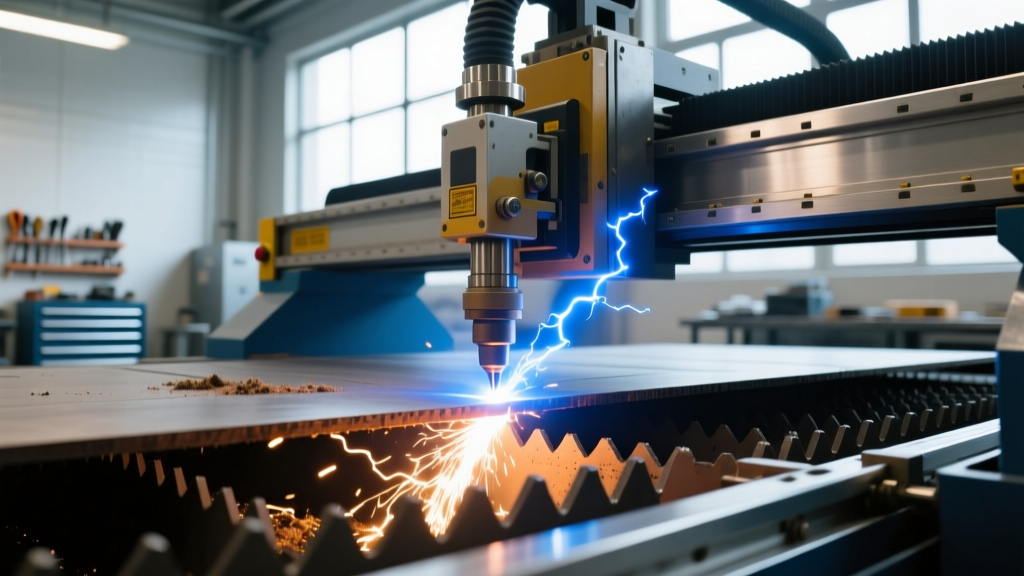
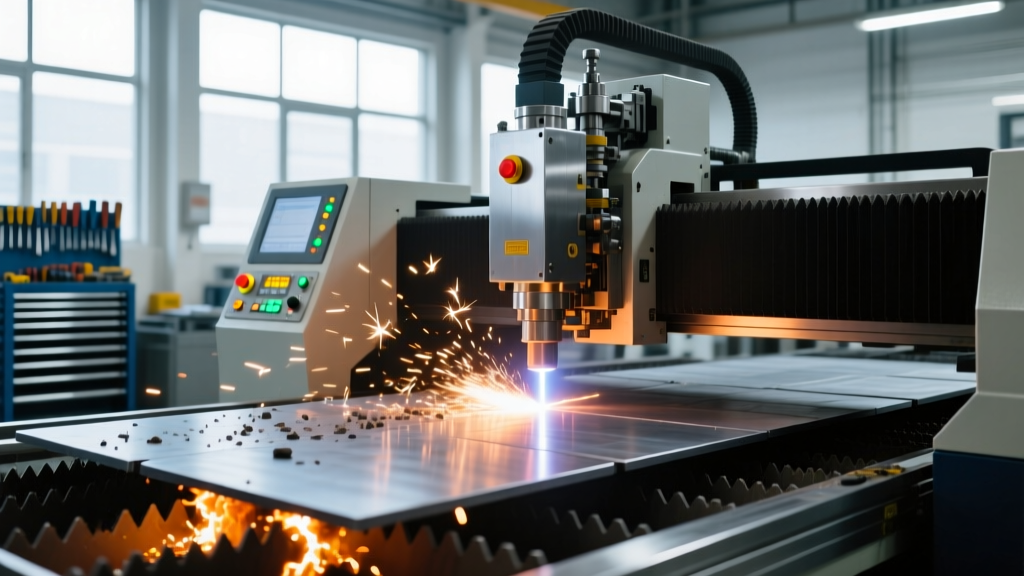
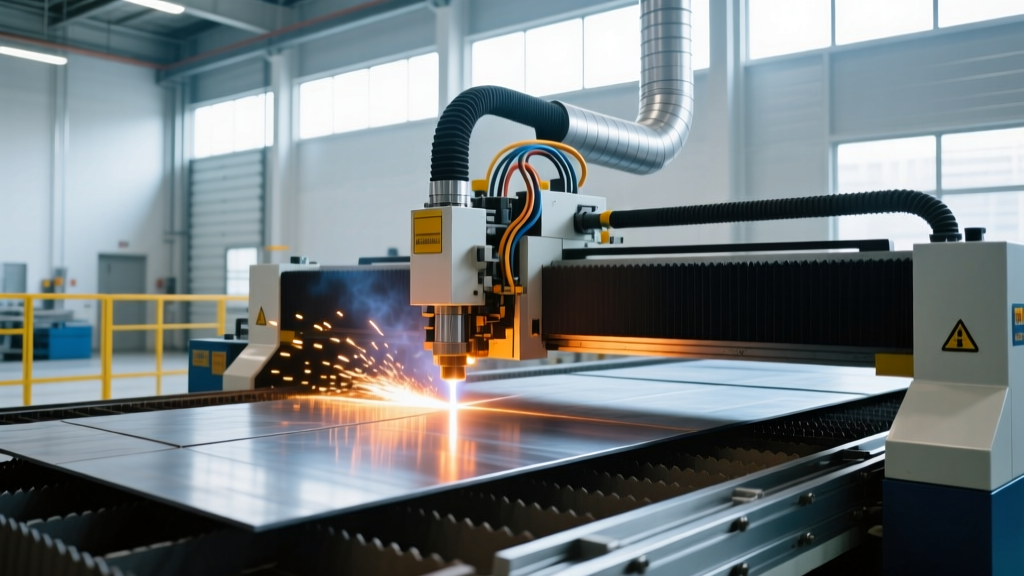
Operating a CNC machine plasma cutting system generates extreme thermal energy, intense ultraviolet (UV) radiation, and toxic metallurgical fumes. Unlike manual cutting, automated plasma tables introduce unique compliance challenges regarding unattended arc flash risks, localized fume capture, and high-frequency electrical interference. Facility managers and safety officers must align their operations with stringent federal and industry frameworks to avoid severe penalties and protect personnel.
⚠️ CRITICAL HIGH-VOLTAGE WARNINGModern high-definition plasma power supplies (such as the Hypertherm XPR300 or Lincoln Electric Torchmate systems) utilize open-circuit voltages (OCV) that frequently exceed 300V DC. Lethal arc flash and electrocution hazards exist not only at the torch but within the gantry cable carriers and power supply terminals. Strict Lockout/Tagout (LOTO) protocols are non-negotiable.
Core Regulatory Frameworks for Plasma Operations
Compliance for CNC machine plasma cutting is governed by a triad of regulatory and consensus standards. Failing to document adherence to these specific codes is the primary trigger for OSHA citations during facility audits.
| Standard / Code | Scope of Requirement | Maximum Penalty Tier (2026) |
|---|---|---|
| OSHA 1910.252 | General Welding, Cutting, and Brazing (Fire watch, PPE, transmission of UV) | $16,131 per violation |
| OSHA 1910.1026 | Hexavalent Chromium exposure limits (Stainless steel cutting) | $16,131 per violation |
| NIOSH / AWS Z49.1 | Consensus standards for ventilation design and ergonomic safety | N/A (Used as OSHA benchmark) |
Fume Extraction and Hexavalent Chromium Compliance
When a CNC plasma cutter slices through stainless steel or hard-faced alloys, the arc vaporizes chromium, creating hexavalent chromium (Cr(VI)). OSHA mandates a strict Permissible Exposure Limit (PEL) of 5 micrograms per cubic meter of air (µg/m³) calculated as an 8-hour time-weighted average (TWA).
Downdraft vs. Water Table Capture Metrics
To maintain compliance, facilities must engineer capture velocities that overcome the thermal updraft generated by the plasma arc.
- Downdraft Tables: Require a minimum capture velocity of 150 to 200 cubic feet per minute (CFM) per square foot of table surface area. For a standard 5x10 foot table, this dictates a dust collection system capable of 7,500 to 10,000 CFM, equipped with HEPA-grade cartridge filters (e.g., Camfil Gold Series) to capture sub-micron particulates.
- Water Injection Tables: Submerging the cut zone under 1/16-inch of water suppresses up to 85% of airborne fumes and dampens noise. However, cutting aluminum or magnesium underwater generates hydrogen gas. Facilities must install localized exhaust hoods above the water table to prevent hydrogen accumulation, which poses a severe deflagration risk.
Electrical Safety and High-Frequency Interference
CNC machine plasma cutting systems rely on either High-Frequency (HF) starts or pilot arc technology to initiate the plasma stream. HF starts generate massive electromagnetic interference (EMI) that can disrupt nearby CNC controllers, limit switches, and facility networks.
Electrical Compliance Checklist
- Grounding: Verify the workpiece is grounded directly to the facility's earth ground bus, independent of the building's structural steel, to prevent stray current arcing.
- OCV Limits: Ensure power supply enclosures are sealed. OSHA requires terminals exceeding 50V to be enclosed in grounded metal cabinets.
- LOTO Integration: The main power disconnect for the plasma supply must be integrated into the machine's master E-Stop circuit and padlockable for maintenance.
Acoustic Shielding and Noise Exposure
The interaction of a high-velocity plasma jet with steel generates severe acoustic noise. Cutting 1/2-inch mild steel at 200 amps routinely produces 105 to 115 dBA at the operator's station. OSHA's action level for hearing conservation is 85 dBA (TWA), and the absolute PEL is 90 dBA.
Because administrative controls (like limiting shift hours) are rarely practical for CNC operators, engineering controls are required. Facilities must install acoustic enclosures featuring mass-loaded vinyl (MLV) baffling or polycarbonate shields with a minimum Sound Transmission Class (STC) rating of 25 around the cutting envelope. Operators outside the immediate enclosure must still be provided with ANSI-approved dual-protection (earplugs plus over-ear muffs) when ambient shop noise exceeds 95 dBA.
Optical Radiation and PPE Matrix
The plasma arc emits intense UV and infrared (IR) radiation. Reflections off unfinished metals or light-colored walls can cause 'arc eye' (photokeratitis) in bystanders up to 50 feet away. Per ANSI Z87.1 and OSHA 1910.133, facilities must mandate specific shade levels based on the cutting amperage.
| Plasma Arc Current (Amps) | Minimum Required Shade | Recommended Application |
|---|---|---|
| Less than 300A | Shade 8 | Air plasma (e.g., Powermax 125) |
| 300A to 400A | Shade 9 | Conventional mechanized plasma |
| 400A to 800A | Shade 11 | High-definition (e.g., HPRXD, XPR) |
Note: Enclosing the CNC gantry in tinted polycarbonate (e.g., ArcGuard screens with a Shade 10 equivalent rating) eliminates the need for bystanders to wear personal welding helmets.
Fire Code Integration: The NFPA 35-Foot Rule
Plasma cutting expels molten slag and sparks at velocities exceeding 300 feet per second. Under NFPA 51B guidelines for hot work, a strict 35-foot radius around the CNC table must be cleared of all combustible materials. If the facility layout prevents moving combustibles beyond 35 feet, they must be protected with fire-retardant tarps (minimum ASTM E84 Class A rating).
"The most common NFPA violation in automated plasma shops is the failure to maintain a dedicated Fire Watch. Even if the CNC machine is fully automated and enclosed, a designated fire watch must monitor the area during operation and for a minimum of 60 minutes after the arc ceases to detect smoldering slag hidden in floor grates or ductwork."
Automated Suppression Systems
For high-volume facilities running unattended shifts, integrating an automated fire suppression system is a critical compliance upgrade. Optical flame sensors paired with localized CO2 or clean agent (e.g., FM-200) nozzles mounted directly to the Z-axis gantry can extinguish slag fires in milliseconds, preventing catastrophic damage to the CNC linear bearings and ball screws.
Routine Compliance Audit Protocol
To ensure continuous adherence to safety standards, facility safety managers should execute the following monthly audit protocol:
- Air Quality Sampling: Contract an industrial hygienist to perform personal breathing zone (PBZ) sampling for Cr(VI) and manganese during peak cutting shifts.
- Interlock Testing: Physically test all light curtains, safety mat interlocks, and polycarbonate door switches to ensure they instantly kill the arc and halt gantry motion.
- Consumable Inspection: Verify that torch consumables (nozzles, electrodes) are replaced before blowout occurs; a blown nozzle directs uncompressed, high-voltage plasma gas erratically, creating severe burn and electrical hazards.
Strict adherence to these engineering and administrative controls transforms a high-hazard thermal cutting process into a safe, compliant, and highly efficient manufacturing operation.