CNC Machine Laser Cutting vs Plasma & Waterjet Alternatives
Compare CNC machine laser cutting against plasma and waterjet alternatives. Analyze CapEx, OpEx, and material limits for shop floor procurement.
The Capital Expenditure Reality: Thermal Cutting Procurement
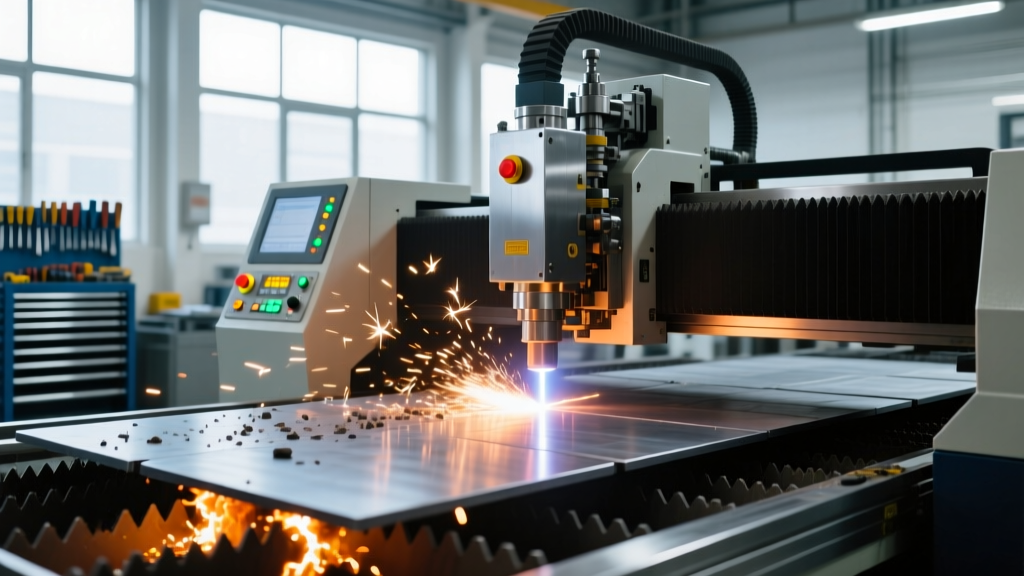
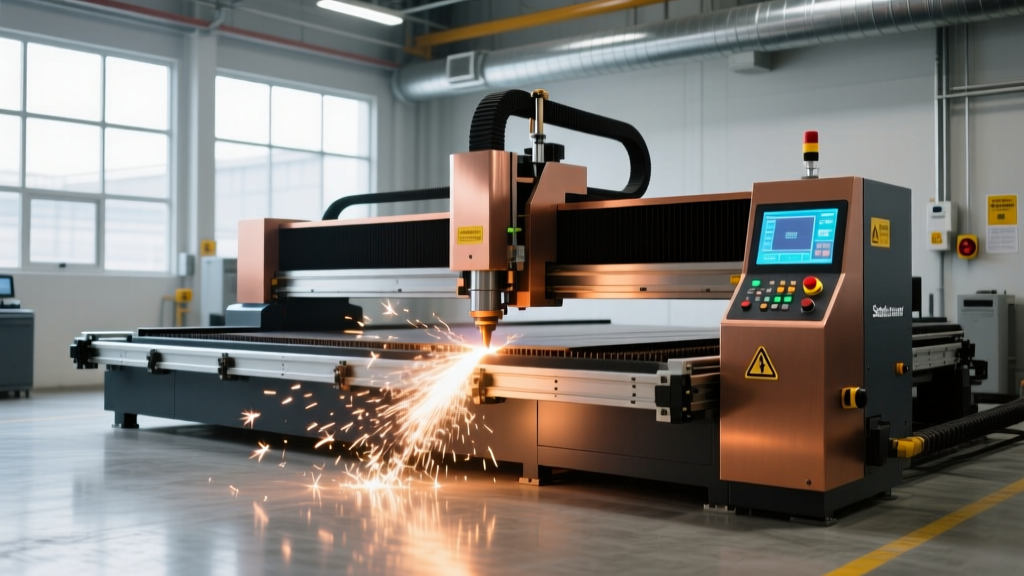
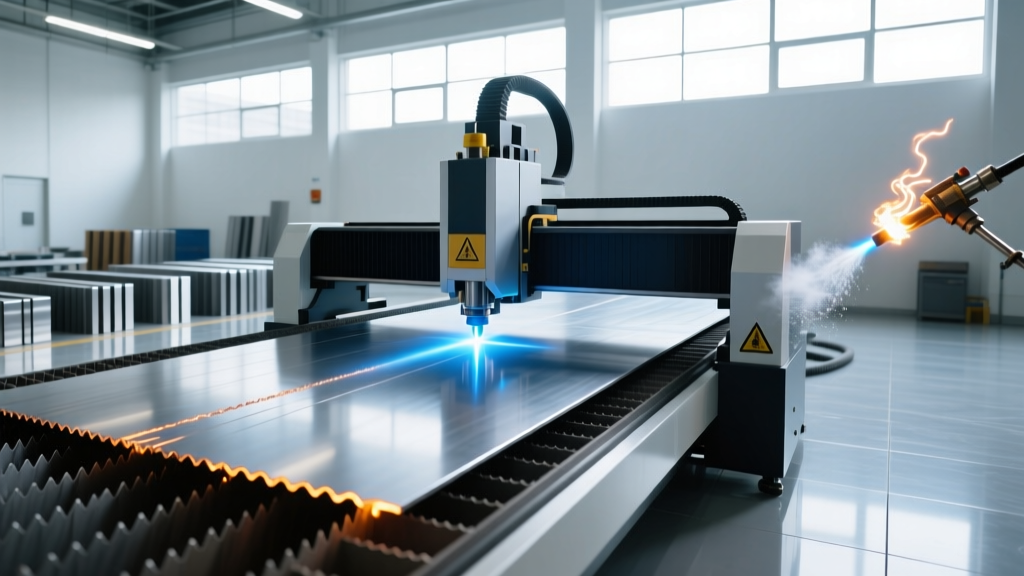
Procuring a new thermal cutting system requires navigating a complex matrix of beam sources, gantry accelerations, and consumable lifecycles. When evaluating cnc machine laser cutting systems against high-definition plasma and abrasive waterjet alternatives, shop managers must look beyond the manufacturer's brochure specifications. The decision is rarely about which machine cuts the thickest metal; it is about which process yields the lowest cost-per-part while maintaining the required edge metallurgy for downstream welding or bending.
Modern 8kW to 12kW fiber lasers have aggressively encroached on plasma's traditional market share in the 0.5-inch to 0.75-inch (12mm–19mm) mild steel range. However, high-definition plasma and cold-cutting waterjets retain distinct, irreplaceable advantages in specific edge cases, heavy plate processing, and non-ferrous material handling.
Shop Floor Decision Diagnostic
IF your primary material is 14ga to 0.5" (3.5mm–12mm) mild/stainless steel AND you require zero secondary edge cleanup → Procure an 8kW+ Fiber Laser.
IF your primary material is 0.75" to 2.5" (19mm–63mm) carbon steel AND you need 45-degree bevel capabilities for structural welding prep → Procure a 300A/400A High-Definition Plasma with True Bevel.
IF your material mix includes titanium, aerospace aluminum, or hardened tool steel AND Heat Affected Zone (HAZ) micro-cracking is a critical failure mode → Procure an Abrasive Waterjet with dynamic taper compensation.
CNC Machine Laser Cutting: Fiber Dominance and Limits
The industrial standard has decisively shifted to solid-state fiber lasers, utilizing a 1.06 µm wavelength that is absorbed by metals up to five times more efficiently than the 10.6 µm wavelength of legacy CO2 lasers. Systems equipped with IPG Photonics YLS-ECO or nLIGHT Corona sources in the 6kW to 12kW range can pierce 1-inch (25mm) mild steel using nitrogen assist gas, producing a clean, oxide-free edge.
The Reflective Metal Trap
Despite their dominance, fiber lasers face a hard physical limitation: back-reflection. When cutting highly reflective metals like copper, brass, or aluminum alloys (e.g., 5052-H32), the unabsorbed beam can reflect back into the fiber delivery cable, destroying the cutting head optics. While modern systems utilize anti-reflective coatings and beam oscillation techniques to mitigate this, shops processing high volumes of 0.25-inch (6mm) copper busbars will experience severe consumable degradation and unplanned downtime. According to research published by The Fabricator, shops heavily invested in reflective aerospace alloys often find waterjets to be a more reliable, albeit slower, alternative.
Kerf Width and Nesting Efficiency
Fiber lasers excel in material utilization. The kerf width on an 8kW laser cutting 0.25-inch steel is typically 0.15mm to 0.25mm. When paired with advanced nesting software like SigmaNEST, shops can achieve material utilization rates exceeding 85%, drastically reducing scrap costs compared to plasma's 2mm to 3mm kerf.
Evaluating the Alternatives
High-Definition CNC Plasma: The Heavy Plate Workhorse
When material thickness exceeds 1 inch (25mm), the economics of laser cutting collapse. The assist gas consumption (liquid nitrogen or oxygen) required to pierce and cut 1.5-inch plate with a laser is exorbitant, and pierce times can exceed 15 seconds per hole. High-definition plasma systems, such as the Hypertherm XPR300 or Kaliburn Spirit, slice through 1.5-inch mild steel in a fraction of the time with a fraction of the energy cost.
- Bevel Cutting: Plasma is the undisputed king of weld prep. 5-axis plasma heads can cut complex Y, V, and K bevels directly on the machine, eliminating secondary milling operations required for structural steel fabrication.
- Consumable Realities: Plasma requires frequent consumable changes. An electrode and nozzle set on a 300A system cutting mild steel with oxygen typically lasts 40 to 80 pierces. Shops must budget $3 to $5 per hour strictly for consumables.
- HAZ and Dross: Plasma generates a significant Heat Affected Zone (up to 3mm wide on thick plate) and often leaves low-speed dross that requires manual grinding before welding. For detailed guidance on mitigating plasma dross, operators should consult the Hypertherm Learning Center.
Abrasive CNC Waterjet: The Cold-Cutting Specialist
Waterjets utilize a 90,000 PSI stream of water mixed with 80-mesh garnet abrasive to erode material. Because it is a mechanical erosion process rather than a thermal one, it produces absolutely zero HAZ. This is non-negotiable for cutting tempered steels, aerospace titanium (Ti-6Al-4V), or thick plastics where thermal melting or edge hardening would compromise the part's structural integrity.
The primary drawback is speed and operating expense. A 50HP waterjet cutting 1-inch stainless steel will move at approximately 4 to 6 inches per minute (IPM), whereas an 8kW fiber laser would cut the same profile at 80 to 100 IPM. Furthermore, the cost of garnet abrasive and high-pressure pump maintenance (replacing seals, check valves, and focusing tubes every 40-80 hours) pushes the hourly operating cost to $40–$55.
Total Cost of Ownership (TCO) Matrix
Understanding the true cost per hour requires analyzing both fixed capital expenditures and variable operational costs. The table below outlines realistic 2026 market figures for mid-sized industrial formats (e.g., 5' x 10' cutting beds).
| Metric | 8kW Fiber Laser | HD Plasma (300A) | Abrasive Waterjet (50HP) |
|---|---|---|---|
| CapEx (Base System) | $220,000 - $310,000 | $65,000 - $110,000 | $140,000 - $210,000 |
| Hourly OpEx (Excl. Labor) | $8 - $14 | $15 - $22 | $35 - $55 |
| Primary Consumable Life | 2,000+ hrs (Protective windows/nozzles) | 40 - 80 hrs (Electrodes/Nozzles) | 2 - 4 hrs (Focusing tubes/Orifices) |
| Peak Power Draw | 25 - 35 kW | 40 - 60 kW | 35 - 45 kW |
| Max Optimal Thickness (Mild Steel) | 0.75" (19mm) | 2.5" (63mm) | 6.0"+ (150mm+) |
Edge Case Troubleshooting: When Processes Fail
Even with the correct machine selected, shops encounter specific failure modes that require process adjustments or alternative routing.
Warning: Laser Piercing Spatter on Thick Plate
When using a fiber laser to pierce 0.75-inch mild steel with oxygen, the exothermic reaction often causes molten spatter to erupt upward, coating the protective window of the cutting head. This leads to immediate lens burnout. Fix: Implement a multi-stage "fly-pierce" or low-power pulse pierce sequence in your CNC controller, and ensure a minimum 1.5-inch lead-in distance from the pierce point to the actual cut path.
Waterjet Taper on Precision Aerospace Parts
Because the abrasive stream naturally flares out as it exits the focusing tube, waterjets produce a V-shaped taper (wider at the top, narrower at the bottom). On 2-inch thick titanium, this taper can exceed 0.015 inches, rendering parts out of tolerance for tight press-fits. Fix: Shops must invest in waterjets equipped with dynamic taper compensation heads (e.g., Flow Dynamic Waterjet or OMAX Tilt-A-Jet), which physically tilt the cutting head up to 9 degrees to mechanically cancel out the kerf taper, holding tolerances to ±0.003 inches.
Plasma Nitride Contamination on Stainless Steel
Cutting 304 or 316 stainless steel with plasma using standard air or nitrogen as the plasma gas creates a chromium-depleted zone and hard nitride dross on the cut edge. This edge will micro-crack if subsequently TIG welded. Fix: Utilize an F5 (5% hydrogen, 95% nitrogen) gas mix for the plasma stream and H35 (35% hydrogen, 65% argon) for the shield gas. This specific combination yields a bright, oxide-free edge on stainless up to 0.5 inches thick, entirely eliminating the need for secondary edge grinding prior to welding.
Final Procurement Directives
The selection of a thermal cutting platform must be dictated by your shop's specific material thickness distribution and downstream processing requirements. If 80% of your volume falls below 0.5 inches and requires immediate press-brake bending without edge de-burring, an 8kW to 12kW cnc machine laser cutting system is the only economically viable choice. However, if your workflow involves heavy structural weld-prep, mixed exotic alloys, or strict HAZ limitations, relegating laser technology to the sidelines in favor of advanced 5-axis plasma or dynamic waterjet systems will yield a superior return on investment and drastically reduce secondary finishing labor.