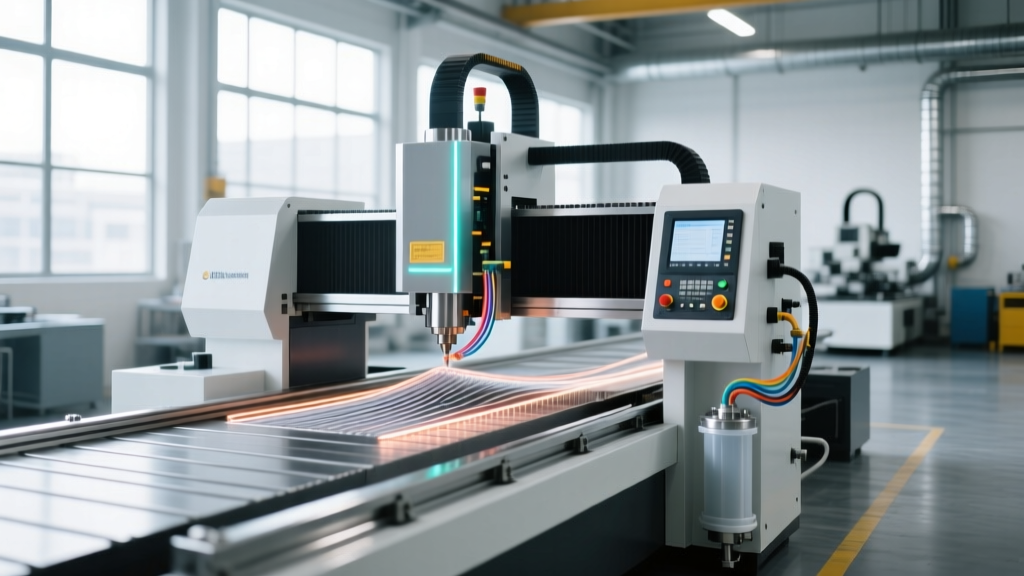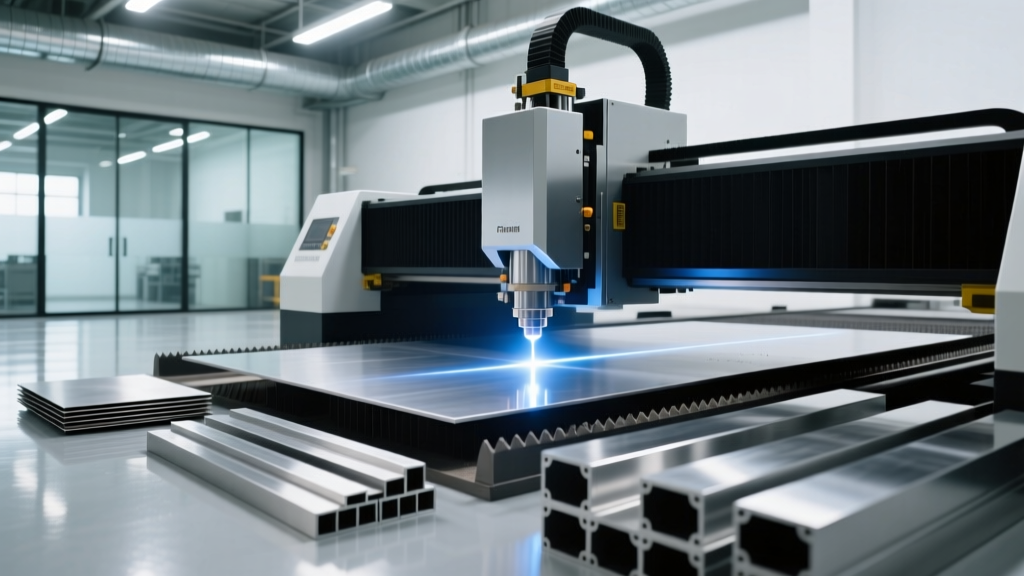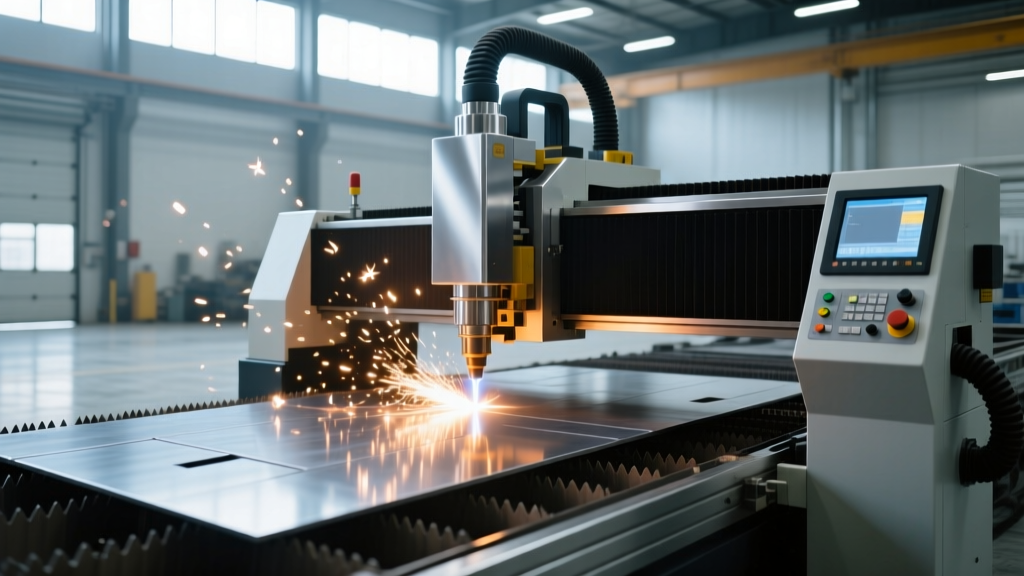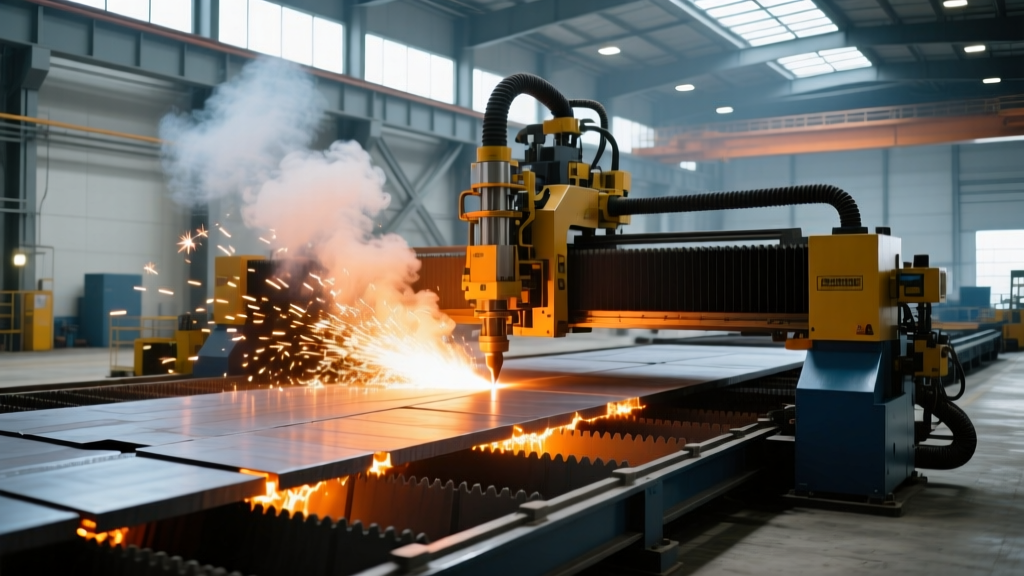
CNC Flame Cutting Machine ROI in Heavy Shipbuilding Case Studies
Analyze real-world ROI and operational metrics of deploying a CNC flame cutting machine in heavy shipbuilding and thick-plate mining fabrication.
The Metallurgical Ceiling: Why Heavy Industry Relies on Oxy-Fuel
When plate thickness exceeds 2 inches (50mm), high-definition plasma and laser systems hit a metallurgical and economic ceiling. The kerf widens, bevel angles degrade, and consumable costs skyrocket. For heavy shipbuilding, offshore rig construction, and mining equipment fabrication, the CNC flame cutting machine remains the undisputed standard for processing carbon steel up to 12 inches (300mm) thick. Unlike plasma, which relies on an electrical arc to melt metal, oxy-fuel cutting utilizes a chemical reaction—preheating the steel to its ignition temperature (approximately 1,600°F to 1,800°F) and then introducing a high-pressure stream of pure oxygen to oxidize and blow away the molten slag.
2026 Heavy-Duty Gantry Pricing & Specs Snapshot
- Machine Footprint: 12ft x 24ft dual-side drive gantry
- Configuration: 4x Oxy-fuel torches + 1x Plasma marking torch
- CNC Controller: Hypertherm Edge Connect or Lincoln Electric CNC
- Capital Expenditure (2026): $115,000 – $165,000 USD (fully installed with fume extraction)
- Operating Cost: $0.12 – $0.18 per linear foot (1.5-inch A36 steel, including gas and consumables)
Case Study 1: Multi-Torch Gantry Deployment in AH36 Hull Fabrication
A mid-sized Pacific Northwest shipyard recently upgraded their thick-plate processing line to accommodate a new contract for 10,000-ton displacement offshore supply vessels. The primary material was AH36 shipbuilding steel, ranging from 1.25 inches to 2.5 inches in thickness. The shipyard required continuous 30-degree V-groove bevels on all hull plate edges to prepare for automated Submerged Arc Welding (SAW).
By deploying a heavy-duty CNC flame cutting machine equipped with a 3-axis bevel head and three standard straight torches, the facility achieved a 300% increase in throughput compared to their legacy manual track-cutters. The bevel head utilized a capacitive height sensor to maintain a strict 0.060-inch standoff distance over warped plates, while the trailing straight torches mirrored the primary cut path to yield four identical plates simultaneously.
Consumable Economics and Fuel Gas Selection
The shipyard's engineering team conducted a 90-day A/B test comparing acetylene and propane as fuel gases. While acetylene offers a hotter inner flame cone (reducing initial pierce time by roughly 15%), propane proved vastly superior for continuous CNC automation on plates over 1 inch thick.
| Metric | Acetylene (C2H2) | Propane (C3H8) |
|---|---|---|
| Flame Temperature (with O2) | ~5,720°F | ~5,190°F |
| Outer Flame Heat Volume | Low (Concentrated) | High (Broad Envelope) |
| Top-Edge Melt Risk (1.5"+ Plate) | High | Minimal |
| Consumable Tip Life | 40–60 pierces | 150–200 pierces |
| Fuel Cost (per 100 lbs) | $210 – $260 | $45 – $65 |
Because propane releases more total heat in its outer flame envelope, it preheats a wider cross-section of thick steel. This prevents the top edge from melting away before the bottom edge reaches ignition temperature, resulting in a square, sharp top edge that requires zero post-cut grinding before welding. According to The Welding Institute (TWI), the broader preheat envelope of propane is the recommended standard for mechanized cutting of thick carbon steels.
Case Study 2: 4-Inch HARDOX Chassis Cutting for Mining Excavators
Fabricating heavy mining excavator chassis requires cutting wear-resistant steels like HARDOX 450 in thicknesses up to 4 inches. A specialized heavy-equipment OEM in Western Australia utilized a custom CNC flame cutting machine to process these abrasion-resistant plates. The primary challenge with HARDOX is carbon migration and edge hardening caused by excessive thermal input.
To mitigate the Heat-Affected Zone (HAZ) brittleness, the OEM programmed a specific pre-heat dwell time into the CNC controller. Instead of moving the torch immediately upon ignition, the machine held the preheat flames stationary for 12 seconds to allow the thermal gradient to equalize through the 4-inch depth. Furthermore, they reduced the cutting oxygen pressure from the standard 80 PSI down to 55 PSI, and slowed the travel speed to 6 inches per minute. This produced a smoother kerf with minimal drag lines and prevented the formation of micro-cracks in the HAZ, a critical failure point in high-vibration mining environments.
'When automating oxy-fuel cuts on high-carbon or wear-resistant steels, the cut speed is dictated not by how fast the machine can move, but by how fast the oxidation reaction can propagate through the Z-axis without stalling. Pushing the feed rate on 4-inch plate will result in incomplete penetration and catastrophic slag re-welding in the kerf.' — Senior Process Engineer, Heavy Fabrication Division
Critical Engineering Nuance: Height Control in Flame Automation
One of the most costly mistakes fabricators make when transitioning from plasma to flame is misunderstanding Torch Height Control (THC). High-definition plasma systems rely on Arc Voltage Height Control (AVHC), which measures the voltage drop of the electrical arc to maintain the torch-to-work distance.
An oxy-fuel torch does not generate an electrical arc. If a CNC flame cutting machine is equipped with an AVHC, the system will fail to read voltage, assume the torch is too high, and rapidly drive the torch nozzle directly into the steel plate, destroying the tip and potentially damaging the gantry Z-axis motor.
Therefore, automated oxy-fuel systems must utilize one of two alternative height control methods:
- Capacitive Height Sensing: A sensor ring surrounds the copper nozzle and measures the electrical capacitance between the torch and the grounded steel plate. This provides non-contact, real-time Z-axis adjustment and is the mandatory standard for bevel-cutting and warped plates.
- Mechanical Float Switches: A physical probe or pneumatic cylinder touches the plate at the start of the cut to establish the Z-zero datum. This is acceptable for flat, pristine plates but fails when cutting grates or heavily warped ship hulls.
Decision Matrix: Oxy-Fuel vs. High-Definition Plasma
Selecting the right thermal process requires an objective look at material thickness, edge quality requirements, and operational budgets. Use the following matrix to determine if a CNC flame cutting machine is the correct capital investment for your facility.
| Operational Parameter | CNC Oxy-Fuel Cutting | High-Definition Plasma |
|---|---|---|
| Optimal Thickness Range | 1.0 inch to 12.0 inches | 0.25 inch to 2.0 inches |
| Material Compatibility | Carbon Steel ONLY | Carbon, Stainless, Aluminum |
| Pierce Time (1.5" Steel) | 15 – 22 seconds | 2 – 4 seconds |
| Kerf Width (1.5" Steel) | 0.120" – 0.150" | 0.180" – 0.250" (severe bevel) |
| Edge Squareness on Thick Plate | Excellent (1° – 3° bevel) | Poor (5° – 12° natural bevel) |
| Capital Equipment Cost | Low to Moderate | High to Extreme |
Preventative Maintenance Framework for Automated Torches
To maintain the tight tolerances required for weld-prep beveling, facility maintenance teams must adhere to a strict preventative schedule. Miller Electric's operational guidelines emphasize that gas regulation and tip cleanliness are the primary variables in cut consistency.
- Daily: Inspect flashback arrestors on both oxygen and fuel gas lines. Test the reverse-flow check valves. Clean the preheat holes on the copper nozzle using brass tip cleaners (never steel files, which can alter the gas flow dynamics).
- Weekly: Calibrate the capacitive height sensor using a feeler gauge block to ensure the Z-axis is maintaining the exact 0.060-inch standoff. Verify that the cutting oxygen pressure at the torch manifold matches the OEM specification (usually within +/- 2 PSI of the rated pressure).
- Monthly: Replace all Teflon seating washers inside the torch head. Micro-leaks in the mixing chamber will cause internal flashbacks or erratic preheat flames that ruin pierce consistency.
By respecting the chemical limits of the oxy-fuel process and investing in precise CNC automation, heavy fabricators can achieve an ROI that plasma and laser systems simply cannot match in the extreme thick-plate sector.