What Is a CNC Machine Operator? Comparing Roles and Alternatives
Discover what a CNC machine operator does and compare the role against manual machinists, CNC programmers, and setup technicians to find your ideal path.
Defining the Role: What Is a CNC Machine Operator?
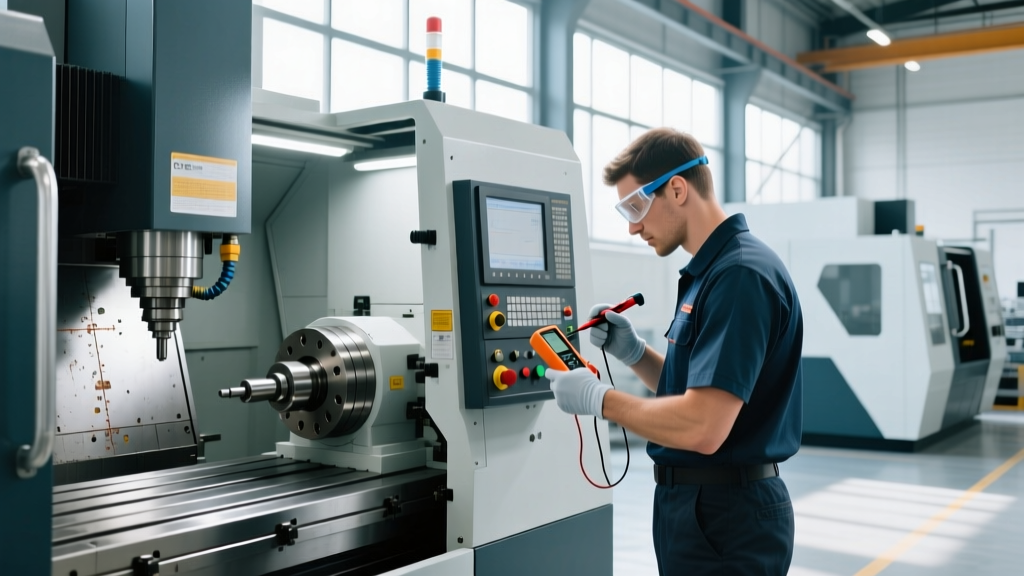
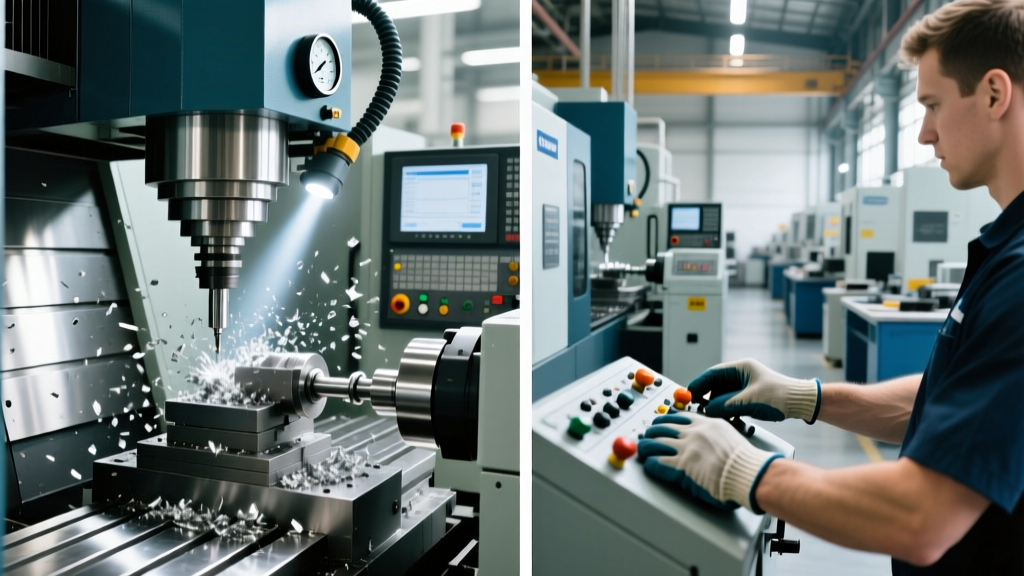
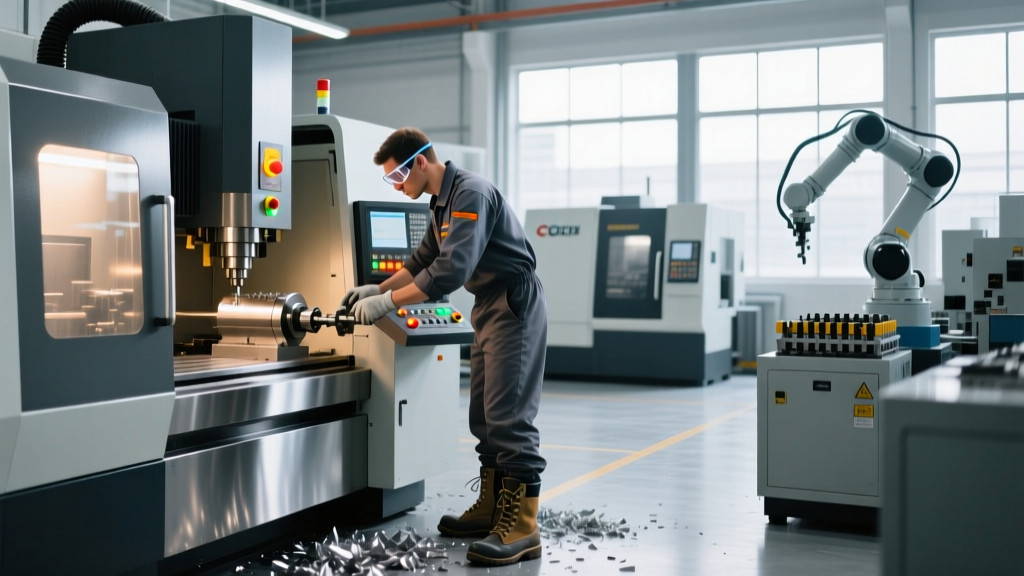
To answer the fundamental question—what is a CNC machine operator—we must look past the outdated stereotype of a simple 'button pusher.' A CNC (Computer Numerical Control) machine operator is a specialized manufacturing professional responsible for executing automated machining cycles, managing raw material loading, and performing rigorous in-process quality inspections on computer-controlled mills, lathes, and multi-axis turn-mill centers.
Core Definition
A CNC operator ensures that pre-programmed G-code and M-code instructions are executed safely and accurately. While they typically do not write the initial CAM toolpaths, they are the final line of defense against scrap parts, utilizing precision metrology and controller offsets to maintain tolerances often as tight as ±0.0005 inches.
However, the manufacturing floor is not a monolith. Understanding what a CNC operator does requires comparing the position to its closest alternatives: the Manual Machinist, the CNC Setup Technician, and the CNC Programmer. Each role demands a different technical ceiling, salary trajectory, and daily workflow.
CNC Operator vs. Manual Machinist: A Direct Comparison
Before automated controls dominated the shop floor, manual machinists were the standard. Today, both roles exist, but their applications have diverged significantly.
| Feature | CNC Machine Operator | Manual Machinist |
|---|---|---|
| Primary Equipment | Haas VF-2, DMG MORI NLX, Mazak INTEGREX | Bridgeport Series I, South Bend Heavy 10 Lathe |
| Core Skillset | Cycle management, wear offset adjustment, GD&T inspection | Handwheel feel, manual feed rates, DRO operation, tool grinding |
| Production Volume | Medium to High (100 to 10,000+ parts) | One-offs, prototypes, and toolroom repair |
| Automation Level | High (Robotic part loaders, pallet changers) | Zero (100% human kinetic input) |
While manual machinists rely on tactile feedback and hand-cranked dials to cut metal, CNC operators rely on digital interfaces like the Fanuc 0i-F Plus or Siemens Sinumerik ONE controllers. The manual machinist builds the part from scratch; the CNC operator manages the machine that builds the part.
Exploring the Alternatives: Setup Techs and Programmers
If the standard CNC operator role feels too repetitive, or if you want to understand the hierarchy of the shop floor, you must look at the immediate alternatives and upward career steps.
1. The CNC Setup Technician (The Bridge)
A setup technician takes a machine from a 'blank' state to production-ready. While an operator loads parts and checks dimensions, the setup tech is responsible for:
- Work Coordinate Systems (WCS): Indicating the vise or fixture and setting the G54-G59 offsets.
- Tool Length Offsets (TLO): Touching off every tool in the carousel to establish the Z-axis datum.
- Proving Out Programs: Running the first article using single-block execution and dry runs to ensure the CAM-generated toolpaths do not result in a spindle crash.
Career Verdict: Choose setup if you enjoy problem-solving, reading complex blueprints, and don't mind getting your hands dirty changing out worn carbide inserts and indicating fixtures with Fowler dial indicators.
2. The CNC Programmer (The Architect)
The programmer rarely touches the physical machine. They operate in the front office using CAM (Computer-Aided Manufacturing) software like Mastercam 2026, Fusion 360, or Siemens NX. Their job is to translate 3D CAD models into efficient, crash-free G-code.
- Feeds and Speeds: Calculating exact spindle RPM and feed rates based on material hardness (e.g., adjusting surface feet per minute for 6061-T6 aluminum vs. 316L stainless steel).
- Toolpath Strategy: Deciding between adaptive clearing (dynamic milling) and traditional offset milling to maximize tool life and minimize cycle times.
Career Verdict: Choose programming if you prefer software, 3D geometry, and process optimization over physical labor and shop-floor noise.
2026 Salary and Career Trajectory Matrix
Compensation in machining is heavily dictated by your proximity to the 'brain' of the operation. According to data trends tracked by the Bureau of Labor Statistics (BLS) and adjusted for the ongoing skilled trades shortage, here is how the financial alternatives stack up in 2026.
| Role | Est. Base Salary Range | Overtime Potential | Ceiling / Next Step |
|---|---|---|---|
| CNC Operator | $42,000 - $58,000 | High (Shift diffs, weekend runs) | Setup Technician |
| Manual Machinist | $48,000 - $68,000 | Moderate | Toolroom Manager / Prototype Lead |
| CNC Setup Tech | $58,000 - $78,000 | Moderate | Lead Machinist / Shop Foreman |
| CNC Programmer | $75,000 - $105,000+ | Low (Usually salaried/exempt) | Manufacturing Engineer / CAM Director |
How to Choose Your Path: A Decision Framework
If you are trying to decide which machining career path to pursue, use this practical framework to align your natural aptitudes with the right role.
The Machining Career Decision Tree
- IF you want to enter the workforce quickly, prefer physical activity, and want a highly structured, repeatable daily routine → Start as a CNC Operator.
- IF you love tactile feedback, enjoy working on unique, one-off problems daily, and appreciate the history of metalworking → Pursue Manual Machining (Toolroom/Die-making).
- IF you like being the 'go-to' problem solver, enjoy reading complex schematics, and want a high hourly wage without sitting at a desk → Aim for CNC Setup Technician.
- IF you excel at 3D spatial reasoning, prefer software environments, and want to optimize macro-level manufacturing efficiency → Target CNC Programming / CAM Engineering.
Industry Certifications That Accelerate Your Transition
Moving from a basic CNC operator to a setup tech or programmer requires verifiable skills. According to the O*NET OnLine database for machining professionals, employers heavily weight candidates who hold standardized credentials. The most recognized authority in the United States is the National Institute for Metalworking Skills (NIMS).
If you are currently an operator looking to pivot, prioritize these specific NIMS credentials:
- CNC Milling: Operations (Level 1 & 2): Proves you can safely operate, perform basic offsets, and maintain 3-axis vertical machining centers.
- CNC Turning: Setup: Validates your ability to indicate chucks, set tool offsets, and prove out first-article parts on CNC lathes.
- Measurement, Materials & Safety: A foundational prerequisite that proves your competency with micrometers, calipers, and shop safety protocols.
Understanding what a CNC machine operator does is only the first step. By comparing the role against manual machining, setup, and programming, you can strategically map out a career that maximizes both your earning potential and your daily job satisfaction on the modern manufacturing floor.