2026 Tech Trends Reshaping the CNC Mill Machine Operator Role
Discover how AI, IoT, and cobots are transforming the CNC mill machine operator role in 2026, including new skill requirements, salary shifts, and software.
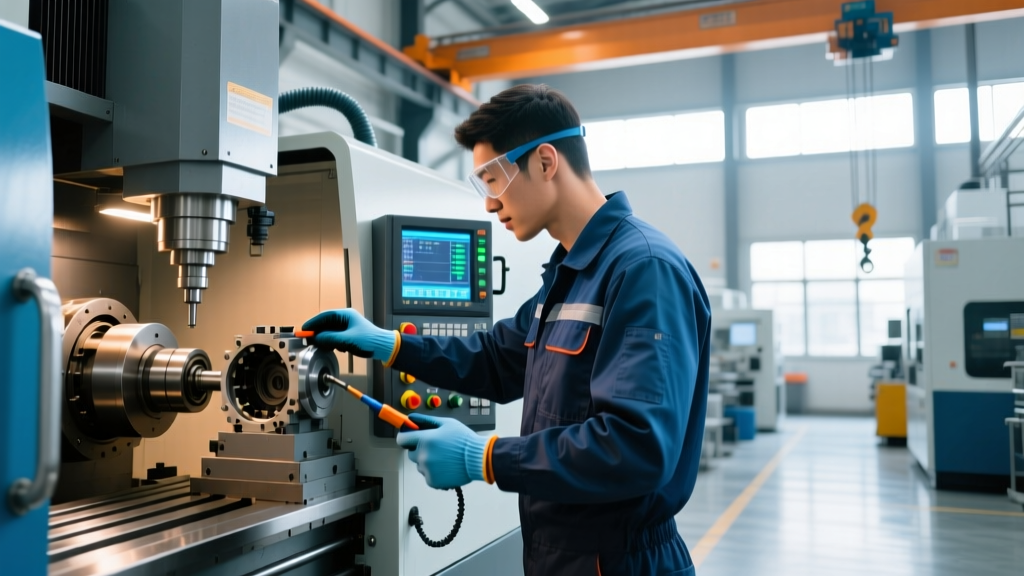
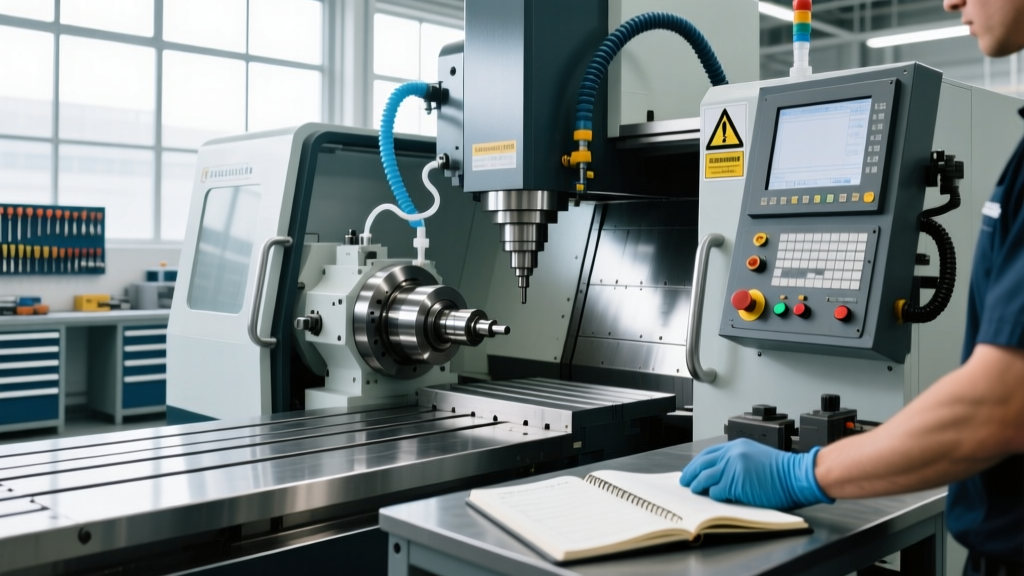
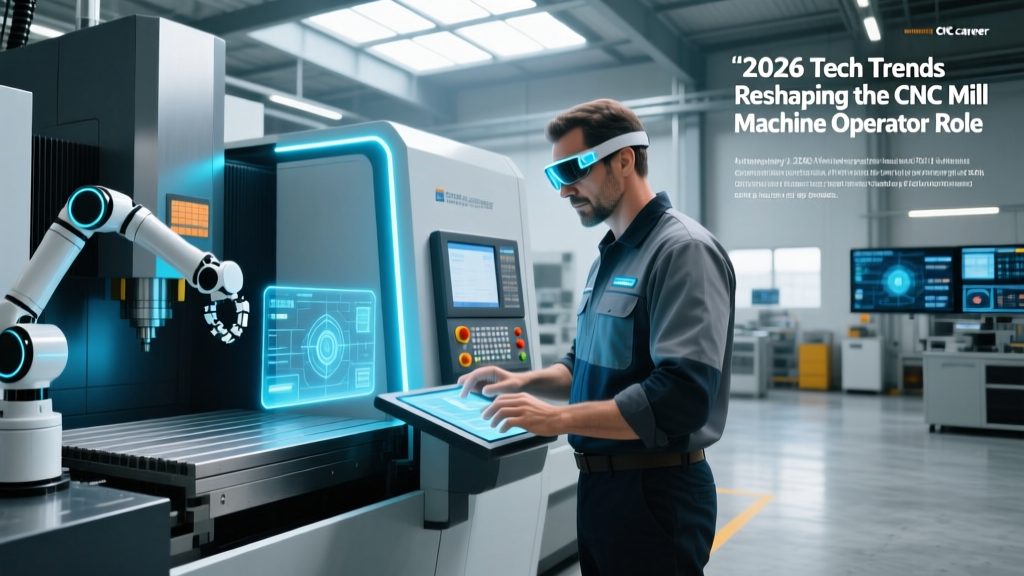
The modern shop floor in 2026 looks vastly different from the manual dial-turning environments of the past decade. For the contemporary cnc mill machine operator, the job has transitioned from purely mechanical setup and G-code editing to managing a networked fleet of smart machinery, collaborative robots, and AI-driven CAM software. As manufacturing faces a persistent skilled labor shortage, shops are investing heavily in automation, fundamentally altering what it means to run a vertical or horizontal machining center.
AI-Driven Toolpathing and CAM Integration
Historically, operators spent hours at the machine control tweaking feeds, speeds, and G-code macros to optimize cycle times and prevent tool breakage. Today, AI-integrated CAM platforms like Mastercam 2026 and Autodesk Fusion have shifted this burden to the software layer. These systems utilize generative toolpath algorithms that analyze tool engagement angles, dynamically adjusting chip thickness and feed rates in real-time.
For example, when roughing a pocket in 6061-T6 aluminum with a 1/2-inch 4-flute carbide end mill, AI-driven Dynamic Motion technology automatically reduces the feed rate during high-engagement cornering and accelerates through low-engagement straightaways. The operator's role is no longer to manually calculate these variances but to validate the CAM simulation, verify tool holder clearance, and ensure the machine's high-speed look-ahead buffer (often exceeding 2,000 blocks on modern Haas NGC or Fanuc 31i controls) is properly configured to handle the complex, micro-segmented code generated by the AI.
⚠️ The 'Lights-Out' Reality Check
Despite advances in automation, true 'lights-out' (fully unattended) machining remains rare for complex, high-tolerance aerospace and medical parts. Thermal growth, unpredictable material hardness variations in castings, and micro-welding on cutting edges still require human oversight. The operator has not been replaced; they have been promoted to a 'fleet manager' overseeing multiple automated cells simultaneously.
Collaborative Robots in Material Handling
Material handling has traditionally been the most physically taxing and time-consuming aspect of milling operations. In 2026, the integration of collaborative robots (cobots) directly into the milling cell is standard practice for mid-to-high volume production. Operators are now expected to program and maintain these systems.
A common setup involves a Universal Robots UR10e cobot (capable of a 12.5 kg payload and 1300 mm reach) paired with a Haas VF-2SS and an Automatic Parts Loader (APL). The cnc mill machine operator must understand how to map the cobot's waypoints, configure the end-of-arm tooling (EOAT) vacuum grippers for specific part geometries, and set up the safety laser scanners that dictate the robot's speed reduction zones when a human enters the cell. Troubleshooting a dropped part often requires the operator to adjust the pneumatic vacuum delay timers in the cobot's logic tree rather than simply repositioning a manual vice.
IoT Telemetry and Acoustic Chatter Detection
The Internet of Things (IoT) has turned the CNC mill into a massive data-generating node. Using the MTConnect open-source protocol, modern machines stream real-time telemetry—including spindle load, axis servo lag, and coolant pressure—to centralized dashboard platforms like MachineMetrics or Scytec.
Predictive Maintenance via Acoustic Sensors
One of the most critical technological leaps for operators is the use of acoustic emission sensors (such as Caron Engineering's DTect-IT systems) mounted directly to the spindle housing. These sensors listen to the high-frequency vibrations generated during the cut. When an operator notices a spike in the acoustic harmonic signature on their tablet, it indicates the onset of tool chatter or edge chipping long before it is visible to the naked eye or audible over the shop noise. By intervening at this micro-stage, the operator prevents catastrophic tool failure that could scrap a $40,000 titanium forging or damage the machine's spindle taper.
| Skill Domain | Traditional Operator (Pre-2020) | Tech-Integrated Operator (2026) |
|---|---|---|
| Toolpath Optimization | Manual G-code editing, trial-and-error feed adjustments | Validating AI-generated CAM simulations, managing look-ahead buffers |
| Material Handling | Manual loading/unloading, crane operation, vice clamping | Programming cobot waypoints, configuring EOAT vacuum grippers |
| Tool Wear Monitoring | Visual inspection, listening for chatter, tracking part counts | Analyzing MTConnect spindle load variance and acoustic harmonic data |
| Quality Assurance | Manual micrometers, calipers, post-process CMM inspection | Managing in-cycle Renishaw probing routines and closed-loop tool offset updates |
Compensation, Certifications, and the Skills Premium
The integration of advanced technology has created a distinct bifurcation in operator compensation. Shops are paying a significant premium for operators who can bridge the gap between mechanical machining and digital systems management.
"The baseline salary for a traditional manual loader and button-pusher has plateaued around $52,000 to $60,000. However, a tech-integrated cnc mill machine operator who can troubleshoot a UR10e communication fault, optimize an MTConnect dashboard, and program macro-level probing cycles is commanding between $82,000 and $98,000 in major aerospace hubs."
— 2026 Manufacturing Workforce Compensation Report
To capture this premium, operators are pursuing advanced credentials. The National Institute for Metalworking Skills (NIMS) now offers specialized endorsements in Multi-Axis CNC Milling and Smart Manufacturing integration. Similarly, the Society of Manufacturing Engineers (SME) provides the Certified Manufacturing Technologist (CMfgT) credential, which heavily weights IoT data interpretation and automated cell management.
The 90-Day Upskilling Roadmap for Current Operators
For operators looking to transition from legacy machining to a tech-integrated role, a structured upskilling approach is required. Focus on these three high-impact areas over a 90-day period:
- Days 1-30: Master In-Cycle Probing and Macro Variables. Move beyond manual part zeroing. Learn to write and edit Fanuc/Haas custom macro B variables (e.g.,
#100through#199) to automate tool wear compensation based on Renishaw OMP60 probe measurements taken mid-cycle. - Days 31-60: MTConnect Data Literacy. Familiarize yourself with the MTConnect XML data schema. Learn how to set up basic dashboards that track Overall Equipment Effectiveness (OEE) and flag spindle load deviations exceeding 15% of the baseline average for a specific tool.
- Days 61-90: Cobot Logic and Safety Mapping. Utilize free offline simulators from major cobot manufacturers to practice waypoint programming. Focus specifically on configuring payload mass and center of gravity (CoG) parameters, which are critical for preventing joint torque faults during high-speed part transfers.
The evolution of the cnc mill machine operator is not a story of human replacement, but of human elevation. By mastering the digital and robotic tools now prevalent on the shop floor, operators secure their position as the indispensable architects of modern manufacturing efficiency.