Is CNC Machining a Good Career? The Maintenance Reality
Evaluating if CNC machining is a good career through the lens of machine maintenance schedules, salary tiers, and technical skill requirements.
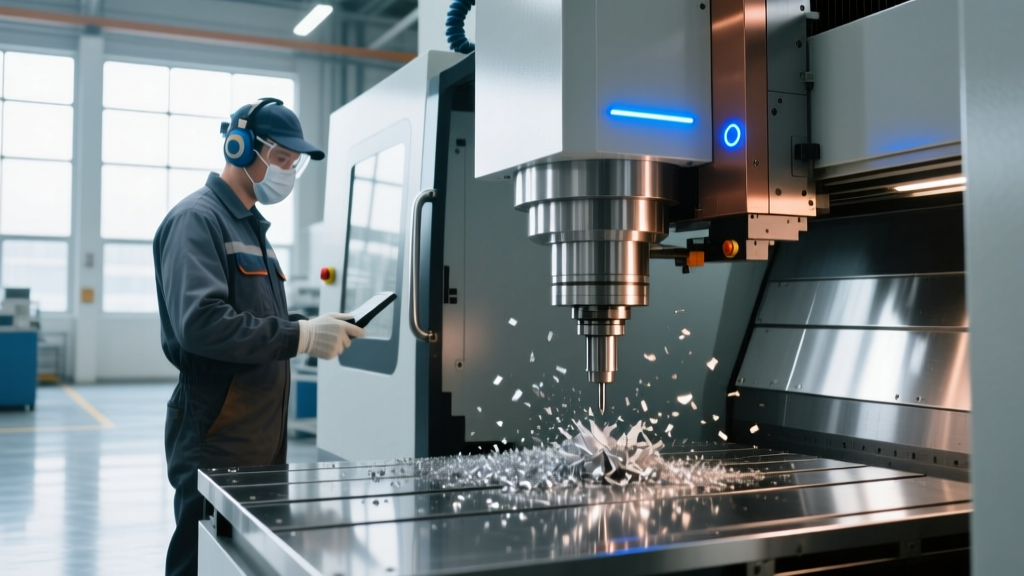
When aspiring manufacturing professionals ask, is cnc machining a good career, they typically envision the thrill of programming complex 5-axis toolpaths, watching titanium chips fly, and holding tolerances under a tenth of a thousandth. However, the reality of a sustainable, high-paying career on the shop floor is inextricably linked to a less glamorous but equally critical discipline: rigorous machine maintenance and service schedules.
In 2026, the modern CNC shop floor is populated by million-dollar assets like the Mazak VCN-530C and Haas UMC-750. Shop owners cannot afford to treat these machines as disposable tools. Consequently, the machinists who command the highest salaries and experience the most job security are not just button-pushers; they are proactive asset managers. Understanding the maintenance burden is essential to accurately evaluating the long-term viability of this trade.
The 2026 Career Reality Check
According to the U.S. Bureau of Labor Statistics, the median pay for machinists hovers around $54,000 annually. However, machinists who master preventative maintenance and transition into CNC Maintenance Technicians or Lead Setup Machinists frequently push past the $95,000 to $115,000 threshold. The skills gap in manufacturing heavily penalizes shops that neglect maintenance, making maintenance-literate operators highly prized.
The Daily Grind vs. The Maintenance Mindset
An entry-level operator views a CNC machine as a black box: load material, press cycle start, unload part. When the machine alarms out or surface finishes degrade, they call for help. A career-minded machinist views the machine as a mechanical ecosystem. They understand that a sudden spike in spindle load or a subtle change in the way lube pump's cycling frequency is an early warning sign of impending failure.
Transitioning from an operator to a setup machinist or shop floor leader requires mastering the OEM service schedules. Failing to adhere to these schedules doesn't just damage the machine; it stalls your career progression. Below is the foundational maintenance framework every serious CNC professional must internalize.
Core CNC Service Schedules Every Machinist Must Master
While specific intervals vary by OEM (always consult your specific machine's manual), the following framework represents the industry standard for vertical machining centers (VMCs) operating in a standard two-shift environment.
1. Shift/Daily Maintenance (The Operator's Domain)
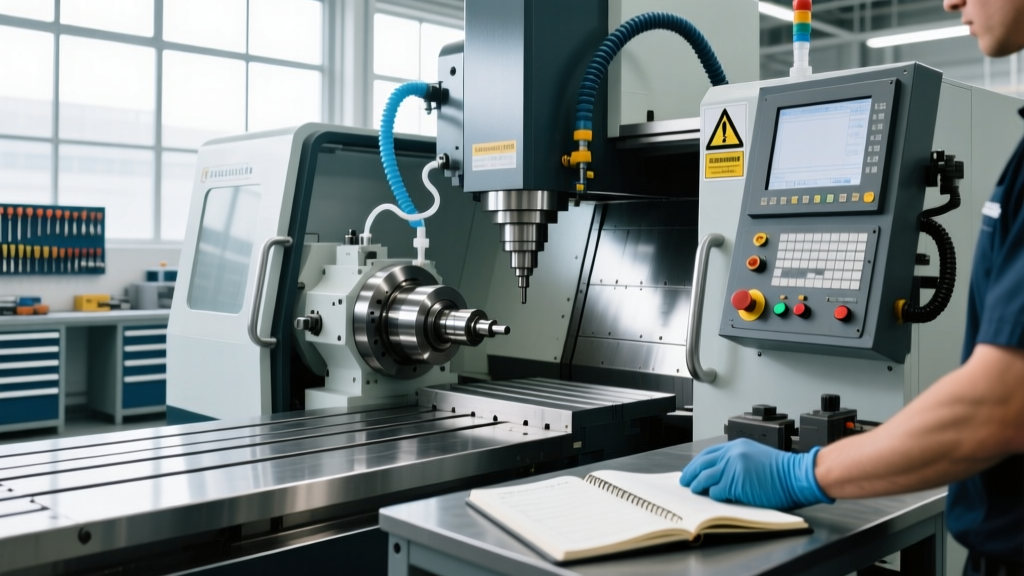
- Spindle Taper & Tool Holders: Wipe the CAT40/BT40 spindle taper and tool holder tapers with a specialized lint-free wiper and isopropyl alcohol. Never use standard shop rags, which leave micro-fibers that cause fretting corrosion and destroy spindle runout.
- Way Lube Reservoir: Verify the level of ISO 68 way lube (e.g., Mobil Vactra No. 2). If the machine is consuming way lube too fast, check for line restrictions; if it's not consuming enough, the metering valves may be clogged, leading to catastrophic axis galling.
- Coolant Concentration: Use a handheld refractometer to check the coolant mixture. For most semi-synthetic fluids (like Trim MicroSol 585XT), maintain a 5% to 7% concentration. Running below 5% invites flash rust on the machine's cast iron surfaces and tooling.
2. Weekly & 500-Hour Intervals (The Setup Machinist's Domain)
- Way Covers & Wipers: Inspect the telescoping steel way covers. Clean out packed chips and verify that the felt wipers are saturated with oil. Dry wipers will score the precision-ground ways in a matter of weeks.
- Hydraulic & Pneumatic Filters: Check the air pressure regulator (typically set to 85-90 PSI) and drain the moisture trap. Inspect hydraulic fluid sight glasses for milky discoloration, which indicates water contamination.
- Grease Points: If your machine utilizes grease-lubricated ball screws (common in high-speed machines), apply the exact OEM-specified grease (e.g., NSK LG2 or Kluber Isoflex). Over-greasing is just as dangerous as under-greasing, as excess grease traps abrasive metallic fines.
3. Annual & 4000-Hour Intervals (The Maintenance Tech's Domain)
- Spindle Runout Verification: Mount a precision test indicator in the spindle and sweep the internal taper. Runout should not exceed 0.0002" TIR (Total Indicator Reading). Excessive runout dictates a spindle rebuild, which costs $8,000 to $15,000.
- Ball Screw Backlash Check: Use a dial indicator to measure axis reversal error. If backlash exceeds 0.0003", the ball screw parameters in the CNC control must be updated, or the screw assembly requires physical replacement.
- Leveling & Geometry: Re-level the machine using a precision machinist level (0.0005" per foot resolution). Concrete foundations shift over time, and an out-of-level machine will induce squareness errors between the X, Y, and Z axes.
Ignoring the annual coolant tank clean-out is a career-limiting move. Tramp oil and anaerobic bacteria build up in the sump, creating a highly acidic environment (pH drops below 8.0). This acidic coolant will eat away at the machine's internal coolant lines, aluminum fixtures, and eventually cause the coolant pump to seize, resulting in thousands of dollars in downtime.
How Maintenance Skills Dictate Your Salary Ceiling
To definitively answer the question of whether this is a lucrative career path, we must look at how compensation scales with maintenance responsibility. The data below reflects 2026 manufacturing sector averages for mid-to-large job shops.
| Career Tier | Avg. Salary Range (2026) | Maintenance Autonomy | Primary Focus |
|---|---|---|---|
| CNC Operator (Entry) | $42,000 - $52,000 | None (Reports issues) | Part loading, deburring, basic inspection |
| Setup Machinist / Programmer | $65,000 - $85,000 | Daily & Weekly PMs | Tooling setup, offsets, CAM programming, basic troubleshooting |
| CNC Maintenance Technician | $85,000 - $115,000+ | Full System Control | Servo tuning, ball screw replacement, electrical diagnostics, geometry calibration |
As highlighted by workforce development initiatives tracked by CareerOneStop, the transition from Setup Machinist to Maintenance Technician represents the most significant financial leap in a traditional machining career. This jump requires moving beyond mechanical maintenance into electrical diagnostics, ladder logic troubleshooting, and servo-drive parameter tuning.
Real-World Edge Cases: When Maintenance Fails
Understanding why maintenance matters requires looking at actual failure modes that plague shops lacking strict schedules. Master machinists use these edge cases to diagnose problems before they scrap a $10,000 aerospace casting.
Edge Case 1: The 'Chatter' That Wasn't Tooling
A shop experiences severe chatter during a heavy roughing cycle on a Haas VF-2SS. The operator assumes the end mill is dull or the feed rate is too high, continually adjusting the CAM program. The actual root cause? The Z-axis gib was loose due to a lack of way lube, causing microscopic stick-slip friction. A senior machinist recognizes this specific acoustic signature, tightens the gib adjustment screws to the OEM spec, and resolves the issue in ten minutes without altering the toolpath.
Edge Case 2: Spindle Taper Fretting
A 5-axis trunnion table machine is failing to hold positional tolerances on a complex impeller. The operator blames the post-processor. The reality is that the previous shift failed to clean the spindle taper, leaving a microscopic layer of aluminum dust. When the tool holder was clamped at 2,500 PSI drawbar force, the dust acted as an abrasive, causing fretting corrosion. The tool holder was sitting 0.0004" out of true. Recognizing this failure mode separates a lifelong operator from a master process engineer.
Verdict: Is the Maintenance Burden Worth the Payoff?
So, is CNC machining a good career when you factor in the grease, the coolant, and the rigorous service schedules? Absolutely—but only if you embrace the maintenance aspect as a core professional competency. The manufacturing industry is currently undergoing a massive demographic shift. As veteran machinists retire, shops are desperate for younger professionals who understand both the digital side (CAD/CAM, probing macros) and the physical side (mechanical preservation, fluid dynamics, electrical systems).
If you view maintenance as a janitorial chore, you will likely cap out at an entry-level operator wage and experience high burnout. If you view maintenance as the science of preserving precision, you unlock a highly lucrative, recession-proof career path with a clear trajectory toward shop management or specialized technical roles.
Frequently Asked Questions (FAQ)
Do CNC operators have to do their own machine maintenance?
In most modern job shops, yes. Operators are responsible for Tier 1 maintenance: daily cleaning, fluid level checks, and basic lubrication. Dedicated maintenance departments usually handle Tier 2 and Tier 3 tasks like servo replacements and spindle rebuilds.
What is the most expensive maintenance mistake a new machinist can make?
Crashing the machine is the most obvious, but the most common silent mistake is using compressed air to blow off the spindle taper. This forces microscopic chips and moisture up into the spindle bearings, destroying a $12,000 component over time. Always use a vacuum and lint-free wipes.
How can I learn CNC maintenance to advance my career?
Many OEMs, such as Haas Automation and Mazak, offer specialized maintenance and repair courses through their local technical centers. Additionally, studying resources provided by the Society of Manufacturing Engineers (SME) and pursuing certifications in mechanical and electrical troubleshooting will dramatically accelerate your transition into higher-paying technical roles.