2026 Data: Safety Compliance and CNC Machine Operator Wages
Discover how OSHA compliance, LOTO expertise, and safety certifications directly impact CNC machine operator wages in 2026. Data-driven wage analysis.
The Financial Intersection of Shop Floor Safety and Operator Compensation
The manufacturing sector has fundamentally shifted its approach to risk management. In 2026, safety compliance is no longer treated merely as a regulatory hurdle; it is a quantifiable metric that directly influences payroll. For machinists and technicians, understanding the correlation between safety standards and cnc machine operator wages is critical for career advancement. Shops are actively paying a premium for operators who possess verifiable safety credentials, primarily to mitigate the catastrophic financial risks associated with OSHA violations and workers' compensation claims.
⚠️ 2026 OSHA Penalty Context: As of the latest federal adjustments, a single 'Serious' OSHA violation for machine guarding or Lockout/Tagout (LOTO) failures carries a maximum penalty exceeding $16,131 per instance. Willful or repeated violations can trigger fines upward of $161,323. This financial exposure is the primary driver behind the wage premium for safety-certified CNC operators.Deconstructing the Safety Wage Premium
Base compensation for CNC operators is heavily dictated by geographic region, shift differentials, and programming capabilities. However, when isolating safety compliance as an independent variable, a distinct wage tier emerges. Operators who can independently manage OSHA 1910.147 (The Control of Hazardous Energy) protocols and audit their own workstations against ANSI B11.0 machinery safety standards command higher hourly rates.
| Credential / Safety Competency | 2026 Average Hourly Wage Premium | Primary Shop Floor Application |
|---|---|---|
| Base Operator (No formal safety cert) | $22.00 - $26.00 / hr | Standard loading, basic tool offsets, routine PPE usage. |
| OSHA 10-Hour General Industry | +$1.50 - $2.50 / hr | Hazard communication, basic machine guarding awareness, ergonomics. |
| NIMS Certified (with Safety Module) | +$3.00 - $4.50 / hr | Standardized setup procedures, verified LOTO execution, precision measurement safety. |
| SME CMfgT + Safety Audit Lead | +$5.50 - $8.00+ / hr | Cell safety auditing, EMR reduction initiatives, training junior staff on interlocks. |
Data aggregated from industry workforce reports and the Bureau of Labor Statistics (BLS) indicates that the top 10% of earners in the machinist category frequently overlap with those holding dual technical and safety compliance certifications.
High-Stakes Competencies: LOTO and Machine Interlocks
The most significant wage differentiators lie in the practical application of safety standards on the shop floor. Modern CNC equipment, such as Haas NGC (Next Generation Control) mills or Mazak INTEGREX turn-mill centers, feature complex electronic interlocks and pneumatic door mechanisms.
The Interlock Bypassing Epidemic
A critical failure mode in machine shops is the bypassing of safety interlocks to save seconds during a cycle. Operators who use zip-ties, tape, or override codes to defeat door switches on lathes to clear chips or adjust coolant lines while the spindle is live pose an existential threat to the business.
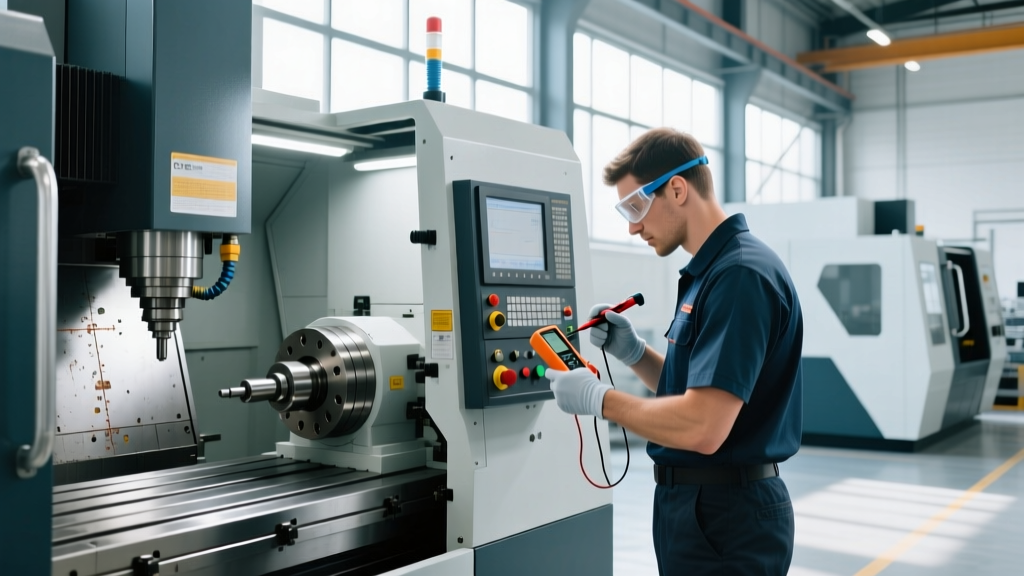
💡 Expert Insight: High-paying shops utilize control system logs (e.g., Haas Parameter 334 or Fanuc macro variables) to track door interlock overrides. Operators who understand how to safely troubleshoot a faulty proximity sensor using a multimeter and replace it during a scheduled LOTO event—rather than bypassing it—are immediately identified as senior-level talent worthy of top-tier wages.Lockout/Tagout (LOTO) on Multi-Axis Equipment
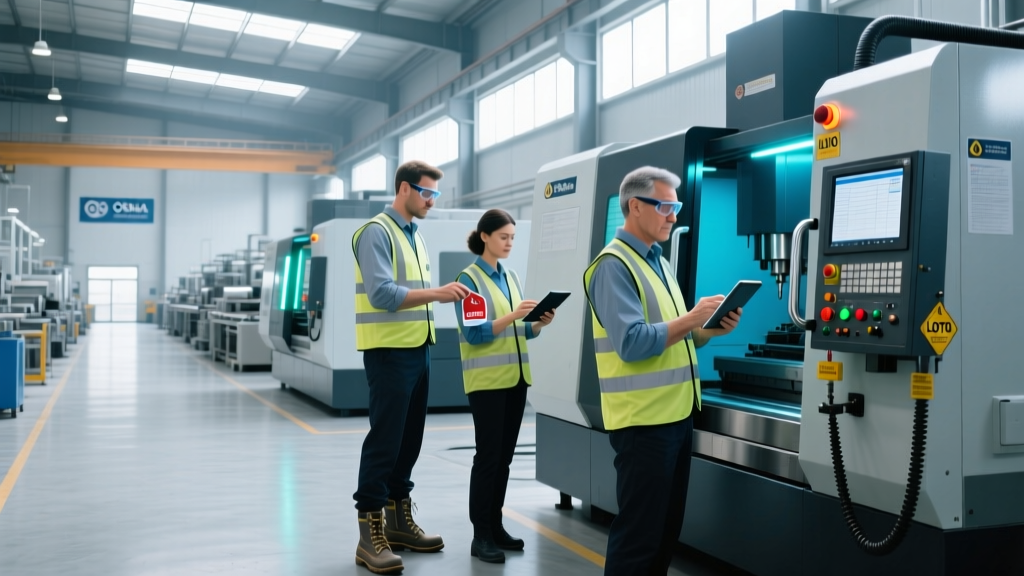
Executing LOTO on a 3-axis VMC is straightforward: disconnect the main electrical disconnect, apply a padlock, and bleed the pneumatic lines. However, 5-axis machining centers and automated pallet changers (APCs) store kinetic and hydraulic energy in accumulators and counterbalance systems. Operators who command premium wages are those who can read specific OEM electrical schematics to identify all energy isolation points, including secondary hydraulic clamping units and spindle orientation locks, ensuring zero stored energy before performing a ballbar test or internal maintenance.
The Insurance Multiplier: Experience Modification Rate (EMR)
To understand why management approves higher wages for safety-conscious operators, one must understand the Experience Modification Rate (EMR). The EMR is a metric used by workers' compensation insurance carriers to calculate a shop's premium based on its claims history compared to industry averages.
- EMR of 1.0: Average risk. The shop pays standard premiums.
- EMR of 0.8: Excellent safety record. The shop pays 20% less than average.
- EMR of 1.2: Poor safety record. The shop pays 20% more, severely cutting into profit margins.
A single amputation or severe laceration resulting from inadequate machine guarding (OSHA 1910.212) can spike a shop's EMR for three consecutive years, costing the business hundreds of thousands of dollars in elevated insurance premiums. When an operator proactively identifies a frayed hydraulic hose on a CNC press brake or reports a cracked polycarbonate viewing window that has degraded from coolant exposure, they are directly protecting the company's EMR. Smart manufacturers factor this risk mitigation into annual wage increases and safety bonuses.
PPE Specifics: Beyond the Basics
Standard safety glasses are insufficient for high-wage environments dealing with exotic alloys or high-pressure through-spindle coolant (TSC). Operators working with 70+ bar (1000+ PSI) TSC systems on Swiss-type lathes or deep-hole drilling operations must utilize specific Personal Protective Equipment (PPE) to prevent severe injuries.
Top-tier operators are trained to select ANSI Z87.1+ high-impact rated face shields in conjunction with sealed safety glasses. Furthermore, while cut-resistant gloves (rated A4 or higher under ANSI/ISEA 105) are mandatory for handling raw titanium or stamped steel blanks, strict compliance dictates that gloves are never worn near rotating spindles, live tooling, or chip conveyors due to the extreme entanglement hazard. Operators who enforce this nuance among junior staff demonstrate the leadership traits that justify lead-machinist compensation.
Actionable Framework: Negotiating Wages via Safety Compliance
Operators seeking to leverage their safety knowledge for higher compensation should avoid generic requests for a raise. Instead, present a documented safety ROI during performance reviews using the following framework:
- Audit and Document: Conduct a self-audit of your assigned CNC cell using the NIMS safety and setup standards. Document any near-misses you have prevented by adhering to strict LOTO protocols.
- Calculate Downtime Prevention: Estimate the machine hours saved by safely troubleshooting minor faults (e.g., clearing a chip jam at the tool changer without triggering an E-stop cascade) versus calling maintenance.
- Propose a Safety Initiative: Offer to lead a 15-minute weekly 'Toolbox Talk' for the second shift, focusing on specific hazards like handling sharp stringy chips from 304 stainless steel or managing cobalt dust exposure.
- Tie to EMR and OSHA: Explicitly state your commitment to maintaining the shop's OSHA compliance record, referencing the specific financial penalties your vigilance helps the company avoid.
By positioning safety compliance not as a set of restrictive rules, but as a core component of operational efficiency and financial risk management, CNC operators can successfully command the upper echelon of 2026 market wages.