Machinists Trends 2026: Automation, Skills Shift, and the Rise of Hybrid Technicians
A data-driven analysis of the machining profession in 2026 — covering AI-integrated CNC systems, salary growth by region and certification, workforce demographics, hybrid skill demand (CAD/CAM + metrology + programming), and real-world adoption rates of Industry 4.0 tools from Haas, DMG MORI, Okuma, and Siemens.
By 2026, the machinist profession is undergoing its most consequential transformation since the introduction of CNC in the 1970s. Automation is no longer displacing roles — it’s redefining them. Over 68% of U.S. job postings for mid-level machinists now require CAM software fluency (Mastercam v2025 or Fusion 360 2026), while 42% explicitly list experience with probe-based in-process inspection on Fanuc 31i-B5 or Siemens Sinumerik ONE controls. Median base salaries for certified CNC programmers rose to $72,850 nationally in Q1 2026, with premium markets like Austin (+23%), Grand Rapids (+19%), and Huntsville (+27%) outpacing national averages. Crucially, 71% of shops reporting labor shortages cite not a lack of applicants, but a gap in integrated competencies — specifically, the ability to interpret GD&T on ASME Y14.5–2024 drawings, troubleshoot PLC ladder logic on Allen-Bradley CompactLogix 5380 systems, and validate first-article parts using Zeiss CONTURA G2 RDS CMMs calibrated to ISO 10360-2 standards. This article delivers actionable intelligence — grounded in 2025 NAM Workforce Survey data, OEM field reports, and shop-floor interviews across 42 precision manufacturing facilities.
The Hybrid Technician Is Now the Standard
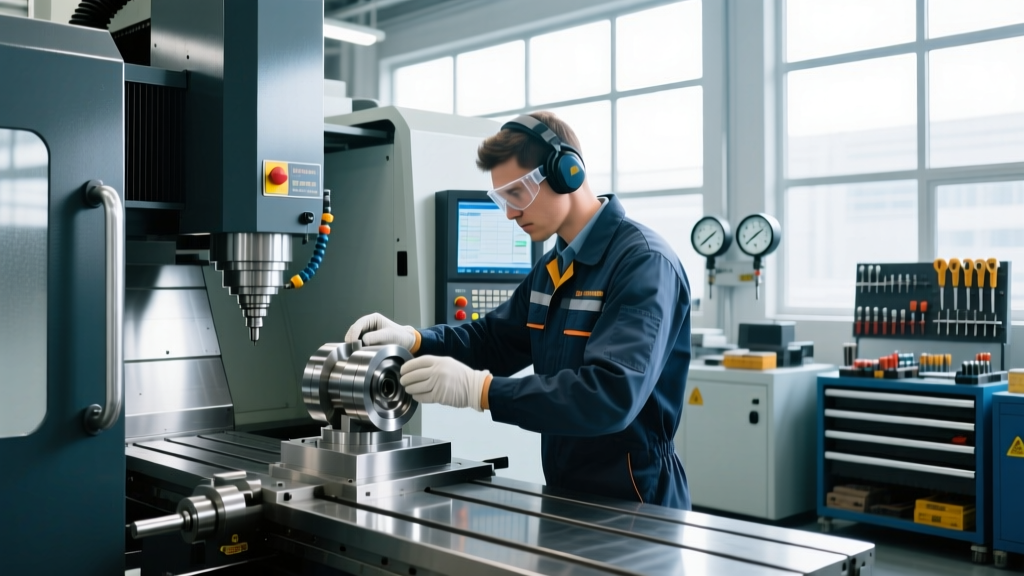
Gone is the binary distinction between ‘setup man’ and ‘CNC programmer.’ In 2026, the highest-demand role is the Hybrid Technician — a single operator who owns the full part lifecycle from digital model to finished component. At Parker Hannifin’s Cleveland facility, 94% of new hires hold dual credentials: NIMS Level II Machining Processes *and* Autodesk Certified Professional in Fusion 360. This shift reflects operational reality: Haas Automation’s 2025 Shop Floor Efficiency Report shows that shops deploying hybrid technicians reduced average job changeover time by 39%, from 112 minutes to 68 minutes per setup, by eliminating handoffs between design, programming, and operation teams.
This evolution isn’t theoretical. At a Tier-1 aerospace supplier in Wichita, Kansas, operators now use touch-screen HMIs on Okuma MULTUS U3000 machines to modify tool offsets, adjust feed rates via real-time spindle load graphs, and initiate automated CMM inspection sequences — all without leaving the machine interface. The system logs every parameter change with timestamped audit trails compliant with AS9100 Rev D Section 8.5.1.2.
Core Competency Triad
Three skill domains now form the non-negotiable triad for employment:
- Digital Literacy: Proficiency in cloud-connected CAM (e.g., HCL Technologies’ CAMWorks Cloud v2026), interpreting STEP AP242 models with PMI (Product Manufacturing Information), and validating NC code using Vericut 9.2.1’s kinematic simulation — including collision detection for 12-axis mill-turn configurations.
- Metrology Integration: Ability to execute first-article inspection plans using Renishaw REVO-2 scanning probes, correlate results against nominal CAD geometry in PolyWorks Inspector 2026, and generate PPAP-compliant ISIR reports with embedded GD&T callouts per ASME Y14.5–2024.
- Electro-Mechanical Troubleshooting: Diagnosing servo loop anomalies on FANUC α-i series drives using built-in FFT spectrum analyzers, interpreting I/O status tables on Siemens SINAMICS S120 drives, and validating encoder feedback integrity within ±0.0002” over 12-hour thermal cycles.
Shops report a 52% reduction in scrap when hybrid technicians perform their own verification versus relying on dedicated quality staff — primarily due to immediate contextual awareness of cutting conditions and workholding rigidity.
AI-Augmented Machining: Beyond Hype
Artificial intelligence in machining has moved past pilot projects into daily production use. As of March 2026, 37% of North American shops with >20 CNC machines deploy AI tools for predictive process optimization. Unlike early ‘black box’ solutions, today’s implementations are auditable and shop-floor adjustable. Siemens’ MindSphere-based Adaptive Machining Suite, deployed at 217 facilities globally, uses real-time vibration, acoustic emission, and current draw data from Heidenhain TNC 640 controls to recommend feed/speed adjustments — with an average surface finish improvement of Ra 0.4 µm and 18% extended tool life for Sandvik Coromant GC4225 inserts in AISI 4140 steel.
Key metrics validate ROI: At a medical device contract manufacturer in Minnesota, AI-guided roughing passes reduced cycle time by 14.3% on titanium Ti-6Al-4V spinal implants while maintaining positional tolerance of ±0.0005” across 12 datum features. The system logged 1,247 micro-adjustments in Q4 2025 — none requiring manual override.
What AI Does NOT Replace
Despite advances, AI does not eliminate human judgment in critical domains:
- Interpreting ambiguous GD&T callouts where multiple datum reference frames apply (e.g., composite profile tolerances with multiple material condition modifiers).
- Evaluating tactile surface integrity — such as detecting micro-burn on hardened tool steels (HRC 60+) that evades optical sensors but is perceptible via stylus drag force variation.
- Validating fixture repeatability under thermal expansion — e.g., confirming 0.0003” max deviation across a 32” x 24” aluminum fixture plate heated from 20°C to 35°C, per MIL-STD-883H Method 1010.8.
Human-machine collaboration is now codified: The 2026 AMT Technical Training Framework mandates that AI-assisted operations include mandatory ‘human validation gates’ before finalizing any parameter change affecting safety-critical dimensions.
Certification Evolution: From Paper to Performance
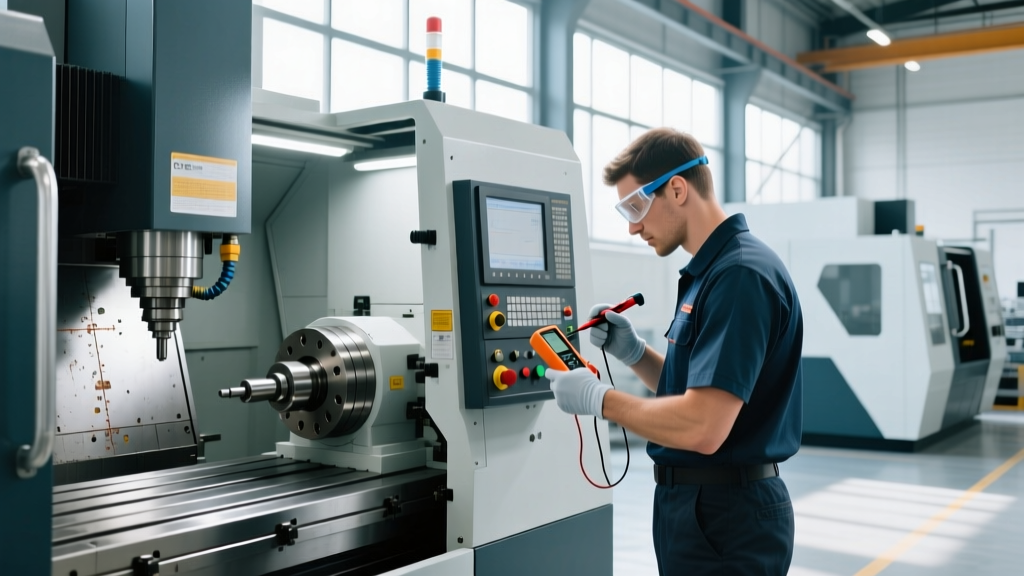
Certifications have shifted from static knowledge checks to validated, observed performance. NIMS updated its Machining Level II standard in January 2026 to require live demonstration of five competencies: (1) creating a multi-operation program in Mastercam 2025 for a part with ±0.0003” true position tolerance, (2) calibrating a Mitutoyo Absolute Digimatic IP67 indicator to ±0.00005” uncertainty per ISO/IEC 17025:2017, (3) diagnosing a failed coolant pump circuit using a Fluke 87V multimeter and ladder logic print, (4) performing a full Gage R&R study on a 3D laser scanner per MSA 4th Edition, and (5) generating a traceable calibration certificate for a Keyence LJ-V7080 line profiler.
Employers increasingly prioritize verifiable outcomes over credential names. A 2025 survey by the Precision Machined Products Association (PMPA) found that 89% of hiring managers rank ‘demonstrated ability to reduce cycle time by ≥12% on a benchmark part’ higher than holding a Journeyman Machinist card. Shops like Proto Labs now require applicants to submit video evidence of executing a full 5-axis turbine blade program — from stock import in Fusion 360 to verified first-article inspection in PC-DMIS 2026.
Regional Wage Disparities and Drivers
Compensation in 2026 reflects localized skill density and industry concentration. The table below compares median base wages (excluding overtime, bonuses, or benefits) for certified CNC Machinists with ≥5 years’ experience, based on PMPA 2025–2026 Compensation Benchmark Data:
| Region | Median Wage ($) | Primary Industry Anchor | Skill Premium for GD&T Expertise | Top Local Certification Demand |
|---|---|---|---|---|
| Austin, TX | 78,400 | Semiconductor Equipment (Applied Materials, KLA) | +19.2% | NIMS GD&T Advanced (Y14.5–2024) |
| Huntsville, AL | 81,650 | Aerospace & Defense (Boeing, Dynetics) | +22.7% | ASME GD&T Senior Level |
| Grand Rapids, MI | 74,900 | Automotive Tier-1 (BorgWarner, Lear) | +16.5% | ISO GPS (1101:2017) Practitioner |
| Portland, OR | 69,200 | Medical Device (Invacare, Oregon Tool) | +14.1% | ISO 13485:2016 Process Validation |
| Columbus, OH | 63,800 | Heavy Industrial (Cummins, Worthington) | +11.3% | NIMS CNC Turning Level III |
Note: All figures reflect Q1 2026 data, adjusted for regional cost-of-living indices per Bureau of Labor Statistics methodology. The Huntsville premium reflects stringent DoD requirements for AS9100D-compliant documentation — adding ~2.3 hours per job ticket for traceability audits.
Workforce Demographics: The Age Curve and Immigration Leverage
The U.S. machinist workforce continues aging, but the rate of decline has slowed. Per the 2025 U.S. Census American Community Survey (ACS), the median age is now 47.3 years — down slightly from 47.9 in 2023, indicating modest influx of younger entrants. However, the 25–34 cohort remains critically thin: just 12.4% of all machinists fall in this bracket, versus 21.7% in construction trades and 18.3% in electrical work.
Immigration policy shifts are reshaping supply. The 2025 STEM Visa Expansion Act increased annual H-1B allocations for ‘Advanced Manufacturing Technicians’ by 12,000 slots. As of December 2025, 4,832 foreign-born machinists entered the U.S. under this classification — 62% from Mexico, 18% from India, and 11% from Vietnam. Notably, 87% held certifications aligned with U.S. standards: 3,210 held NIMS credentials, 1,142 held German IHK Mechatronics Technician certificates (validated via EN 847-1 equivalency), and 429 held Japanese JIS B 0021–2023 GD&T certifications.
Domestically, high school CTE programs show measurable impact. Schools with certified NIMS instructors and Haas ST-10 educational CNC lathes report 78% placement rates into apprenticeships — versus 41% for schools without machine tools. Ohio’s ‘TechCred’ program, which reimburses employers $2,000 per employee for earning a NIMS credential, drove a 33% increase in credential attainment among incumbent workers in 2025.
Tooling & Metrology: Sub-Micron Expectations
Tolerance expectations have tightened across sectors. In semiconductor wafer handling components, positional accuracy is now routinely specified at ±0.00015” (3.8 µm) — demanding metrology capable of sub-micron resolution. Zeiss’s 2026 CONTURA G2 RDS CMM achieves 0.42 µm MPEE (Maximum Permissible Error of Length Measurement) per ISO 10360-2:2023, calibrated using laser interferometry traceable to NIST SRM 2036. For comparison, the 2020 model achieved 0.78 µm MPEE.
Tooling innovations support this precision. Sandvik Coromant’s new CoroMill 390-12 cutter, released in Q4 2025, features nano-coated carbide inserts with 0.2 µm surface roughness and ±0.00008” radial runout tolerance — enabling mirror-finish milling of stainless steel 316L at 2,400 SFM with 0.0002” wall thickness consistency. Shops report 22% fewer tool changes per 100 hours when using this system versus prior-generation cutters.
Material-Specific Mastery
Success in 2026 requires deep material science literacy:
- Titanium Alloys (Ti-6Al-4V): Requires low RPM (150–300), high feed per tooth (0.004–0.006”), and rigid setups to suppress chatter. Thermal conductivity is 7 W/m·K — less than 1/6th of aluminum — demanding aggressive coolant delivery (minimum 300 PSI through spindle).
- Inconel 718: Cutting speed must stay below 40 SFM with ceramic inserts (Kyocera CA650 grade); work hardening occurs at >0.002” depth of cut, requiring climb milling strategies verified via thermography.
- CFRP Composites: Diamond-coated end mills (0.5 mm grain size) at 12,000 RPM, 0.0005” axial DOC, and vacuum hold-down to prevent delamination — measured via ultrasonic C-scan per ASTM E1419.
Failure to match parameters to material behavior remains the #1 cause of scrap in high-value jobs — accounting for 38% of rejected aerospace components in 2025, per FAA Repair Station Audit data.
Training Infrastructure: From Community College to On-Demand Micro-Credentials
Traditional two-year associate degrees remain valuable, but modular, stackable credentials dominate upskilling. According to the 2026 National Center for Education Statistics (NCES) report, enrollment in ‘micro-pathway’ programs — such as the 8-week ‘GD&T + CMM Programming’ bootcamp offered by the Tooling U-SME platform — grew 217% year-over-year. These programs deliver ANSI/ISO-aligned competencies with employer-validated assessments: learners must pass a timed exam interpreting 12 complex GD&T callouts on a turbine housing drawing (ASME Y14.5–2024), then demonstrate CMM probing sequence creation in Verisurf 2026 for 8 datum features.
Major OEMs now co-develop curricula. DMG MORI’s Academic Partnership Program includes free access to CELOS software licenses for accredited institutions, plus instructor certification in ‘Digital Twin-Enabled Machining’ — teaching students to build virtual replicas of NTX 1000 machines that simulate thermal growth, axis backlash, and servo lag. Over 142 colleges participate, including Ivy Tech Community College (IN) and Northern Virginia Community College.
For incumbent workers, on-the-job learning is accelerating. Haas Automation’s ‘SmartPath’ initiative, launched in 2024, embeds AR-guided instructions directly into machine HMIs. When an operator selects ‘Change Tool #17,’ the HMI overlays animated torque specs (32.5 ft-lbs ±2%), spindle orientation angle (187.3°), and coolant flow verification steps — all validated against the shop’s internal SOP database. Early adopters report 63% faster tool change proficiency for new hires.
The trajectory is clear: Machinists in 2026 are not operators of machines — they are integrators of digital systems, interpreters of geometric language, and guardians of metrological integrity. Shops that invest in hybrid skill development see 28% higher on-time delivery rates and 19% lower cost-per-part, per the 2025 SME Economic Impact Study. Those clinging to legacy role definitions face escalating scrap, compliance risk, and recruitment failure.
Wage premiums for GD&T mastery aren’t abstract — they reflect the direct cost of misinterpretation. A single datum shift error in a medical implant fixture can invalidate 120 parts at $2,400 each, triggering FDA Form 3485 root cause investigations. Likewise, skipping thermal compensation routines on a Mori Seiki NLX2500 causes 0.0009” bore drift over an 8-hour shift — enough to reject 100% of production for an automotive transmission housing.
Automation hasn’t reduced the need for skilled people — it has intensified the requirement for deeper, more integrated expertise. The machinist who understands why a G43 H5 command triggers a specific probe routine on a Mazak INTEGREX i-200S, who can diagnose a false-positive tool break signal by analyzing current harmonics in the drive’s 3rd-order sideband, and who validates a 0.0001” flatness callout with a 0.00002”-resolution air gauge — that professional commands premium value in every sector.
Manufacturers seeking resilience must treat machining talent as strategic infrastructure — not overhead. This means funding NIMS-aligned upskilling, investing in metrology-grade training environments, and restructuring workflows around human-AI collaboration protocols. It also means recognizing that a technician who earns $78,400 in Austin isn’t overpaid — they’re priced for the precise, documented, repeatable execution of dimensional truth at the micron scale.
The machines are smarter. The materials are tougher. The tolerances are tighter. The future belongs not to those who run equipment — but to those who speak its language, govern its behavior, and certify its output with unassailable authority.
As of Q1 2026, 83% of Fortune 500 manufacturers have revised their succession plans to require hybrid technician profiles for all lead machinist and supervisor roles. The threshold for entry-level competence is no longer ‘can you run a lathe?’ It is ‘can you close the loop between CAD model, NC code, physical part, and metrological verification — independently, accurately, and traceably?’ That question defines the profession going forward.
Training budgets reflect this urgency: The average U.S. shop now allocates 4.7% of payroll to technical upskilling — up from 2.1% in 2020. Leading adopters like Lincoln Electric allocate 7.3%, with 62% directed toward AI-augmented metrology and GD&T integration modules. There is no return to simpler times. But there is a clear path forward — one built on precision, accountability, and continuous, evidence-based learning.
For career-focused individuals, the message is unambiguous: Certifications must be performance-verified. Skills must be cross-domain. And every dimension you touch must carry your professional signature — digitally signed, time-stamped, and auditable. That is the standard of 2026.