What Is a CNC Machine Operator? The Troubleshooting & Repair Guide
Discover what a CNC machine operator does beyond machining. Learn first-line troubleshooting, alarm diagnostics, and repair escalation protocols.
Redefining the Role: Beyond the Start Button
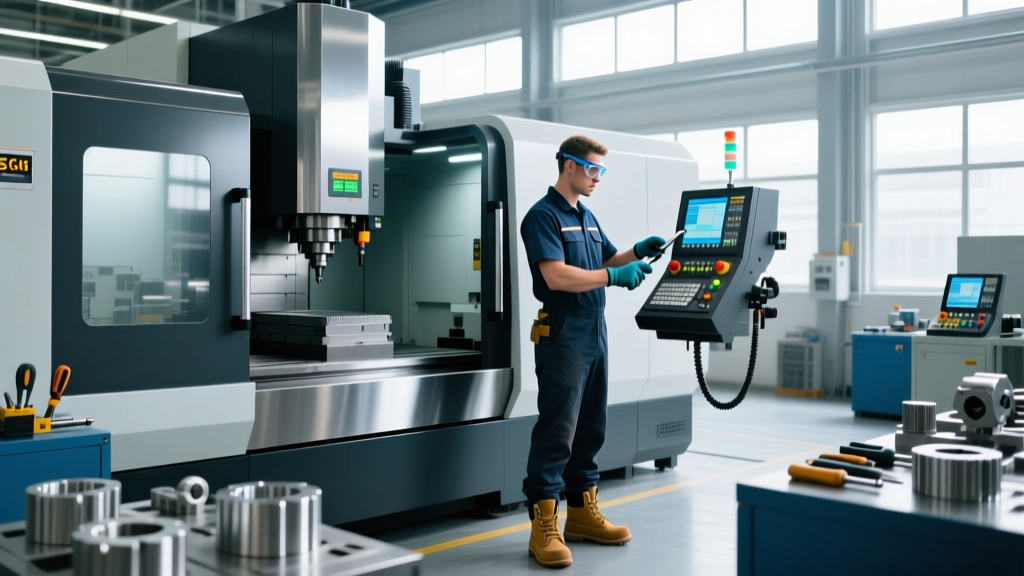
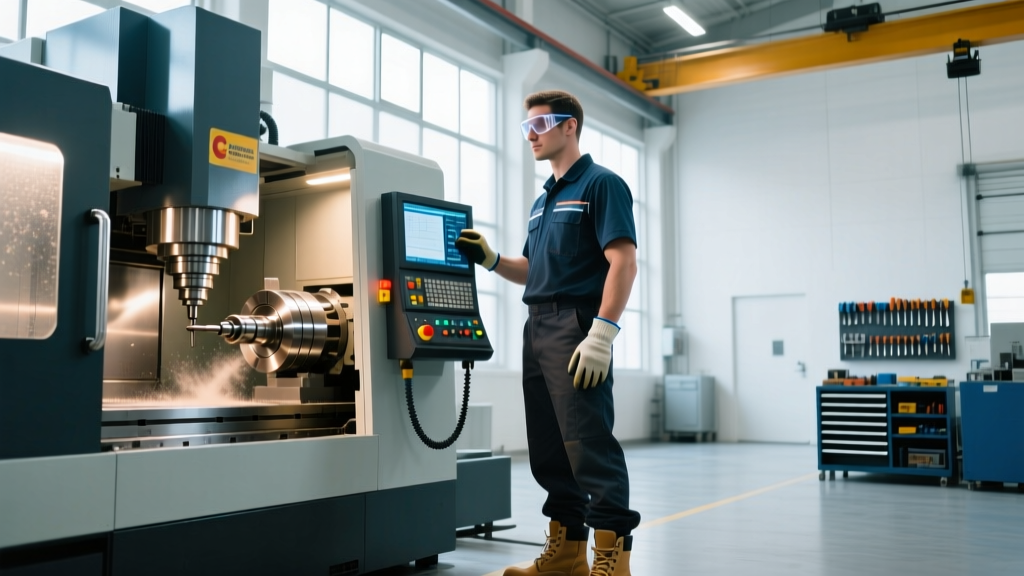
When industry trainees ask 'what is cnc machine operator', the traditional answer often limits the role to loading raw material, pressing the cycle start button, and unloading finished parts. In modern manufacturing environments, this definition is dangerously obsolete. Today's CNC operator is a first-line diagnostic technician, a preventative maintenance executor, and a critical node in the factory's overall equipment effectiveness (OEE) strategy.
With the integration of Industry 4.0 sensors and smart machining, operators are expected to interpret real-time telemetry, diagnose mechanical faults before they cause catastrophic tool failure, and perform minor repairs that keep spindles turning. Understanding the troubleshooting and repair responsibilities of this role is essential for both workforce development and career advancement.
Operator vs. Maintenance Technician: Where is the Line?
CNC Operator Domain: Replacing worn tooling, adjusting coolant concentration, clearing chip jams, resetting minor servo alarms, verifying way lube levels, and performing daily geometric calibration checks.
Maintenance Tech Domain: Replacing spindle bearings, rebuilding ball screws, rewriting PLC ladder logic, replacing servo drives, and fixing high-voltage electrical faults.
First-Line Diagnostics: Fluid and Lubrication Systems
The most common cause of unplanned downtime in CNC milling and turning centers is not software failure; it is lubrication and coolant mismanagement. Operators must master these fluid systems to prevent way wear and thermal deformation.
Coolant Concentration and Flow Troubleshooting
Tramp oil and water evaporation constantly alter coolant chemistry. An operator must use a handheld refractometer every shift. The target concentration for standard semi-synthetic coolants (like TRIM MicroSol 585XT) is typically 6.5% to 8.5%. If the refractometer reads below 6%, the operator must add concentrated coolant, not just water, to prevent bacterial growth and tool rust. If flow is weak, the operator should bypass the machine's internal filter and check the coolant pump impeller for stringy chip wrap, a common failure point on Haas VF-series mills.
Way Lube and Hydraulic Pressure Checks
Way lube reduces friction on the linear guideways. A machine running dry will score the rails, requiring a $15,000+ rebuild. Operators must verify that the way lube tank is filled with the correct ISO 68 viscosity fluid (such as Mobil Vactra No. 2). If the machine triggers a low-pressure alarm, the operator should check the air regulator on the lube pump. Most pneumatic lube pumps require shop air pressure between 85 and 90 PSI to cycle correctly. If air pressure is adequate but the pump fails to cycle, the operator must escalate to maintenance for a pump replacement.
Common CNC Alarms and Operator-Level Fixes
Alarm codes are the machine's way of communicating faults. While some require a certified technician, many can be resolved by a trained operator. Below is a troubleshooting matrix for common Fanuc and Haas control alarms.
| Alarm Code / Type | Symptom / Trigger | Operator Troubleshooting Action | Escalation Threshold |
|---|---|---|---|
| Haas Alarm 114 (Low Lube Air Pressure) |
Machine pauses cycle; lube pump fails to prime. | 1. Check shop air supply gauge. 2. Verify regulator is set to 85 PSI. 3. Check for kinked air lines. |
If air is 85+ PSI and pump won't cycle, escalate to maintenance. |
| Fanuc Alarm 401 (Servo Alarm: Axis Not Ready) |
Axis refuses to move; servo drive disables. | 1. Verify E-Stop is fully disengaged. 2. Check servo breaker in the electrical cabinet. 3. Perform a full control reboot. |
If breaker trips immediately upon reboot, do not reset. Escalate (short circuit). |
| Spindle Chatter (No Code / Auditory) |
Loud harmonic vibration during heavy roughing cuts. | 1. Reduce radial depth of cut (RDOC) by 20%. 2. Increase RPM to shift harmonic frequency. 3. Verify tool stick-out is minimized. |
If chatter persists with light cuts, escalate for spindle runout test. |
| Overtravel Alarm (Soft or Hard Limit) |
Axis hits physical or programmed boundary. | 1. Switch to jog/handle mode. 2. Move axis off the limit switch in the opposite direction. 3. Press alarm reset. |
If the physical limit switch is mechanically broken or stuck, escalate. |
The Escalation Decision Tree: When to Call Maintenance
Knowing when to stop troubleshooting is just as critical as knowing how to troubleshoot. Attempting unauthorized repairs can void machine warranties and violate safety protocols. Operators should follow this decision framework:
- Is the issue consumable-related? (e.g., dull insert, empty lube tank, clogged coolant filter). Action: Operator fixes.
- Is the issue parameter/offset-related? (e.g., incorrect tool length offset, work coordinate shift). Action: Operator fixes.
- Does the fix require opening the electrical cabinet? Action: Stop. Only certified electricians or maintenance techs should access high-voltage cabinets.
- Does the fix require breaking a mechanical seal or removing way covers? Action: Stop. Escalate to the maintenance department to prevent contamination of the linear guides.
Safety First: LOTO Protocols for Operator Repairs
When an operator performs first-line repairs—such as clearing a severe chip jam from the tool changer or replacing a broken coolant hose—they are interacting with hazardous energy. The Occupational Safety and Health Administration (OSHA) strictly mandates Lockout/Tagout (LOTO) procedures for these tasks.
'Failure to properly lockout/tagout machines during maintenance and repair is consistently one of the most frequently cited OSHA violations. Operators must never reach into the machining envelope without isolating the main electrical disconnect and applying their personal padlock.'
— OSHA Control of Hazardous Energy Guidelines
For a Haas VF-2 or similar vertical machining center, the operator must turn the main rotary disconnect on the side of the machine to the OFF position, apply a personal lock, and attempt to start the machine to verify 'zero energy' before reaching into the tool magazine or spindle area.
Career and Salary Impact of Troubleshooting Mastery
Operators who master first-line troubleshooting transition from basic 'button-pushers' to indispensable manufacturing technicians. This skill shift directly correlates with significant wage premiums and career mobility.
2026 Compensation Matrix: CNC Roles
- Basic CNC Operator (Load/Unload): $20.00 - $25.00 / hour. Minimal troubleshooting expected.
- CNC Setup Operator / Troubleshooter: $28.00 - $36.00 / hour. Capable of proving out new programs, adjusting offsets, and resolving mechanical alarms.
- CNC Programmer / Lead Technician: $38.00 - $50.00+ / hour. Handles complex CAM programming, macro variables, and advanced machine calibration.
Data reflects national manufacturing averages and aligns with the Bureau of Labor Statistics projections for advanced machinists and tool programmers.
Continuous Learning and Resources
To build these troubleshooting skills, operators should utilize the Haas Automation Support Portal or the Fanuc America manual library to study alarm codes specific to their machine's control generation. Keeping a personal 'fault log' notebook on the shop floor—documenting the alarm, the root cause, and the fix—is a proven method for accelerating diagnostic intuition. Ultimately, the modern CNC machine operator is a hybrid machinist-mechanic, and mastering the repair domain is the fastest route to the top tier of the manufacturing workforce.