How a CNC Machine Operator Drives Aerospace & Medical Innovation
Discover how a skilled CNC machine operator drives precision in aerospace and medical manufacturing through real-world case studies and industry data.
The Evolution of the CNC Machine Operator in High-Stakes Manufacturing
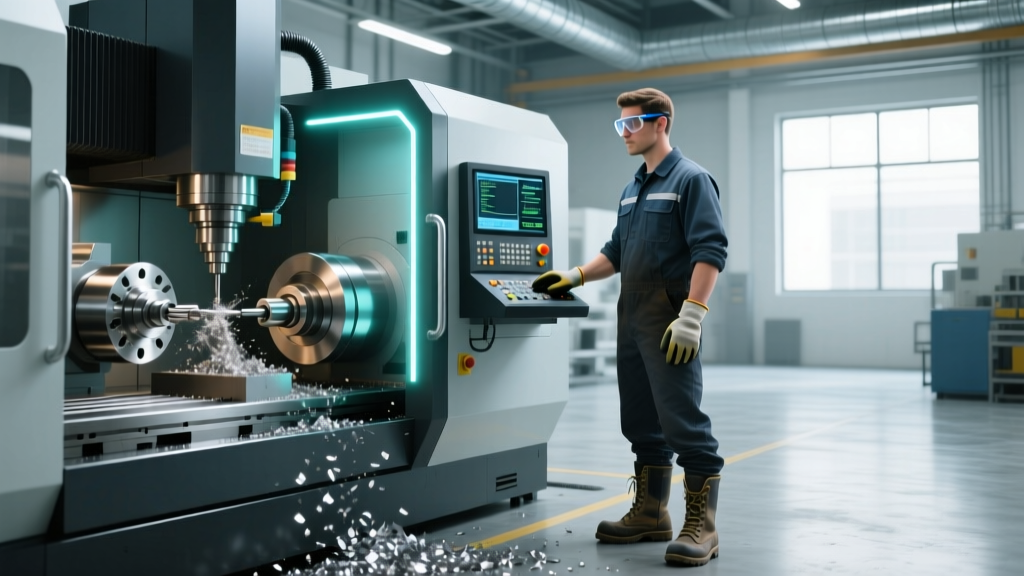
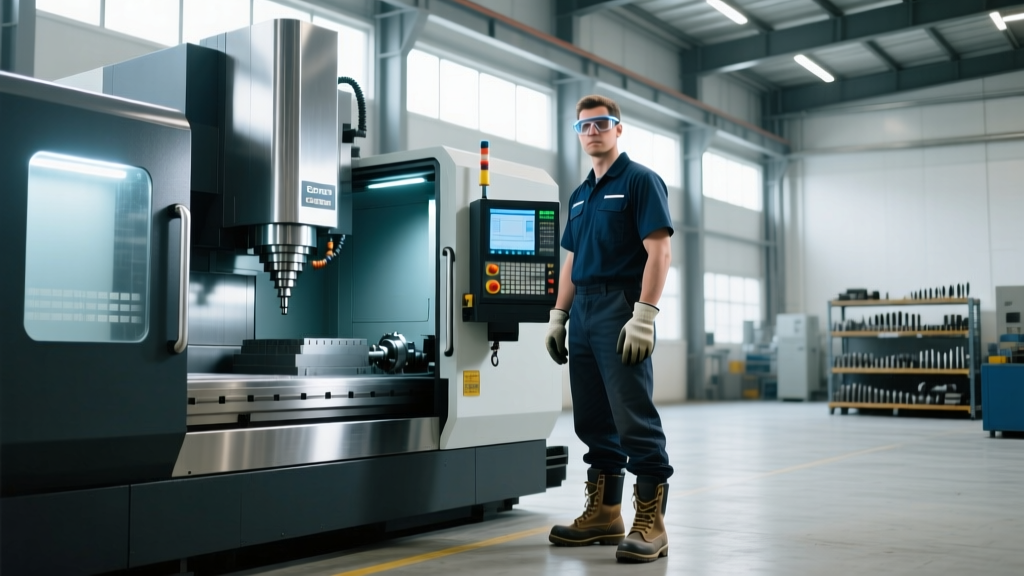
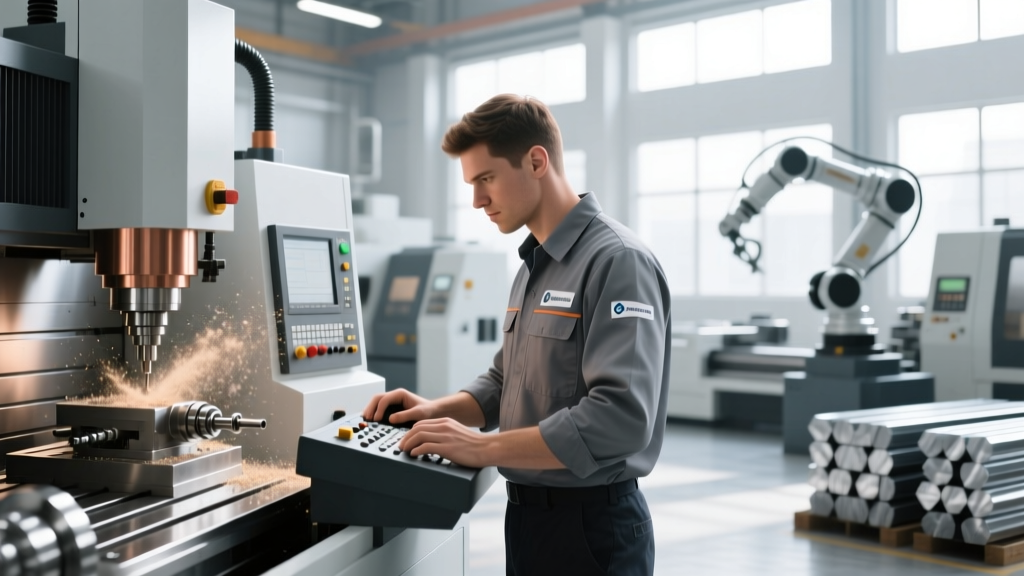
The modern CNC machine operator functions as a hybrid process engineer, metallurgist, and metrologist. In high-stakes industries like aerospace and medical device manufacturing, the margin for error is measured in microns, and the cost of a scrapped component can exceed tens of thousands of dollars. The operator is no longer just loading blanks and pressing cycle start; they are actively managing thermal deformation, mitigating harmonic chatter, and optimizing tool life through real-time adaptive control. This article examines two distinct industrial applications where the expertise of a CNC machine operator directly dictates the viability of the manufacturing process.
2026 Industry Snapshot: The Skill Premium
According to the U.S. Bureau of Labor Statistics, the median pay for machinists continues to climb, but the premium for 5-axis aerospace and Swiss-type medical operators is significantly higher. Facilities machining Ti-6Al-4V or Cobalt-Chrome routinely pay 25% to 40% above the national median to retain operators who possess advanced CAM verification and in-process metrology skills.
Case Study 1: 5-Axis Aerospace Blisk Machining
A bladed disk (blisk) is a critical rotating component in jet engines, integrating the rotor disk and blades into a single solid piece. Machining a blisk from a solid billet of Ti-6Al-4V titanium alloy requires extreme rigidity and precise thermal management. We analyzed a production cell utilizing a DMG MORI monoBLOCK 5-axis machining center equipped with a 20,000 RPM spindle and high-pressure coolant delivery.
The Operator's Role in Chatter Mitigation
Titanium's low thermal conductivity means up to 80% of the heat generated during cutting transfers directly into the cutting tool, leading to rapid flank wear. A highly skilled CNC machine operator monitors the spindle load meter and acoustic emission sensors to detect harmonic chatter before it compromises the airfoil surface finish.
- Toolholding Strategy: The operator mandates the use of HAIMER shrink-fit toolholders rather than standard collet chucks. The uniform clamping force reduces tool runout to less than 0.0001 inches, critical for maintaining balance at 12,000 RPM during roughing passes.
- Adaptive Feed Control: When the tool engages the deep, narrow channels between the blades, the radial depth of cut increases. The operator utilizes Renishaw adaptive machining software to automatically reduce the feed rate by 15% during these high-engagement zones, preventing tool deflection and catastrophic insert failure.
- Thermal Compensation: Titanium machining generates immense localized heat. The operator schedules mandatory spindle cool-down cycles and utilizes machine-integrated laser tool setters to measure and compensate for thermal spindle growth every 45 minutes.
'In 5-axis titanium milling, the CNC machine operator's ability to interpret spindle load graphs and adjust trochoidal toolpaths on the fly is the difference between a $40,000 finished blisk and a scrapped billet.' — Lead Manufacturing Engineer, Tier 1 Aerospace Supplier.
Case Study 2: Swiss-Type Micro-Machining for Orthopedics
Orthopedic bone screws and spinal implants demand complex geometries, extreme surface finishes, and biocompatible materials like Cobalt-Chrome (CoCr) and PEEK (Polyether ether ketone). These parts are typically produced on Swiss-type CNC lathes, such as the Citizen Cincom L32, which feature a sliding headstock and a guide bushing to support the material inches away from the cutting action.
Managing Micro-Tooling and High-Pressure Coolant
Drilling a 0.5mm deep-hole for a bone screw's internal hex drive requires peck drilling cycles and flawless chip evacuation. The CNC machine operator's setup and monitoring protocols are highly specialized:
- Guide Bushing Clearance: The operator must set the clearance between the bar stock and the guide bushing to exactly 0.0002 to 0.0004 inches. Too tight, and the bar drags, stalling the feeder; too loose, and the part deflects during cross-drilling, ruining concentricity.
- High-Pressure Coolant (HPC): CoCr produces long, stringy, work-hardened chips. The operator configures HPC nozzles at 1,500 PSI directly at the cutting edge to break chips into manageable 'C' shapes. If the operator fails to clear the chips, they will wrap around the micro-drill, causing instant tool breakage and part rejection.
- Optical In-Process Inspection: Instead of stopping the machine to measure with calipers, the operator programs the machine's integrated vision system to capture optical profiles of the thread pitch and major diameter mid-cycle, ensuring Ra surface finishes remain below 0.2 µm.
Comparative Analysis: Aerospace vs. Medical Operator Demands
While both industries demand extreme precision, the daily operational focus of a CNC machine operator varies drastically based on the physics of the materials and the scale of the parts.
| Parameter | Aerospace (5-Axis Milling) | Medical (Swiss-Type Turning) |
|---|---|---|
| Primary Materials | Ti-6Al-4V, Inconel 718, 7075-T6 Aluminum | Cobalt-Chrome, Nitinol, PEEK, 316L Stainless |
| Critical Tolerances | ±0.0005" on complex 3D airfoil profiles | ±0.0002" on micro-diameters and thread pitches |
| Primary Failure Mode | Harmonic chatter, thermal spindle growth, tool deflection | Chip bird-nesting, micro-tool breakage, bar stock drag |
| Key Metrology Tools | CMM, Laser scanner, On-machine probing (Renishaw) | Optical comparators, vision systems, air gauging |
| Cycle Time Focus | Hours to days per part; focus on tool life and uptime | Seconds to minutes per part; focus on continuous feed and automation |
Troubleshooting Edge Cases on the Shop Floor
Real-world manufacturing rarely mirrors the CAM simulation. A senior CNC machine operator must possess a mental decision tree for diagnosing anomalies that software cannot predict.
Edge Case: Work Hardening in Inconel 718
When milling Inconel turbine blades, a common operator error is allowing the tool to dwell or rubbing the material instead of cutting it. This causes immediate work hardening, turning the surface into a glass-like hardness that will shatter the next cutting edge. The Fix: The operator must maintain a strict minimum chip thickness. If the tool is worn and the chip load drops below 0.002 inches per tooth, the operator must increase the feed rate or index the insert immediately, even if the spindle load meter hasn't spiked yet.
Edge Case: PEEK Delamination During Drilling
PEEK is a high-performance polymer used in spinal cages. Unlike metal, PEEK is prone to delamination and burring at the exit point of a drilled hole. The Fix: The operator cannot use standard 118-degree twist drills. They must switch to a diamond-coated brad-point drill and program a sacrificial backer plate (usually aluminum) clamped tightly against the PEEK exit surface to support the fibers during breakthrough.
Bridging the Gap: Certifications and Career Trajectory
Transitioning from standard 3-axis production machining to high-value aerospace or medical roles requires verifiable credentials and specialized training. Employers in these sectors heavily rely on standardized testing to filter candidates.
Avoid the 'Button Pusher' Trap
Operators who only know how to load material and change worn inserts will see their roles automated by robotic tending and AI-driven tool monitoring. To future-proof your career, you must master the 'why' behind the cutting parameters. Learn to edit G-code at the control, understand the geometry of end mill flutes, and master CAD/CAM toolpath verification.
The National Institute for Metalworking Skills (NIMS) offers tiered credentials that are highly respected by Tier 1 and Tier 2 suppliers. For operators targeting the aerospace and medical sectors, the most valuable NIMS certifications include:
- CNC Milling: Programming, Setup, and Operations (5-Axis) - Validates the ability to set up complex work offsets, manage rotary axis centerlines, and prove out multi-axis CAM code.
- CNC Turning: Swiss-Type Operations - Proves competency in guide bushing setup, sub-spindle synchronization, and high-pressure coolant management.
- Measurement, Materials & Safety - Essential for medical operators who must document material traceability and utilize advanced metrology for FDA compliance batches.
The ROI of Advanced Training
Investing time in Mastercam or ESPRIT CAM training allows a CNC machine operator to transition into a CNC Programmer or Manufacturing Engineer role. In 2026, facilities are actively cross-training operators to perform in-process CMM programming using PC-DMIS. An operator who can machine a medical implant, program the CMM to inspect it, and adjust the machine offsets based on the CMM data is effectively a one-person quality cell, commanding top-tier compensation and immense job security.