How to Become a CNC Machine Operator: Technical Specs
Master how to become a CNC machine operator by understanding machine kinematics, G-code architecture, control systems, and precision metrology specs.
The modern manufacturing floor is an environment of applied physics, computer science, and precision engineering. To understand how to become a cnc machine operator, you must look past the outdated stereotype of a simple "button pusher" and examine the technical specifications of the machinery itself. Today's operators manage complex kinematics, interpret multi-axis G-code architecture, and utilize sub-micron metrology tools. This guide deconstructs the career pathway through the lens of machine hardware, control logic, and verification technology.
The Core Hardware: Kinematics and Spindle Architecture
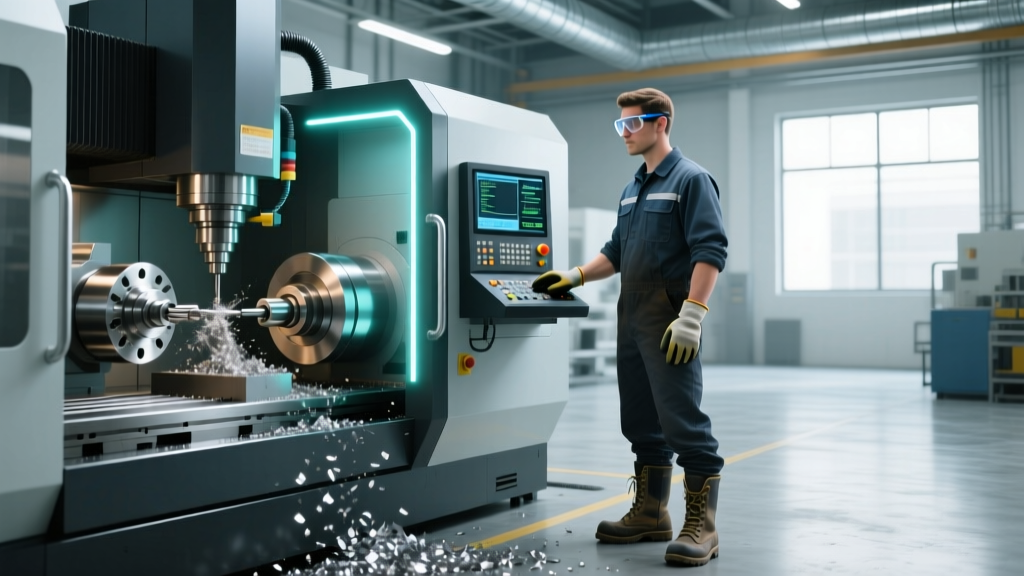
An operator's primary responsibility is managing the physical interaction between the cutting tool and the workpiece. This requires a deep understanding of machine kinematics. For example, when operating a standard 3-axis vertical machining center like the Haas VF-2, you are controlling a system driven by precision ground ballscrews and linear guideways.
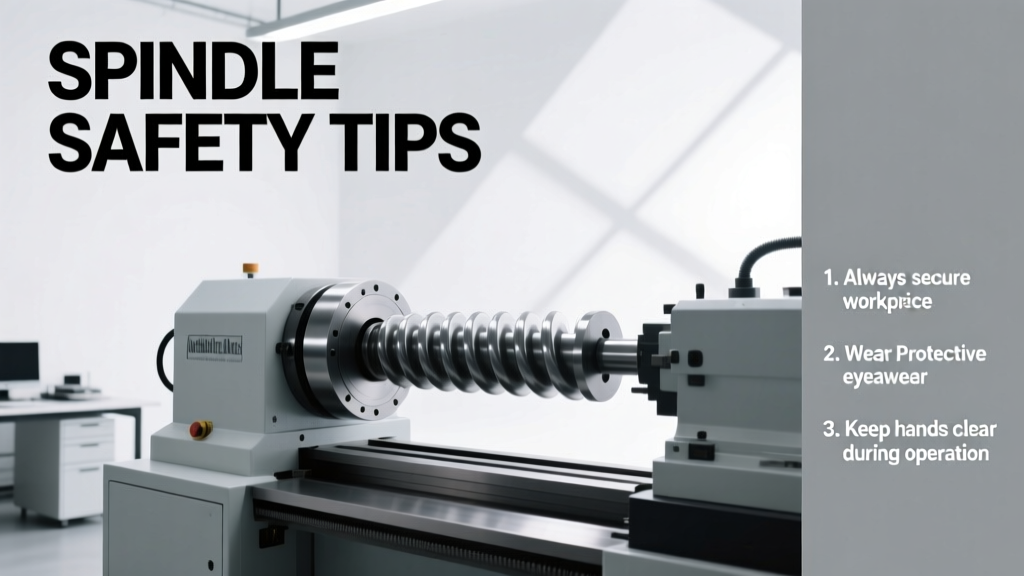
Technical Insight: Spindle Taper SelectionThe spindle taper dictates toolholding rigidity and high-speed performance. Operators must understand the difference between CAT40, BT40, and HSK63 interfaces:
- CAT40 (V-Flange): Standard for North American 3-axis mills. Excellent for heavy roughing but lacks face contact, limiting high-speed accuracy.
- BT40: Common in Asian-market machines; uses a pull-stud thread metric standard. Symmetrical flange design balances better at high RPMs than CAT.
- HSK-A63 (Hollow Shank): Features dual-contact (taper and face). As centrifugal force increases at 12,000+ RPM, the spindle bore expands; the HSK design locks tighter, maintaining Z-axis accuracy essential for 5-axis aerospace milling.
Through-Spindle Coolant (TSC) Pressures
Modern operators must manage coolant pressure specifications to prevent tool failure. Standard flood coolant operates at roughly 300 PSI. However, when executing deep-cavity milling or deep-hole drilling with carbide tools (e.g., Kennametal KenTIP FS drills), operators must engage high-pressure TSC at 1,000 PSI. This pressure is required to break the chip at the cutting edge and evacuate it through the tool's flutes, preventing chip packing and catastrophic tool breakage.
Control Architecture: Processing Speeds and Look-Ahead
The CNC controller is the brain of the machine. Understanding how different control systems process data is critical for optimizing cycle times and preventing dwell marks on finished surfaces. Below is a technical comparison of the dominant control architectures you will encounter.
| Control System | Block Look-Ahead | Processing Speed | Primary Application |
|---|---|---|---|
| Fanuc 31i-B5 | Up to 1,000 blocks | Ultra-high (Nano-smoothing) | 5-axis aerospace, complex 3D surfacing |
| Haas NGC | 300+ blocks | High (Conversational & G-Code) | General 3-axis/4-axis production, job shops |
| Mazak Mazatrol | Variable (AI-driven) | Optimized for Mill-Turn | Integrex mill-turn centers, done-in-one parts |
When machining complex 3D contours (such as impeller blades or mold cavities), the program may contain hundreds of thousands of micro-line segments. If the control's look-ahead buffer is too small, the machine will decelerate at every block transition, causing dwell marks and burning the cutting tool. Operators must know how to adjust acceleration/deceleration parameters (often found in the machine's parameter menu) to match the contour's geometry.
The Language of the Machine: G-Code Execution and Cutter Comp
While CAM software generates the baseline code, the operator must read, verify, and edit G-code at the machine. The most critical technical skill in G-code manipulation is mastering Cutter Radius Compensation (CRC).
Mastering G41, G42, and G40
CRC allows the operator to adjust for tool wear without altering the original CAM toolpath. The control shifts the toolpath by the exact radius stored in the tool offset page.
- G41 (Left Compensation): The control shifts the tool to the left of the programmed path, relative to the direction of tool travel. Used for climb milling external contours.
- G42 (Right Compensation): The control shifts the tool to the right. Used for conventional milling or machining internal pockets.
- G40 (Cancel): Deactivates compensation. Failure to program G40 at the end of a contour is the leading cause of machine crashes during tool retracts.
You cannot engage G41 or G42 on a corner or an arc. The control requires a linear lead-in move that is strictly longer than the cutter's radius. If you attempt to engage G41 on a 0.500" linear move with a 0.625" diameter endmill, the control will throw an "Interference Alarm" and halt the machine, as the mathematical offset vectors cross over one another.
Precision Metrology: The Operator's Verification Toolkit
Becoming a CNC operator means becoming a metrologist. You must verify that the physical part matches the CAD model's Geometric Dimensioning and Tolerancing (GD&T) callouts. This requires specific, calibrated instrumentation.
Essential Hand Metrology Tools
- Mitutoyo 500-196-30 (6" Digimatic Caliper): The industry standard for general tolerances (+/- 0.001"). Features an Absolute encoder scale that retains its zero point even when powered off.
- Fowler 52-585-005 (Internal Bore Gauge): Required for measuring bore diameters with tight tolerances (+/- 0.0002"). Operators must use a micrometer to set the bore gauge to a master ring gauge before measuring the machined part.
- Precision Thread Gauges (Go/No-Go): Used to verify pitch diameter on tapped holes. If the "Go" gauge fails to thread in, the tap is worn or the hole was drilled undersized. If the "No-Go" gauge threads in more than two turns, the thread is oversize and the part is scrap.
In-Machine Probing: Renishaw OMP60
Advanced operators utilize spindle-mounted touch probes to automate part setup and in-cycle inspection. The Renishaw OMP60 uses RENGAGE strain-gauge technology rather than traditional kinematic resistive mechanisms. This eliminates "lobing error" (variations in trigger force depending on the angle of approach), ensuring 3D contour measurements are accurate to 1 micron (0.00004"). Operators write macro programs (using G65) to automatically update work offsets (G54-G59) based on the probe's physical measurement of the raw casting.
The 2026 Training Pathway: Certifications and Milestones
To formally prove your technical competency to employers, you must acquire industry-recognized credentials. The Bureau of Labor Statistics notes that employers increasingly favor candidates with verifiable, standardized technical skills over unverified on-the-job experience.
The gold standard for technical validation in the United States is the National Institute for Metalworking Skills (NIMS). The specific pathway to becoming a certified operator involves the following milestones:
Actionable Roadmap: NIMS CNC Milling Credentials- CNC Milling: Operations (Level 1): Validates your ability to safely start up a machine, perform tool length and work offset setups, execute a first-article run, and perform basic hand metrology. Exam cost: ~$150.
- CNC Milling: Programming, Setup, and Operations (Level 2): Requires you to manually write G-code, set up complex multi-axis fixtures, and troubleshoot tool deflection and chatter. Exam cost: ~$200.
- Measurement, Materials & Safety: A prerequisite credential covering micrometer usage, cutting fluid chemistry, and OSHA lockout/tagout (LOTO) procedures.
Summary: From Button Pusher to Technical Operator
Understanding how to become a CNC machine operator requires shifting your focus from simply running parts to mastering the technical specifications of the equipment. By deeply understanding spindle kinematics, control architecture look-ahead buffers, the mathematical rules of G-code cutter compensation, and strain-gauge metrology, you transition from a basic machine tender to a highly compensated, indispensable manufacturing technician. Focus your training on the physics of the cut and the logic of the code, and the career progression will follow naturally.