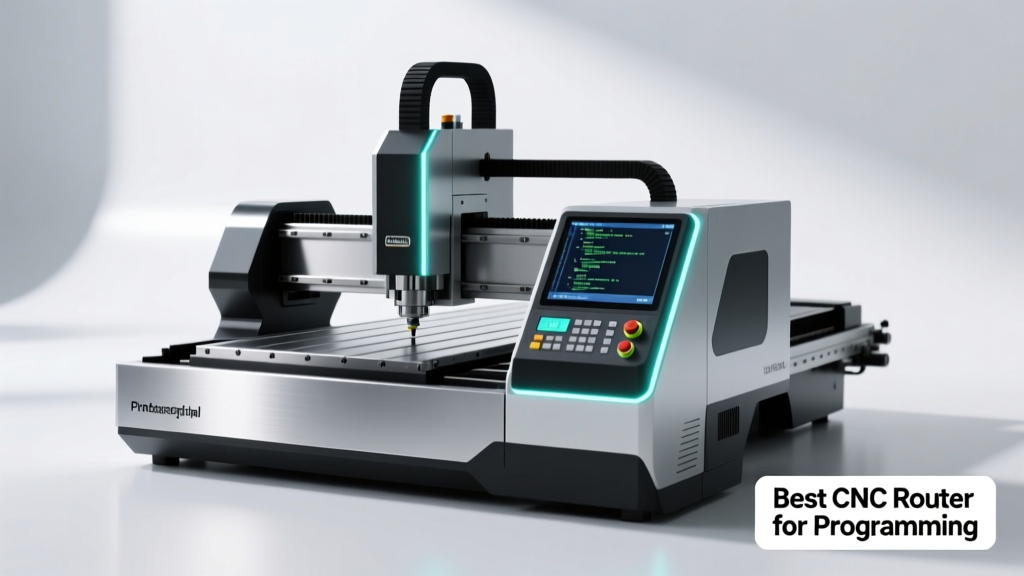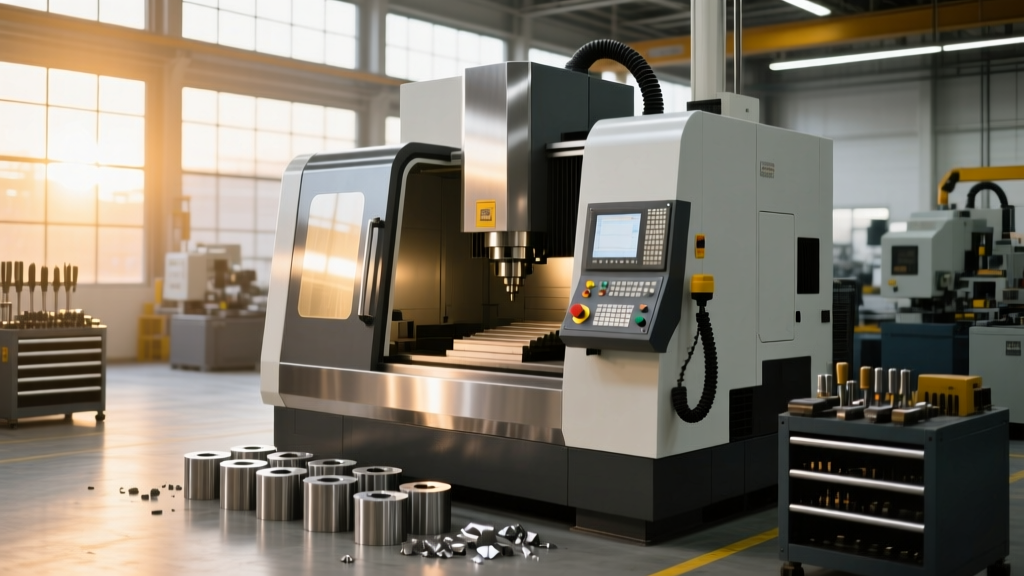
How Much Does a CNC Machine Cost? 2026 Budget Guide
Discover exactly how much a CNC machine costs in 2026. We break down pricing tiers, hidden tooling expenses, and total cost of ownership for every budget.
Asking how much does a cnc machine cost is functionally identical to asking how much a vehicle costs. The answer spans from a $300 desktop diode laser to a $750,000+ 5-axis simultaneous machining center. However, the sticker price of the machine itself is only the entry fee. In 2026, the true cost of CNC ownership is defined by the "Ready-to-Cut" multiplier—the combined expense of tooling, workholding, software, facility prep, and rigging required to make your first chip.
This guide strips away the marketing brochures and provides a forensic breakdown of CNC machine pricing, total cost of ownership (TCO), and the hidden capital requirements for hobbyists, job shops, and high-volume production facilities.
The 2026 CNC Pricing Matrix: Base Machine Costs
Machine pricing has stabilized following the supply chain disruptions of the early 2020s, but inflation and advanced standard features (like integrated probing and high-speed look-ahead) have shifted the baselines. Below is the current market reality for vertical milling centers and CNC routers.
| Tier | Machine Category | 2026 Price Range (USD) | Representative Models |
|---|---|---|---|
| Tier 1: Hobbyist | Desktop Routers & Mini Mills | $250 – $4,500 | Genmitsu PROVerXL 4030, Shapeoko 5, Bantam Tools Desktop CNC |
| Tier 2: Prosumer | Light Job Shop & Prototyping | $8,000 – $45,000 | Tormach PCNC 1100 Series 4, Haas Mini Mill, Pocket NC 5-Axis |
| Tier 3: Industrial | Production Vertical Machining Centers | $65,000 – $180,000 | Haas VF-2SS, Doosan DNM 4500, Brother S700X2 |
| Tier 4: Advanced | 5-Axis & Multi-Tasking Centers | $220,000 – $750,000+ | aas UMC-750SS, DMG MORI DMU 50 3rd Gen, Mazak VARIAXIS i-700 |
The "Ready-to-Cut" Multiplier: Hidden Capital Requirements
A common fatal error in shop budgeting is allocating 100% of available capital to the machine base price. If you purchase a $75,000 Haas VF-2SS, you must budget an additional 20% to 35% to actually put it into production.
⚠️ The 30% Rule of Thumb
For every $100,000 spent on an industrial CNC machine, reserve $30,000 for immediate ancillary requirements. This covers workholding, initial tooling libraries, coolant systems, and power infrastructure.
Workholding and Tooling
The machine is only as rigid as its weakest holding point. A standard 6-inch Kurt DX6 Anglock vise costs approximately $1,200. A production cell running multiple parts may require four vises, plus a suite of ER32 collet chucks, hydraulic fixtures, and tombstones for horizontal setups. Furthermore, stocking an initial library of carbide endmills, indexable face mills, and drills it is standard when up-front $8,000 before the first cycle runs. Sourcing from established industrial suppliers like MSC Industrial Direct ensures access to documented tool life data and consistent geometries.
Digital Infrastructure & CAM Software
Hardware is uselessel without the digital toolpaths to drive it. Computer-A- (CAM) software pricing varies wildly based on your axis requirements:
- Autodesk Fusion : Free for non-commercial hobbyists; Commercial licenses hover around $545/year. Excellent for 3-axis and basic 4-axis indexing.
- Mastercam: The industry standard for complex job shops. A 3-axis Mill package starts around $4,500, while full 5-axis simultaneous toolpaths can exceed $12,000 per seat, plus annual maintenance (SMA) fees of roughly 18%. Explore their ecosystem via the Mastercam official portal.
- Siemens NX / CATIA: Required for aerospace and Tier 1 automotive surfacing. Expect to pay $15,000 to $30,000+ per seat, often bundled with enterprise PLM systems.
Facility Preparation: Power, Air, and Floor Load
Industrial CNC machines are not plug-and-play. Plugging a 20-horsepower spindle into a standard residential or light-commercial panel will trip breakers and damage drives.
Electrical & Pneumatic Upgrades
Most Tier 3 and Tier 4 machines require 3-phase power (typically 208V or 480V). If your facility only has single-phase power, you must either install a rotary phase converter ($2,500 – $6,000) or pay the local utility to drop a 3-phase line ($10,000 – $40,000+ depending on distance from the main). Additionally, CNC machines require clean, dry compressed air for tool changers and spindle air blasts. A 60-gallon, 2-stage reciprocating air compressor with a refrigerated air dryer will add $3,500 to your facility prep budget.
Rigging and Floor Reinforcement
A standard Haas VF-2 weighs roughly 8,000 lbs. Moving it from the delivery truck to your shop floor requires professional riggers with specialized skates and forklifts, costing between $1,500 and $4,000 locally. Furthermore, if you are placing heavy machinery on a standard 4-inch residential concrete slab, the floor will crack and settle, destroying the machine's geometric accuracy. Industrial CNCs require a minimum 6-inch reinforced concrete pad, often requiring localized trenching and repouring.
Buying New vs. Used: A Decision Framework
The secondary current used market is flooded with machines from closed startups and upgrading job shops. However, buying used requires stringent mechanical verification.
"A used CNC machine is only a bargain if the ballscrews and spindle bearings are within tolerance. A $15,000 spindle rebuild will instantly erase the discount you negotiated on a 10-year-old VMC."
— Senior Applications Engineer, Midwest Job Shop
When to Buy New
- Warranty & Support: Manufacturers like Haas Automation offer robust factory-direct support and 1-year bumper-to-bumper warranties.
- Financing: Banks and captive finance arms easily underwrite new equipment at favorable rates (often 5-8% APR in the current industrial lending environment).
- Technology: Modern controls offer look-ahead processing, high-speed machining (HSM) codes, and integrated Renishaw probing that older machines lack.
When to Buy Used
- Depreciation Absorption: A 5-year-old machine has already taken the steepest depreciation hit. You can often acquire a lightly used Doosan or Mazak for 40-50% of its original invoice.
- Control Familiarity: Fanuc and Haas controls from 2015-2020 are virtually identical to current iterations, meaning no learning curve for your programmers.
- Inspection Protocol: Never buy used without running a "teardrop test" on the spindle (checking for bearing wear via vibration analysis) and using a dial indicator to measure backlash on the X, Y, and Z ballscrews. Backlash exceeding 0.0005 inches indicates impending mechanical failure.
Total Cost of Ownership (TCO) and Maintenance
Budgeting for a CNC machine does not end at purchase. Ongoing operational costs must be factored into your hourly shop rate.
Annual Maintenance Baseline (Tier 3 Industrial VMC)
- Way Lube & Hydraulic Fluid: $400 - $800 / year
- Tramp Oil Skimmers & Coolant (e.g., Trim MicroSol): $1,200 - $2,500 / year
- Preventative Maintenance (PM) Contracts: $2,000 - $4,000 / year (covers laser calibration and ballbar testing)
- Spindle Rebuild Reserve: Set aside $1,500 / year to amortize a future $12,000+ spindle rebuild at the 10,000-hour mark.
Calculating Your Payback Period
To determine if a machine purchase makes financial sense, calculate the fully burdened hourly cost. Take the total "Ready-to-Cut" cost and divide it by your expected utilization hours over a 5-year period.
For example, a $100,000 total investment (machine + tooling + rigging) utilized for 40 hours a week over 50 weeks a year for 5 years equals 10,000 hours. Your base machine cost is $10/hour. Add $25/hour for operator labor, $15/hour for overhead (rent, power, insurance), and $5/hour for consumable tooling wear. Your fully burdened shop rate is $55/hour. If your market allows you to bill $85/hour for 5-axis aerospace work, the machine pays for itself in roughly 3.2 years, yielding pure profit for the remainder of its lifespan.
Understanding exactly how much a CNC machine costs requires looking past the showroom sticker. By budgeting for the complete ecosystem of tooling, software, facility upgrades, and long-term maintenance, you transform a capital expenditure into a predictable, high-yield production asset.
Related reading

Troubleshooting vs. Medical: Why CNC Buyers Must Distinguish Critical Application Categories
Technical Alternatives to Code: Low-Code Platforms, Visual Programming, and No-Code Automation in Modern Manufacturing & CNC Integration