What Is a CNC Milling Machine? Industry Applications & Cases
Discover what a CNC milling machine is through real-world aerospace, automotive, and medical case studies, featuring specific models, tooling, and costs.
Defining the Core: What Is a CNC Milling Machine?
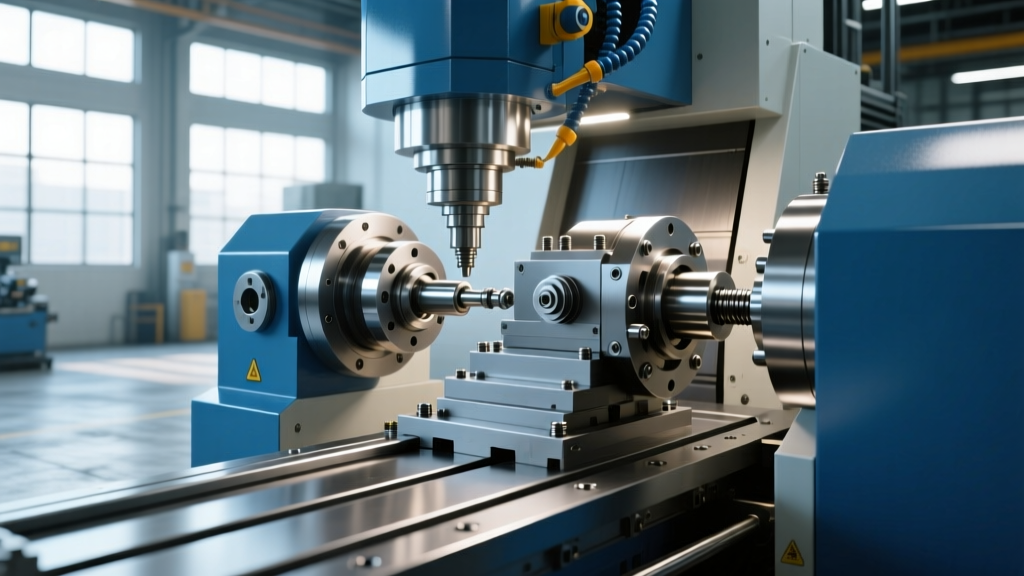
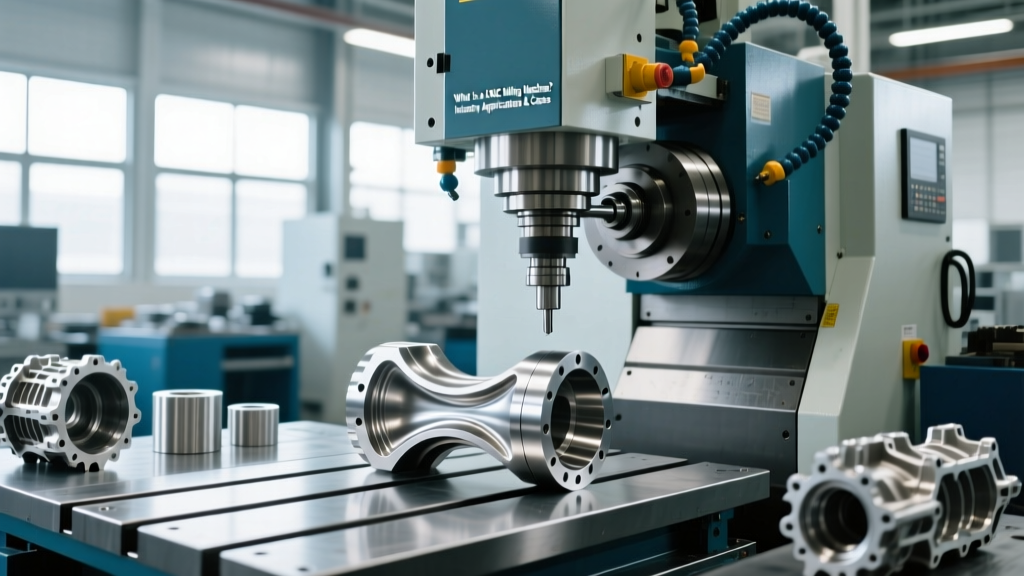
At its most fundamental level, a CNC (Computer Numerical Control) milling machine is a subtractive manufacturing tool that uses rotary cutting tools to remove material from a stationary workpiece. Unlike a CNC lathe, where the workpiece spins and the tool remains stationary, a milling machine secures the raw material to a bed or vise while a high-speed spindle moves along multiple axes to carve out complex geometries.
Modern CNC mills are driven by G-code and M-code instructions, interpreted by controllers like Fanuc, Siemens, or Heidenhain. While 3-axis machines (X, Y, Z) handle standard prismatic parts, the integration of 4-axis and 5-axis simultaneous kinematics allows for the machining of undercuts, complex contours, and aerospace blisks in a single setup. To truly understand the capabilities of these systems, we must look past the spec sheets and examine how they perform in high-stakes production environments.
Expert Insight: The defining metric of a modern CNC mill is no longer just spindle speed; it is the dynamic accuracy under heavy cutting loads. A machine that boasts 20,000 RPM but suffers from thermal growth at the spindle nose will fail tight-tolerance aerospace applications.Case Study 1: Aerospace Blisk Milling (5-Axis Simultaneous)
Machining a bladed disk (blisk) from a solid billet of Ti-6Al-4V titanium alloy represents one of the most demanding applications for CNC milling. The aerospace sector requires extreme precision, governed by AS9100 quality standards, where a single scrapped part can cost upwards of $45,000 in raw material and lost cycle time.
The Setup and Machinery
For a recent Tier-1 aerospace supplier project, the chosen platform was the DMG MORI DMU 200 G. This 5-axis machine features a 15,000 RPM spindle with 130 Nm of torque, specifically tuned for hard-metal removal. The workholding utilized a custom hydraulic zero-point clamping system to ensure repeatability within 0.003 mm across pallet changes.
Tooling and Coolant Strategy
Titanium is a poor conductor of heat. Without aggressive thermal management, cutting tools fail catastrophically within minutes. According to Sandvik Coromant's aerospace machining guidelines, high-pressure coolant is non-negotiable for titanium milling.
- Tooling: Solid carbide end mills with an AlTiN (Aluminum Titanium Nitride) PVD coating, featuring a variable helix design to break harmonic chatter.
- Coolant Pressure: Through-spindle coolant (TSC) delivered at 70 bar (1,015 psi) directly to the cutting edge to evacuate chips and prevent re-cutting.
- Toolpath Strategy: Adaptive clearing (trochoidal milling) to maintain a constant tool engagement angle of 15%, preventing localized heat buildup.
Case Study 2: Automotive EV Battery Enclosures (High-Speed Aluminum)
The shift to electric vehicles has created massive demand for battery enclosures. These large, thin-walled structures are typically machined from 6061-T6 or 6082 aluminum extrusions. The challenge is not material hardness, but rather vibration control, cycle time reduction, and maintaining flatness tolerances of ±0.05 mm across a 2-meter span.
Production Line Integration
High-volume automotive plants rely on horizontal machining centers (HMCs) with integrated pallet pools. For a 2025 EV rollout, a major manufacturer deployed the Makino a61nx HMC. As detailed in Makino's machining center specifications, the a61nx offers a 14,000 RPM spindle and rapid traverse rates of 60 m/min, drastically reducing non-cutting time.
Workholding and Cycle Time Economics
Clamping thin aluminum walls causes distortion. Once the clamps are released, the part springs back out of tolerance. To solve this, engineers use custom vacuum chucks combined with low-pressure mechanical locators. Below is a comparison of the production economics between legacy 3-axis setups and optimized 5-axis HMC cells for EV housings.
| Metric | Legacy 3-Axis VMC (e.g., Haas VF-4) | Optimized 5-Axis HMC (e.g., Makino a61nx) |
|---|---|---|
| Setup Operations | 3 (Requires manual flipping) | 1 (Single tombstone setup) |
| Cycle Time per Part | 48 minutes | 22 minutes |
| Flatness Tolerance Achieved | ±0.15 mm (Clamp distortion) | ±0.04 mm (Vacuum holding) |
| Estimated Machine Cost (2026) | $95,000 | $310,000 |
| Cost Per Part (at 100k volume) | $14.20 | $6.85 |
While the initial capital expenditure for the 5-axis HMC cell is over three times higher, the 52% reduction in cycle time and elimination of secondary operations yields a return on investment (ROI) in just 11 months at production volumes exceeding 100,000 units annually.
Case Study 3: Medical Micromilling (Orthopedic Implants)
Machining orthopedic implants, such as femoral knee components, requires working with Cobalt-Chrome (CoCr) or highly polished titanium. These parts demand mirror-like surface finishes (Ra 0.2 µm or better) to prevent wear against ultra-high-molecular-weight polyethylene (UHMWPE) cartilage inserts.
The Micromilling Environment
Standard CNC mills lack the thermal stability and resolution for medical micromilling. Facilities producing these implants utilize ultra-precision machines like the Kern Pyramid Nano. This machine features hydrostatic guideways and a positioning accuracy of ±0.0005 mm.
To achieve the required surface finish without manual polishing—which introduces human error and alters the implant's critical dimensions—shops employ Minimum Quantity Lubrication (MQL). MQL delivers a microscopic mist of biodegradable oil directly to the cutting zone. This eliminates the thermal shock of traditional flood coolant, keeping the spindle and workpiece at a stable 20°C (68°F), which is critical when holding micron-level tolerances.
'In medical micromilling, your biggest enemy isn't the hardness of the CoCr alloy; it's the ambient temperature of the shop floor. A 2°C swing in the room can shift the Z-axis datum enough to scrap a $2,000 implant blank.' — Lead Manufacturing Engineer, Tier-1 Orthopedics Supplier.
Decision Framework: Sizing a CNC Mill for Your Application
Understanding what a CNC milling machine is requires matching the machine's kinematics to your specific industry output. Use this framework to guide capital equipment purchases, supported by data from the NIST Manufacturing Extension Partnership (MEP) regarding shop floor modernization.
1. Evaluate Part Geometry vs. Axis Count
- 2.5D to 3D Prismatic Parts (Brackets, Manifolds): A 3-axis Vertical Machining Center (VMC) like the Haas VF-2SS (approx. $85,000) is the most cost-effective choice. Avoid paying for 5-axis capabilities you will not utilize.
- Complex Contours & Undercuts (Impellers, Blisks, Turbines): Mandate a 5-axis machine with a tilting rotary table (TRT) or swivel head. Look for machines with direct-drive torque motors rather than worm-gear drives to eliminate backlash.
2. Calculate the True Cost of Workholding
Novice buyers allocate 95% of their budget to the machine and 5% to tooling and workholding. Industry leaders invert this ratio. If you are machining high-value aerospace or medical parts, budget an additional $15,000 to $30,000 for zero-point clamping systems (like System 3R or Erowa), custom hydraulic vises, and high-pressure coolant chillers. The machine is only as accurate as the fixture holding the part.
3. Assess Control System Familiarity
The physical iron of the machine is secondary to the operator's ability to program and run it. If your shop floor is staffed by programmers trained on Fanuc macro-B, purchasing a machine with a proprietary or niche European controller will result in a 30% drop in initial spindle utilization. Align your controller choice (Fanuc, Siemens, Heidenhain) with your existing workforce's expertise or budget for comprehensive 6-month training programs.
Summary of Capabilities
A CNC milling machine is not a single, monolithic tool, but a highly adaptable platform defined by its application. Whether it is a 5-axis DMG MORI carving titanium blisks at 70 bar of coolant pressure, a Makino HMC vacuum-machining EV battery trays in 22 minutes, or a Kern micromill achieving Ra 0.2 µm finishes on knee implants, the core principle remains identical: rigid, thermally stable, computer-controlled material removal. Success in modern manufacturing relies on selecting the exact kinematic package, tooling strategy, and workholding solution that aligns with your specific industry's tolerance and throughput demands.