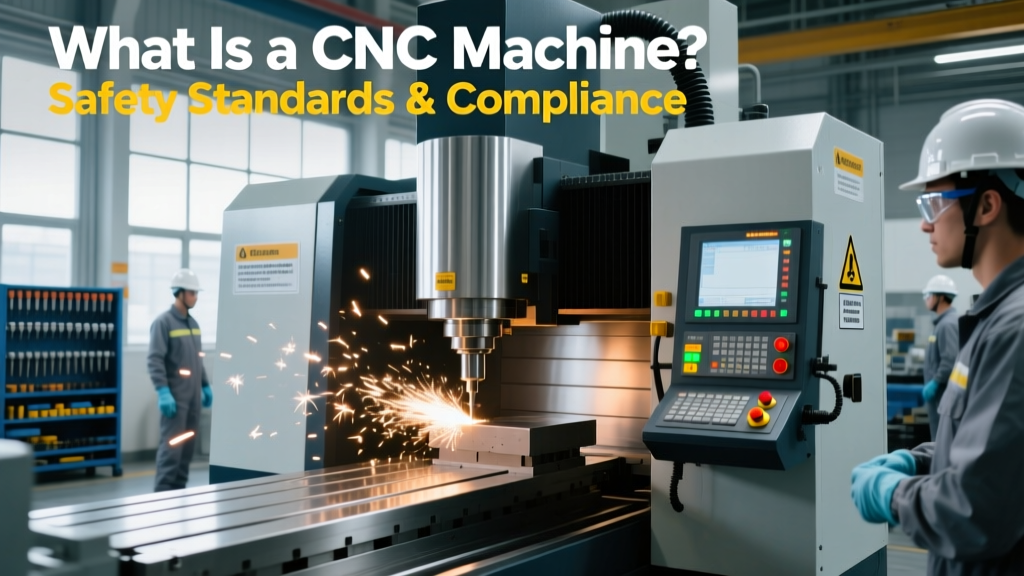
What Is a CNC Machine? Safety Standards & Compliance
Discover what is CNC machine technology through the lens of safety. Learn ISO 16090, OSHA compliance, interlock standards, and 2026 audit checklists.
Defining the CNC Machine Through a Safety Lens
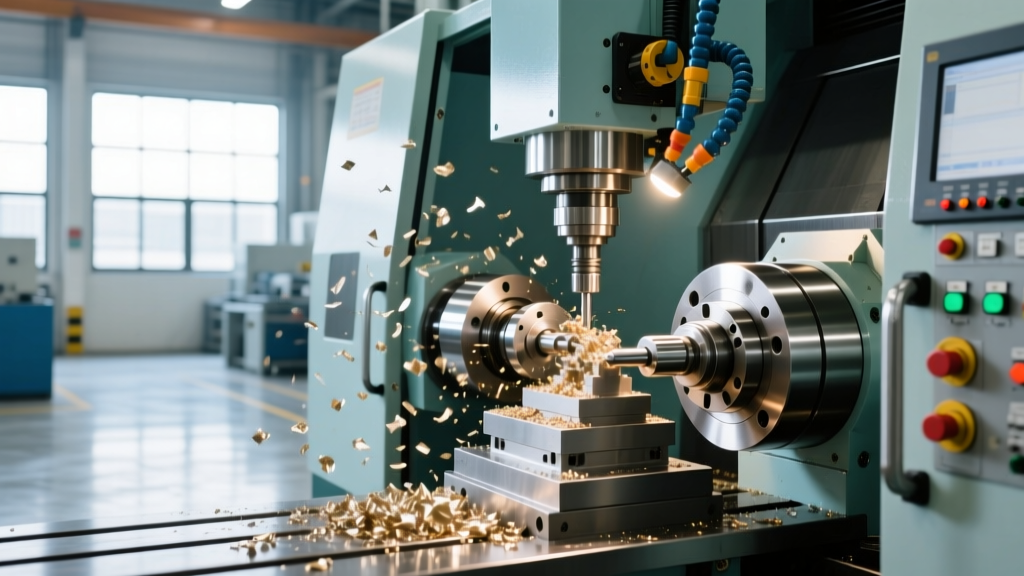
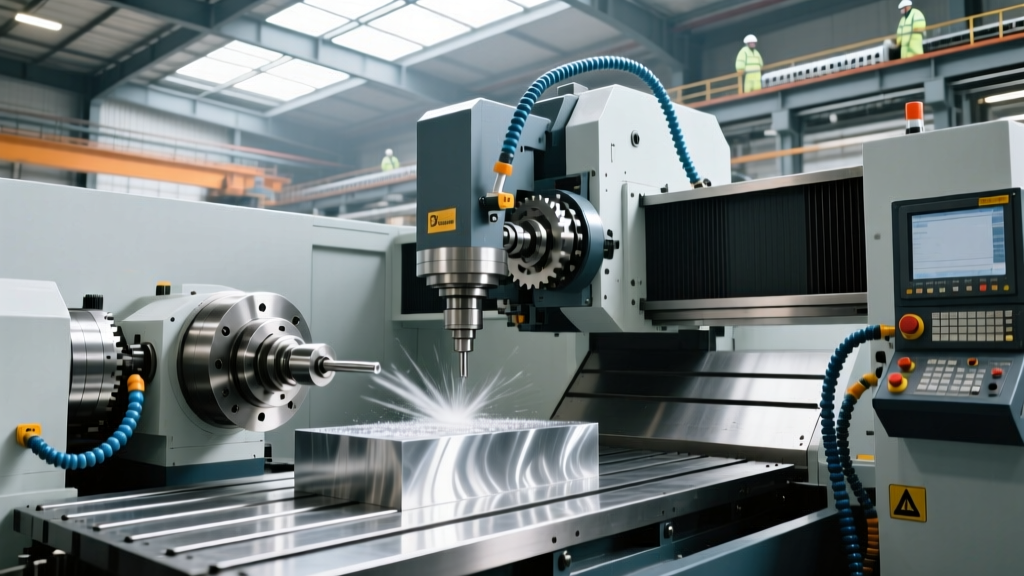
When shop floor managers and safety officers ask, 'what is cnc machine' technology fundamentally composed of, the answer extends far beyond servos, spindles, and G-code. At its core, a Computer Numerical Control (CNC) machine is a high-kinetic-energy automated manufacturing system. In 2026, with spindle speeds on standard vertical machining centers (VMCs) routinely exceeding 12,000 RPM and rapid traverse rates hitting 1,500 inches per minute, the definition of a CNC machine is inextricably linked to its safety architecture.
Understanding CNC fundamentals requires mastering the regulatory frameworks that govern them. A machine without compliant guarding, certified interlocks, and proper stopping categories is not just a liability; it is an imminent hazard. This guide deconstructs CNC machinery by examining the exact safety standards, containment requirements, and compliance audits required for modern manufacturing environments.
WARNING: The Retrofit TrapUpgrading a legacy CNC (e.g., a 2008 Haas VF-2 or Mori Seiki NV series) with modern 3D probing or automated pallet changers often voids the original CE or UL listing. If the new automated doors or pneumatic clamps are not integrated into the machine's existing safety PLC via certified protocols like CIP Safety or PROFIsafe, the entire machine must be re-evaluated under current ISO 16090 standards.
The Anatomy of CNC Containment and Guarding
To understand what is CNC machine guarding, we must look at the physical barriers designed to contain catastrophic failures. The primary hazard in milling and turning is not just the cutting tool, but the workpiece and tooling components becoming high-velocity projectiles.
Polycarbonate Enclosure Specifications
Standard acrylic or thin polycarbonate windows are non-compliant for modern enclosed CNCs. According to testing data referenced by machine tool builders, a 10,000 RPM spindle failure can generate impact forces exceeding 4,000 Joules. Compliant CNC enclosures utilize specialized materials:
- Material: Makrolon® or Lexan® polycarbonate, specifically graded for machine tool impact resistance.
- Thickness: Minimum 12mm (0.47 inches) for standard VMCs; up to 20mm for heavy-duty lathes and 5-axis trunnion tables operating at high mass.
- Chemical Degradation: Polycarbonate is highly susceptible to stress cracking when exposed to synthetic coolants (like Trim E206) and improper cleaning solvents. ISO 16090-1 mandates that guarding materials must resist degradation from all specified process fluids. Operators must use only water-based or specifically approved polycarbonate cleaners; using acetone or alcohol-based cleaners will cause micro-fractures, leading to explosive window failure during operation.
Core Global Safety Standards for CNC Operations
Regulatory compliance depends heavily on the geographic location of the manufacturing facility, though global harmonization is increasing. The following standards dictate the design and operation of CNC machinery:
ISO 16090 and ISO 23125 (Machine Tool Specifics)
ISO 13849-1:2023 provides the general framework for safety-related parts of control systems, but machine-specific standards take precedence on the shop floor. ISO 16090-1 governs safety for milling and boring machines, while ISO 23125 covers turning machines. These standards dictate specific requirements for chip conveyors, automated door interlocks, and the prevention of unexpected startup.
NFPA 79 and OSHA 1910.212 (North America)
In the United States, the National Fire Protection Association's NFPA 79 Electrical Standard for Industrial Machinery governs the electrical panel, wiring, and motor control circuits of CNC machines. Meanwhile, OSHA 1910.212 outlines the general requirements for all machine guarding, mandating that barriers protect the operator from the point of operation, ingoing nip points, and rotating parts.
Compliance Matrix: CE Marking vs. OSHA/NFPA
Multinational manufacturing firms often struggle to standardize their CNC fleets. Below is a comparison of how the two major regulatory frameworks handle critical CNC safety functions.
| Safety Function | CE Marking (EU / ISO Standards) | OSHA / NFPA 79 (North America) |
|---|---|---|
| Door Interlocks | Must be ISO 14119 compliant; trapped key or RFID (e.g., Pilz PSENmlock) required for high-inertia spindles. Guard locking mandatory until spindle reaches 0 RPM. | OSHA requires interlocks to prevent machine startup when open. NFPA 79 mandates specific wiring classes but historically allowed simpler mechanical limit switches if risk assessment permits. |
| Emergency Stop (E-Stop) | Must trigger a Category 0 or Category 1 stop per ISO 13850. Hardwired, dual-channel redundancy required. | NFPA 79 requires Category 0 (immediate power removal via contactors) or Category 1 (controlled stop, then power removal). Must be hardwired, not software-dependent. |
| Light Curtains / AOPDs | Allowed only if the machine cycle can be reliably halted before the operator reaches the hazard (calculated via ISO 13855 safety distances). | Rarely accepted as primary guarding for the point of operation on CNC mills/lathes due to the inability to stop the cutting action instantly; physical barriers are preferred. |
Control System Architecture: Performance Levels (PL)
When evaluating what is CNC machine control logic from a safety perspective, engineers use the Performance Level (PL) rating system defined by ISO 13849-1. Modern CNC machines utilize safety PLCs (such as the Allen-Bradley GuardLogix 5580 or Siemens SINUMERIK Safety Integrated) to monitor the machine state.
'The shift to integrated safety drives in 2026 means that safety functions like Safe Torque Off (STO) and Safe Speed Monitor (SSM) are executed directly inside the spindle drive, eliminating the need for external main contactors and drastically reducing Category 1 stopping times.' — Industrial Automation Safety Consortium
Understanding Stop Categories in CNC
- Category 0 (Immediate): Power is removed instantly from the spindle and axis drives. The spindle coasts to a stop. This is the default E-Stop action, but on a high-mass 15,000 RPM spindle, coasting can take over 60 seconds, requiring the door interlock to remain locked (guard locking) until zero speed is verified.
- Category 1 (Controlled): The drive uses dynamic braking to stop the spindle and axes rapidly, and then removes power. This is used for standard cycle stops or feed holds, minimizing mechanical stress on the ballscrews and spindle bearings.
Step-by-Step CNC Safety Compliance Audit Checklist
Shop floor managers should execute this audit quarterly to ensure ongoing compliance and hardware integrity.
- Verify Interlock Functionality: Open the primary operator door during an active dry-run cycle. The feed must halt immediately. Attempt to open the door during a high-RPM spindle run; the mechanical guard lock must resist manual pulling forces up to 1,000 Newtons.
- Inspect Polycarbonate Glazing: Check the interior of the main window for yellowing, micro-cracking, or hazing. If coolant has degraded the material, replace it immediately with OEM-specified thickness polycarbonate.
- Test E-Stop Circuits: Press all E-Stop buttons (operator panel, pendant, and rear electrical cabinet). Verify on the HMI that the safety PLC registers the exact node of the E-Stop trigger, confirming the dual-channel diagnostic wiring is intact.
- Audit Chip Conveyor Guarding: Ensure the pinch points where the chip conveyor belt meets the machine base are fitted with physical nip-point guards. OSHA inspectors frequently cite missing chip conveyor guards.
- Review Coolant Mist Extraction: Verify that the mist collector interlock is active. If the extraction unit fails, the CNC should trigger an alarm and pause the cycle to prevent the enclosure from pressurizing with combustible aerosolized oil.
Frequently Asked Questions (FAQ)
Does a desktop or hobbyist CNC router require CE or UL certification?
If the desktop CNC (e.g., a Tormach PCNC 440 or Shapeoko) is used strictly for personal, non-commercial hobbyist purposes, it generally falls outside the scope of OSHA and industrial CE directives. However, if that same machine is placed in a commercial prototyping lab, school, or job shop, it immediately becomes subject to OSHA 1910.212 and NFPA 79 compliance, requiring full enclosure guarding and hardwired E-stops.
What is the maximum allowable stopping time for a CNC lathe chuck?
There is no universal 'time' limit; rather, the requirement is based on the safety distance calculation (ISO 13855). The chuck must reach a complete stop (0 RPM) before the operator's hand can physically reach the hazard zone after bypassing or opening the safety interlocked guard. For high-inertia chucks, this necessates active pneumatic or hydraulic braking systems paired with RFID guard locking switches.
Can I use standard limit switches for CNC door interlocks?
Standard mechanical limit switches with simple cam actuators are largely non-compliant for modern CNC guarding under ISO 14119. They are easily defeated by operators using tape or zip-ties (a major OSHA violation). Modern compliance requires coded magnetic or RFID safety switches (like the SICK STR1 or Pilz PSENcode) that feature unique actuator coding, making deliberate defeat virtually impossible without triggering a safety fault.