What Does CNC Stand For in Machining? A Safety & Compliance Guide
Learn what CNC stands for in machining and explore the critical OSHA, ISO, and ANSI safety compliance standards required for automated machine shops.
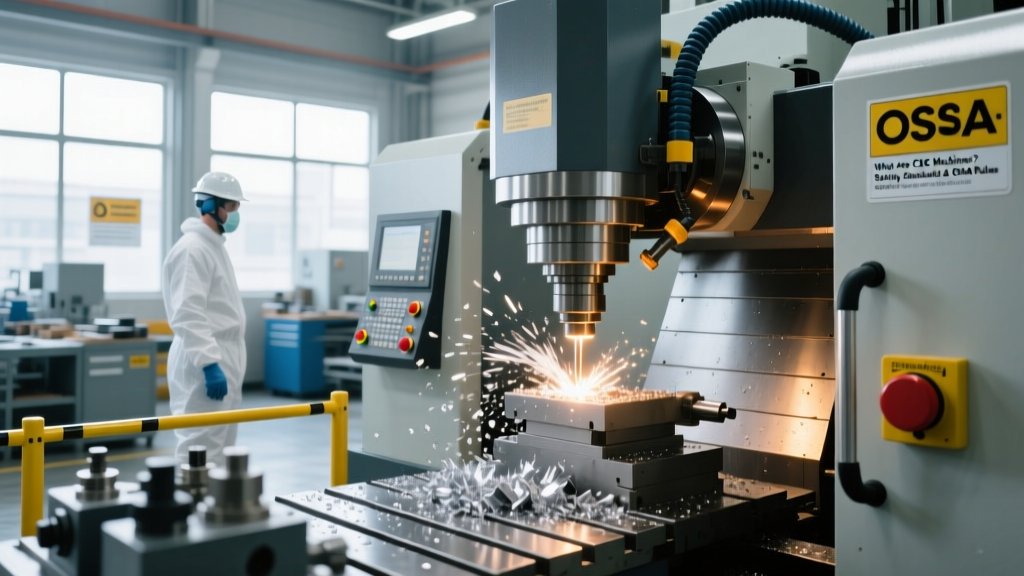
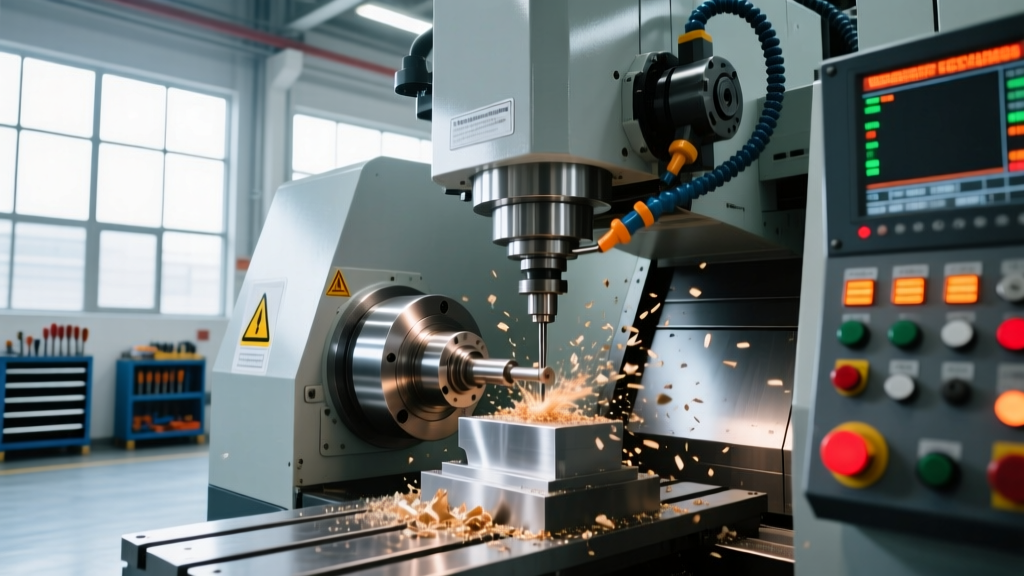
When entering the manufacturing sector, the first technical question new operators ask is: what does CNC stand for in machining? The literal definition is Computer Numerical Control. However, from a safety engineering and regulatory compliance perspective, CNC represents a high-energy, autonomous kinetic system. Unlike manual lathes or knee mills where the operator directly controls the feed rate and tool engagement, a CNC machine executes pre-programmed G-code and M-code sequences autonomously. This automation removes the operator from the immediate cutting zone but introduces severe crushing, shearing, and entanglement hazards during automated tool changes, pallet swaps, and rapid traverse movements.
The Core Definition: Breaking Down the Automation Hazards
To understand the compliance requirements, we must break down the acronym through the lens of machine guarding and hazard mitigation:
- Computer (The Interface): The CAD/CAM software and machine control unit (MCU). The hazard here is cybersecurity and program verification; a corrupted G-code file can command a spindle to rapid-traverse directly into a fixture, causing catastrophic explosive fragmentation.
- Numerical (The Coordinates): The X, Y, Z, A, B, and C axis coordinate system. Multi-axis machines (like 5-axis trunnion tables) create complex, unpredictable rotational envelopes that are difficult to guard with standard physical barriers.
- Control (The Actuation): The servo drives, PLCs, and pneumatic/hydraulic actuators. This is where the highest physical risk lies, specifically regarding stored energy and automated sequencing.
Governing Safety Standards for CNC Operations
Facility managers and safety officers must navigate a complex web of overlapping regulations. While OSHA provides the legal baseline in the United States, international ISO standards and ANSI guidelines dictate the specific engineering controls required by modern machine tool builders.
| Standard / Regulation | Scope & Application | Key Compliance Requirement |
|---|---|---|
| OSHA 29 CFR 1910.212 | General Machine Guarding (USA) | Mandates physical barriers to protect operators from rotating parts, flying chips, and coolant splash. |
| ISO 16090:2019 | Machine Tools Safety - Machining Centres | Specifies requirements for enclosure design, interlock logic, and emergency stop (E-Stop) circuit routing. |
| ANSI B11.8 | Drilling, Milling, and Boring Machines | Provides specific risk assessment frameworks for automatic tool changers (ATC) and chip conveyors. |
| NFPA 79 | Electrical Standard for Industrial Machinery | Governs the wiring of safety relays, E-Stop circuits, and control panel grounding for CNC systems. |
Enclosure Glazing and Interlock Compliance
The most critical physical barrier on a CNC machining center is the main operator door. Under OSHA 1910.212 machine guarding regulations, the enclosure must withstand the maximum kinetic energy of a tool or workpiece failure.
The Polycarbonate Mandate
A common and highly dangerous mistake in aftermarket machine maintenance is replacing shattered viewing windows with acrylic (PMMA). Acrylic is brittle and will shatter into high-velocity shrapnel if struck by a broken carbide endmill. Compliance requires the use of Polycarbonate (e.g., Makrolon or Lexan). For high-speed machining centers (spindle speeds exceeding 12,000 RPM), ISO 16090 dictates a minimum polycarbonate thickness of 12mm to 15mm, depending on the mass of the rotating tool assembly. Furthermore, polycarbonate degrades when exposed to certain synthetic cutting fluids and UV light; compliance requires replacing viewing windows every 3 to 5 years, or immediately if crazing (micro-cracking) is visible.
Safety Interlock Architecture (ISO 13849-1)
Modern CNC machines do not use simple mechanical limit switches on doors. To prevent operators from defeating the interlock with a zip-tie or tape, compliance requires RFID-coded, non-contact safety switches (such as the Sick TR10 or Schmersal AZM40 series). Under ISO 13849-1, CNC door interlocks must typically achieve Category 3, Performance Level (PL) d. This means the safety circuit uses redundant channels; if one relay welds shut, the secondary channel will still cut power to the servo drives and trigger the dynamic braking resistors.
⚠️ OSHA Warning: Interlock DefeatBypassing a CNC door interlock to run a program with the door open (often done to clear long, stringy chips) is one of the most frequently cited willful violations by OSHA. In 2025 and 2026, enforcement actions have increasingly targeted shop floor managers who implicitly allow 'cheat keys' or magnetic overrides to remain on the shop floor. Fines for willful interlock defeat frequently exceed $150,000 per instance.
Lockout/Tagout (LOTO) and Stored Energy in Multi-Axis CNC
When performing maintenance on a CNC machine, simply turning off the main disconnect is insufficient. OSHA's 1910.147 LOTO standard requires the dissipation of all stored energy. CNC machines harbor multiple hidden energy sources that can cause fatal crushing injuries:
- Z-Axis Gravity Drop: Vertical machining centers (VMCs) rely on servo motor holding torque to keep the heavy spindle head elevated. When main power is severed, the servo brakes engage. However, if the mechanical brake is worn or the axis is mid-travel, the Z-axis can drop 100+ pounds of tooling and cast iron onto a technician's hands. Compliance requires mechanically blocking the Z-axis with a rated physical prop or lowering it to the physical hard stop before LOTO begins.
- Pneumatic ATC Accumulators: Automatic Tool Changers use compressed air to actuate the drawbar and swing arm. Even with the shop air supply disconnected, localized accumulators and pilot valves can retain 80+ PSI of pressure, capable of triggering a tool release or arm swing. Maintenance protocols require manually bleeding the localized pneumatic dump valves.
- Hydraulic Pallet Clamps: Horizontal machining centers (HMCs) use high-pressure hydraulic systems (often 2,000+ PSI) to clamp tombstones. Technicians must verify zero pressure on the machine's hydraulic manifold gauges before loosening any fittings.
Coolant Mist and Air Quality Compliance
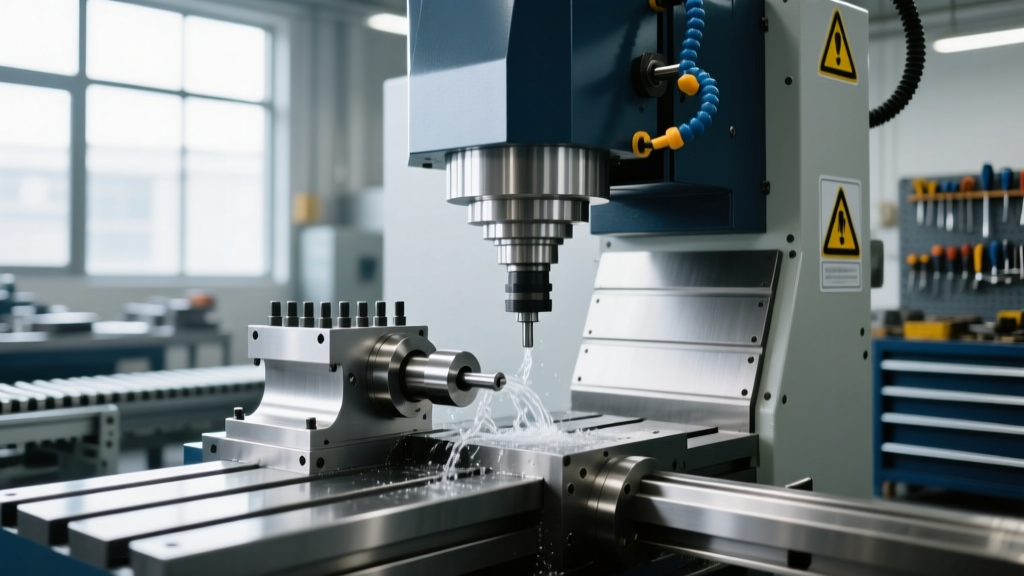
The 'Control' aspect of CNC machining allows for unattended, high-pressure coolant delivery (up to 1,000 PSI) to break chips in deep cavity milling. This generates massive volumes of aerosolized metalworking fluid (MWF). Prolonged exposure to MWF mist causes occupational asthma, hypersensitivity pneumonitis, and dermatitis.
While the legal OSHA Permissible Exposure Limit (PEL) for mineral oil mist is 5 mg/m³ (as an 8-hour TWA), the National Institute for Occupational Safety and Health (NIOSH) recommends a much stricter Recommended Exposure Limit (REL) of 0.4 mg/m³. To achieve this and maintain a compliant, safe shop floor, facilities must install properly sized centrifugal or HEPA mist collectors directly ducted to the machine enclosure. A standard 40-taper VMC requires a mist collector rated for a minimum of 600 to 800 CFM to maintain negative pressure inside the enclosure, preventing mist from escaping when the operator opens the door.
'Compliance is not just about avoiding fines; it is about engineering the hazard out of the automated cycle. A CNC machine will execute a fatal command without hesitation if the safety PLC architecture is not designed to Category 3 standards.' — Industrial Safety Engineering Journal, 2025
Actionable Compliance Checklist for Machine Shops
- Audit Enclosures: Inspect all polycarbonate windows for yellowing, crazing, or chemical degradation. Replace with OEM-specified thickness.
- Test Interlocks: Perform a monthly 'drop test' on door interlocks by initiating a rapid traverse and opening the door to verify immediate Category 3 servo braking.
- Verify LOTO Blocks: Ensure custom-machined Z-axis safety blocks are present at every VMC and included in the machine-specific LOTO procedure.
- Monitor Air Quality: Contract an industrial hygienist for annual personal breathing zone air sampling to ensure MWF mist remains below the 0.4 mg/m³ NIOSH REL.
Understanding what CNC stands for in machining is the first step in operator training. Recognizing the immense kinetic and pneumatic forces governed by that computer control is the foundation of a compliant, zero-incident manufacturing environment.