What Is a CNC Router Machine? Core Specs and Mechanics Explained
Discover what a CNC router machine is, exploring core technical specifications, drive systems, spindle mechanics, and material cutting parameters.
Defining the CNC Router: Kinematics and Purpose
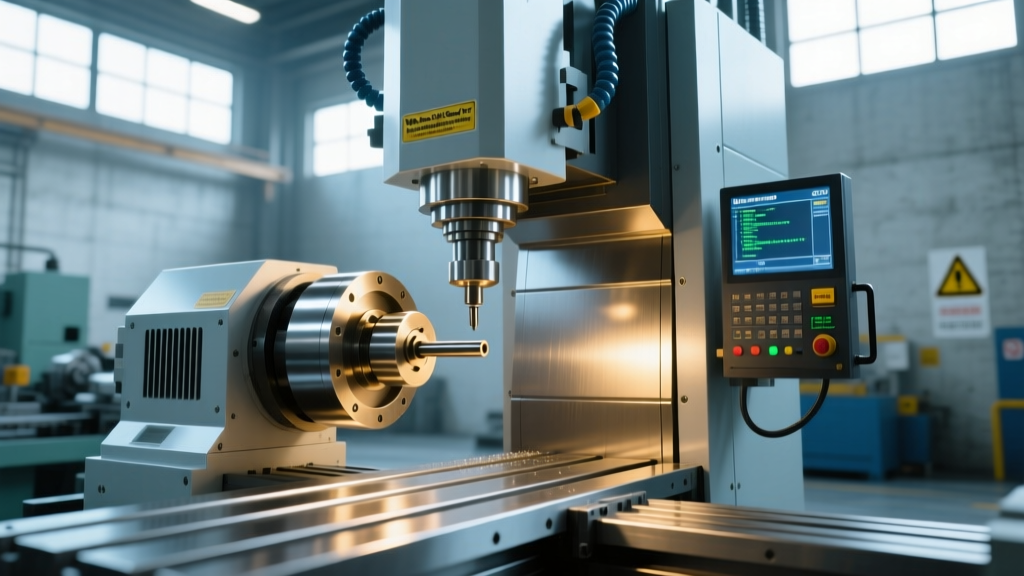
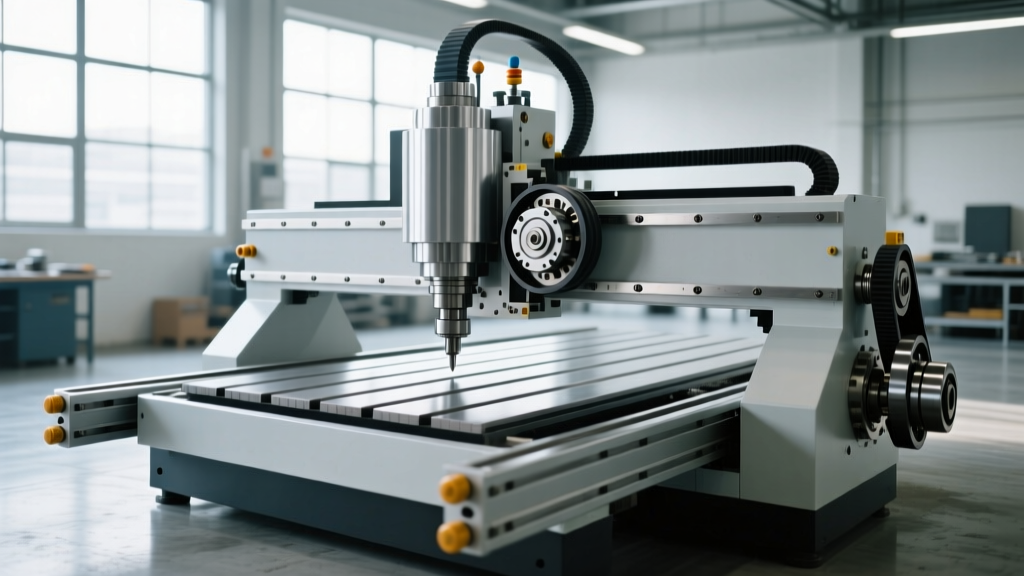
A Computer Numerical Control (CNC) router is a subtractive manufacturing system designed to cut, carve, and machine large-format sheet materials and soft metals. Unlike CNC milling machines, which utilize heavy cast-iron frames and high-torque spindles to remove aggressive volumes of hard block metals, CNC routers prioritize a massive work envelope (typically 4x8 feet or 5x10 feet), high spindle speeds (18,000 to 24,000 RPM), and rapid traverse rates. According to Autodesk's CNC machining overview, the fundamental distinction lies in the machine's architecture: routers generally employ a moving gantry over a stationary bed, whereas mills utilize a stationary spindle head and a moving table.
This moving-gantry kinematic architecture allows CNC routers to process entire sheets of plywood, MDF, acrylic, aluminum composite material (ACM), and non-ferrous metals without requiring the massive floor space a moving-bed mill would demand. However, this design introduces specific mechanical challenges regarding gantry sag, torsional twist, and vibration dampening that dictate the machine's ultimate precision.
Linear Motion and Drive Architecture
The precision of a CNC router is entirely dependent on its linear motion systems. Industrial routers abandon the lead screws found in hobbyist machines in favor of two primary technologies:
Helical Rack and Pinion (X and Y Axes)
For long-travel axes (typically exceeding 48 inches), ball screws suffer from 'whip'—a harmonic vibration caused by the rotation of a long, unsupported shaft. To eliminate this, industrial routers use helical rack and pinion drives. The helical gear teeth engage at a gradual angle (usually a 20-degree pressure angle with a 19-degree helix angle), ensuring multiple teeth are in contact simultaneously. This reduces backlash to less than 0.001 inches and allows for rapid traverse speeds exceeding 1,500 inches per minute (IPM).
Ball Screws and Linear Rails (Z Axis and Precision Systems)
The Z-axis, which handles the shorter vertical travel and must resist heavy plunge forces, relies on precision-ground C3-class ball screws. These are paired with profile linear guide rails, such as the Hiwin HG35 series. The HG35 blocks utilize recirculating ball bearings that provide a dynamic load rating of over 10,000 lbs per block, ensuring the Z-axis does not deflect when a 9kW spindle plunges into dense hardwood or aluminum.
Engineering Warning: Never evaluate a CNC router solely by its positional accuracy specifications. Repeatability and cutting rigidity under load are the true metrics. A machine may locate to 0.0005 inches in the air, but if the gantry lacks torsional rigidity, cutting 3/4-inch birch plywood will induce chatter, ruining the edge finish and destroying the end mill.Spindle Mechanics: RPM, Torque, and Collet Runout
The spindle is the heart of the router. While hobbyist machines use 2.2kW air-cooled spindles, industrial systems utilize liquid-cooled, high-frequency asynchronous motors, such as the HSD ES929 9kW spindle. These spindles require a dedicated 3-phase VFD (Variable Frequency Drive) and a closed-loop water chiller to maintain the stator temperature below 40°C during 8-hour continuous cutting cycles.
ER Collet Systems and Runout Tolerances
Tool holding is managed via ER collets (typically ER25 or ER32). The critical specification here is Total Indicator Runout (TIR). Premium CNC router spindles guarantee a taper and collet TIR of less than 0.0004 inches (0.01mm). If runout exceeds 0.001 inches, the cutting flutes of the end mill do not share the load equally, leading to premature tool failure and poor surface finishes. As detailed in Harvey Tool's technical routing guides, maintaining strict collet cleanliness and applying exact torque (100-130 Nm for ER32 nuts) is mandatory to preserve these tolerances.
Drive Systems: Closed-Loop Steppers vs. AC Servos
The motors driving the rack and pinion or ball screws dictate the machine's acceleration, holding torque, and fault recovery. The industry has largely bifurcated into two distinct drive tiers:
| Specification | NEMA 34 Closed-Loop Steppers (e.g., Leadshine) | 750W AC Servos (e.g., Yaskawa Sigma-7) |
|---|---|---|
| Resolution | 10,000 to 40,000 steps/rev via encoder | 24-bit encoder (16.7 million pulses/rev) |
| Top Speed / Torque | Torque drops sharply above 800 RPM | Constant torque up to 3,000 RPM |
| Acceleration | Moderate (prone to stall if ramped too fast) | Extreme (300% overload capacity for 3 seconds) |
| Cost Impact | Standard on machines $15k - $30k | Standard on machines $45k+ |
AC Servos utilize absolute encoders, meaning the controller knows the exact physical location of the gantry upon power-up without requiring a homing sequence. This eliminates the 3-minute homing routine required by stepper systems at the start of every shift, saving hundreds of hours annually in high-volume production environments.
Control Systems and Look-Ahead Interpolation
The physical mechanics of a router are useless without advanced motion control. Modern industrial routers utilize controllers like the Siemens Sinumerik 828D, Fanuc 0i-F, or the Syntec 60W. The most critical software feature for 3D routing and intricate vector work is 'look-ahead' interpolation.
When machining complex 3D surfaces or detailed sign-making vectors, the toolpath consists of thousands of microscopic line segments. A basic controller processes one block of G-code at a time, forcing the machine to decelerate and accelerate at every node, resulting in dwell marks and burned material. Advanced controllers feature 1,000-block to 10,000-block look-ahead, analyzing the upcoming vector geometry to maintain a constant feed rate through curves while automatically slowing down for sharp corners. According to Haas Automation's technical tips, proper tuning of look-ahead and jerk-control parameters is the primary differentiator between a mediocre surface finish and a mirror-smooth cut.
Material-Specific Feed and Speed Framework
Understanding what a CNC router is requires understanding how it interacts with diverse materials. Routers operate at significantly higher RPMs and lower chip loads than traditional mills. Below is a baseline framework for 1/2-inch (12mm) material using a 1/2-inch shank solid carbide end mill:
| Material | Tool Geometry | Spindle RPM | Feed Rate (IPM) | Depth of Cut (DOC) |
|---|---|---|---|---|
| 6061 Aluminum | 1-Flute ZrN Coated | 16,000 | 140 | 0.100" (Pass) |
| MDF (Medium Density Fiberboard) | 2-Flute Compression | 18,000 | 350 | 0.750" (Full Sheet) |
| Cast Acrylic (PMMA) | O-Flute (Single Edge) | 14,000 | 120 | 0.250" (Pass) |
| Solid Surface (Corian) | 3-Flute Carbide | 18,000 | 250 | 0.500" (Pass) |
Note: Compression bits are mandatory for double-sided laminates like melamine to prevent top and bottom tear-out, utilizing an up-cut geometry at the base and a down-cut geometry at the top of the flute.
Purchasing Tiers: What Your Budget Actually Buys
The CNC router market is strictly segmented by mechanical rigidity and component quality. When evaluating 'what is a CNC router machine' for your facility, align your budget with these realistic market tiers:
- Prosumer / Light Production ($12,000 - $25,000): Features 4x8 foot beds, 4.5kW to 7kW air-cooled spindles, NEMA 34 closed-loop steppers, and DSP handheld controllers (e.g., RichAuto A11). Suitable for custom cabinetry, sign making, and low-volume nesting. Examples include entry-level Camaster or ShopBot models.
- Industrial Mid-Range ($45,000 - $85,000): Features 5x10 foot beds, 9kW to 12kW liquid-cooled HSD spindles, 750W AC Servos, helical rack drives, and 12-position automatic tool changers (ATC). Controllers are typically Syntec or Fanuc. Designed for 8-hour daily production of doors, nested cabinets, and aluminum composite panels.
- Aerospace / Heavy 5-Axis ($120,000 - $250,000+): Features fixed-bridge kinematics, 15kW+ spindles, full 5-axis simultaneous interpolation, and advanced Siemens Sinumerik controls. Used for machining deep-draw plastic molds, aerospace composite trims, and complex marine patterns. Brands like Thermwood and Biesse dominate this tier.
Selecting the correct machine requires matching the gantry mass and servo tuning to your primary material. A machine optimized for high-speed MDF nesting will fail catastrophically if tasked with heavy 3D profiling of solid aluminum due to insufficient Z-axis mass and spindle torque at lower RPMs.