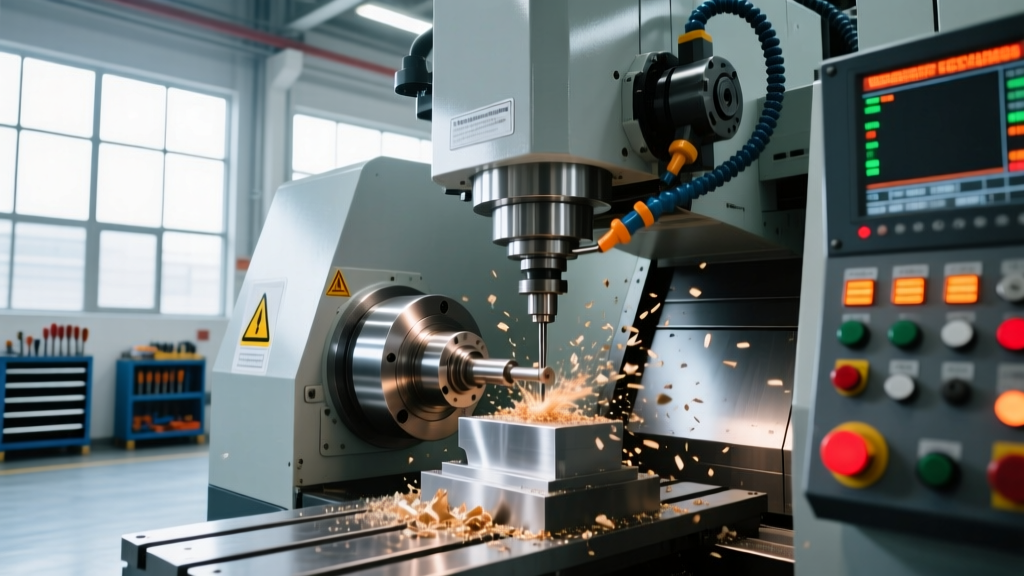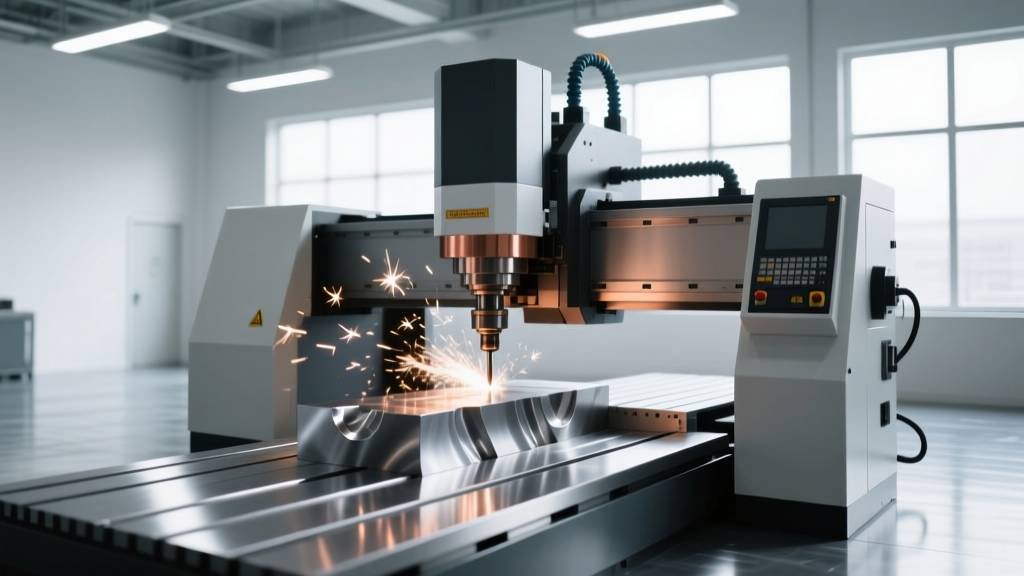
What Is a CNC Plasma Cutting Machine? Heavy Industry Case Studies
Discover what a CNC plasma cutting machine is through heavy industry case studies, technical specs, and ROI data for thick-plate fabrication.
Defining the Technology: What Is a CNC Plasma Cutting Machine?
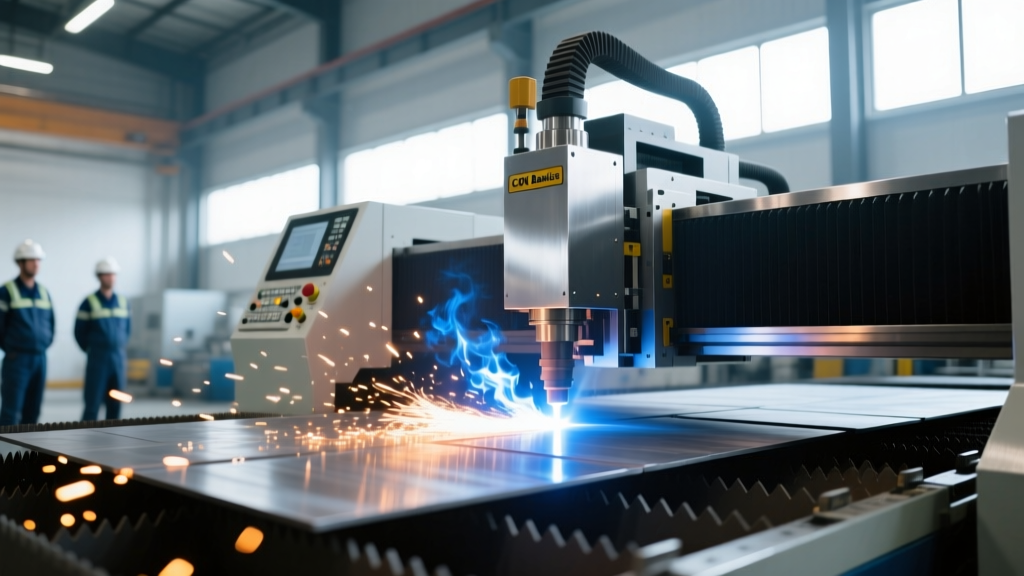
When facility managers and manufacturing engineers ask, "what is a cnc plasma cutting machine" in the context of heavy fabrication, the answer extends far beyond a simple automated torch. At its core, a CNC (Computer Numerical Control) plasma cutter is a coordinated thermal profiling system that uses a high-velocity jet of ionized gas (plasma) to melt and sever electrically conductive metals. However, in an industrial setting, it is a highly integrated ecosystem comprising a precision gantry, a high-frequency or pilot-arc power supply, an automated Torch Height Control (THC) unit, and advanced nesting software.
Unlike hobbyist or light-duty tables, industrial CNC plasma systems are engineered to process 0.5-inch to 2.5-inch thick mild steel, stainless steel, and aluminum with tight tolerances (±0.020 inches) and minimal Heat-Affected Zone (HAZ) distortion. According to The Welding Institute (TWI), modern plasma systems achieve cutting speeds up to five times faster than oxy-fuel processes on materials under 2 inches thick, making them the backbone of heavy equipment manufacturing, shipbuilding, and structural steel fabrication.
Core System Requirements for Industrial Plasma:- Power Supply: 130A to 400A+ (e.g., Hypertherm XPR300 or HPR400XD)
- Drive System: Helical rack-and-pinion or linear motors for high-speed acceleration
- THC (Torch Height Control):strong> Arc-voltage sampling to maintain a 0.150-inch standoff over warped plate
- Gas Delivery: Automated console managing plasma, shield, and auxiliary gases (H35, N2, O2, F5)
Anatomy of an Industrial CNC Plasma Table
To understand the real-world applications, we must break down the critical subsystems that separate a $15,000 entry-level table from a $250,000 heavy-industry workhorse.
1. Torch Height Control (THC) and Pierce Detection
Heavy steel plates stored in outdoor yards are rarely perfectly flat. An industrial THC monitors the arc voltage in real-time (typically targeting 130V to 145V depending on the consumable set) and adjusts the Z-axis height up to 200 times per second. Without this, the torch would crash into warped plate or cut too high, resulting in severe top-edge beveling and excessive dross.
2. Advanced Nesting and Kerf Compensation
Software like Hypertherm ProNest or SigmaNEST does not merely follow a CAD line. It applies kerf compensation (offsetting the toolpath by half the kerf width, usually 0.150" to 0.200" for thick plate), generates lead-ins and lead-outs to prevent edge blemishes, and sequences pierces to manage heat distribution across the sheet.
Case Study 1: Heavy Equipment Manufacturing (Earthmoving Booms)
The Scenario: A mid-sized OEM fabricating excavator boom arms requires cutting complex geometries from 1.25-inch AR400 (abrasion-resistant) and A572 Grade 50 mild steel. They need to cut 1:1 ratio bolt holes (e.g., a 1.25-inch hole in 1.25-inch plate) without secondary CNC machining.
The Solution: The facility deployed a Messer MetalMaster 10x20 foot table equipped with a Hypertherm HPR400XD power supply utilizing True Hole® technology. True Hole synchronizes the torch motion, gas flow, and power output specifically for hole cutting, eliminating the traditional "keyhole" or taper effect in thick materials.
Production Data & ROI
- Cut Speed: 45 Inches Per Minute (IPM) on 1.25" mild steel using O2 plasma gas.
- Consumable Life: Using an O2/N2 gas mix, the electrode and nozzle set yields approximately 350 pierces before replacement, costing roughly $38 per set.
- Secondary Operations Eliminated: By achieving a near-net-shape hole with less than 2 degrees of taper, the OEM eliminated the need for a secondary CNC vertical milling center to bore the pin holes, saving 4.5 hours of machining time per boom arm.
"The transition from oxy-fuel to high-definition CNC plasma on 1-inch to 1.5-inch plate reduced our HAZ width from 0.25 inches down to 0.08 inches, virtually eliminating the micro-cracking we used to see in AR400 weldments." — Lead Manufacturing Engineer, Heavy Machinery OEM
Case Study 2: Shipbuilding and Offshore Structural Steel
The Scenario: A coastal shipyard processes 10-foot by 40-foot sheets of 0.75-inch marine-grade aluminum and 1-inch AH36 shipbuilding steel. The critical requirement is edge preparation: cutting V-grooves and Y-grooves directly on the table to prepare parts for deep-penetration submerged arc welding (SAW).
The Solution: A Voortman heavy-duty gantry system featuring a 5-axis bevel cutting head and a 400-Amp plasma source. The 5-axis head allows the torch to tilt up to 45 degrees while the THC and nesting software dynamically compensate for the changing kerf width and torch standoff distance.
Technical Execution of Bevel Cutting
Bevel cutting with plasma is notoriously difficult due to the shifting arc centerline. Modern systems use specialized CAM software that calculates the exact pivot point of the torch tip. For the AH36 steel, the yard utilized an H35 (35% Hydrogen, 65% Argon) plasma gas mixture with an N2 shield. The hydrogen increases the arc voltage and thermal energy density, resulting in a square, clean edge on stainless and aluminum, and a highly defined bevel on carbon steel that requires zero grinding before welding.
Process Comparison: Plasma vs. Laser vs. Oxy-Fuel
Choosing the right thermal cutting process depends strictly on material thickness, edge quality requirements, and capital expenditure (CapEx). Below is a 2026 market matrix for heavy industry profiling.
| Metric | CNC High-Def Plasma (300A-400A) | CNC Fiber Laser (12kW-20kW) | CNC Oxy-Fuel |
|---|---|---|---|
| Optimal Thickness Range | 0.5" to 2.0" (Mild Steel) | 0.060" to 1.0" (Mild Steel) | 1.0" to 6.0"+ (Mild Steel ONLY) |
| Cut Speed (1" Mild Steel) | ~75 IPM | ~110 IPM | ~20 IPM |
| Edge Quality / Dross d> | Good (Minimal dross, 2-4° bevel) | Excellent (Square edge, no dross) | Fair (Heavy bottom dross, requires grinding) |
| Material Versatility | Mild Steel, Stainless, Aluminum | Mild Steel, Stainless, Aluminum | Mild Steel ONLY (No Stainless/Aluminum) |
| Typical CapEx (10x20 Table) | $110,000 - $180,000 | $350,000 - $600,000+ | $60,000 - $90,000 |
| Operating Cost per Hour | $25 - $45 (Gas + Consumables) | $15 - $30 (N2/O2 + Assist Gas) | $12 - $20 (Oxygen + Fuel Gas) |
Never use O2 (Oxygen) as a plasma gas when cutting stainless steel or aluminum. Oxygen causes severe exothermic reactions that destroy edge metallurgy, create unmanageable dross, and ruin corrosion resistance. Always use H35 (Argon/Hydrogen) or F5 (Nitrogen/Hydrogen) for non-ferrous and alloy metals to ensure a clean, oxide-free cut edge.
The ROI Calculation: When to Deploy CNC Plasma
The decision to invest in a high-definition CNC plasma cutting machine hinges on the "thickness-to-volume" ratio of your production. Fiber lasers dominate the thin-gauge (under 0.5") and high-precision market. However, once material thickness crosses the 0.75-inch threshold, the cost per watt of laser power becomes economically prohibitive, and the assist gas pressures required to clear the molten kerf result in massive operational expenses.
For job shops and OEMs processing a mix of 0.5-inch to 1.5-inch plate, a 300-Amp CNC plasma system offers the fastest payback period. According to ESAB's fabrication guidelines, the combination of rapid pierce times (under 1.5 seconds for 1-inch plate using advanced arc-start technology) and high travel speeds allows plasma to out-produce oxy-fuel by a factor of 3x to 4x, while requiring a fraction of the capital investment of a high-power fiber laser.
Actionable Implementation Checklist
- Audit your material mix: If 80% of your cuts are under 0.375", buy a fiber laser. If your volume peaks between 0.5" and 1.5", CNC plasma is your optimal ROI vector.
- Specify the exhaust system: Heavy plasma cutting generates toxic hexavalent chromium (when cutting stainless) and dense metallic particulate. Budget $25,000 to $40,000 for a high-static-pressure downdraft table and a pulse-jet cartridge dust collector rated for minimum 99.9% efficiency at 0.5 microns.
- Demand automated gas consoles: Do not accept manual gas mixing valves. Modern nesting software must be able to digitally command the gas console to switch from O2 pierce gases to N2 shield gases in milliseconds to optimize consumable life and edge squareness.
Understanding what a CNC plasma cutting machine truly represents in a heavy industrial environment means looking past the sparks and recognizing it as a highly calibrated, data-driven material removal system. By matching the correct amperage, gas chemistry, and THC parameters to your specific metallurgical requirements, CNC plasma remains the most cost-effective bridge between raw steel and finished heavy fabrication.