What Is a CNC Plasma Cutting Machine? Equipment Buying Guide
Discover what a CNC plasma cutting machine is and how to choose the right amperage, THC, and power supply for your fab shop with our expert buying guide.
The Mechanics: What Is a CNC Plasma Cutting Machine?
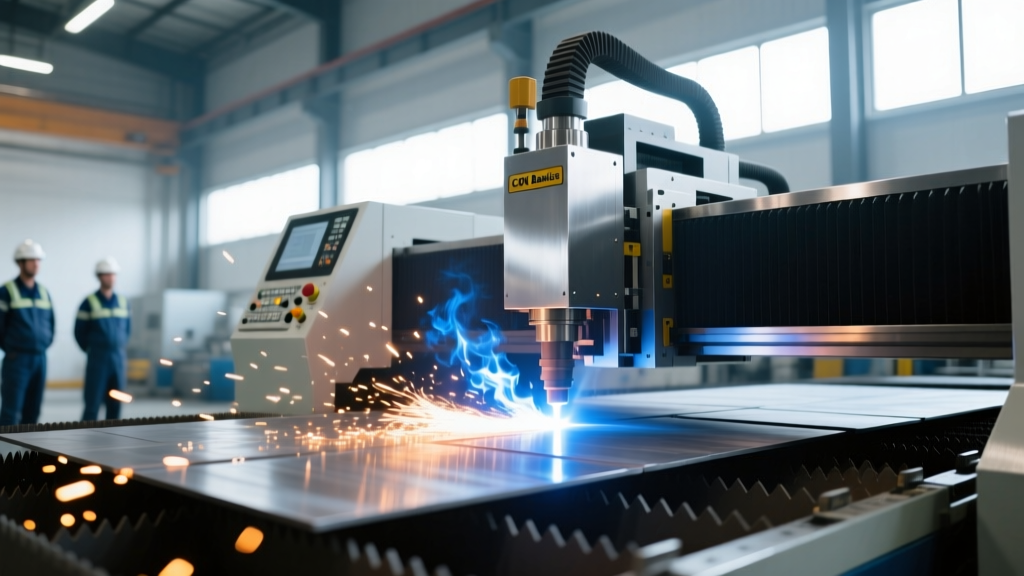
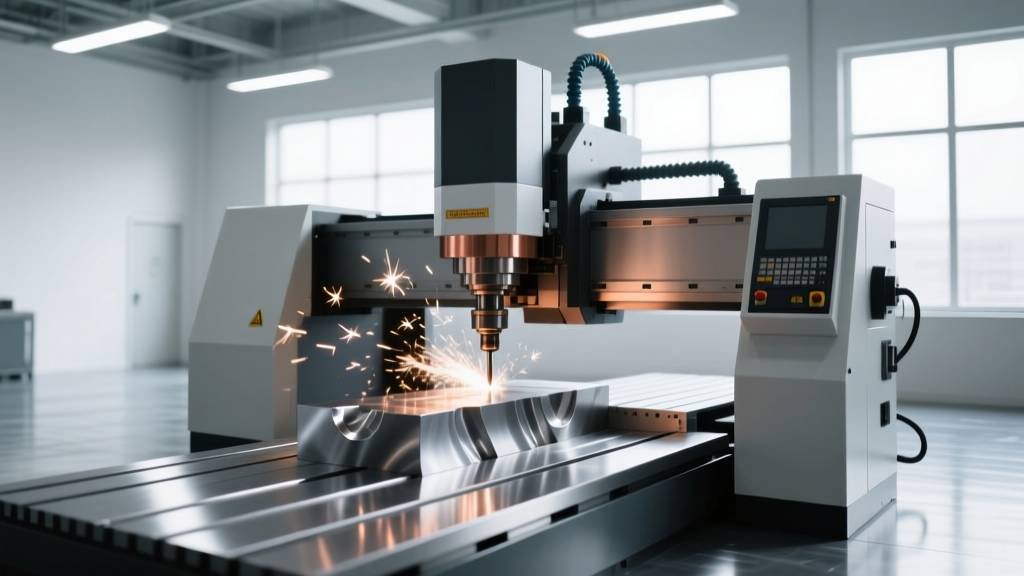
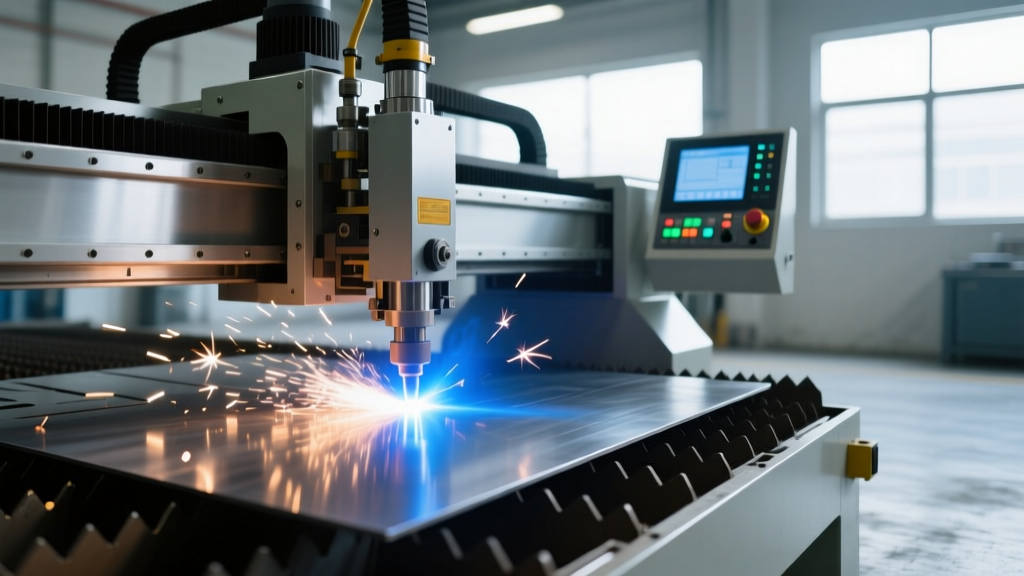
A CNC (Computer Numerical Control) plasma cutting machine is an automated thermal profiling system that uses a high-velocity jet of ionized gas to melt and sever electrically conductive materials. Unlike laser cutters that rely on focused photons, or waterjets that use abrasive kinetic energy, plasma cutting relies on an electrical arc constricted through a copper nozzle to generate temperatures exceeding 30,000°F (16,649°C). The CNC controller translates 2D CAD toolpaths into precise X and Y axis movements, while the Z-axis manages torch height to maintain arc stability.
According to The Welding Institute (TWI), the process requires a pilot arc to ionize the gas before the main transferred arc strikes the workpiece. This fundamental physics constraint means plasma cutters can only process conductive metals—primarily mild steel, stainless steel, and aluminum—making them useless for wood, plastics, or glass.
Machine Tiers: Matching Amperage to Production Volume
When evaluating what a CNC plasma cutting machine is for your specific operation, you must look past the physical table size and focus on the power supply's amperage and duty cycle. Amperage dictates your maximum pierce and severance capacities, while duty cycle determines how long the machine can cut before requiring thermal cooldown.
1. Hobbyist and Light Fabrication (45A – 65A)
Systems in this tier, such as those built around the Hypertherm Powermax45 XP or Lincoln Electric Tomahawk 600, are designed for 1/2-inch (12mm) mild steel maximum severance. They typically operate on single-phase 220V power and utilize compressed air as the plasma gas. Expect to pay between $4,000 and $9,000 for a complete 4x4 or 4x8 table package from brands like CrossFire or Torchmate. These machines lack heavy-duty industrial THC (Torch Height Control) and are best for thin-gauge HVAC ducting, automotive restoration, and prototype art.
2. Mid-Range Job Shop (85A – 125A)
This is the sweet spot for general fabrication. A 125-amp power supply, like the Hypertherm Powermax125 SYNC, can cleanly pierce 1-inch (25mm) mild steel and sever up to 2.25 inches (57mm). These systems require 3-phase power and often introduce mechanized torch interfaces. Pricing ranges from $18,000 to $35,000 for a robust 5x10 table with integrated water beds and fume extraction. At this tier, you gain access to FineCut consumables for thinner gauges and True Hole technology capabilities for superior bolt-hole quality.
3. Heavy Industrial and High-Definition (200A – 400A+)
For plate processing centers and heavy equipment manufacturing, High-Definition (HD) plasma systems like the Hypertherm XPR300 or ESAB Suprarex SXE-P tables are mandatory. HD plasma uses a highly constricted arc and specialized shielding gases (like O2 plasma with air or CO2 shielding) to achieve edge squareness within 2 degrees, rivaling laser cutters on thicker materials. These machines require 400V/480V 3-phase power, heavy-duty gear-rack drives, and cost anywhere from $75,000 to over $200,000 depending on bevel-head configurations and automated material handling.
Specification Comparison Matrix
| Feature | Light Fab (45A-65A) | Job Shop (105A-125A) | Industrial HD (200A-400A) |
|---|---|---|---|
| Max Clean Pierce (Mild Steel) | 1/2" (12mm) | 1" (25mm) | 2" (50mm) |
| Plasma Gas Used | Compressed Air | Air, O2, N2 | O2, H35, F5, Ar/N2 Mixes |
| Torch Height Control (THC) | Basic Arc Voltage | Ohmic Sensing + Voltage | Advanced Arc Voltage + Laser Mapping |
| Drive System | Belt or Light Pinion | Rack and Pinion | Helical Rack & Pinion / Linear Motors |
| Estimated System Cost | $4,000 - $9,000 | $18,000 - $35,000 | $75,000 - $200,000+ |
The Hidden Variable: Torch Height Control (THC)
Novice buyers often fixate on table dimensions and ignore the Z-axis controller. Thermal cutting inherently warps sheet metal. If your torch is set to a fixed 0.060-inch standoff height and the steel bows upward by 0.040 inches, the nozzle will crash into the workpiece, destroying the consumables and halting production.
Warning: Pierce vs. Severance CapacityManufacturers heavily market "severance capacity" (the absolute maximum thickness the plasma arc can melt through while moving). For buying decisions, always look at the rated pierce capacity. Piercing 1-inch steel requires punching a hole through solid material, generating immense molten splashback. If you regularly pierce at the machine's maximum severance limit, you will degrade your nozzle and electrode in fewer than 20 pierces.
Modern mid-range and industrial machines utilize Ohmic Sensing. This technology uses a low-voltage circuit to detect the exact moment the copper nozzle physically touches the metal surface, establishing a perfect Z-zero reference before the arc fires. This prevents the "diving" effect seen in older arc-voltage THCs, which often plunge the torch into the plate when cutting expanded metal or heavily rusted surfaces. According to Hypertherm's plasma cutting guidelines, proper initial height sensing (IHS) can increase consumable life by up to 30% by preventing double-arcing during the start sequence.
Shielding Gases and Edge Quality Economics
What separates a $5,000 hobby table from a $100,000 industrial system is largely the gas delivery infrastructure. Using compressed air for all materials results in oxidized, rough edges on stainless steel and aluminum, requiring secondary grinding operations.
- Mild Steel: Oxygen (O2) plasma gas is the industry standard for mild steel up to 1.25 inches. The exothermic reaction between the oxygen and the iron increases cutting speed by up to 20% compared to air and leaves a clean, weld-ready edge.
- Stainless Steel: F5 gas (5% Hydrogen, 95% Nitrogen) is used for plasma, paired with Nitrogen shielding. This combination prevents carbon pickup and leaves a bright, oxide-free edge on gauges up to 1/2 inch.
- Thick Aluminum & Stainless: H35 (35% Hydrogen, 65% Argon) is required for high-current cutting of non-ferrous metals over 1 inch thick. The high thermal conductivity of hydrogen ensures a square cut edge, though it requires expensive automatic gas consoles and strict ventilation due to hydrogen's flammability.
Consumable Economics: The True Cost Per Pierce
When budgeting for a CNC plasma machine, factor in the ongoing cost of the nozzle, electrode, swirl ring, and shield cap. A standard set of Powermax45 air consumables costs roughly $25 and yields approximately 300-500 pierces on 1/4-inch steel, equating to roughly $0.05 to $0.08 per pierce.
However, industrial High-Definition systems using O2 plasma and liquid-cooled torches have consumable sets costing $80 to $120. While the upfront cost is higher, these sets are rated for 1,500+ pierces, dropping the cost per pierce below $0.04 while delivering vastly superior edge angularity. Always calculate your ROI based on your daily pierce count, not just the sticker price of the power supply.
Software and Post-Processing Ecosystem
The physical machine is only half the equation. The CNC controller requires G-code and M-code generated by CAM (Computer-Aided Manufacturing) software. SheetCam remains the industry standard for 2D plasma profiling due to its robust post-processor library and specialized plasma features, such as automatic lead-in/lead-out placement, kerf width compensation, and True Hole optimization.
For 3D bevel cutting or complex tube profiling, shops are increasingly adopting Autodesk Fusion 360 or specialized software like Hypertherm's ProNest, which includes advanced nesting algorithms to maximize material yield from expensive stainless or aluminum plates.
Frequently Asked Questions
Can a CNC plasma cutter cut 3D shapes or bevels?
Standard 2-axis plasma tables only cut flat profiles. However, industrial systems can be equipped with a 3-axis or 5-axis bevel head (such as the Hypertherm True Bevel). This allows the torch to tilt up to 45 degrees during the cut to prepare V-groove or K-groove weld preps directly on the plate, eliminating secondary milling or grinding.
Do I need a water table or a downdraft table?
Water tables submerge the workpiece 1-2 inches underwater. This eliminates 90% of the UV glare, drastically reduces airborne particulate (smoke), and warps the metal less due to rapid cooling. Downdraft tables use high-CFM blowers to pull smoke into filtration systems. Downdraft is mandatory if you are cutting thick plate with High-Definition O2 processes, as the violent splashback of a water table would ruin the cut quality and consumables.
What is the maintenance schedule for the CNC drive system?
Plasma cutting generates highly abrasive metallic dust. If your machine uses linear rails and ball screws, they must be purged and re-greased weekly. Rack-and-pinion systems require daily brushing of the gear teeth and monthly application of high-tack lithium grease. Neglecting this allows metal dust to mix with lubricants, forming a grinding paste that will destroy precision bearings within six months.