Redefining the CNC Machines Definition: Real Costs and Budget Planning
Moving beyond the textbook CNC machines definition to explore real-world capital costs, hidden tooling expenses, and operational budgeting for shops.
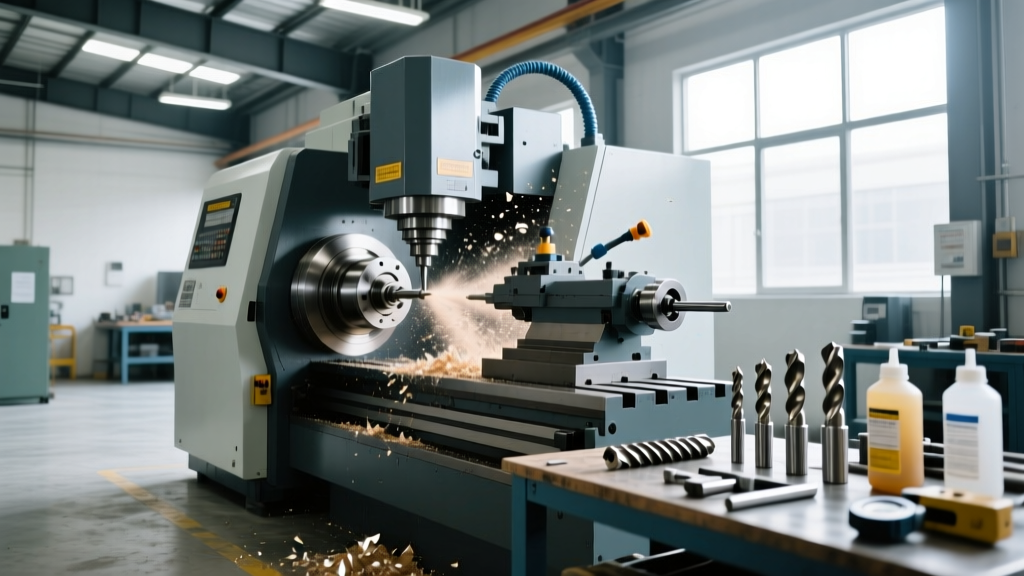
If you search for the standard cnc machines definition, you will find textbook explanations describing Computer Numerical Control as a subtractive manufacturing process guided by pre-programmed software. While technically accurate, this academic definition is financially useless for a shop owner, startup founder, or procurement manager. In the real world of machine shop economics, the true definition of a CNC machine is not just a casting, a spindle, and a controller—it is a complex capital asset that requires a 1.5x to 2.2x multiplier on its base sticker price to achieve "first-chip" readiness.
Budgeting for CNC equipment requires moving past the brochure price. This guide deconstructs the financial reality of CNC ownership in 2026, breaking down capital expenditures (CapEx), hidden integration costs, and ongoing operational expenditures (OpEx) to help you build an accurate, failure-proof budget.
The Balance Sheet Definition: CapEx Tiers
The base price of a CNC milling machine or lathe varies wildly depending on the intended production volume, precision requirements, and controller sophistication. Below is a breakdown of the primary equipment tiers and their realistic base capital costs for new equipment.
| Equipment Tier | Representative Models | Base Price Range | Primary Use Case |
|---|---|---|---|
| Tier 1: Prosumer / Light Job Shop | Tormach 1100MX, Haas Desktop Mill | $15,000 - $35,000 | Prototyping, low-volume aluminum/plastics, R&D labs |
| Tier 2: Standard Production VMC | Haas VF-2SS, Doosan DNM 4500 | $65,000 - $110,000 | General job shop work, batch production, steel/aluminum |
| Tier 3: High-Speed / 5-Axis | Haas UMC-750, DMG Mori DMU 50 | $160,000 - $350,000+ | Aerospace, complex medical implants, multi-sided parts |
| Tier 4: Automated Cells | Mazak VARIAXIS w/ Palletech | $450,000 - $1M+ | High-volume, lights-out manufacturing, minimal operator touch |
The Iceberg Rule of CNC Purchasing: The machine base price represents only 45% to 60% of your total first-year capital outlay. The remaining percentage is submerged in tooling, workholding, facility upgrades, and software licensing.
The "Ready-to-Cut" Multiplier: Hidden CapEx Variables
A bare machine cannot make money. To transition a VMC from a static asset on your floor to a revenue-generating tool, you must budget for the peripheral ecosystem. According to industry data tracked by the Society of Manufacturing Engineers (SME), undercapitalizing the peripheral ecosystem is the leading cause of cash-flow failure in new machine shops.
1. Tooling and Workholding ($8,000 - $25,000+)
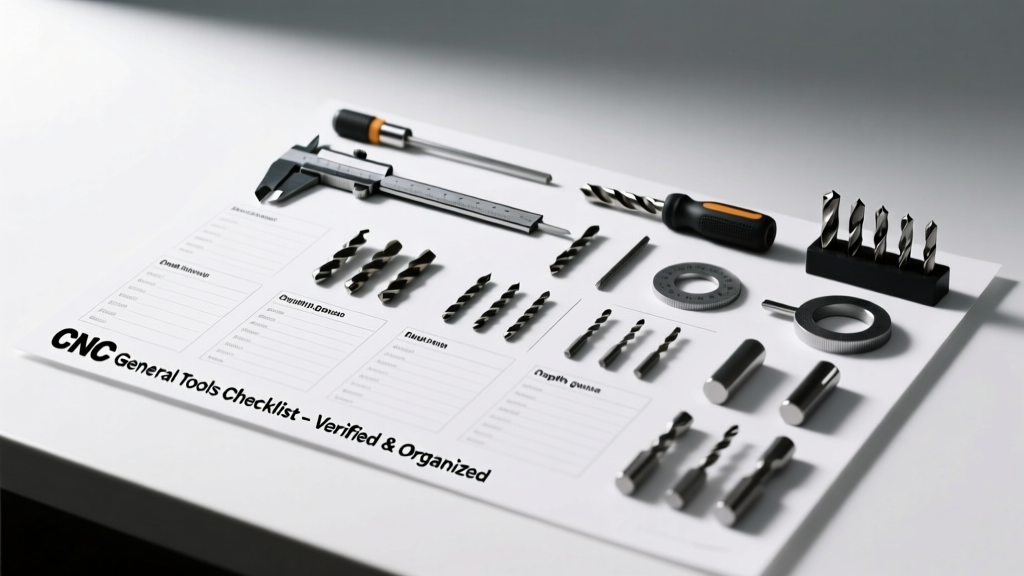
You cannot run production parts with the generic collets and endmills included in the machine's startup kit. A professional shop requires:
- CAT40 or BT40 Toolholders: A starter set of 20 ER32 collet chucks and endmill holders from brands like Techniks or Parlec will cost between $2,500 and $4,000.
- Premium Cutting Tools: Stocking Sandvik Coromant or Kennametal carbide endmills, drills, and taps for common materials (6061-T6, 304 Stainless, P20 mold steel) requires an initial inventory investment of $3,500 to $7,000.
- Workholding: A standard 6-inch Kurt DX6 milling vise costs approximately $1,100. A well-equipped VMC requires at least two vises, plus soft jaws, parallels, and potentially a 5th Axis self-centering vise ($3,500+) for complex geometries.
2. Facility and Utility Integration ($4,000 - $15,000)
Industrial CNC machines demand specific utility infrastructure. If your facility is not pre-wired, budget for the following:
- Electrical Drops: Running a dedicated 208V/240V 3-phase line with a 60-amp breaker typically costs $2,500 to $5,000 depending on the distance from your main panel.
- Phase Converters: If your building only has single-phase power, a rotary phase converter (e.g., Phase-A-Perfect 20HP) or a high-quality VFD will add $3,000 to $6,000 to your budget.
- Compressed Air: CNC machines require clean, dry air for tool changers and pneumatic vises. A 5HP rotary screw compressor with a refrigerated air dryer (like a Kaeser or Ingersoll Rand) costs $4,500 to $8,000 installed.
3. Rigging, Installation, and Metrology ($3,500 - $12,000)
Heavy machinery requires professional movers. Rigging a 10,000 lb VMC off a flatbed trailer, placing it on chip trays, and leveling it with precision machinist levels costs between $2,000 and $6,000. Furthermore, you must budget for inspection tools: a set of Mitutoyo Digimatic calipers, micrometers, and a Fowler dial test indicator will add $1,500 to your metrology bench.
Operational Expenditure (OpEx) and Floor Space Economics
Once the machine is cutting, the definition of a CNC machine shifts from a capital expense to an operational cost center. Calculating your true hourly shop rate requires factoring in the following recurring OpEx variables:
Warning: The True Cost of a Spindle CrashOperator error or CAM verification failures leading to a spindle crash remain the most devastating unbudgeted OpEx event. Rebuilding or replacing a 12,000 RPM CAT40 spindle cartridge from OEMs like GMN or Kessler costs between $8,000 and $15,000, not including the 4 to 8 weeks of machine downtime and lost revenue. Always budget for comprehensive machine insurance and implement strict G-code simulation protocols using software like Vericut or CAMotics.
Consumables and Maintenance
Budgeting for consumables is often overlooked by first-time buyers. You must allocate monthly funds for:
- Cutting Fluid: A 55-gallon drum of high-quality semi-synthetic coolant (e.g., Trim MicroSol 585XT) costs roughly $1,800 and requires regular concentration checks and tramp oil skimming to prevent rancidity and dermatitis.
- Way Lube and Hydraulic Oil: Mobil Vactra Oil Number 2 for way lubrication and standard ISO 32 hydraulic fluid for the power unit require quarterly top-offs and annual flushes.
- Preventative Maintenance (PM): Budget 1.5 hours per week of non-billable machine time for operator-led PMs (greasing bearings, checking belt tension, cleaning way covers). At a $75/hr shop rate, this is $450/month in lost opportunity cost.
Decision Framework: Aligning Budget with Production Realities
Understanding the financial cnc machines definition allows you to match your capital to your actual business model. Use this framework to determine which tier of equipment aligns with your shop's economic reality.
The R&D / Prototyping Lab
Profile: High mix, ultra-low volume. Tolerances of +/- 0.005". Parts are mostly engineering plastics and aluminum.
Budget Strategy: CapEx heavy on software (Mastercam/MCAM) and metrology, light on machine mass. A Tormach or Haas Mini Mill is sufficient. Do not overspend on 3-phase electrical upgrades; utilize single-phase capable machines to keep facility costs near zero.
The General Job Shop
Profile: Batch sizes of 50 to 500. Mixed materials including stainless steel and titanium. Tolerances of +/- 0.001".
Budget Strategy: Invest heavily in rigidity and chip management. A standard VMC (like the Haas VF series or Doosan DNM) is mandatory. Allocate 20% of your machine budget specifically for high-pressure through-spindle coolant (TSC) options and rigid tapping capabilities to reduce cycle times on steel parts.
The Aerospace / Medical Supplier
Profile: Complex 5-sided geometries, Inconel/Titanium milling, strict AS9100 or ISO 13485 documentation requirements.
Budget Strategy: The machine is secondary to the controller and probing ecosystem. Budget for a 5-axis trunnion machine with Renishaw OMP60 touch probes, tool breakage detection, and thermal compensation packages. Expect CapEx to exceed $250,000 before the first chip is made.
Sourcing, Validation, and Next Steps
Accurate budgeting requires continuous validation against current market conditions. Supply chain stabilization over the last two years has normalized lead times for standard VMCs to the 12-to-16-week range, but highly optioned 5-axis machines can still push 30+ weeks. When requesting quotes from OEMs or authorized dealers, always demand a "turnkey" or "first-chip" line-item breakdown that separates the base machine price from the chip conveyor, high-pressure coolant pump, and transformer costs.
For ongoing research into manufacturing cost analysis and equipment utilization metrics, consult the resources provided by the NIST Manufacturing Extension Partnership (MEP), which offers regional centers that assist small-to-medium manufacturers in calculating accurate shop rates and ROI timelines for capital equipment. Additionally, reviewing current model specifications and base pricing on the Haas Automation Vertical Mills catalog provides a reliable baseline for benchmarking competitor quotes in the standard VMC category.
Ultimately, mastering the financial definition of CNC equipment transforms you from a passive buyer into a strategic investor. By accounting for the hidden multipliers of tooling, facility integration, and OpEx, you ensure your shop is capitalized not just to buy a machine, but to run it profitably from day one.