What Is a CNC Machine Shop? Evaluating Equipment & Capabilities
Understand what a CNC machine shop is and how to evaluate its equipment. Learn to assess 3-axis vs 5-axis mills, lathes, and ISO certs for your parts.
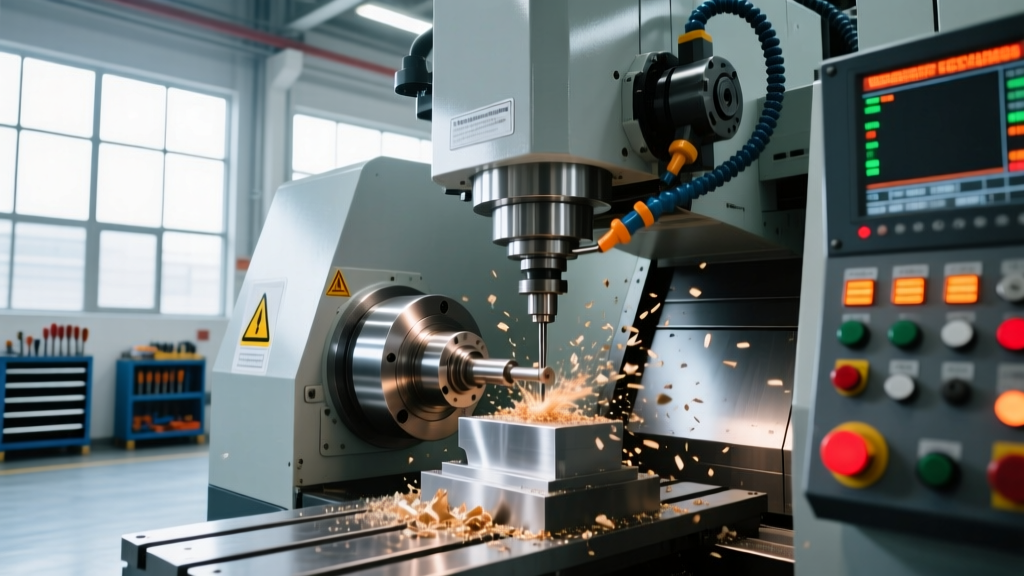
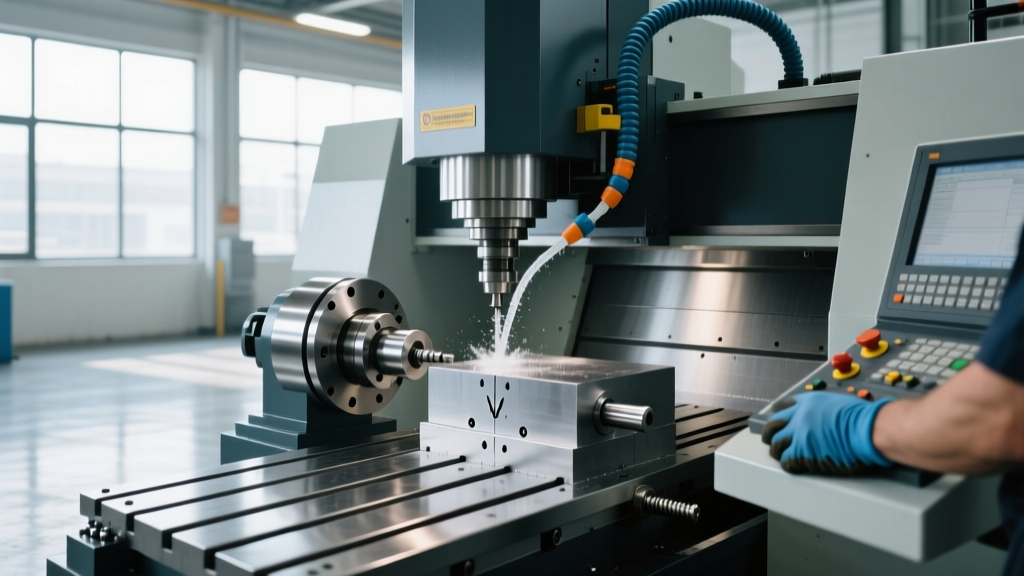
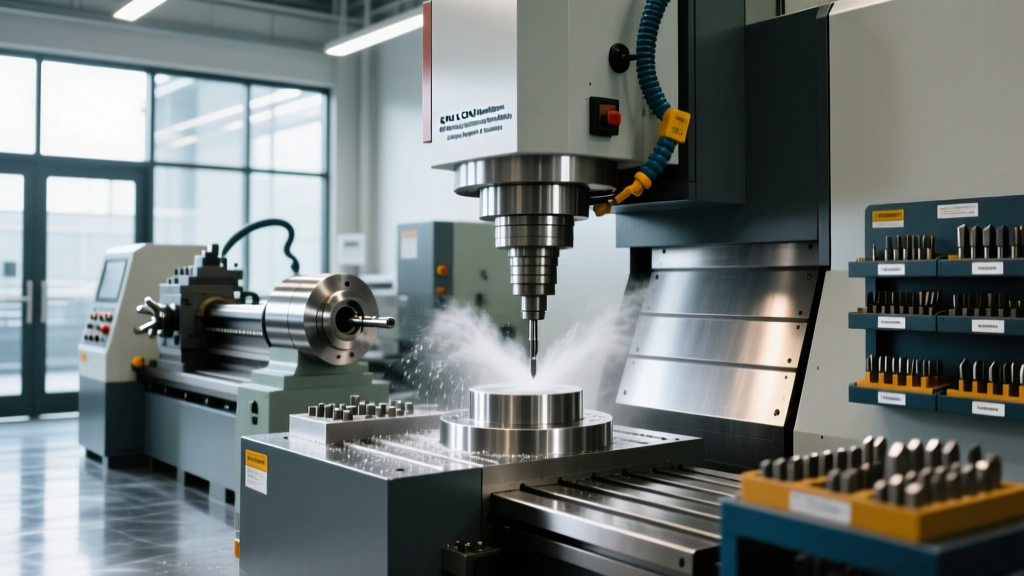
When sourcing precision components, answering the question of what is a CNC machine shop requires looking past the basic definition of a facility with computer-controlled tools. From an equipment selection and procurement perspective, a modern CNC machine shop is a highly integrated manufacturing ecosystem. It combines subtractive manufacturing hardware, advanced metrology, and digital thread software to produce parts with micron-level repeatability.
Whether you are vetting a new contract manufacturing partner or planning an in-house capital equipment purchase, evaluating a shop's true capabilities means auditing its machine tool matrix, inspection infrastructure, and quality frameworks. This guide breaks down the exact equipment, software, and operational metrics that define a top-tier CNC machining facility in 2026.
The Core Machine Tool Matrix: Matching Iron to Geometry
A shop's equipment list dictates its geometric limits, tolerance capabilities, and pricing structure. General-purpose job shops typically rely on 3-axis vertical machining centers (VMCs) and 2-axis lathes, while high-mix/low-volume precision shops invest in multi-axis mill-turn centers and Swiss-type lathes. Below is a breakdown of standard equipment tiers, representative 2025/2026 machine models, and current market hourly rates.
| Machine Category | Representative Model | Standard Tolerance | Avg. Hourly Rate (2026) | Ideal Part Geometry |
|---|---|---|---|---|
| 3-Axis VMC | Haas VF-2SSYT | ±0.0005" | $95 - $130 | Prismatic parts, brackets, simple enclosures |
| 5-Axis Trunnion | DMG MORI DMU 50 3rd Gen | ±0.0002" | $160 - $220 | Aerospace structural components, impellers, complex contours |
| CNC Mill-Turn | Mazak INTEGREX i-200S | ±0.0003" | $180 - $250 | Highly complex rotational parts with off-center milling features |
| Swiss-Type Lathe | Tsugami B020-V | ±0.0001" | $140 - $190 | Micro-medical devices, slender shafts, high-volume small diameters |
Metrology and Quality Control Infrastructure
Understanding what is a CNC machine shop also means evaluating how it proves its work. Machining is only half the process; verification is the other. A capable shop will possess a climate-controlled inspection room (maintained at 68°F / 20°C) equipped with advanced metrology tools that exceed the resolution of the machine tools themselves.
Essential Inspection Equipment
- Coordinate Measuring Machines (CMM): Look for bridge-style CMMs like the Zeiss CONTURA or Hexagon Global S. These are mandatory for verifying complex 3D surface profiles and true position tolerances on 5-axis parts.
- Vision Measurement Systems: For high-volume, small-tolerance stamped or machined micro-parts, optical comparators have been replaced by systems like the Keyence IM-8000, which captures hundreds of dimensional data points in seconds.
- Surface Roughness Testers: Profilometers such as the Mitutoyo SJ-410 are required to verify Ra (roughness average) and Rz finishes, especially critical for sealing surfaces and hydraulic manifolds.
The Digital Thread: CAD/CAM and ERP Integration
The physical machines are useless without a robust digital thread. In 2026, leading machine shops utilize integrated software stacks to manage the lifecycle of a part from RFQ to shipment. When auditing a shop, inquire about their software ecosystem.
Top-tier facilities utilize advanced CAM software like Mastercam 2026 or Siemens NX for complex 5-axis toolpath generation, featuring collision detection and machine simulation. Furthermore, shop floor management should be driven by a manufacturing-specific ERP (Enterprise Resource Planning) system like ProShop ERP or E2 Shop System. These platforms provide real-time job costing, tooling lifecycle tracking, and digital traveler routing, eliminating the paper-based errors that plague outdated job shops.
Certifications: Decoding the Quality Alphabet Soup
Certifications are the baseline filter for equipment selection and vendor approval. According to SAE International, quality management systems dictate how a shop handles non-conforming material, calibration schedules, and traceability. Here is how to interpret the major standards:
- ISO 9001:2015: The foundational baseline. It proves the shop has documented processes and a commitment to continuous improvement, but it does not mandate specific manufacturing controls. Suitable for commercial, non-critical parts.
- AS9100 Rev D: Mandatory for aerospace and defense. It adds stringent requirements for risk management, counterfeit part prevention, and advanced product quality planning (APQP). If a shop claims AS9100 but lacks a dedicated quality manager, their certification is likely at risk.
- ISO 13485:2016: Required for medical device components. It emphasizes strict regulatory compliance, cleanroom protocols, and exhaustive material traceability from raw billet to finished implant.
The 5-Point Shop Floor Audit Checklist
When physically touring a prospective CNC machine shop, bypass the pristine reception area and head straight to the production floor. Use this checklist to evaluate their operational maturity:
- Tooling Management: Are cutting tools organized in a centralized, barcoded vending system (e.g., Seco Pointbox), or are they scattered across messy benches? Proper tooling management reduces setup times by up to 30%.
- Chip and Coolant Management: Look for high-pressure coolant systems (1,000+ PSI) and automated chip conveyors. Shops that manually shovel chips or run low-pressure flood coolant on tough alloys like Inconel or Titanium will suffer from premature tool failure and poor surface finishes.
- First Article Inspection (FAI) Protocol: Ask to see a recent AS9102 FAI report. A robust shop will have a dedicated, ring-fenced inspection area where the first part off the machine is held for CMM verification before the rest of the batch is run.
- Preventative Maintenance (PM) Logs: Check the side of a VMC or lathe. There should be a visible, up-to-date PM log detailing way lube checks, coolant concentration testing (refractometer readings), and ball screw lubrication.
- Material Traceability: Pick up a raw material drop-off or a finished part. Ask the operator for its heat lot number. In a certified shop, every piece of metal is traceable back to the mill test report (MTR) via laser-etched QR codes or barcode travelers.
Evaluating Automation and Lights-Out Capabilities
As the manufacturing sector adapts to skilled labor shortages, the definition of a modern CNC machine shop now includes automation. According to the National Institute of Standards and Technology (NIST), advanced manufacturing integration is critical for maintaining global competitiveness.
When evaluating high-volume or long-running contracts, look for shops utilizing pallet pool systems (like the Makino MMC2) or collaborative robotic (cobot) machine tending. These systems allow machines to run unattended during nights and weekends. A shop with lights-out manufacturing capabilities can offer significantly lower per-piece costs on production runs exceeding 500 units, as the amortized labor cost per part drops to near zero.
Quick Comparison: Manual vs. Automated Loading
| Metric | Manual Operator Loading | Pallet Pool / Cobot Automation |
|---|---|---|
| Spindle Uptime (per 24hr shift) | 8 - 10 hours | 20 - 22 hours |
| Labor Cost Impact | High (requires 2-3 shifts) | Low (1 shift + unattended run) |
| Ideal Production Volume | Prototypes & Low-Volume (1-50 pcs) | Mid-to-High Volume (100-10,000+ pcs) |
Ultimately, understanding what is a CNC machine shop means recognizing it as a complex intersection of metallurgy, precision mechanics, and data management. By rigorously evaluating the machine tool matrix, metrology stack, and operational discipline, procurement teams can separate true precision manufacturing partners from basic job shops, ensuring optimal part quality and total cost of ownership.