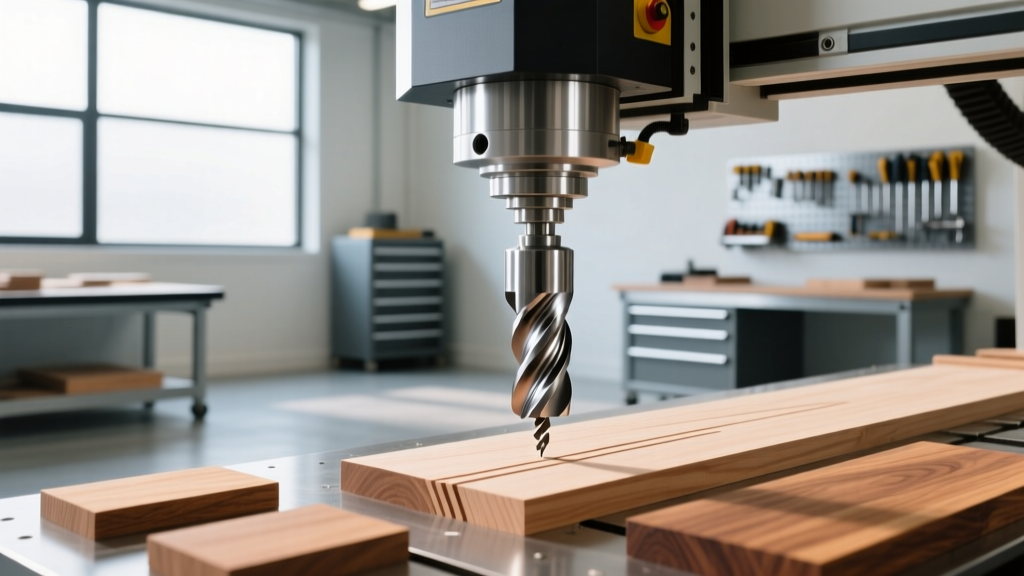
Evaluating Lakewood Machine and Tool for Custom Woodworking Cutters
Sourcing custom CNC router bits and shaper knives? Evaluate Lakewood Machine and Tool for industrial woodworking with this precision tooling buying guide.
- Lakewood Machine & Tool manufactures custom woodworking cutters from micro-grain carbide and high-speed steel for CNC routers and shapers.
- Custom cutter lead times range from 10 to 15 business days depending on profile complexity and material selection.
- Custom profiles cost 35% to 60% more than standard catalog bits but eliminate secondary machining operations.
- Minimum order quantities start at 1 unit for prototypes and scale to production runs of 500+ units.
This guide is written for CNC router operators, custom furniture manufacturers, and production woodworking shop managers evaluating custom cutting tool solutions. Lakewood Machine & Tool is a precision tooling manufacturer that produces custom woodworking cutters—router bits, shaper cutters, and specialty profile tools—engineered to exact customer specifications using micro-grain carbide and M2 high-speed steel. For shops running repetitive moulding profiles or complex joinery geometries that standard catalog tools cannot address, Lakewood Machine & Tool provides made-to-order cutters with tolerances held to ±0.001 inches on critical dimensions.
What Is Lakewood Machine & Tool?
Lakewood Machine & Tool operates as a contract manufacturer specializing in rotary cutting tools for the woodworking and composite materials industry. The company produces custom router bits, shaper knives, insert-style cutterheads, and specialty boring tools for clients ranging from one-person cabinet shops to multi-shift production facilities.
Their core competency lies in translating customer-supplied DXF or DWG profile drawings into finished cutting tools ground on 5-axis CNC tool grinders. According to the Woodworking Network industry reporting, custom tooling demand has grown approximately 12% year-over-year since 2023 as manufacturers pursue tighter tolerances for automated assembly lines.
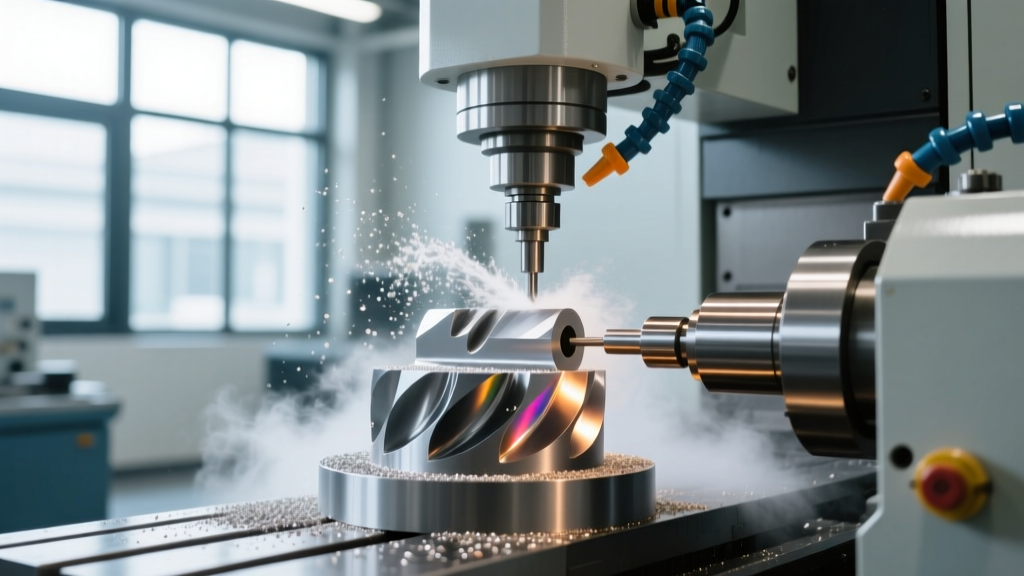
Custom Woodworking Cutter Services
Types of Custom Cutters Available
Lakewood Machine & Tool produces the following custom cutter categories for woodworking applications:
| Cutter Type | Typical Shank Diameter | Application |
|---|---|---|
| Custom Router Bits | 6.35 mm to 12.7 mm (1/4" to 1/2") | CNC profiling, edge forming, dadoing |
| Shaper Cutters | 12.7 mm to 31.75 mm bore | Spindle moulding, raised panels, stair parts |
| Insert Cutterheads | 40 mm to 120 mm body diameter | High-volume production planing and profiling |
| Specialty Boring Bits | 5 mm to 35 mm | Cabinet hinge cups, dowel joints, shelf pins |
Material Specifications and Tolerances
Customers select from three primary substrate materials based on production volume and workpiece density:
- Micro-Grain Carbide (C2 Grade): Hardness of 92 HRA, transverse rupture strength of 3,800 megapascals. Best for hardwoods above 700 kilograms per cubic meter density and abrasive composites like medium-density fiberboard.
- M2 High-Speed Steel: Hardness of 63–65 HRC after heat treatment. Cost-effective for short production runs under 2,000 linear meters of cut length in softwoods.
- Polycrystalline Diamond (PCD) Tipped: Edge life exceeds 50,000 linear meters in laminated particleboard. Initial cost runs 4 to 6 times higher than solid carbide equivalents.
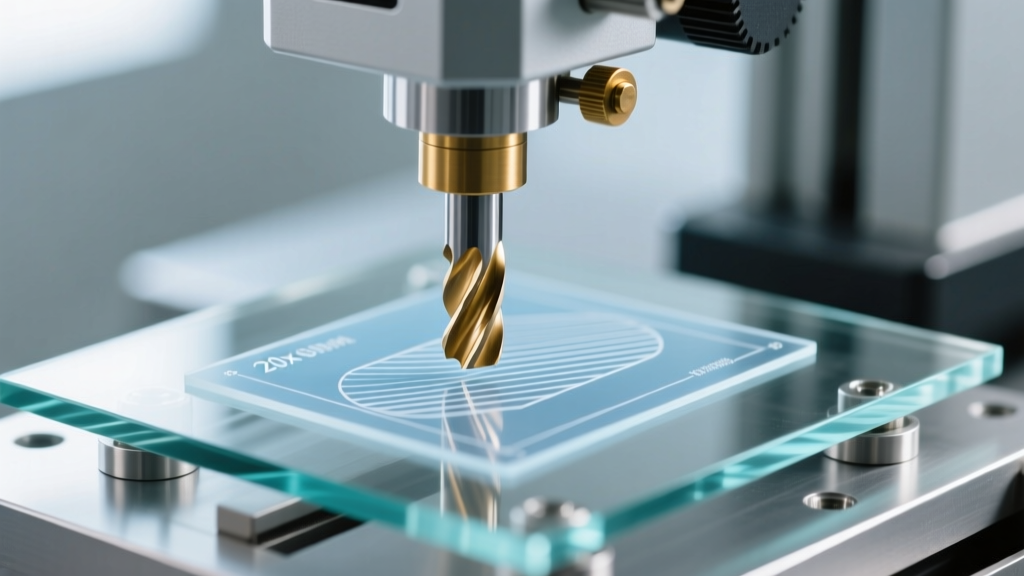
All custom profiles are ground to ±0.001 inches on radial dimensions and ±0.0005 inches on axial runout, measured on optical comparators at 20× magnification.
Custom vs. Standard Cutters: Decision Framework
Use this decision matrix to determine whether a Lakewood Machine & Tool custom cutter or an off-the-shelf standard bit serves your operation better.
| Factor | Standard Catalog Bit | Custom Cutter (Lakewood Machine & Tool) |
|---|---|---|
| Profile Availability | Limited to manufacturer catalog (~200 common profiles) | Any profile from customer DXF/DWG file |
| Lead Time | 1 to 3 business days (in stock) | 10 to 15 business days (made to order) |
| Unit Cost | $25 to $85 per bit | $95 to $340 per bit (single unit) |
| Volume Discount | Minimal below 50 units | 15% to 25% reduction at 50+ units |
| Secondary Operations Eliminated | Rarely | Frequently (combined profiles in one pass) |
| Regrind Service | Third-party required | Available directly from manufacturer |
Ordering Process and Lead Times
The custom cutter ordering workflow at Lakewood Machine & Tool follows four stages:
- Profile Submission (Day 1): Submit a 2D vector file in DXF, DWG, or PDF format with critical dimensions called out. Include workpiece material type, density, and annual volume estimate.
- Engineering Review (Days 2–3): Lakewood Machine & Tool engineers validate grindability, recommend substrate grade, and return a formal quote with tool drawing for approval.
- Manufacturing (Days 4–12): Carbide blanks are laser-cut, brazed if multi-piece, and ground on Walter or ANCA CNC grinders. Quality inspection includes CMM verification of all critical radii.
- Shipping (Days 13–15): Tools ship in individual protective sleeves with inspection certificates. Rush orders available at a 30% surcharge, compressing lead time to 7 business days.
Regrind services for returned custom cutters typically complete within 5 to 7 business days, restoring profiles to original specification at approximately 40% of new-tool cost. The Woodworking Network Blogs archive notes that shops maintaining a regrind rotation extend effective tool life by 300% to 500% compared to single-use disposal.
Frequently Asked Questions
What file formats does Lakewood Machine & Tool accept for custom profiles?
Lakewood Machine & Tool accepts DXF, DWG, IGES, and PDF formats for 2D profile submissions. For complex 3D cutter geometries such as helical flute patterns, STEP files are preferred. Hand-drawn sketches with fully dimensioned callouts are also accepted for initial quoting, though a vector file is required before manufacturing begins.
How much do Lakewood Machine & Tool custom woodworking cutters cost?
Single-unit custom router bits range from $95 to $340 depending on profile complexity, number of flutes, and substrate material. Micro-grain carbide bits average $185 per unit at single quantities. Production orders of 50 or more identical cutters receive volume discounts of 15% to 25%, bringing per-unit costs down to $70 to $250.
Can Lakewood Machine & Tool match an existing cutter profile for replacement?
Yes. Customers can ship a worn or broken sample cutter to Lakewood Machine & Tool for reverse engineering. The engineering team scans the profile on an optical comparator, compensates for wear, and produces a new tool matching the original specification within ±0.001 inches.
What is the maximum cutter diameter Lakewood Machine & Tool can produce?
The facility accommodates custom cutter bodies up to 150 millimeters in diameter and 200 millimeters in overall length for shaper-style tools. Router bits up to 254 millimeters in overall length with shank diameters up to 12.7 millimeters are within standard capability.
Next Steps
Lakewood Machine & Tool delivers custom woodworking cutters that eliminate secondary operations, reduce tool change frequency, and hold tighter tolerances than catalog alternatives. If your shop machines a repetitive non-standard profile exceeding 500 linear meters monthly, the investment in a custom cutter typically pays for itself within two months of production use.
Your immediate action: export your most frequently machined profile as a DXF file with critical dimensions noted, and submit it to Lakewood Machine & Tool for a no-obligation engineering review and quote. Expect a response with a formal tool drawing and pricing within 48 hours of submission.