PSL vs Sleeve Labeler Maintenance in Sealing Packaging Machinery
Compare maintenance schedules for pressure-sensitive and sleeve labelers in sealing packaging machinery. Reduce downtime with expert service intervals.
The Mechanical Divide: PSL vs. Sleeve in Sealing Packaging Machinery
Integrating labeling modules with downstream sealing packaging machinery requires strict adherence to mechanical tolerances and rigorous maintenance schedules. While pressure-sensitive labelers (PSL) and shrink sleeve labelers achieve the same end goal, their mechanical architectures dictate vastly different service protocols. A neglected PSL applicator will suffer from web breaks and adhesive tracking, whereas a poorly maintained sleeve labeler will yield skewed cuts and steam tunnel scale buildup. Both failure modes directly compromise the efficiency of inline sealing packaging machinery, leading to rejected seals, fouled heating elements, and catastrophic line stoppages.
⚠️ Critical Integration Warning: When positioning labelers upstream of L-bar sealers or continuous band sealers, label placement accuracy must be held to ±0.5mm. If a PSL label overlaps the seal zone, the adhesive will melt onto the Teflon-coated sealing jaws, requiring immediate line shutdown and abrasive cleaning. Similarly, if a shrink sleeve label creeps over the container flange before reaching the induction sealer or heat sealer, the polymer barrier will prevent a hermetic seal, resulting in batch-wide leak failures.Pressure-Sensitive Labeler (PSL) Maintenance Protocols
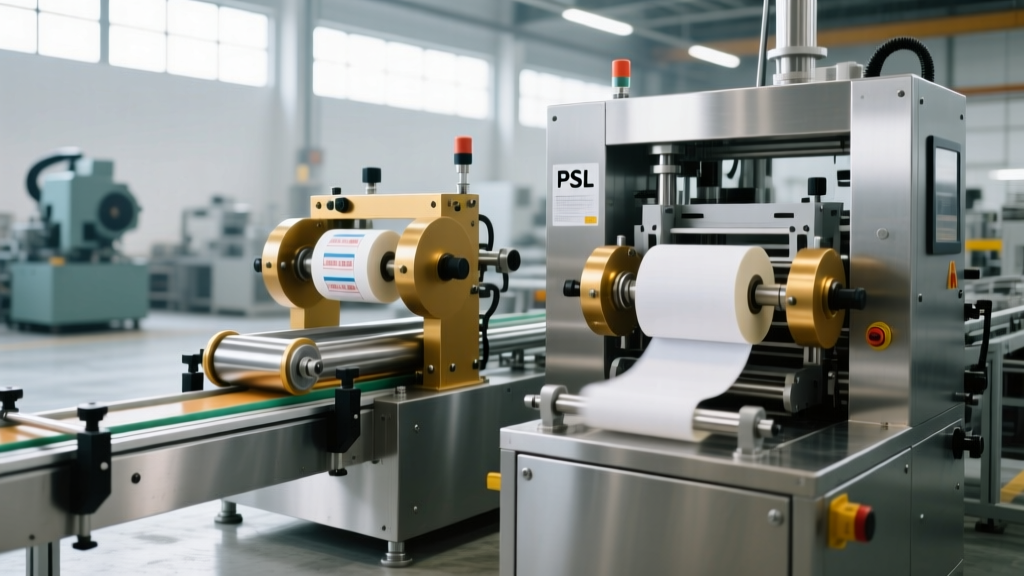
PSL systems rely on precise web tension, peel plate geometry, and applicator pad timing. The primary enemy of PSL maintenance is adhesive ooze, which accumulates on guides and rollers, altering the web path and causing registration drift.
Daily and Shift-Level Service
- Peel Plate Cleaning: Wipe the stainless steel or silicone-coated peel plate with 99% isopropyl alcohol (IPA) at every shift change. Avoid abrasive pads that score the silicone coating, which will cause the label liner to stick and snap.
- Dancer Arm Inspection: Verify that the dancer arm pivot bearings move freely without stiction. A sticky dancer arm causes sudden tension spikes, tearing the web at the sealing packaging machinery infeed.
- Applicator Pad/Tamp Check: Inspect the foam or rubber tamp pad for compression set. Replace pads that have lost more than 15% of their original thickness to ensure consistent label wipe-down pressure.
Monthly and Bi-Annual Deep Service
- Magnetic Particle Brake Calibration: The web rewind brake relies on magnetic particles to maintain tension. Every six months, flush and replace the magnetic particle fluid. Rebuild kits for standard 24V brakes (such as those from Montalvo or Maxcess) cost between $350 and $500. Failure to service this results in loose rewind rolls that jam the machine.
- Stepper Motor and Drive Belt Alignment: Check the synchronous drive belts connecting the stepper motor to the dispensing roller. Replace belts showing micro-cracking or edge fraying. Misalignment here causes the 'label gap' sensor to misread the liner, throwing off the dispense timing relative to the downstream sealer.
Shrink Sleeve Labeler Maintenance Protocols
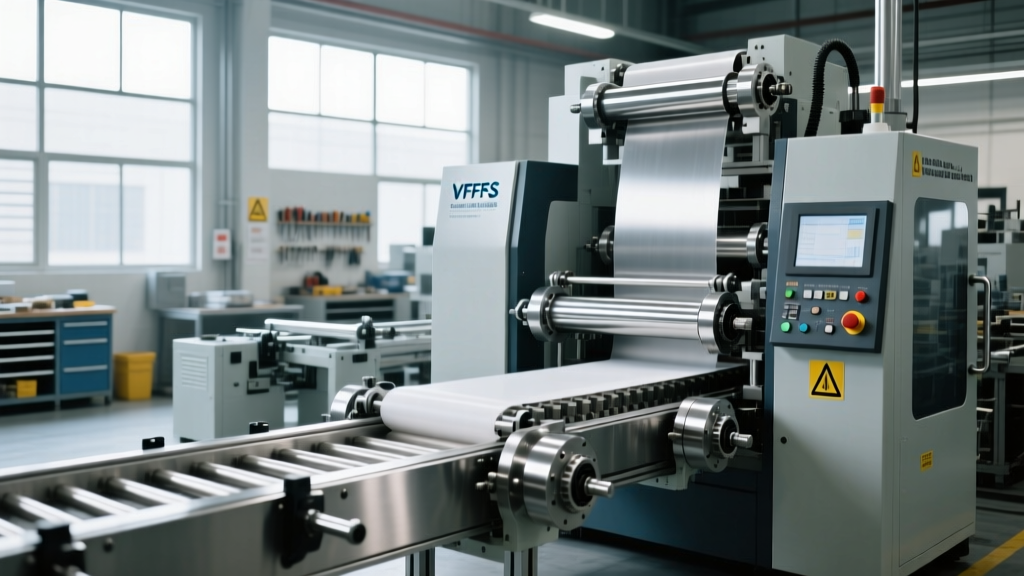
Sleeve labelers operate on an entirely different mechanical principle, utilizing a forming mandrel to fold flat tubular film into a 3D shape before cutting and dropping it onto the container. Maintenance here focuses on cutting precision, friction reduction, and thermal management in the downstream steam tunnel.
Mandrel and Film Feed Maintenance
The forming mandrel is the heart of the sleeve labeler. As PETG or PVC films slide over the mandrel at speeds exceeding 400 containers per minute, friction generates static and heat.
- UHMW Wear Strip Replacement: Inspect the Ultra-High Molecular Weight (UHMW) polyethylene wear strips on the mandrel monthly. If grooves deeper than 0.5mm are visible, replace the strips. Grooved mandrels cause film tracking errors and skewed sleeve application.
- Static Elimination: Clean the ionizing air bars daily with compressed air. Test the static neutralization output quarterly using an electrostatic field meter. High static causes the sleeve to cling to the mandrel, resulting in mis-drops that will jam the subsequent sealing packaging machinery.
Cutting Mechanism and Steam Tunnel Care
- Rotary Blade Assembly: Unlike oscillating knives, rotary blades provide continuous high-speed cuts. However, they dull rapidly when cutting abrasive PVC films. Replace the rotary blade assembly every 400,000 to 500,000 cuts (approximately every 2 to 3 weeks in high-volume plants). A replacement rotary cutter head costs between $850 and $1,200. Dull blades leave 'tails' on the sleeve that fail to shrink flat, creating catch-points on conveyor transfers.
- Steam Tunnel Descaling: Hard water leaves calcium carbonate deposits inside the steam nozzles, resulting in uneven heat distribution and 'dog-earing' (wrinkling) of the sleeve. Flush the steam generator and tunnel manifolds monthly with a 15% food-grade citric acid solution. This $150 maintenance task prevents the $10,000+ cost of replacing scaled-over heating elements and steam valves.
Comparative Maintenance Matrix: PSL vs. Sleeve
The following matrix outlines the distinct resource allocation required for both systems when integrated into a comprehensive packaging line.
| Component / Task | PSL Interval | Sleeve Interval | Est. Part Cost | Failure Consequence |
|---|---|---|---|---|
| Web/Tension Brake | 6 Months | N/A (Roller feed) | $350 - $500 | Web snap, line stoppage |
| Cutting Mechanism | N/A (Die-cut at source) | 2-3 Weeks | $850 - $1,200 | Sleeve tails, jamming |
| Thermal/Steam System | N/A | Monthly (Descaling) | $50 (Acid flush) | Wrinkling, dog-earing |
| Peel Plate / Mandrel | Daily (Clean) | Monthly (UHMW strips) | $150 / $300 | Registration drift |
Synchronizing Labelers with Sealing Packaging Machinery
The true test of a maintenance program is how well the labeler communicates mechanically and electronically with the rest of the line. Modern sealing packaging machinery—such as continuous motion form-fill-seal (FFS) systems or high-speed L-bar wrappers—relies on precise 'no-label/no-seal' interlocks. If the vision system detects a missing or skewed label, it must send a reject signal to the sealer to bypass the heat seal cycle, preventing adhesive contamination on the sealing jaws.
To maintain this synchronization, technicians must calibrate the photoelectric registration sensors on the labeler and the encoders on the sealer's infeed conveyor weekly. A drift of just 2mm in the encoder reading will cause the labeler to dispense late, pushing the label into the seal zone. Always verify that the PLC handshake latency between the labeler and the sealing packaging machinery controller remains under 15 milliseconds. Higher latency indicates network congestion or degraded ethernet cabling in the washdown environment.
Predictive Maintenance: IoT and Sensor Calibration
As we move through 2026, reactive maintenance is being replaced by predictive IoT frameworks. Leading packaging plants are installing vibration sensors on the servo motors driving sleeve cutter assemblies and current-draw monitors on PSL stepper motors.
"By monitoring the amperage draw of the PSL rewind motor, we can predict magnetic particle brake failure up to three weeks before a web break occurs. A degrading brake forces the stepper motor to work harder, spiking the current draw by 12% to 18%. This data allows us to schedule rebuilds during planned sanitation shifts rather than suffering unplanned downtime on the sealing line."
— Lead Packaging Engineer, Regional Beverage Co-Packer
Furthermore, adherence to strict Lockout/Tagout (LOTO) procedures during these maintenance intervals is non-negotiable. The kinetic energy stored in PSL dancer arms and the thermal hazards of sleeve steam tunnels require comprehensive energy isolation before any technician accesses the machine guards. Integrating smart LOTO verification systems directly into the machine's HMI ensures that maintenance on labeling and sealing packaging machinery is executed safely and efficiently, maximizing overall equipment effectiveness (OEE) across the entire packaging floor.