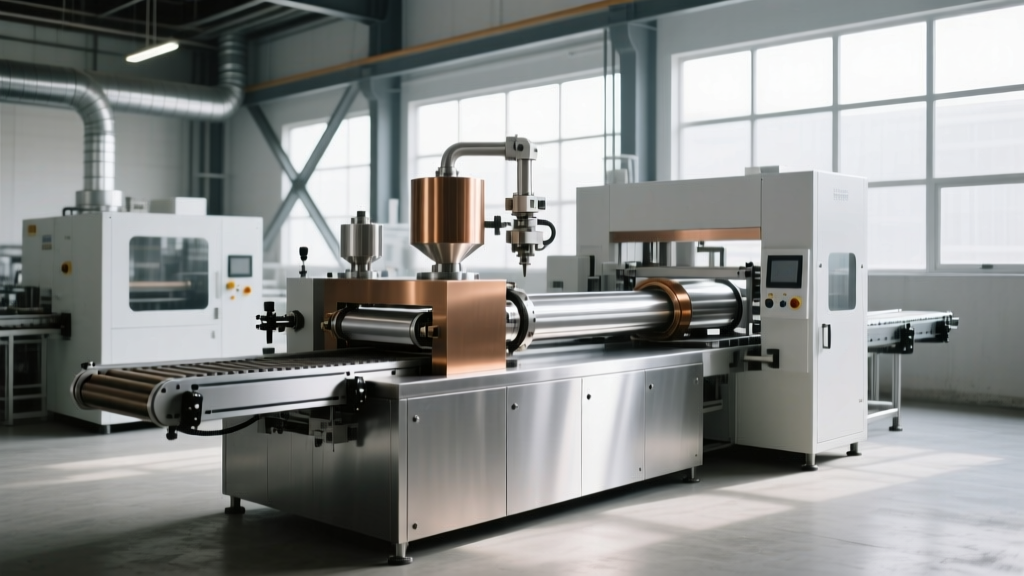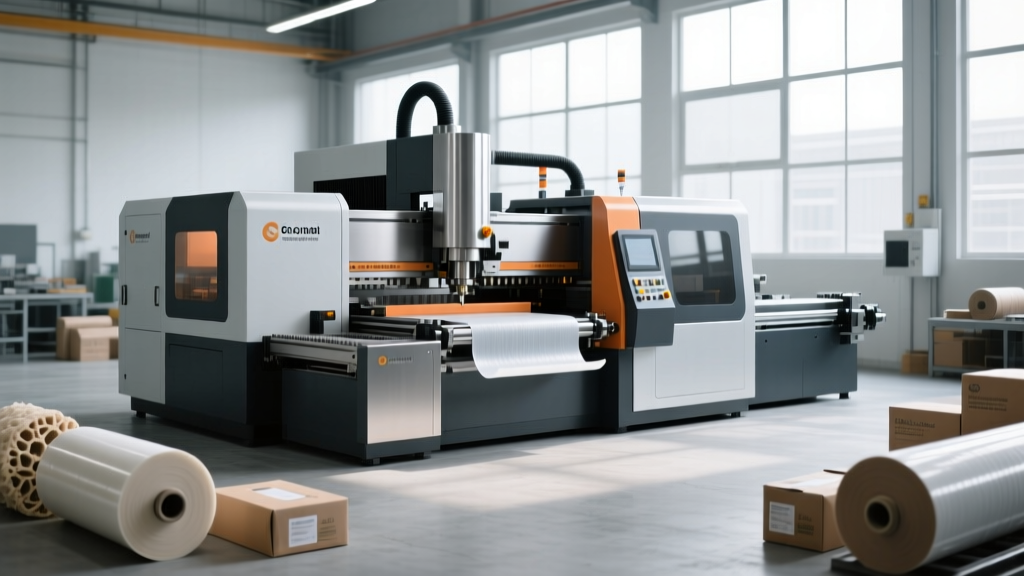
Eco-Friendly Seal Tooling Machine Alternatives for 2026
Compare ultrasonic, impulse, and ceramic seal tooling machine alternatives for sealing PLA, PHA, and cellulose sustainable films. Includes 2026 pricing.
The Biopolymer Sealing Challenge: Why Standard Tooling Fails
Standard constant-heat seal tooling machines were engineered for the broad thermal windows of petroleum-based polymers like PE, PP, and PET. When packaging engineers attempt to run sustainable biopolymers—such as polylactic acid (PLA), polyhydroxyalkanoates (PHA), or cellulose-based films—through legacy equipment, the result is almost always catastrophic seal failure. According to the Ellen MacArthur Foundation, the shift toward circular packaging materials has outpaced the mechanical adaptation of legacy sealing jaws, creating a critical bottleneck in sustainable manufacturing lines.
Thermal Degradation Thresholds: Standard PET requires a sealing temperature of 160°C–190°C. In contrast, NatureWorks Ingeo PLA has a narrow sealing window of 110°C–130°C. A conventional seal tooling machine overshooting this window by just 15°C causes polymer chain scission, resulting in brittle fractures and zero peel strength.Comparing 3 Seal Tooling Machine Alternatives for Sustainable Films
To achieve hermetic seals on eco-friendly materials without thermal degradation, manufacturers must evaluate alternative sealing technologies. Below is a technical comparison of the three dominant alternatives replacing legacy constant-heat jaws in 2026.
| Technology | Optimal Temp Range | Dwell Time | Est. 2026 Retrofit Cost | Best Substrate Match |
|---|---|---|---|---|
| Ultrasonic Sealing | Ambient to 80°C (Frictional) | 0.1s – 0.3s | $28,000 – $35,000 | PHA, Multi-layer Bio-PE |
| Precision PID Impulse | 90°C – 140°C | 0.4s – 1.2s | $4,500 – $8,200 | PLA, Cellulose, Kraft-paper/PE |
| Ceramic-Coated Constant Heat | 110°C – 160°C | 0.6s – 1.5s | $1,800 – $3,500 | Bio-PET, Thin-gauge PLA |
Alternative 1: Ultrasonic Sealing (The Premium Choice)
Ultrasonic sealing eliminates external heat sources entirely. High-frequency acoustic vibrations (typically 20kHz to 35kHz) generate frictional heat directly at the film interface. This is the ultimate solution for heat-sensitive biopolymers like PHA, which degrade rapidly under conductive heat. Herrmann Ultrasonics and Syntegon have pioneered VFFS-compatible ultrasonic units that deliver localized melting without warming the surrounding substrate. While the capital expenditure for an ultrasonic generator and custom sonotrode tooling ranges from $28,000 to $35,000, the elimination of film burn-through and the ability to seal through contaminated zones (e.g., dusty protein powders or oily snacks) yields an ROI within 14 months on high-speed lines.
Alternative 2: Precision PID Impulse Sealing (The Mid-Market Workhorse)
Impulse sealers utilize a Nichrome wire heating element encased in PTFE that heats up only during the active seal cycle, then rapidly cools before the jaws release. Modern 2026 iterations feature solid-state relays and digital PID (Proportional-Integral-Derivative) controllers that maintain temperature variance within ±1°C. This precision is vital for cellulose-based films that wrinkle under sustained conductive heat. Brands like Audion Elektro offer digital impulse sealers in the $4,500 to $8,200 range that allow operators to program multi-stage heat profiles—ramping up to melt the sealant layer, then dropping temperature to set the seal before jaw release.
Alternative 3: Ceramic-Coated Constant Heat (The Budget Retrofit)
For facilities unable to replace their existing seal tooling machine chassis, retrofitting constant-heat jaws with zirconia or advanced ceramic coatings is a viable compromise. Ceramic coatings reduce the coefficient of friction and prevent molten biopolymers from adhering to the metal jaws—a common failure mode when running uncoated PLA. Furthermore, embedding high-density thermocouples closer to the jaw surface improves PID response times. This retrofit typically costs between $1,800 and $3,500 per jaw set, making it an accessible entry point for contract packagers transitioning to eco-friendly runs.
Decision Framework: Matching Tooling to Your Sustainable Substrate
Selecting the correct seal tooling machine alternative requires mapping your specific substrate's thermal properties to the sealing technology. Follow this diagnostic flow:
- Step 1: Identify the Sealant Layer. If your eco-film uses a PHA or PBAT sealant layer with a melting point below 115°C, bypass constant heat entirely and specify Ultrasonic Sealing.
- Step 2: Evaluate Line Speed. If your VFFS machine operates above 80 bags per minute, impulse sealing dwell times (0.8s+) will bottleneck your line. You must use Ultrasonic or heavily modified Ceramic Constant Heat.
- Step 3: Assess Contamination Risks. If packaging dry, dusty, or oily products, ultrasonic vibrations actively clear the seal area of particulates, whereas impulse and constant heat jaws will trap debris, causing leakers.
Real-World Failure Modes & Troubleshooting Biopolymer Seals
Even with upgraded tooling, sustainable films present unique mechanical challenges. Below are the most frequent failure modes encountered on the production floor and their exact mechanical corrections, aligned with ASTM packaging testing standards for seal integrity.
Failure Mode 1: 'Burn-Through' and Brittle Fractures
Symptom: The seal area appears cloudy, warped, and shatters when subjected to drop tests.
Cause: Thermal degradation of the PLA polymer chains due to excessive dwell time, not necessarily excessive temperature.
Fix: Reduce jaw dwell time from 0.8s to 0.35s. Increase jaw pressure to 45-50 psi to compensate for the shorter thermal exposure, ensuring molecular entanglement before the film cools.
Failure Mode 2: Weak Peel Strength (Channel Leakers)
Symptom: Seals peel apart easily; dye penetration tests reveal micro-channels along the cross-seal.
Cause: Uneven jaw pressure distribution across the biopolymer film, which lacks the elastic recovery of traditional PE.
Fix: Install a conformable silicone backing pad (Shore A hardness 50-60) on the opposing jaw. This allows the rigid biopolymer to press into a yielding surface, ensuring uniform pressure across microscopic film gauge variations.
'The transition to sustainable packaging is not merely a material swap; it is a thermodynamic recalibration. A seal tooling machine that ignores the narrow processing windows of biopolymers will generate more waste through leakers than the eco-film saves in carbon footprint.' — 2026 PMMI Sustainable Packaging Task Force Guidelines
Sourcing & ROI: What to Expect in 2026
When procuring a new seal tooling machine or retrofitting an existing VFFS/HFFS line for sustainable materials, demand OEM validation using your exact film roll stock. Do not accept generic 'bio-film compatibility' claims. Require the vendor to run a Design of Experiments (DoE) mapping dwell time, temperature, and pressure, providing you with a definitive process window that guarantees a minimum peel strength of 3.5 N/15mm. While ultrasonic systems demand a higher upfront capital allocation, their zero-burn-through rate and ability to run next-generation PHA blends position them as the most future-proof investment for high-volume eco-friendly packaging operations.