Used Hales Machine Tool Inspection and Budget Checklist
Evaluate hidden costs and repair budgets with our comprehensive used Hales machine tool inspection checklist. Maximize ROI on your next equipment purchase.
Capital Allocation: The True Landed Cost of Used Machinery
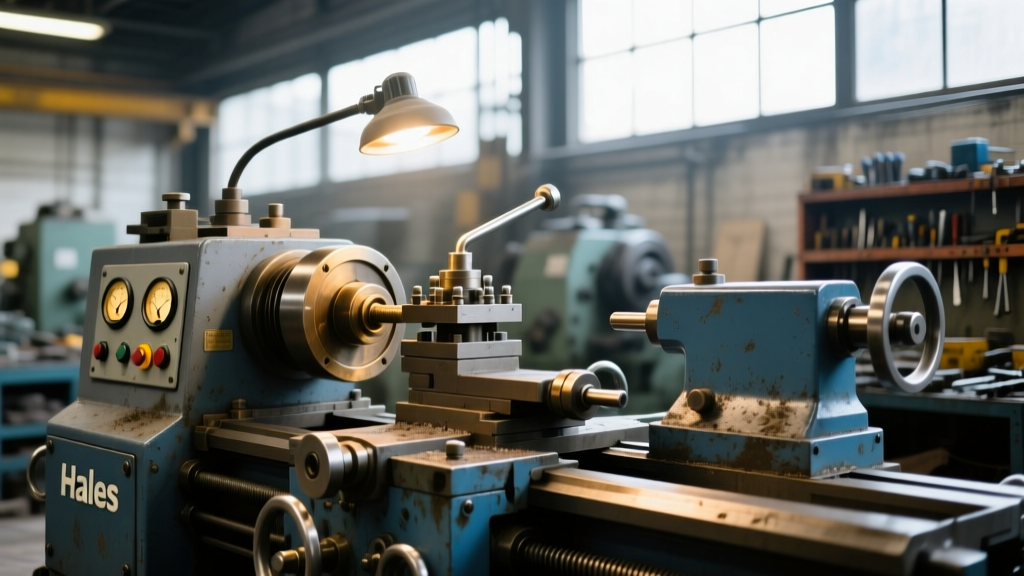
Acquiring pre-owned equipment is a strategic capital allocation decision, not just a simple purchase. When evaluating a used Hales machine tool, the initial sticker price is merely the entry fee. A machine listed at $45,000 can easily demand an additional $25,000 to $35,000 in hidden capitalization costs before it chips its first part. To protect your shop's cash flow, you must model the Total Landed Cost (TLC) before initiating any mechanical inspection.
| Cost Category | Low Estimate | High Estimate | Financial Risk Factor |
|---|---|---|---|
| Equipment Purchase Price | $35,000 | $85,000 | Market volatility, dealer markups |
| Rigging and Freight | $2,500 | $8,500 | Weight, distance, crane requirements |
| Electrical & Air Upgrades | $1,500 | $12,000 | Phase conversion, compressor sizing |
| Tooling & Workholding | $4,000 | $15,000 | Missing standard toolholders, chuck wear |
| First-Year Maintenance Reserve | $5,000 | $18,000 | Unforeseen breakdowns, fluid flushes |
| Total Landed Cost (TLC) | $48,000 | $138,500 | Must remain 30% below new equivalent |
According to manufacturing extension guidelines from the NIST Manufacturing Extension Partnership (MEP), shops that fail to allocate a minimum 15% to 20% maintenance reserve for used equipment in year one frequently experience negative ROI due to unplanned downtime. Your inspection checklist must directly inform this reserve budget.
Mechanical Integrity: Quantifying Wear and Tear
The mechanical inspection is where you uncover the liabilities that will drain your maintenance budget. Do not rely on a visual walk-around. You need dial indicators, test bars, and laser calibration data.
1. Spindle Runout and Thermal Growth
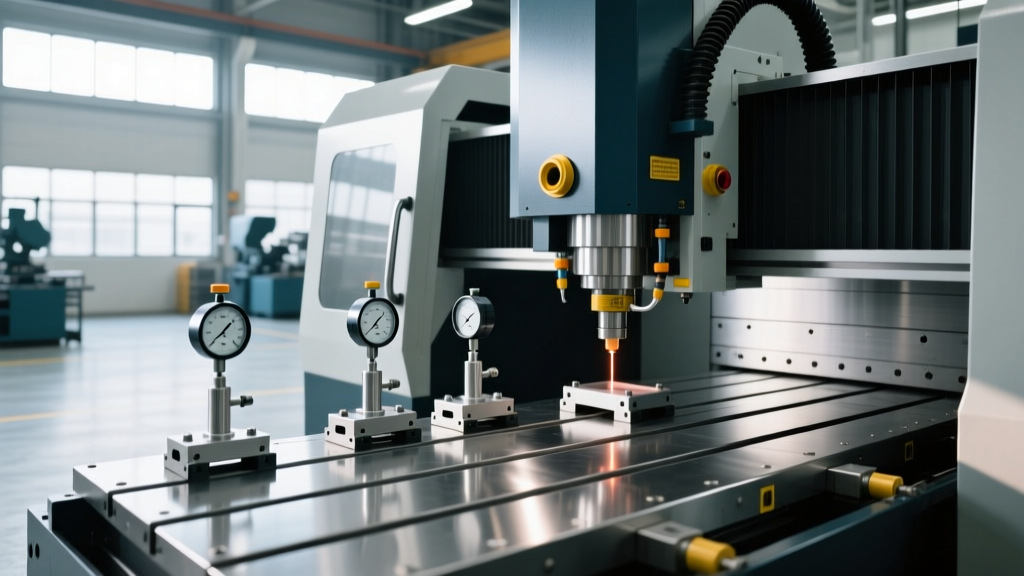
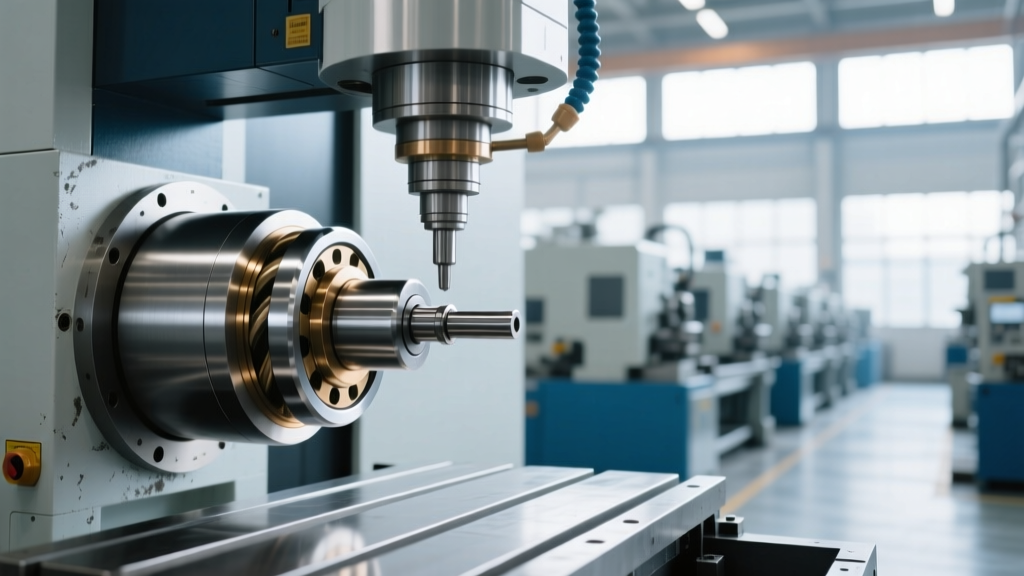
The spindle is the most expensive single component on any Hales machine tool. Insert a certified ground test bar into the spindle taper. Mount a 0.0001" resolution dial indicator on the table or carriage.
- Acceptable: Less than 0.0002" TIR (Total Indicator Reading) at the gauge line, and less than 0.0004" TIR at 12 inches out.
- Warning Zone: 0.0005" to 0.0008" TIR. Budget $4,500 to $7,000 for a precision bearing preload adjustment and seal replacement.
- Walk-Away: Greater than 0.001" TIR, or audible grinding at 3,000+ RPM. A full spindle rebuild or replacement will cost between $12,000 and $22,000, destroying the machine's value proposition.
Pro Tip: Run the spindle at maximum RPM for 45 minutes. Re-measure the runout. If thermal growth pushes the TIR out by more than 0.0003", the spindle cooling jacket is likely clogged or the chiller unit is failing.
2. Axis Geometry and Ballscrew Backlash
Way wear and ballscrew degradation dictate the machine's ability to hold tight tolerances. Perform a reverse bump test on the X and Z axes. Command the machine to move 1.000" in the positive direction, then 1.000" in the negative direction, stopping at the exact same coordinate.
Mount a dial indicator against a fixed mag-base. Any discrepancy between the forward and reverse stop positions is your backlash. If backlash exceeds 0.0008" on a CNC machine, the ballnut is worn. Replacing a ballscrew assembly and performing a laser pitch-error compensation will cost $6,500 to $14,000 per axis. Furthermore, inspect the way covers and wipers. If the way lube system is pumping air or the distribution blocks are clogged, the cast iron ways will exhibit scoring. Re-scraping or Moglice injection for a mid-size machine bed starts at $18,000.
⚠️ Financial Red Flag: Flood DamageIf the machine was located in a region that experienced recent flooding, inspect the underside of the way covers and the interior of the electrical cabinet for a distinct "water line" stain or rust. Coolant and water mixtures destroy linear scales and servo motors. Do not purchase flood-damaged equipment under any circumstances; the electrical gremlins will bankrupt your maintenance budget.
Control System Obsolescence and Electrical Liabilities
The mechanical iron of a Hales machine tool might last 40 years, but the electronics will not. Assessing the control system is critical for long-term budget planning.
Evaluating the CNC Controller
Identify the exact control model (e.g., Fanuc 0i-F, Siemens 828D, Mitsubishi M80). If the machine is equipped with an obsolete control like a Fanuc 10T, 0T, or early 21i, sourcing replacement PCB boards or servo drives is nearly impossible. When a drive fails, you will face weeks of downtime.
"Retrofitting a legacy machine with a modern control system is a massive capital expenditure. Shops must weigh the cost of a $35,000+ retrofit against simply buying a newer used machine with a current-generation controller." — Industry analysis via Modern Machine Shop
Electrical Cabinet and Safety Compliance
Open the main electrical panel. Look for brittle wire insulation, melted contactors, and unauthorized "jumper" repairs. Ensure the machine complies with current safety standards. According to OSHA machinery and machine guarding regulations, all equipment must feature functional e-stops, interlocked guard doors, and proper grounding. Upgrading a legacy machine to meet modern OSHA and NFPA 79 electrical standards can add $4,000 to $9,000 to your installation budget.
The Walk-Away Matrix: Financial Thresholds
Use this decision matrix during your on-site inspection to determine whether to negotiate the price, budget for repairs, or walk away entirely.
| Inspection Finding | Estimated Repair Cost | Impact on Production | Financial Action |
|---|---|---|---|
| Spindle runout > 0.001" TIR | $12,000 - $22,000 | Severe (Scrap parts, poor finish) | Walk Away (Unless price drops by 100% of repair cost) |
| Obsolete CNC Control (e.g., Fanuc 10) | $30,000 - $45,000 | Catastrophic (No parts support) | Walk Away |
| Axis backlash > 0.001" | $6,500 - $14,000 | Moderate (Holding loose tolerances only) | Negotiate (Demand deduction from asking price) |
| Missing toolholders / worn chuck | $3,000 - $8,000 | Low (Easily replaced) | Negotiate (Standard deduction) |
| Clogged way lube distribution | $1,500 - $3,500 | Moderate (Risk of way scoring) | Budget & Repair (Acceptable first-week maintenance task) |
Leveraging Inspection Data for Price Negotiation
Data is your strongest leverage in a used equipment transaction. Sellers often price a used Hales machine tool based on the assumption that it is in "ready-to-run" condition. Your inspection checklist systematically dismantles this assumption.
Compile your findings into a formalized inspection report. If the seller is asking $65,000, but your dial indicator tests reveal $10,000 in required ballscrew replacements and $4,000 in missing workholding, your counteroffer should not be $60,000. It should be $48,000, reflecting the true cost to bring the asset to production-ready status. Include photos of the dial indicators, the worn way wipers, and the obsolete electrical components in your negotiation packet. Professional dealers and liquidators respect data-backed offers and will often concede to avoid the cost of re-listing and storing the machine.
Final Capital Verification
Before wiring the deposit, verify the machine's serial number against the manufacturer's database to ensure there are no outstanding liens, unpaid software licenses, or locked parameters. A locked parameter set on a multi-axis machine can cost thousands in dealer service calls to unlock. By strictly adhering to this cost-focused inspection protocol, you transform the purchase of a used Hales machine tool from a speculative gamble into a calculated, high-yield capital investment.