Evaluating Chip Conveyors From Top Machine Tools Manufacturers
Compare swarf management systems and chip conveyor alternatives from leading machine tools manufacturers to minimize downtime and coolant degradation.
The Hidden Economics of Swarf Mismanagement
Unplanned spindle downtime caused by chip conveyor jams costs modern machine shops between $150 and $300 per hour in lost production. When evaluating equipment from leading machine tools manufacturers, buyers often hyper-focus on spindle speed, rapid traverse rates, and CNC controller features while treating swarf management as an afterthought. This is a critical error. A machine tool is only as productive as its ability to evacuate waste. In 2026, with shops running untended lights-out shifts, the reliability of the chip conveyor and coolant filtration system dictates overall equipment effectiveness (OEE).
Poor swarf management does not just cause mechanical jams; it destroys coolant integrity. According to guidelines on metalworking fluids, tramp oil and fine metallic particulates trapped in degraded coolant accelerate tool wear by up to 20% and create severe respiratory hazards for operators. Selecting the right conveyor technology requires matching the physical characteristics of your chips to the mechanical action of the conveyor.
Conveyor Technologies: Hinge, Scraper, and Shaker Systems
Machine tools manufacturers typically offer a base-model conveyor and charge premiums for advanced alternatives. Understanding the mechanical differences is essential for specifying the right package.
Hinge-Belt Conveyors (The Industry Standard)
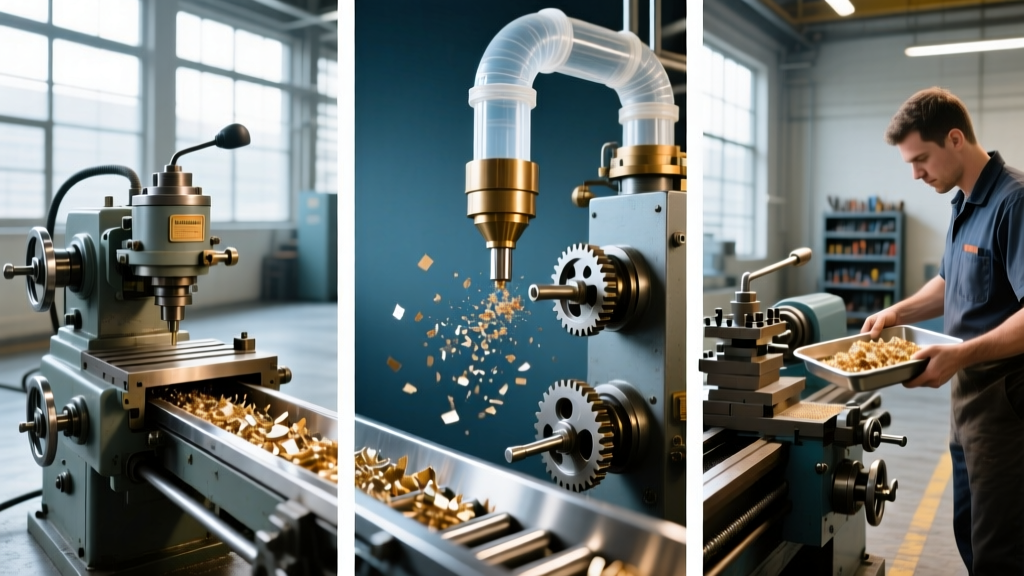
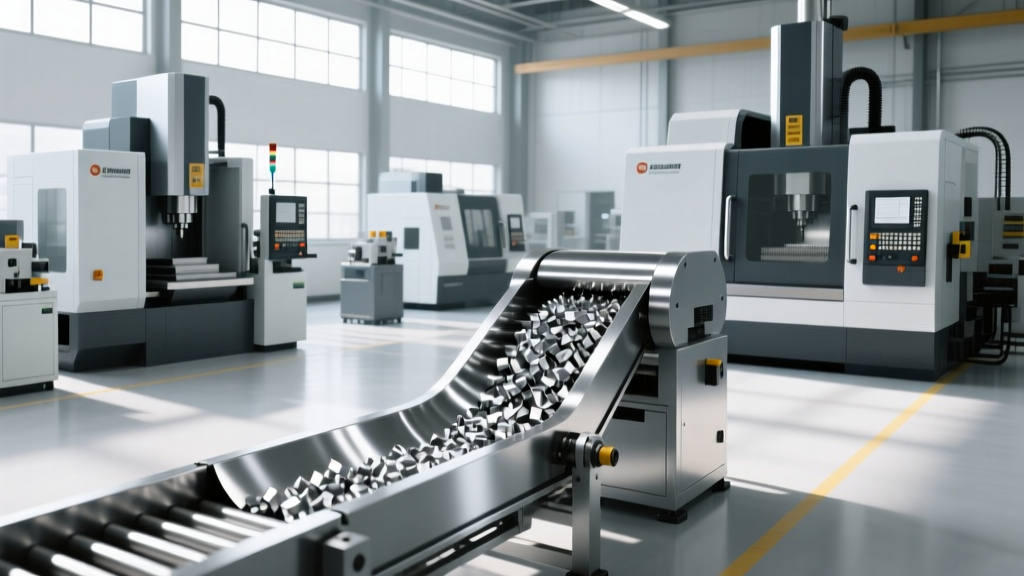
The hinge-belt conveyor uses interlocking 1.5-inch or 2.5-inch pitch stainless steel slats driven by a continuous chain. It is the default option for 85% of vertical and horizontal machining centers. It excels at moving long, stringy chips generated from machining steel and aluminum. However, it is highly vulnerable to 'fines'—microscopic abrasive particles generated when machining cast iron, brass, or titanium. These fines slip between the hinge joints, accelerating wear and eventually seizing the belt.
Scraper and Magnetic Conveyors (The Fines Alternative)
For high-volume cast iron or abrasive material removal, scraper conveyors utilize a chain-driven blade that drags along the bottom of a sealed trough. Because there are no exposed hinge joints, fines cannot jam the mechanism. Magnetic conveyors embed heavy-duty ceramic magnets beneath a stationary stainless steel pan, dragging ferrous chips along the surface without any moving parts exposed to the swarf. While magnetic conveyors eliminate mechanical jamming entirely, they are useless for non-ferrous materials like aluminum or Inconel.
Harmonic Shaker Conveyors
Advanced alternatives like the Mayfran ShakerTrak use a harmonic, reciprocating motion to vibrate chips forward. With no continuous belt or chain to snap, shaker conveyors offer near-zero maintenance for highly abrasive applications, though they require a larger physical footprint and struggle with steep incline angles exceeding 15 degrees.
OEM Integrated Packages vs. Aftermarket Alternatives
When purchasing new equipment, shops must decide whether to accept the OEM's integrated swarf package or retrofit an aftermarket system. Below is a comparison of the operational trade-offs.
| Feature | OEM Integrated (e.g., Haas, Mazak, DMG MORI) | Aftermarket Retrofit (e.g., Hennig, LNS, Mayfran) |
|---|---|---|
| Initial Capital Cost | $4,500 - $9,000 (bundled in machine financing) | $7,000 - $15,000 (plus installation labor) |
| Footprint Integration | Seamless; matches machine enclosure aesthetics | Requires custom sheet metal adaptation; bulky |
| Controller Integration | Native M-code triggers; alarms display on CNC HMI | Standalone PLC; requires separate control panel |
| Filtration Synergy | Pre-engineered for OEM coolant tank volume | Highly customizable; supports multi-machine central systems |
| Lead Time Impact | Adds 2-4 weeks to machine build schedule | Ships independently; no delay on machine delivery |
How Leading Machine Tools Manufacturers Integrate Filtration
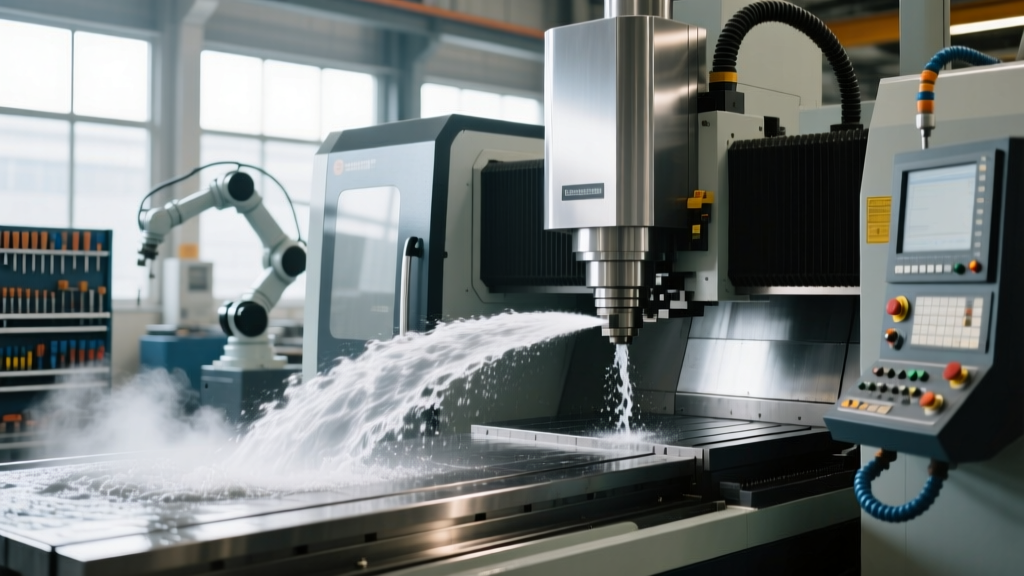
A chip conveyor only removes macro-swarf. Micro-fines require integrated filtration, an area where top machine tools manufacturers are heavily innovating to support high-pressure through-spindle coolant (TSC) systems operating at 1,000 to 2,000 PSI.
High-Pressure Coolant Reality Check: Running 1,000 PSI TSC with standard 50-micron bag filters will destroy your spindle rotary union in under 500 hours. Advanced OEM packages now include wedge-wire or vacuum drum filters rated to 10-20 microns to protect high-pressure pumps.Manufacturers like DMG MORI and Mazak now offer multi-stage filtration packages that route the primary conveyor discharge into a secondary settling tank equipped with a vac-u-wedge filter. This ensures that the coolant returning to the machine's 100-gallon sump is virtually free of particulates, extending coolant sump life from 6 months to over 24 months and drastically reducing hazardous waste disposal costs.
Torque Limiters and Edge-Case Failures
The most common point of failure in any swarf management system is the drive motor torque limiter. When a long string of aluminum wraps around the head shaft, the motor stalls. How the system handles this stall dictates downtime.
Warning: Mechanical Shear Pins vs. Electronic ClutchesOlder or budget conveyors use mechanical shear pins rated to 40-60 Nm. When a jam occurs, the pin snaps. Replacing a $15 shear pin requires 20 minutes of downtime, lockout/tagout procedures, and manual clearing of the jam. Modern electronic slip clutches (such as the Hennig APS system) detect the amperage spike, automatically reverse the belt for 3 seconds to break the chip ball, and resume forward motion. This clears 85% of jams without operator intervention.
When specifying a machine, always verify that the OEM includes an electronic auto-reversing torque limiter rather than a mechanical shear pin or basic thermal overload relay. The $800 upcharge for an electronic clutch pays for itself after the first three avoided downtime events.
Decision Framework: Selecting the Right Swarf System
Use this conditional logic matrix to specify the correct conveyor and filtration package from your machine tool builder:
- If machining >80% Steel/Stainless (Stringy Chips): Specify a standard 1.5-inch pitch hinge-belt conveyor with an electronic auto-reversing torque limiter. Add a 50-micron bag filter for standard low-pressure flood coolant.
- If machining >60% Aluminum (Soft, Bird-Nesting Chips): Specify a hinge-belt conveyor with integrated wiper blades to prevent aluminum chips from sticking to the underside of the belt and falling back into the sump. Increase belt speed to 25 ft/min.
- If machining Cast Iron, Brass, or Titanium (Abrasive Fines): Reject hinge-belt conveyors. Specify a scraper conveyor or a harmonic shaker system. Mandate a 20-micron drum filter to prevent fines from recirculating and scoring the machine's linear guideways.
- If utilizing >1,000 PSI Through-Spindle Coolant: The standard OEM conveyor is insufficient for fluid clarity. You must specify a secondary vacuum filtration unit or a centrifugal clarifier integrated into the machine's base casting to protect the high-pressure pump seals.
"Shops that treat the chip conveyor as a commodity component are the same shops struggling with premature way-cover failures and degraded surface finishes. Swarf management is a primary machining process, not a secondary cleanup task." — Manufacturing Engineering Lead, Tier 1 Aerospace Supplier.
Final Specification Directives
When negotiating with machine tools manufacturers, do not accept the 'standard' chip conveyor if your material mix includes abrasive fines or high-volume aluminum. Force the builder to itemize the conveyor type, the pitch of the belt, the torque limiter mechanism, and the exact micron rating of the coolant filtration system. Upfront capital expenditure on advanced swarf management—typically a $6,000 to $12,000 premium on a standard VMC—yields a verifiable ROI through preserved coolant chemistry, protected way-covers, and uninterrupted lights-out production cycles.