Relocation Troubleshooting: Cost of VR Training Equipment for Manufacturing Programs
Learn how VR prevents installation errors. We analyze the cost of VR training equipment for manufacturing programs and relocation troubleshooting.
The High Stakes of Machinery Relocation and Installation
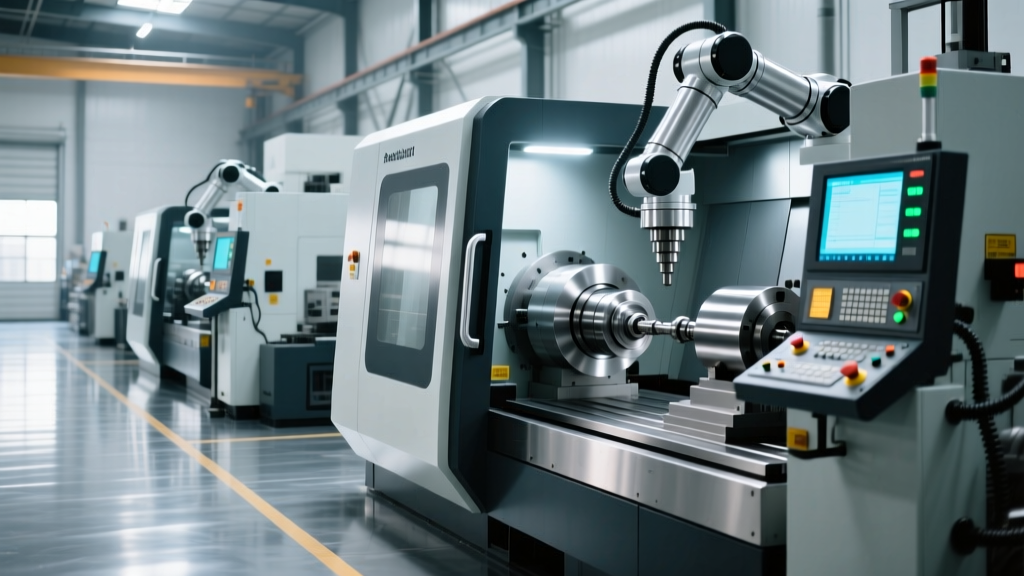
Relocating heavy manufacturing equipment—such as a 40-ton Haas EC-1600 horizontal machining center or a multi-stage Amada stamping press—introduces severe mechanical and structural variables. When installation fails, the resulting downtime, spindle misalignment, and foundation cracking can cost facilities upwards of $15,000 per day in lost production. Traditional troubleshooting relies on post-installation diagnostics, using precision levels and laser interferometers to identify errors after the machine is already bolted down. However, the modern industrial approach shifts this troubleshooting phase to the pre-installation planning stage using immersive digital twins.
By simulating the rigging, transport, and leveling sequences in virtual reality, installation teams can identify torsion risks, load distribution failures, and clearance bottlenecks before the physical move begins. But adopting this technology requires a precise capital allocation. Facility directors must carefully evaluate the cost of VR training equipment for manufacturing programs dedicated to relocation and rigging crews to ensure a positive return on investment.
⚠️ CRITICAL WARNING: Rigging Load MiscalculationsThe most common cause of post-relocation Z-axis chatter in CNC mills is a twisted machine bed. This occurs when riggers use standard chain slings without a spreader beam, inducing torsional stress during the lift. VR simulations specifically train crews to identify center-of-gravity shifts and mandate 4-point synchronous lifting protocols to prevent permanent geometric distortion.
Troubleshooting Physical Installation Errors via Virtual Simulation
Before breaking down the financial investment, it is essential to understand what specific installation failures VR troubleshooting prevents. Physical machinery relocation involves complex physics that are difficult to visualize from 2D CAD layouts.
1. Foundation Settling and Anchor Bolt Torque Failures
When relocating a 5-axis DMG MORI DMU 50, the foundation must cure to specific PSI ratings, and anchor bolts (typically M24 or M30) require exact torque specifications (e.g., 450 ft-lbs). If the concrete pad is uneven, tightening the bolts will twist the machine casting. VR training modules allow installers to practice reading digital torque wrenches and simulating the sequential star-pattern tightening sequence. If a virtual strain gauge shows casting distortion in the simulation, the team knows to use epoxy grout or Fabreeka vibration isolation pads to compensate for the uneven floor before the physical machine arrives.
2. Coolant and Chip Conveyor Integration
Troubleshooting post-installation often reveals that high-pressure coolant lines or chip conveyors were routed through areas with insufficient clearance, requiring expensive on-site welding and re-routing. VR environments mapped to the exact dimensions of the new facility floor allow pipefitters to walk through the virtual installation, identifying clash points between the machine's auxiliary ports and existing facility pillars or overhead crane rails.
Breaking Down the Cost of VR Training Equipment for Manufacturing Programs
When calculating the total cost of VR training equipment for manufacturing programs focused on relocation, the budget extends far beyond the headsets. A complete deployment requires enterprise-grade hardware, spatial computing software licenses, and custom digital twin modeling. Below is the 2026 pricing matrix for a standard 10-person rigging and installation team.
| Hardware / Software Tier | Recommended Model / Platform | Unit Cost (2026) | Total for 10-User Fleet |
|---|---|---|---|
| Enterprise Standalone VR | HTC Vive Focus 3 (with LBE mode) | $1,300 per headset | $13,000 |
| Mixed Reality (High Fidelity) | Varjo XR-4 (Tethered) | $3,995 per headset | $39,950 |
| Budget Fleet (Light Duty) | Meta Quest 3 (Enterprise Edition) | $900 per headset | $9,000 |
| Digital Twin Engine License | Unity Industry (Annual Subscription) | $2,040 per seat/year | $20,400 / year |
| Custom 3D Asset Modeling | OEM CAD to VR Conversion (Per Machine) | $4,500 - $8,000 | Varies by fleet size |
For a mid-sized manufacturing facility outfitting a 10-person installation crew with HTC Vive Focus 3 headsets and an annual Unity Industry license, the first-year hardware and software cost sits at approximately $33,400, excluding the one-time fee for converting specific machine CAD files into interactive VR assets. According to research on smart connected manufacturing initiatives by NIST, the integration of digital twins and immersive training can reduce physical commissioning times by up to 30%, rapidly offsetting the initial hardware expenditure.
Why Hardware Choice Dictates Troubleshooting Efficacy
Do not default to the cheapest headset. When troubleshooting precise installation metrics—such as reading the 0.0002-inch graduations on a digital machinist level or inspecting the thread engagement on foundation anchors—resolution is paramount. The Meta Quest 3 is sufficient for spatial awareness and clearance checks. However, if your troubleshooting requires reading analog dials, inspecting micro-fractures in rigging hardware, or verifying exact torque wrench settings, the Varjo XR-4's dual 5120 x 5120 pixel displays are mandatory to prevent eye strain and simulation sickness during extended training sessions.
A 4-Step VR Troubleshooting Workflow for Rigging and Installation
To maximize the ROI of your VR investment, relocation teams should follow this standardized troubleshooting workflow before the physical equipment is disconnected from its original power supply.
- Virtual Site Survey & Clash Detection: Import the LiDAR scan of the new facility floor into the VR environment. Have the installation crew walk the virtual path of the machine. Troubleshooting target: Identify overhead crane height limitations and doorway width bottlenecks that could trap the machine during transport.
- Rigging Physics Simulation: Assign virtual slings, shackles, and spreader beams to the machine's digital twin. The physics engine will calculate the load on each leg based on the machine's center of gravity. Troubleshooting target: Ensure no single sling leg exceeds its Working Load Limit (WLL), adhering to OSHA crane and rigging standards for below-the-hook lifting devices.
- Sequential Leveling & Bolting Drill: Crews practice the star-pattern anchor bolt tightening sequence using virtual torque multipliers. Troubleshooting target: Monitor the virtual strain gauges on the machine casting. If the bed twists out of the 0.0005"/ft tolerance, the crew must adjust the virtual shimming before proceeding.
- Utility Hookup & Pressure Testing: Simulate the connection of 480V 3-phase power, pneumatic lines, and high-pressure coolant. Troubleshooting target: Verify that pressure drop across extended coolant lines does not exceed the machine pump's compensation threshold.
ROI Matrix: VR Prevention vs. Post-Installation Repair Costs
The true value of VR training is best understood when compared to the catastrophic costs of physical installation failures. The table below contrasts the preventative cost of VR simulation against the reactive repair costs of common relocation errors.
| Installation Failure Mode | Physical Repair Cost & Downtime | VR Prevention Cost (Amortized) |
|---|---|---|
| Twisted CNC Bed (Improper Rigging) | $22,000 (Scraping/Re-machining) + 14 days downtime | $450 (2 hours VR rigging sim) |
| Foundation Cracking (Uneven Load) | $18,500 (Epoxy injection & re-coring) | $300 (Virtual shimming drill) |
| Overhead Crane Collision | $65,000+ (Crane repair & OSHA fines) | $200 (LiDAR clash detection) |
| Spindle Runout (Anchor Bolt Torque) | $8,000 (Spindle replacement & laser calibration) | $150 (Sequential bolting module) |
Final Recommendations for Facility Managers
Integrating virtual reality into your equipment relocation and installation protocol is no longer a futuristic concept; it is a necessary risk-mitigation strategy for high-value capital assets. When budgeting for the cost of VR training equipment for manufacturing programs, prioritize high-resolution optics for precision troubleshooting and invest heavily in accurate, physics-enabled digital twins of your specific machinery. By shifting the troubleshooting phase from the concrete floor to the virtual environment, facilities can eliminate catastrophic installation errors, ensure strict adherence to rigging safety standards, and achieve first-pass yield on complex machinery relocations.