Recycling Equipment Manufacturing: Sustainable Alternatives
Compare traditional and green tech in recycling equipment manufacturing. Analyze direct-drive shredders, NIR sorters, and ROI metrics.
The Engineering Reality of Sustainable Size Reduction
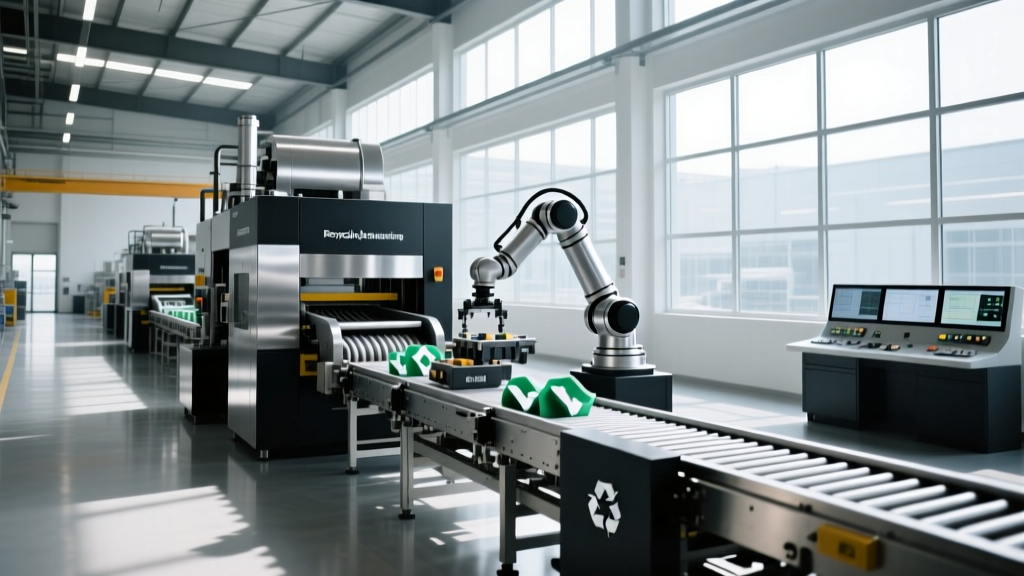
The shift toward sustainable manufacturing equipment in the recycling sector is no longer driven solely by corporate ESG mandates; it is an operational necessity dictated by energy costs and throughput demands. Traditional recycling equipment manufacturing relied heavily on oversized induction motors, hydraulic drivetrains, and belt-driven transmissions. While robust, these systems suffer from inherent parasitic losses. Modern green technology alternatives replace these mechanical inefficiencies with electro-mechanical direct drives, solid-state optical sorting, and intelligent Variable Frequency Drives (VFDs).
Energy Baseline Metric: According to the U.S. Department of Energy's Industrial Energy Efficiency guidelines, optimizing motor-driven systems in material processing can reduce specific energy consumption (SEC) by 20% to 30%. In a standard 15-ton/hour MSW (Municipal Solid Waste) facility, this translates to an annual electrical savings of over $140,000.Shredder Drivetrains: Belt vs. Electro-Mechanical Direct Drive
The primary size reduction unit in any recycling line dictates the facility's baseline power draw. Traditional single-shaft shredders utilize a standard electric motor connected to the rotor via a V-belt or hydraulic coupling. Green tech alternatives, such as the UNTHA XR3000C e-shredder series, utilize a direct-drive electro-mechanical system where the low-speed, high-torque motor is mounted directly to the rotor shaft.
Technical Comparison Matrix
| Feature | Traditional Belt/Hydraulic Drive | Direct-Drive Electro-Mechanical (Green Tech) |
|---|---|---|
| Drivetrain Efficiency | 82% - 88% (Belt slippage & hydraulic fluid friction) | 95% - 98% (Direct mechanical coupling) |
| Startup Current Draw | High (Requires oversized soft-starters or VFDs) | Low (Integrated VFD ramps up torque smoothly) |
| Maintenance Interval | 500 hours (Belt tensioning, hydraulic fluid changes) | 4,000 hours (Gearbox oil and bearing greasing only) |
| Shock Load Response | Belt slips (Acts as mechanical fuse, but causes heat/wear) | Electronic torque limiter disengages in <50ms |
| Approximate CapEx (150kW class) | $280,000 - $320,000 | $380,000 - $450,000 |
While the initial capital expenditure for direct-drive recycling equipment manufacturing is 25% to 35% higher, the elimination of belt replacements (which cost $2,500 to $4,000 per set and require 8 hours of downtime to install) and the reduction in kWh/ton processed typically yields an ROI within 28 to 36 months for facilities operating two shifts per day.
Optical Sorting: Overcoming the Xenon Lamp Bottleneck
Material recovery facilities (MRFs) rely on optical sorters to separate polymers (PET, HDPE, PP) from mixed waste streams. Legacy systems utilize Xenon flash lamps to illuminate the material on the conveyor belt. Xenon technology is fundamentally inefficient: the lamps consume massive amounts of electricity, generate intense heat (requiring dedicated 5-ton HVAC units inside the sorting cabin to prevent sensor drift), and degrade rapidly.
The LED-NIR Alternative
Sustainable alternatives in optical sorting utilize LED-based Near-Infrared (NIR) illumination, seen in modern iterations like the TOMRA AUTOSORT GREENJET. The engineering advantages are stark:
- Lifespan: Xenon lamps require replacement every 2,000 to 3,000 hours. LED arrays maintain spectral stability for 20,000+ hours, effectively eliminating lamp-related downtime over a 5-year lifecycle.
- Thermal Management: LEDs emit a fraction of the radiant heat. This allows manufacturers to design passive cooling enclosures, eliminating the 12kW to 15kW continuous load of cabin air conditioning units.
- Spectral Precision: LED arrays can be tuned to specific narrow-band wavelengths (e.g., 980nm for moisture detection, 1200nm for PET), reducing false-positive ejection rates by up to 14% compared to the broad-spectrum flash of Xenon lamps.
Transitioning to LED-NIR optical sorting aligns directly with the EPA's Sustainable Materials Management (SMM) framework by reducing the upstream energy required to process recycled commodities while simultaneously increasing the purity of the recovered bales.
5-Year TCO Analysis: Traditional vs. Sustainable Line
To understand the financial reality of green technology in recycling equipment manufacturing, plant managers must evaluate the Total Cost of Ownership (TCO). The following model assumes a 10-ton/hour mixed plastics processing line operating 5,000 hours annually, with industrial electricity priced at $0.14/kWh.
| Cost Category (5-Year) | Legacy Line (Belt Shredder + Xenon Sorter) | Sustainable Line (Direct Drive + LED-NIR Sorter) |
|---|---|---|
| Initial Equipment CapEx | $680,000 | $895,000 |
| Energy Consumption (Shredder) | $315,000 | $236,000 |
| Energy Consumption (Sorter HVAC & Lamps) | $142,000 | $28,000 |
| Drivetrain & Lamp Maintenance Parts | $85,000 | $12,000 |
| Scheduled Downtime Labor Costs | $64,000 | $18,000 |
| 5-Year Total Cost of Ownership | $1,286,000 | $1,189,000 |
Despite a $215,000 premium on the initial purchase order, the sustainable line generates a net positive cash flow of $97,000 over five years, not including the revenue gained from the 14% increase in sorted material purity.
Critical Failure Modes in Green Recycling Tech
Sustainable equipment is not immune to failure; it simply fails differently. Plant engineers must anticipate the specific edge cases associated with green drivetrains and solid-state optics.
1. VFD Thermal Derating in Conductive Dust Environments
Direct-drive shredders rely on high-amperage VFDs. In recycling facilities processing aluminum, copper, or carbon black, conductive dust infiltrates standard IP54 VFD enclosures. If the intake filters are not vacuumed weekly, the internal heat sinks foul. When the internal temperature exceeds 45°C, the VFD logic board initiates thermal derating, reducing motor torque by 30% and causing immediate rotor stalling under load. Solution: Mandate IP66-rated liquid-cooled VFD cabinets for any facility processing non-ferrous metals.
2. Electronic Torque Limiter Latency
Unlike a mechanical belt that will physically slip and smoke when a 50mm solid steel axle enters the cutting chamber, a direct-drive system relies on software to detect the current spike and cut power to the motor. If the PLC scan rate is too slow, or the torque limiter threshold is set too high to prevent nuisance tripping, the kinetic energy will shatter the rotor blades or blow the IGBTs in the VFD. Solution: Calibrate the electronic shear-pin software to trigger at 150% of nominal torque with a response time strictly under 40 milliseconds.
Retrofit vs. Replace: A Decision Framework
Facility operators rarely have the capital to scrap an entire line for green alternatives. Use this framework to determine when to retrofit existing equipment versus purchasing new sustainable machinery:
- Audit the Drivetrain: If your current shredder uses a hydraulic drive and the hydraulic pump is nearing its 15,000-hour rebuild cycle, do not rebuild. Retrofit the main shaft with an electro-mechanical direct-drive kit (available from OEMs for legacy models). This costs roughly 60% of a new machine but captures 90% of the energy savings.
- Evaluate the Optical Cabin: If your Xenon-based sorter requires lamp replacements more than twice a year, the labor and downtime costs justify an immediate full-unit replacement with an LED-NIR model. Retrofitting LEDs into Xenon housings is optically unviable due to differing focal lengths and heat sink requirements.
- Check the Motor Nameplate: If your auxiliary equipment (conveyors, trommels, air classifiers) utilizes NEMA Premium (IE3) motors, retain them. If they are standard efficiency (IE1), replace them with IE4 or IE5 synchronous reluctance motors, which offer 15% better efficiency at partial loads—a common state in recycling lines with fluctuating feed rates.
By targeting the highest-loss nodes in the material processing flow, recycling equipment manufacturing can achieve aggressive sustainability targets without compromising the mechanical aggression required to process modern waste streams.