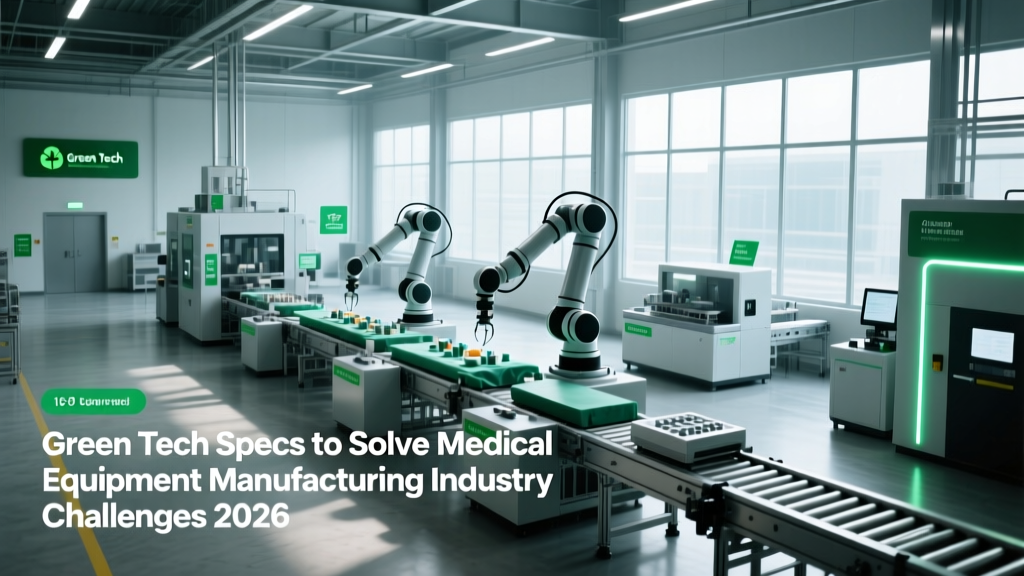
Green Tech Specs to Solve Medical Equipment Manufacturing Industry Challenges 2026
Explore technical specs of sustainable cleanroom HVAC, all-electric molding, and dry vacuum pumps to solve medical equipment manufacturing challenges.
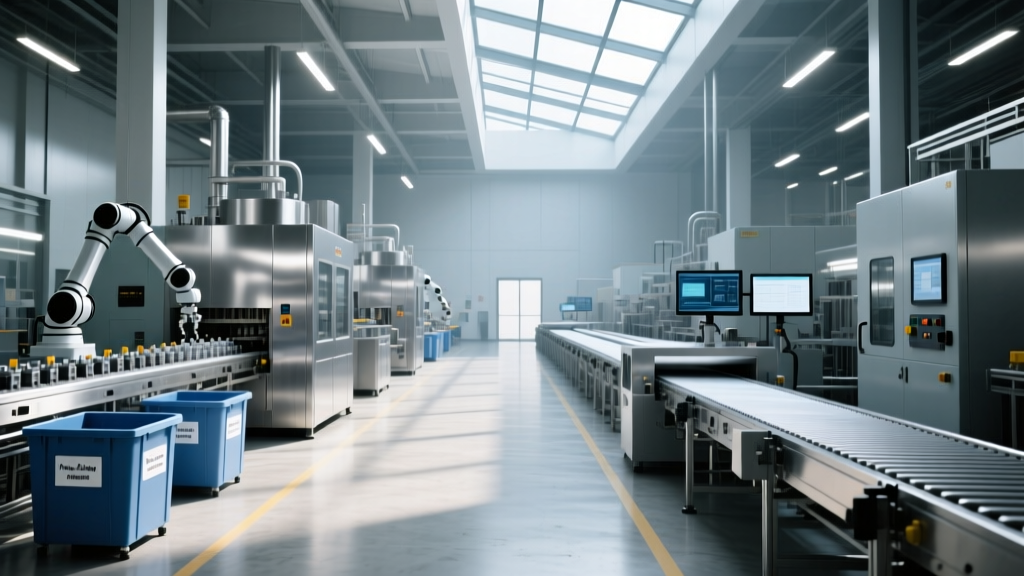
The medical equipment manufacturing industry challenges 2026 are largely defined by a critical operational friction: the collision between stringent FDA sterility mandates (21 CFR Part 820) and aggressive corporate Scope 3 carbon reduction targets. Medical device OEMs must maintain ISO Class 7 and Class 8 cleanrooms, process high-performance polymers, and execute sterile barrier packaging—all of which are historically energy-intensive processes. To remain compliant with both ISO 14001 environmental management standards and medical quality systems, manufacturers are replacing legacy equipment with precision-engineered green technology.
This guide details the exact technical specifications, thermodynamic principles, and operational parameters of sustainable manufacturing equipment required to overcome these modern production hurdles.
Core Engineering Conflict: Standard ISO Class 7 cleanrooms require 30 to 60 air changes per hour (ACH) to maintain ≤352,000 particles (≥0.5 µm) per cubic meter. Legacy HVAC systems running 24/7 at 100% capacity consume up to 45% of a medical device facility's total electrical load. Sustainable retrofits must reduce this load without compromising laminar airflow uniformity.The Cleanroom Energy Paradox: FFU and HVAC Specifications
The most effective solution to the cleanroom energy paradox is the deployment of Fan Filter Units (FFUs) equipped with Electronically Commutated (EC) motors, integrated with demand-controlled ventilation (DCV) logic. Unlike traditional AC shaded-pole or permanent split capacitor (PSC) motors, EC motors utilize permanent magnets and integrated microelectronics to eliminate rotor slip losses.
Technical Breakdown: EC Motors vs. Legacy AC Motors
- Motor Efficiency at Partial Load: Cleanrooms rarely require maximum airflow. An EC motor (such as the ebm-papst RadiPac series) maintains 70% to 80% wire-to-air efficiency when dialed down to 50% speed. In contrast, a standard AC shaded-pole motor drops to roughly 30% efficiency at the same reduced speed, wasting energy as heat.
- Thermal Output Reduction: Because EC motors generate significantly less waste heat, the facility's chilled water system does not have to work as hard to remove the heat load from the cleanroom ceiling plenum. This creates a compound energy saving: roughly 1 watt saved in fan power yields an additional 0.3 watts saved in chiller power.
- Static Pressure Management: Medical-grade ULPA filters (99.999% efficiency at 0.12 µm) create a high initial pressure drop (often 250–350 Pa). EC motors feature built-in constant-flow controllers that automatically increase torque to maintain a precise face velocity of 0.45 m/s (±10%) even as the filter loads with particulates over its 3-to-5-year lifespan.
Sustainable Injection Molding for Medical Polymers
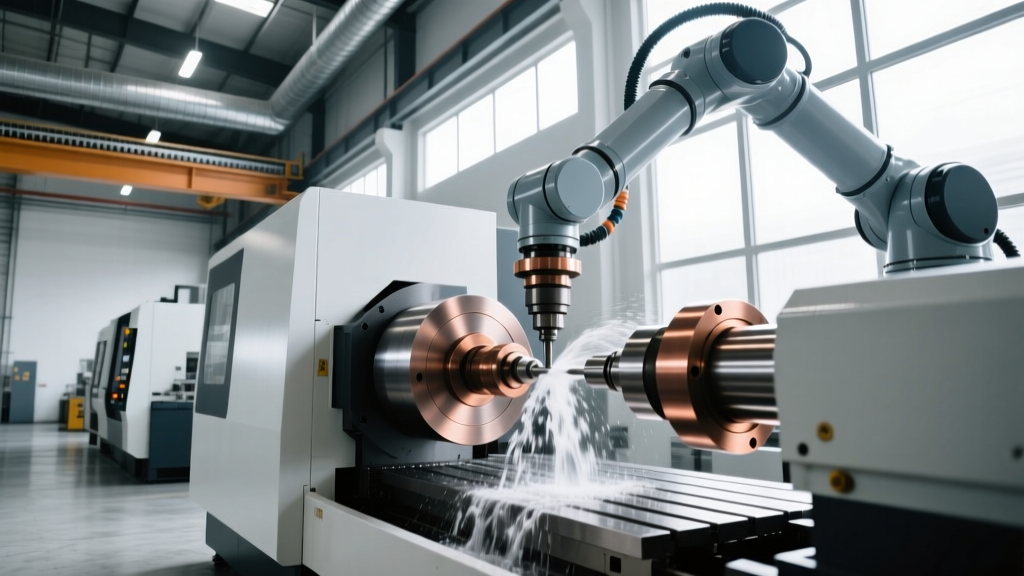
Manufacturing disposable syringes, catheter hubs, and surgical instrument housings requires processing medical-grade polymers like Polycarbonate (PC), Polyetheretherketone (PEEK), and Polysulfone (PSU). The transition from hydraulic to all-electric injection molding machines is a primary driver for reducing the carbon footprint of medical plastics production.
All-Electric Toggle Clamps and Regenerative Braking
All-electric machines, such as the Arburg Allrounder 470 A series, replace hydraulic pumps with servo-driven ball screws for injection, clamping, and ejection. The technical advantage lies in regenerative braking. During the mold closing and deceleration phases, the kinetic energy of the heavy moving platen is converted back into electrical energy by the servo drives and fed back into the machine's internal DC bus, reducing peak grid draw.
| Machine Drive Type | Specific Energy Consumption (SEC) | Idle Energy Draw | Cooling Water Requirement |
|---|---|---|---|
| Standard Hydraulic | 2.5 - 3.2 kWh/kg | 15 - 20 kW | High (Oil Cooling) |
| Servo-Hydraulic | 1.2 - 1.8 kWh/kg | 5 - 8 kW | Medium |
| All-Electric | 0.6 - 0.9 kWh/kg | < 1 kW | Low (Barrel Only) |
Ceramic Heater Bands for High-Temp PEEK Processing
Processing PEEK requires barrel temperatures up to 400°C. Standard mica heater bands suffer from high radial heat loss, forcing the heaters to cycle constantly. Upgrading to ceramic insulated heater bands reduces radial heat loss by up to 35%. The ceramic fiber insulation forces thermal energy inward toward the barrel, reducing the electrical wattage required to maintain the 400°C setpoint and stabilizing the melt temperature, which is critical for preventing polymer degradation in implantable devices.
Dry Vacuum Technology for Sterile Barrier Packaging
Medical devices require sterile barrier packaging, typically achieved through thermoforming blister packs. This process relies on deep vacuum to pull heated medical-grade PETG or Tyvek materials into the mold cavities. Historically, oil-sealed rotary vane pumps have been the standard, but they introduce severe sustainability and contamination risks.
Contamination Risk: Oil-sealed pumps experience 'oil carryover' where aerosolized hydrocarbons bypass the exhaust filters. In a cleanroom packaging environment, these volatile organic compounds (VOCs) can settle on sterile barrier materials, risking FDA batch rejections and requiring costly hazardous waste disposal for the contaminated oil.The Mechanics of Dry Claw Vacuum Pumps
Dry claw vacuum pumps (such as the Busch MINK MV series) operate using two non-contacting claw-shaped rotors that rotate in opposite directions. As the claws turn, they trap, compress, and exhaust air without requiring any sealing fluid or oil in the compression chamber.
- Ultimate Vacuum Levels: Modern dry claw pumps achieve an ultimate vacuum of 80 to 200 mbar, which is more than sufficient for the 150-250 mbar typically required for medical blister thermoforming.
- Thermodynamic Efficiency: Because there is no oil to shear and heat up, the internal compression temperatures are lower. Integrated variable frequency drives (VFDs) allow the pump to ramp down to 30 Hz during the non-forming portion of the machine cycle, cutting average energy consumption by 25% compared to constant-speed oil-sealed equivalents.
- Maintenance Intervals: Eliminating oil removes the need for 1,000-hour fluid changes and oil filter replacements, aligning with lean manufacturing principles and drastically reducing Scope 3 waste metrics.
CapEx vs. OpEx: The 2026 ROI Decision Matrix
Overcoming the medical equipment manufacturing industry challenges 2026 requires capital allocation based on lifecycle cost analysis rather than initial purchase price. Below is a decision matrix for facility engineers evaluating sustainable retrofits.
| Equipment Upgrade | Estimated Green Tech Premium | Annual Energy / Waste Savings | Simple Payback Period |
|---|---|---|---|
| FFU EC Motor Retrofit (per 100 units) | $45,000 - $60,000 | $18,500 (Electricity + Chiller Load) | 2.4 - 3.2 Years |
| All-Electric Press (vs. Hydraulic) | $85,000 - $120,000 | $32,000 (Power + Cooling Water) | 2.6 - 3.7 Years |
| Dry Claw Vacuum (vs. Oil-Sealed) | $12,000 - $18,000 | $6,500 (Power + Oil Disposal) | 1.8 - 2.7 Years |
Regulatory Alignment and Future-Proofing
Integrating these technologies does more than reduce utility bills; it directly supports compliance with evolving EPA Scope 3 inventory guidance and global ESG reporting frameworks. By reducing the energy intensity of cleanrooms and eliminating hazardous waste from packaging lines, medical device manufacturers insulate themselves against carbon taxation and secure preferential tier-1 supplier status with global healthcare networks.
Furthermore, the precision of all-electric molding and EC-motor airflow control reduces process variation. In medical manufacturing, where a deviation of 10 microns in a catheter lumen or a 5% drop in cleanroom positive pressure can trigger an FDA Form 483 observation, the inherent stability of green technology serves a dual purpose: protecting the planet while safeguarding patient safety and product quality. For deeper insights into integrating energy efficiency into advanced manufacturing facilities, facility engineers should consult the DOE Advanced Manufacturing Office resources on industrial assessment and cleanroom optimization.