2026 Relocation Tech for Electric Equipment Vehicle Manufacturers
Discover how electric equipment vehicle manufacturers use digital twins, IoT monitoring, and automated leveling to relocate gigafactory equipment in 2026.
Relocating a modern gigafactory is no longer a brute-force exercise in heavy rigging. As electric equipment vehicle manufacturers scale production and shift supply chains, the physical movement of hyper-sensitive, multi-million-dollar battery and motor assembly lines requires surgical precision. A single misaligned calendering roll or a micro-fractured PLC cabinet during transit can delay production ramp-ups by months, costing upwards of $15,000 per hour in lost output.
In 2026, the standard for manufacturing equipment relocation has shifted from manual crane operations to a highly digitized, sensor-driven discipline. According to the U.S. Department of Energy (DOE), the rapid expansion of domestic EV and battery supply chains has necessitated entirely new protocols for moving heavy industrial assets while preserving micron-level calibrations.
⚠️ The Cost of Legacy Rigging: Traditional relocation methods yield a 14% post-installation recalibration failure rate for sensitive battery electrode coaters. Smart relocation protocols reduce this to under 1.2%, saving an average of $420,000 in secondary alignment costs per production line.Pre-Move Simulation: LiDAR and Digital Twin Integration
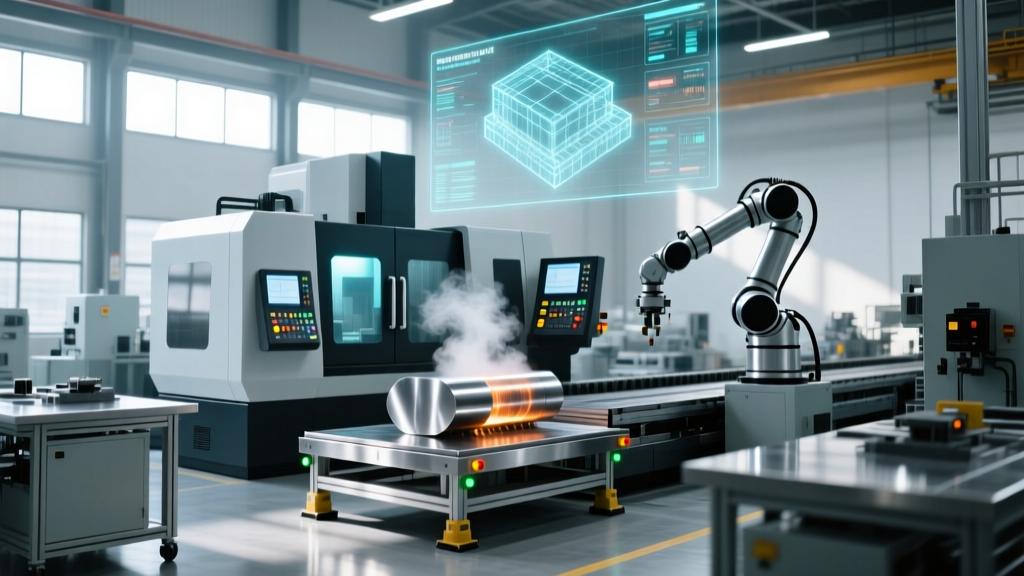
Before a single bolt is unfastened, modern relocation teams construct a sub-millimeter accurate digital twin of both the origin and destination facilities. Using terrestrial LiDAR scanners (such as the Leica RTC360), engineers capture point-cloud data of the facility’s egress routes, overhead clearances, and floor load-bearing capacities.
Physics-Based Collision Avoidance
For electric equipment vehicle manufacturers moving 80-ton battery stacking machines, physical dry-runs are impossible. Instead, engineers import the LiDAR point cloud into physics simulation software like Siemens Tecnomatix. The software models the exact center of gravity, kinematic footprint, and turning radius of the machinery on specialized multi-axle modular transporters.
- Pinch Point Identification: Simulations routinely reveal clearance issues as small as 14mm that human spotters would miss, particularly around reinforced concrete pillars and overhead HVAC ducting.
- Floor Load Distribution: The digital twin calculates dynamic point-loads during transit, dictating the exact placement of temporary steel road plates to prevent cracking on older facility floors.
IoT Shock and Tilt Monitoring During Transit
Battery manufacturing equipment—specifically electrode slurry mixers and precision calendering presses—contains ceramic and hardened steel components that lose factory calibration if subjected to abrupt harmonic vibrations or G-force spikes. OSHA material handling guidelines provide baseline safety for rigging personnel, but protecting the asset itself requires continuous IoT telemetry.
In 2026, triaxial accelerometers and MEMS-based tilt sensors are hardwired directly to the machine’s base frame and critical sub-assemblies. These devices log data at 100Hz to a localized edge server, transmitting alerts if transit thresholds are breached.
| Equipment Type | Max Allowable Shock (G-Force) | Max Tilt Deviation | Consequence of Breach |
|---|---|---|---|
| Battery Electrode Calender | 1.5 G | 2.0 degrees | Roll bearing micro-fractures; $120k realignment |
| Motor Stator Winding Machine | 2.0 G | 1.5 degrees | Servo encoder desynchronization |
| Main PLC & Robotics Cabinet | 3.5 G | 5.0 degrees | Backplane connector severing |
| Heavy Stamping Press (Frame) | 5.0 G | 8.0 degrees | Structural weld stress (rare) |
Automated Precision Leveling and Alignment
The installation phase is where legacy methods fail most catastrophically. Historically, millwrights used precision machinist levels and manual hydraulic jacks to set machinery. For modern EV drivetrain assembly lines, manual leveling is insufficient. The National Renewable Energy Laboratory (NREL) highlights that advanced battery cell manufacturing demands tolerances that exceed human manual adjustment capabilities.
Laser Interferometry and Hydraulic Gantry Systems
Today’s installation teams utilize automated hydraulic gantry systems (such as the Enerpac JS-Series) integrated with laser interferometers (like the API Radian). As the 60-ton machine is lowered onto its vibration-isolation mounts, the laser tracker continuously measures the spatial coordinates of the machine’s datum points.
"We no longer 'set' a machine and then measure it. The laser tracker feeds real-time spatial data to the hydraulic gantry's PLC, making micro-adjustments of 0.01mm per second as the load is transferred to the foundation. It is a closed-loop installation system." — Lead Millwright, Tier 1 EV Battery Supplier.
For motor stator winding equipment, this closed-loop system ensures the primary axis is aligned to within 5 microns over a 10-meter span, preventing premature wire insulation wear during high-speed automated winding operations.
Dry Room Protocol Integration During Hook-Up
Relocating battery cell stacking and electrolyte filling equipment introduces a unique environmental challenge: the dry room. Lithium-ion battery manufacturing requires ambient dew points between -40°C and -60°C to prevent moisture contamination in the electrolyte.
When installing equipment inside these environments, the physical presence of the installation crew, the heat generated by welding, and the opening of airlocks rapidly degrade the dew point. To combat this in 2026, electric equipment vehicle manufacturers mandate the following installation protocols:
- Temporary Desiccant Zoning: Portable Munters HCD-series desiccant dehumidifiers are rigged directly to the machine’s immediate footprint, creating a micro-climate tent around the equipment while the main facility HVAC is balanced.
- Staged Airlock Cycling: Tooling and rigging gear are pre-staged in an antechamber. Personnel limits are strictly enforced via RFID tracking to ensure no more than three technicians occupy the installation zone simultaneously, capping human-generated moisture output.
- Weld-Free Piping: All utility hookups (compressed air, nitrogen, cooling water) utilize Victaulic grooved mechanical couplings rather than TIG welding, eliminating localized heat spikes and the need for exhaust ventilation that would disrupt dry room pressure differentials.
📋 The 2026 Smart Relocation Decision Framework
Use this matrix to determine the required relocation tier for your specific manufacturing assets:
- Tier 1 (Heavy/Robust): Cast iron frames, stamping presses, raw material conveyors. Requirement: Standard LiDAR egress mapping, basic shock indicators.
- Tier 2 (Precision/Electromechanical): CNC machining centers, automated guided vehicle (AGV) charging stations, motor test dynos. Requirement: Digital twin collision simulation, continuous IoT tilt monitoring, laser-assisted leveling.
- Tier 3 (Hyper-Sensitive/Cleanroom): Battery electrode coaters, cell stacking robots, electrolyte dispensers. Requirement: Full physics-based kinematic simulation, 100Hz triaxial accelerometer logging, closed-loop hydraulic gantry installation, micro-climate dry-room tenting.
Post-Installation Telemetry and Commissioning
The relocation process does not end when the power is connected. Modern installation contracts now include a 72-hour dynamic telemetry phase. Once the equipment is powered on, vibration sensors remain attached to the main drive bearings and spindle housings. As the machine cycles through its initial dry-run sequences, the edge server compares the real-time vibration signature against the OEM’s baseline digital twin model.
If the harmonic resonance deviates by more than 4% from the baseline, the automated leveling system is re-engaged to adjust the isolator mount stiffness. This guarantees that when the first battery cell or EV motor rolls off the relocated line, the equipment is performing exactly as it did on its original foundation, effectively neutralizing the historical downtime associated with gigafactory relocations.