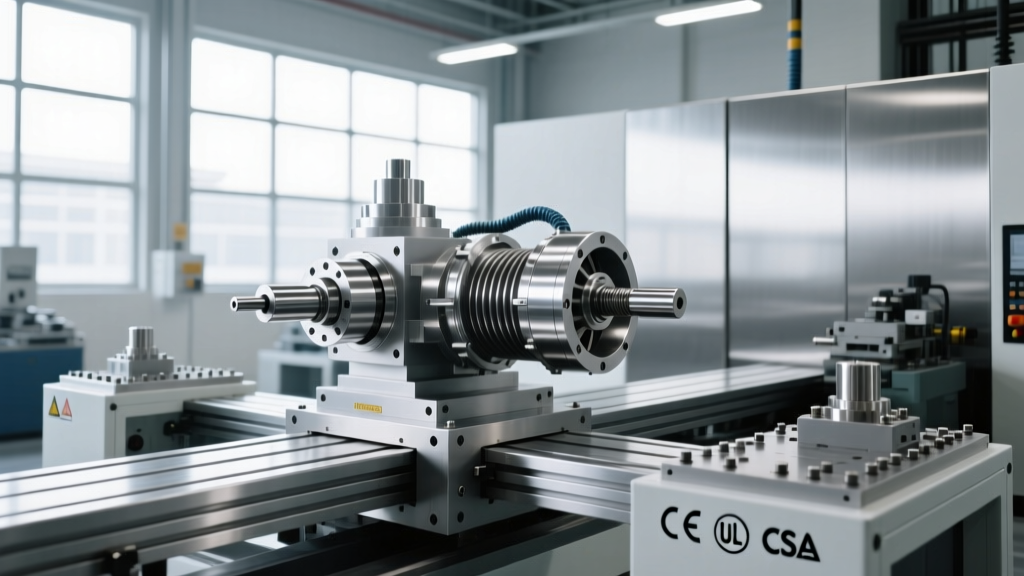
Maximizing Energy Efficiency Ratings Using Production Tracking Solutions in Industrial Equipment Manufacturing
Discover how production tracking solutions in industrial equipment manufacturing optimize energy efficiency ratings and reduce operational costs.
The Convergence of Telemetry and Power Consumption
Energy consumption accounts for 15% to 30% of total operating expenses in heavy manufacturing. Historically, equipment buyers relied on static nameplate data and standardized motor classifications to estimate power draw. This approach is fundamentally flawed for modern production environments. A machine rated for high efficiency on the showroom floor rarely maintains that Specific Energy Consumption (SEC) under dynamic shop-floor loads, thermal degradation, and suboptimal tooling conditions.
To bridge the gap between theoretical ratings and actual consumption, buyers must integrate production tracking solutions in industrial equipment manufacturing directly into their procurement criteria. By mandating native IoT telemetry and sub-metering capabilities in new equipment, facility managers can validate energy efficiency ratings in real-time, enforce ISO 50001 compliance, and identify micro-stoppages that silently inflate utility bills.
Decoding IEC Motor Classifications and SEC Metrics
The baseline for evaluating electromechanical efficiency remains the IEC 60034-30-1 standard. However, understanding the delta between efficiency classes is critical when calculating the ROI of integrated tracking hardware. According to the International Electrotechnical Commission (IEC), the jump from IE3 (Premium) to IE4 (Super Premium) yields marginal gains in isolated motor testing, but massive gains when paired with variable frequency drives (VFDs) and continuous telemetry.
| IEC Class | Designation | Typical Technology | CapEx Premium (vs IE3) | Tracking Requirement |
|---|---|---|---|---|
| IE3 | Premium Efficiency | Standard Induction | Baseline | Main breaker sub-metering |
| IE4 | Super Premium | Optimized Induction / PM | +15% to 20% | VFD telemetry & axis-level tracking |
| IE5 | Ultra Premium | Synchronous Reluctance (SynRM) | +30% to 45% | High-frequency (100ms) OPC UA polling |
When purchasing IE4 or IE5 equipment, such as a 500-ton Engel Victory injection molding machine equipped with servo-hydraulic drives, the SEC metric (measured in kWh/kg of processed material) becomes the primary KPI. Without production tracking solutions capturing both the material throughput (via PLC counters) and the instantaneous power draw (via smart VFDs), calculating an accurate SEC is impossible.
Selecting Production Tracking Solutions in Industrial Equipment Manufacturing
Not all OEM telemetry packages are created equal. Many machine tool builders offer proprietary 'black box' monitoring software that locks energy data behind closed ecosystems. When evaluating production tracking solutions, buyers must prioritize open-architecture protocols that feed directly into enterprise Energy Management Systems (EnMS).
⚠️ Procurement Warning: Proprietary IoT Lock-InAvoid OEMs that charge recurring SaaS fees to access raw energy data. Mandate that the equipment includes a localized edge gateway (e.g., Siemens SIMATIC IOT2050) with an unlocked OPC UA server. This ensures your facility owns the data stream natively, bypassing $5,000+ annual middleware licensing fees.
Required Sensor Granularity for Energy Audits
To truly validate an equipment's energy efficiency rating, the tracking solution must support granular sub-metering. A single main power meter on a 5-axis CNC mill is insufficient. The RFQ must specify:
- Spindle Load Telemetry: Polling rate of 100ms to capture regenerative braking events and peak cutting loads.
- Auxiliary System Sub-metering: Independent current transformers (CTs) on coolant pumps, chip conveyors, and HVAC enclosures to isolate non-cutting energy waste.
- State-Condition Mapping: The tracking solution must map power draw to machine states (e.g., MTConnect tags:
ACTIVE,IDLE,WAIT) to calculate the 'Idle-to-Cutting' energy ratio.
RFQ Checklist: Mandating Energy Telemetry
When issuing a Request for Quote (RFQ) for heavy manufacturing equipment, embed the following technical requirements to ensure the machinery supports modern energy tracking:
- Native Protocol Support: The machine controller must natively support MTConnect (for CNCs) or OPC UA (for PLCs/robotics) without requiring third-party hardware retrofits.
- Integrated Power Analyzer: The electrical cabinet must include a Class 0.5S power analyzer (e.g., Phoenix Contact EEM-MA series) hardwired to the main bus and auxiliary buses, exposed via the controller's HMI and external API.
- Energy-Per-Part Tagging: The PLC logic must include a cumulative kWh register that resets per cycle, allowing the production tracking software to assign exact energy costs to individual SKU serial numbers.
- Standby Mode Automation: The equipment must support automated eco-modes (e.g., DMG MORI's CELOS energy-saving protocols) that spin down hydraulics and coolants after 120 seconds of idle time, with state-change events broadcasted to the tracking network.
ROI Framework: Upfront CapEx vs. Lifecycle OpEx
Justifying the premium for smart-tracked, high-efficiency equipment requires a rigorous lifecycle analysis. Below is a comparative matrix based on a standard 24/7 production environment operating a mid-sized vertical machining center (VMC).
| Financial Metric | Standard VMC (IE3 Motors, Basic Relay Logic) | Smart-Tracked VMC (IE4 SynRM, Native OPC UA) |
|---|---|---|
| Base Equipment Cost | $145,000 | $162,000 (+11.7%) |
| IoT Gateway & Integration | $3,500 (Retrofit hardware + labor) | $0 (Native Edge Gateway included) |
| Annual Energy Consumption | 115,000 kWh | 89,000 kWh (22.6% reduction) |
| Annual Energy Cost (@ $0.14/kWh) | $16,100 | $12,460 |
| Hidden Waste Identified via Tracking | Unknown (Idle pumps run 24/7) | $2,800 saved via automated eco-mode triggers |
| Payback Period (Energy Delta) | N/A | 14.5 Months |
The data clearly demonstrates that the initial CapEx premium is rapidly eclipsed by OpEx savings, but only when the production tracking solution is utilized to eliminate idle-state waste. According to the U.S. Department of Energy's Advanced Manufacturing Office, motor systems account for nearly 70% of industrial electricity use; optimizing these systems via continuous telemetry is the single highest-yield energy intervention available to plant managers.
Edge Cases in Energy Tracking: Regenerative Braking and Power Factor
A common pitfall when evaluating energy efficiency ratings via tracking software is the misinterpretation of regenerative energy. In heavy CNC machining and robotic stamping, decelerating massive payloads feeds kinetic energy back into the drive. Standard bidirectional power meters will show negative kWh spikes. If the production tracking solution lacks a 'regenerative energy absorption' algorithm, it will artificially deflate the machine's reported energy consumption, masking underlying mechanical inefficiencies.
Furthermore, buyers must ensure the integrated power analyzers measure Apparent Power (kVA) and Power Factor (PF), not just Active Power (kW). A machine with high IE4 motors but poorly tuned VFDs may exhibit a low power factor (e.g., 0.75), triggering severe penalty tariffs from local utility providers. Advanced tracking solutions flag PF degradation in real-time, allowing maintenance teams to deploy active harmonic filters before utility penalties accrue.
ISO 50001 Compliance and Continuous Auditing
For facilities pursuing or maintaining ISO 50001 Energy Management Systems certification, static equipment ratings are insufficient for audit compliance. ISO 50001:2018 requires organizations to demonstrate continuous improvement in energy performance using verifiable data. Production tracking solutions provide the immutable, time-stamped SEC logs required by third-party auditors.
By integrating equipment-level energy telemetry with facility-level SCADA systems, manufacturers can establish dynamic Energy Baselines (EnBs). When a machine's real-time SEC deviates from its EnB by more than 4%, the tracking solution automatically generates a maintenance work order, flagging potential issues such as degraded spindle bearings, clogged hydraulic filters, or failing VFD capacitors before they result in catastrophic failure or massive energy waste.