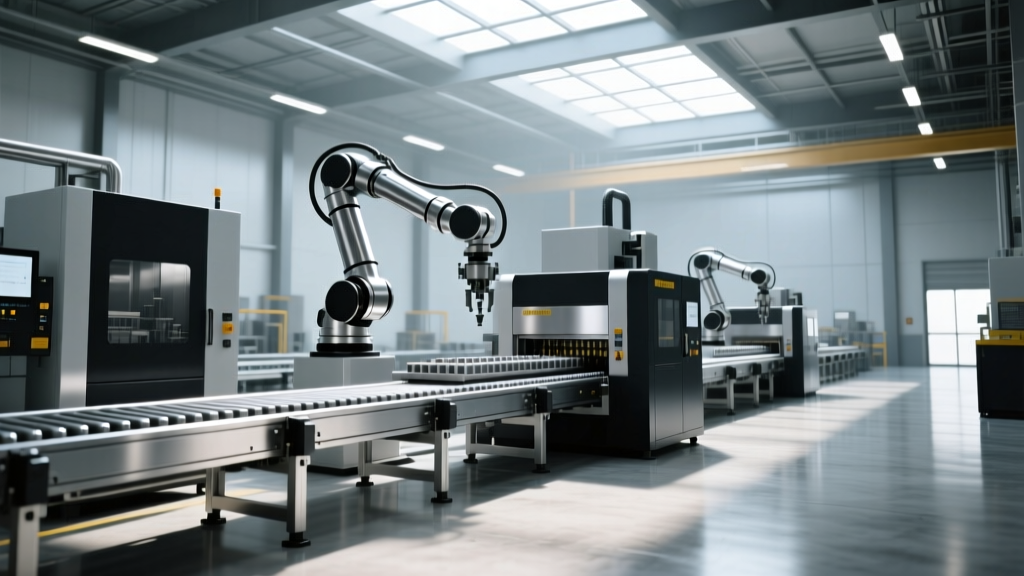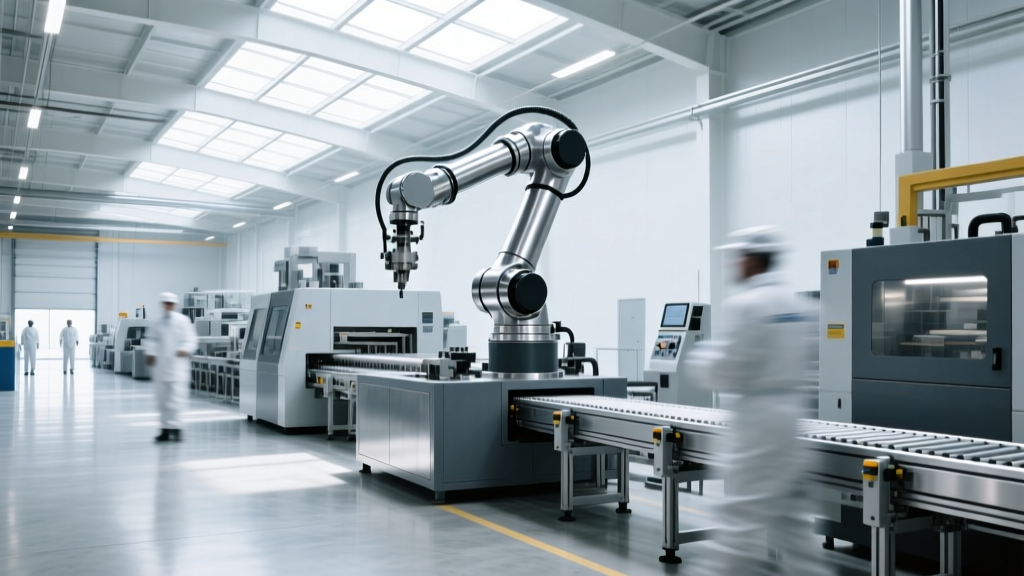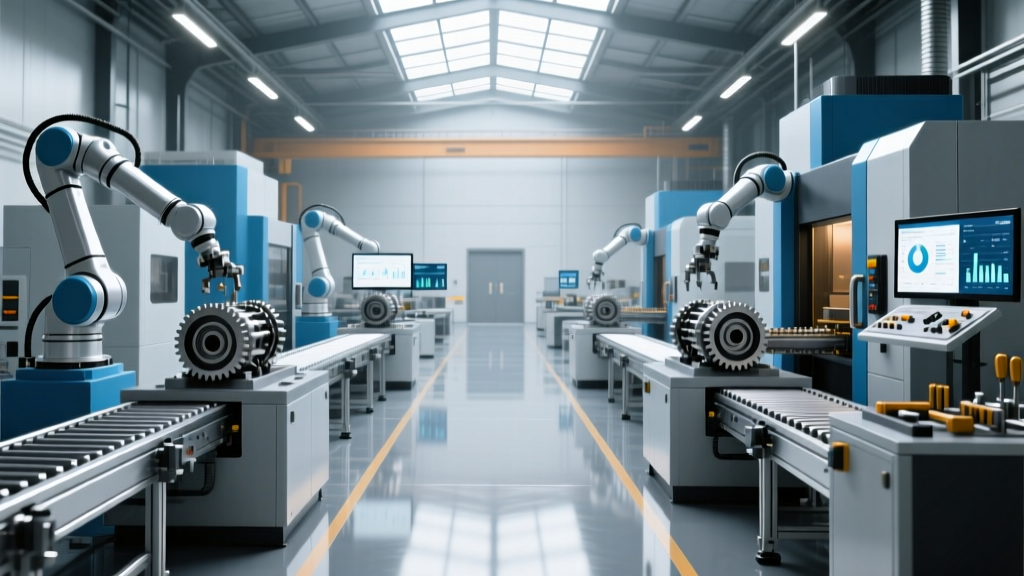
Power Transmission Equipment Manufacturers Shift to Modular Lines
Discover how power transmission equipment manufacturers are adopting modular manufacturing equipment to enable flexible, high-mix production in 2026.
Power transmission equipment manufacturers face a unique operational paradox: while their products—gearboxes, chain drives, belt conveyors, and industrial couplings—are the backbone of flexible automation worldwide, their own internal assembly lines have historically relied on rigid, hard-tooled transfer systems. As industrial demand shifts toward high-mix, low-volume (HMLV) production, legacy fixed-automation architectures are becoming financial liabilities. In 2026, the transition to modular manufacturing equipment is no longer an experimental pilot project; it is a baseline requirement for survival and margin preservation in the drivetrain and power transmission sector.
2026 Industry Benchmark Data:Plants assembling custom gear reducers and variable frequency drives (VFDs) using modular flexible production report a 62% reduction in SKU changeover times (dropping from 8 hours to under 45 minutes) and a 34% decrease in physical floor space requirements compared to legacy hard-automated rotary dial machines.
The HMLV Reality in Drivetrain Assembly
The market for power transmission components is increasingly fragmented. Customers no longer order 10,000 identical helical gearboxes; they order 50 customized planetary gearheads with specific output shaft diameters, specialized sealing for harsh environments, and integrated servo flanges. Hard-automated transfer lines, which require weeks of mechanical re-tooling and PLC reprogramming to accommodate a new housing casting, cannot absorb this variability. Modular manufacturing equipment decouples the mechanical transport mechanism from the process tooling, allowing power transmission equipment manufacturers to swap end-effectors, re-route conveyor paths via software, and scale capacity up or down without ripping out concrete foundations.
Core Modular Technologies Reshaping Production
The modern modular assembly cell relies on three interconnected technology layers: intelligent transport, reconfigurable tooling, and decentralized control architectures.
1. Magnetic Levitation and Linear Motor Conveyors
Traditional belt-and-roller conveyors are being replaced by modular linear motor systems like the Beckhoff XTS or B&R ACOPOS Trak. These systems utilize individually controlled movers that travel along a modular track. For a manufacturer assembling heavy-duty chain drives, this means a single track can simultaneously handle the transport of 15-pound master links and 2-ounce retaining clips, with each mover accelerating independently. The capital expenditure is significant—typically $12,000 to $18,000 per mover and $3,500 per meter of track—but the elimination of mechanical indexing tables and pneumatic stops reduces maintenance downtime by up to 40%.
2. Quick-Change Tooling and End-Effectors
Modularity extends to the point of work. When assembling varying sizes of flexible jaw couplings, robotic arms are equipped with automated tool changers (such as Schunk SWS or ATI Quick-Change systems) integrated with IO-Link communication. These changers allow a robot to drop a 50mm parallel gripper and pick up a 120mm magnetic lifting head in under 1.2 seconds. The critical specification here is repeatability; high-end modular tool changers maintain a 0.015mm repeatability at the tool center point (TCP), ensuring that precision gear meshing operations are not compromised by mechanical slop in the quick-disconnect flange.
3. Decentralized, Plug-and-Produce I/O
Modular mechanical systems fail without modular control architectures. Utilizing decentralized I/O blocks like the Siemens Simatic ET 200SP, manufacturers can build assembly cells that are pre-wired and pre-programmed. When a new modular cell is rolled onto the factory floor, it connects via a single PROFINET or EtherCAT cable, and the master PLC automatically recognizes the cell's digital twin, parameters, and safety zones. This "plug-and-produce" capability reduces line integration and commissioning time from months to weeks.
Comparative Analysis: Fixed Automation vs. Modular Systems
| Feature | Legacy Fixed Automation (Rotary/Transfer) | Modular Flexible Production |
|---|---|---|
| Initial CapEx | $1.2M - $2.5M (High) | $600k - $1.5M (Moderate) |
| Changeover Time | 4 to 12 hours (Mechanical adjustments) | 15 to 45 minutes (Software + quick-change) |
| Product Lifecycle | Tied to single product; scrap value low | Hardware agnostic; 85% component reuse |
| Footprint Scaling | Requires complete redesign to add stations | Add modular track segments and cells |
| Maintenance Focus | Cam followers, pneumatic cylinders, chains | Linear motor cooling, network switches |
Integration Challenges and Real-World Failure Modes
While the theoretical benefits of modular manufacturing equipment are vast, power transmission equipment manufacturers frequently encounter specific edge cases and failure modes during deployment. Recognizing these pitfalls is essential for plant engineers and operations directors.
- Particulate Contamination in Quick-Disconnects: Facilities that machine or grind gears in-house generate microscopic metallic particulate. If modular quick-change tooling is not rated for IP67 or equipped with automatic pneumatic purging, metal shavings accumulate on the mating surfaces of the tool changer. Over 500 cycles, this causes a 0.05mm to 0.15mm runout error, leading to misaligned gear shaft insertions and catastrophic assembly rejects.
- Network Jitter in Daisy-Chained Nodes: Modular lines often rely on daisy-chaining IO-Link masters and safety relays. When a line exceeds 35 modular nodes on a single PROFINET IRT (Isochronous Real-Time) segment, network jitter can spike above 2 microseconds. In high-speed pick-and-place operations for small bearings or snap rings, this latency results in asynchronous robotic movements and collision faults.
- Thermal Expansion in Long Linear Tracks: Magnetic levitation conveyor tracks spanning more than 15 meters are susceptible to thermal expansion from ambient factory temperature fluctuations. A 10°C swing can cause up to 1.8mm of linear growth in steel tracks, throwing off absolute positioning for precision dowel pin insertions. Engineers must specify tracks with integrated thermal compensation algorithms or physical expansion joints every 5 meters.
Do not modularize high-speed, single-SKU processes. If your facility produces a standard 6204 deep-groove ball bearing assembly at a constant rate of 140 units per minute, 24/7, a hard-tooled rotary dial machine remains vastly superior in cost-per-unit. Modular systems are optimized for flexibility and speed-to-market, not for raw, unvarying throughput velocity.
Decision Framework: When to Modularize Your Assembly Line
Plant managers evaluating capital expenditure for 2026 and beyond should apply the following decision matrix to determine if a specific power transmission assembly process is a candidate for modularization:
- Assess SKU Variability: If the line must handle more than 8 distinct product families with varying physical envelopes (e.g., mixing NEMA 56C and IEC 100 motor flanges), proceed to modular design. If the line runs 1-2 SKUs, retain fixed automation.
- Calculate Changeover Cost: Multiply the hourly burden rate of the line ($400-$800/hr) by the current mechanical changeover time. If lost production exceeds $15,000 per month due to changeovers, the ROI for modular quick-change tooling and software-driven routing will typically fall under 14 months.
- Evaluate Floor Space Constraints: If the facility is landlocked and cannot expand its footprint, modular linear motor systems allow for vertical stacking and tight-radius 180-degree curves, recovering up to 30% of floor space compared to traditional belt conveyors.
- Audit Internal Technical Bandwidth: Modular systems shift maintenance requirements from mechanical millwrights to mechatronics and network engineers. Ensure your facility has access to advanced manufacturing training resources or systems integrators capable of managing decentralized PLC architectures before signing the purchase order.
Sourcing and Supply Chain Evolution
The supply chain for modular manufacturing equipment has matured significantly. Power transmission equipment manufacturers are no longer forced to buy entire proprietary, monolithic lines from a single OEM. The rise of standardized mechanical interfaces (such as the Bosch Rexroth 45mm profile framing standard) and open-source software architectures (like OPC UA) means a plant can source linear motors from Beckhoff, robotic arms from FANUC, and safety light curtains from SICK, integrating them seamlessly into a single cohesive modular cell. This vendor-agnostic approach prevents lock-in, drives down component costs by 15-20%, and ensures that replacement parts for modular cells can be sourced locally within 24 hours, drastically reducing mean time to repair (MTTR).