Custom Fabrication Costs for Personal Protective Equipment Manufacturers
Detailed cost analysis and budget planning guide for personal protective equipment manufacturers investing in custom automation and fabrication.
The Capital Reality of Custom PPE Automation
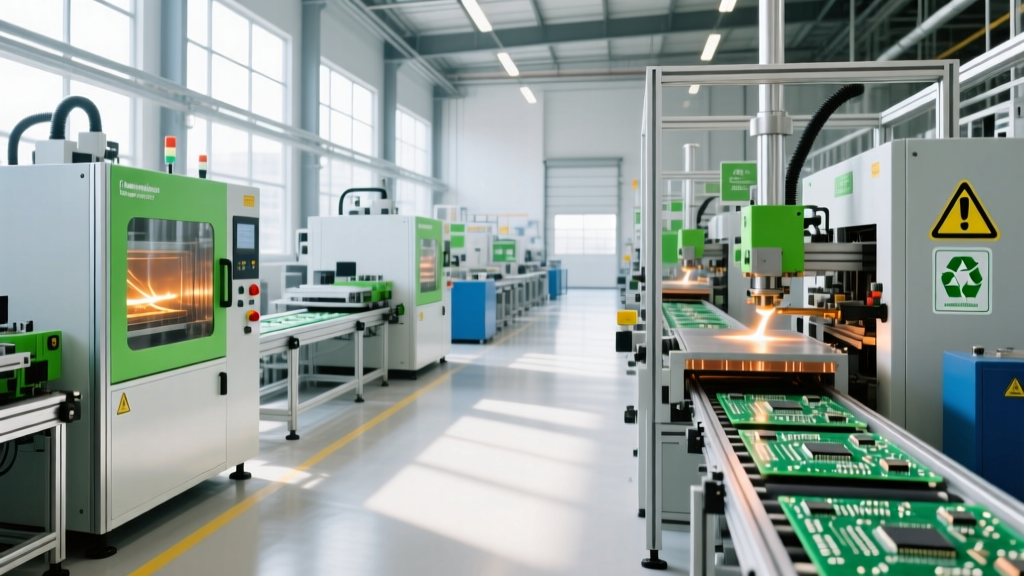
For personal protective equipment manufacturers, the transition from manual assembly or off-the-shelf machinery to fully custom-fabricated production lines is a massive capital undertaking. Whether producing N95 filtering facepiece respirators, elastomeric half-mask respirators, or advanced cut-resistant gloves, standard packaging and assembly equipment rarely meets the stringent precision required for life-safety devices. Custom manufacturing equipment design and fabrication allows facilities to integrate specialized processes—such as ultrasonic welding of non-woven SMS (spunbond-meltblown-spunbond) polypropylene fabrics or automated optical inspection (AOI) for micro-tears—but it requires rigorous budget planning.
In 2026, the cost of industrial automation components has stabilized following the supply chain shocks of the early 2020s, but engineering hours and cleanroom-compliant fabrication remain premium expenses. According to the FDA's guidelines on PPE manufacturing, device consistency is paramount, meaning custom machinery must be designed with zero-tolerance validation protocols. This article breaks down the exact capital expenditures (CAPEX), operational expenditures (OPEX), and hidden engineering costs associated with commissioning custom fabrication lines for PPE production.
Off-the-Shelf vs. Custom Fabrication: A Cost-Benefit Matrix
Before allocating capital, engineering directors must evaluate whether a modified off-the-shelf system can meet NIOSH certification requirements for structural integrity and filtration efficiency. Below is a comparative matrix detailing the financial and operational trade-offs.
| Parameter | Modified Off-the-Shelf Equipment | Fully Custom-Fabricated Line |
|---|---|---|
| Initial CAPEX (Per Line) | $150,000 - $280,000 | $450,000 - $1,200,000+ |
| Engineering & Design Time | 4 - 8 Weeks | 16 - 32 Weeks |
| Changeover Flexibility | Low (Mechanical swaps required) | High (Recipe-driven via HMI) |
| Scrap Rate (SMS Fabric) | 8% - 12% | 1.5% - 3% |
| NIOSH Validation Support | Minimal (Manufacturer relies on internal QA) | Comprehensive (Integrator provides IQ/OQ/PQ) |
Line-Item CAPEX Breakdown: Budgeting a Custom Respirator Assembly Line
To build an accurate budget, personal protective equipment manufacturers must dissect the custom fabrication quote into core mechanical, electrical, and environmental subsystems. The following breakdown reflects 2026 market rates for a high-speed (120+ units per minute) N95 assembly line.
1. Web Handling and Tension Control Systems
Non-woven fabrics used in PPE are highly susceptible to stretching and tearing. Standard conveyors will destroy SMS fabric. Custom lines require closed-loop web tension control using load cells and ultrasonic edge guides. Budget $35,000 to $55,000 for a multi-layer web merging station equipped with Maxcess (Fife) servo-driven guides and precision magnetic particle brakes.
2. Ultrasonic Welding and Sealing Stations
Thermal welding compromises the electrostatic charge of meltblown filtration layers. Custom lines utilize 20 kHz or 35 kHz ultrasonic welding systems (such as Emerson Branson platforms) for earloop attachment and perimeter sealing. A custom-fabricated dual-horn ultrasonic station with active acoustic tuning and force-feedback servos costs between $65,000 and $95,000 per station. A standard line requires at least two stations (one for earloops, one for the nose-bridge wire insertion and seal).
3. Automated Optical Inspection (AOI) and Vision Systems
Manual inspection cannot keep pace with 120 PPM output while detecting 0.2mm fabric defects or incomplete weld seams. Integrating a custom vision array using Cognex In-Sight 9000 series or Keyence IV3 smart cameras, complete with custom polarized lighting rigs to eliminate glare from non-woven textures, adds $40,000 to $75,000 to the budget.
⚠️ Budget Warning: The Cleanroom Integration MultiplierIf your PPE is classified as a sterile medical device, the custom equipment must be fabricated using 316L stainless steel, feature IP69K-rated washdown motors, and operate within an ISO Class 7 or 8 cleanroom. Fabricating the machine with electropolished surfaces and HEPA-filtered unidirectional airflow enclosures will increase the base mechanical fabrication cost by 35% to 50%.
Engineering, Prototyping, and the Validation Bottleneck
The most common budget overrun for personal protective equipment manufacturers occurs during the PLC programming and validation phases. Custom machinery requires complex kinematic synchronization. For example, synchronizing the rotary die-cutter with the continuous web feed requires advanced electronic camming profiles, typically programmed on Beckhoff TwinCAT 3 or Allen-Bradley ControlLogix platforms.
The Cost of IQ/OQ/PQ Documentation
Under OSHA and relevant FDA quality system regulations, PPE manufacturing equipment must undergo rigorous Installation Qualification (IQ), Operational Qualification (OQ), and Performance Qualification (PQ). Many manufacturers forget to budget for the integrator's engineering hours to generate these protocols. Expect to pay $125 to $175 per hour for validation engineering, which typically requires 200 to 400 hours for a fully custom automated line, adding $25,000 to $70,000 to the final invoice.
Decision Framework: When to Invest in Custom Automation
Not every PPE product justifies a $1M custom fabrication line. Use this operational framework to determine the correct capital allocation strategy:
- Scenario A: High-Volume Commodity PPE (e.g., standard surgical masks, basic nitrile gloves). Margins are razor-thin. Do not build custom. Purchase standardized, high-speed off-the-shelf lines from established Asian or European OEMs and allocate budget toward facility scale and raw material hedging.
- Scenario B: Specialized/Proprietary PPE (e.g., smart-respirators with integrated sensors, specialized hazmat suits with RF-welded seams). Off-the-shelf equipment does not exist. Custom fabrication is mandatory. Budget heavily for R&D prototyping and modular machine design to allow for future product iterations.
- Scenario C: Mid-Volume Niche PPE (e.g., custom-fit elastomeric respirators for specific industrial gases). Invest in a hybrid approach. Purchase standard injection molding and base assembly equipment, but custom-fabricate the final automated testing and leak-check validation stations to ensure 100% quality assurance without over-investing in full-line automation.
Lifecycle OPEX: Wear Parts and Maintenance Budgeting
Capital planning does not end at machine commissioning. Custom-fabricated PPE equipment experiences unique wear patterns that must be accounted for in the Year 1 through Year 5 OPEX budgets.
💡 Pro-Tip: Ultrasonic Horn and Anvil AmortizationThe titanium or aluminum ultrasonic horns used for welding PPE straps degrade over time due to acoustic fatigue and abrasive contact with synthetic strap materials. A custom-machined titanium horn costs between $2,500 and $4,000 and typically requires replacement every 1.5 to 2 million cycles. Manufacturers must budget an annual consumable reserve of $15,000 to $25,000 strictly for ultrasonic stack wear parts to prevent unplanned downtime.
Additionally, servo motors driving the web-tension dancers and rotary die-cutters require annual recalibration and bearing replacements. Budget approximately 3% to 5% of the total initial CAPEX annually for preventative maintenance, spare sensors (photoeyes, laser profilers), and PLC battery/module replacements.
Strategic Sourcing for Custom Fabrication Partners
When issuing an RFP for custom manufacturing equipment design, personal protective equipment manufacturers must vet integrators not just on mechanical design, but on material science expertise. An integrator who does not understand the electrostatic discharge (ESD) sensitivity of meltblown filter media will design a machine that strips the filtration charge via friction, resulting in catastrophic NIOSH test failures. Require prospective integrators to provide case studies specifically detailing their experience with non-woven web handling, cleanroom kinematics, and ultrasonic sealing of porous materials before releasing any engineering deposit funds.