Contract Machinery Selection for a Calf Raising Equipment Manufacturer
Learn how a calf raising equipment manufacturer trains operators on contract manufacturing equipment selection criteria for plastics and metals.
The Intersection of Contract Manufacturing and Agricultural Plastics
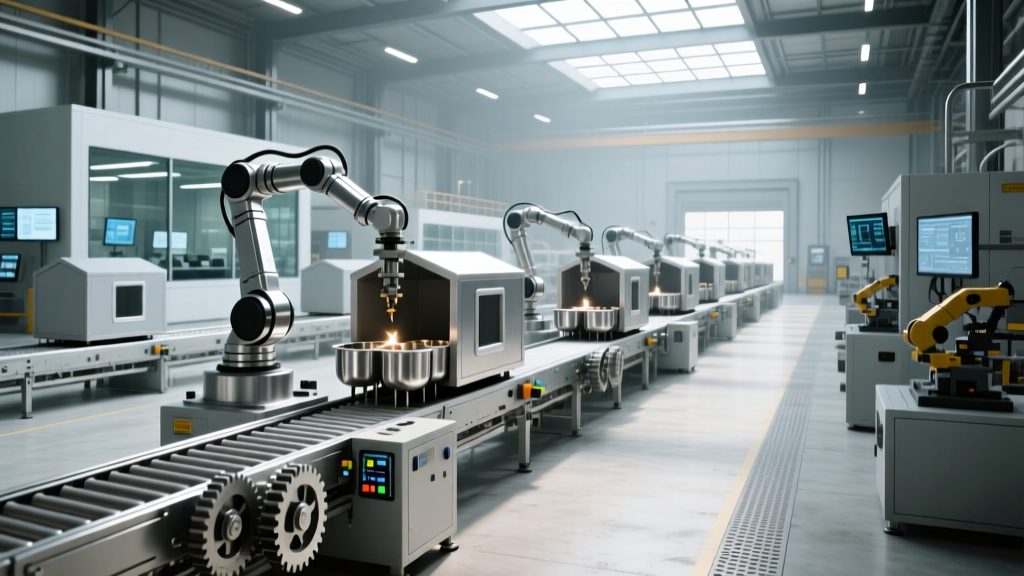
Manufacturing calf raising equipment—ranging from UV-stabilized polyethylene hutches to sanitary 304 stainless steel milk replacer troughs—demands rigorous process control. When a facility scales production by integrating contract manufacturing equipment, the responsibility falls on floor managers and lead operators to understand the engineering intent behind the machinery. Training operators on contract manufacturing equipment selection criteria bridges the gap between capital investment and shop-floor execution. Operators who understand why a 5-axis CNC router was selected over a 3-axis model for hutch trimming, or why a specific rotational molding oven profile is mandated, produce significantly less scrap and maintain tighter tolerances.
Warning: The Cost of Ignorance on Selection CriteriaWhen operators treat contract manufacturing machinery as black boxes, material degradation spikes. For example, failing to understand the thermal selection criteria of a thermoformer can lead to the degradation of UV-8 stabilizer masterbatches in HDPE hutch panels, resulting in catastrophic brittle failures during sub-zero winter transport.
Core Machinery Matrix: Selection Criteria and Training Focus
A comprehensive training program begins by mapping the specific contract manufacturing equipment to its application and core selection metrics. Below is the baseline matrix used to onboard lead operators in agricultural plastics and metals fabrication.
| Equipment Type | Calf Equipment Application | Primary Selection Criterion | Operator Training Focus |
|---|---|---|---|
| Carousel Rotational Molder | LLDPE Calf Hutches | Oven uniformity & cooling CFM | Thermal imaging interpretation, arm speed adjustment |
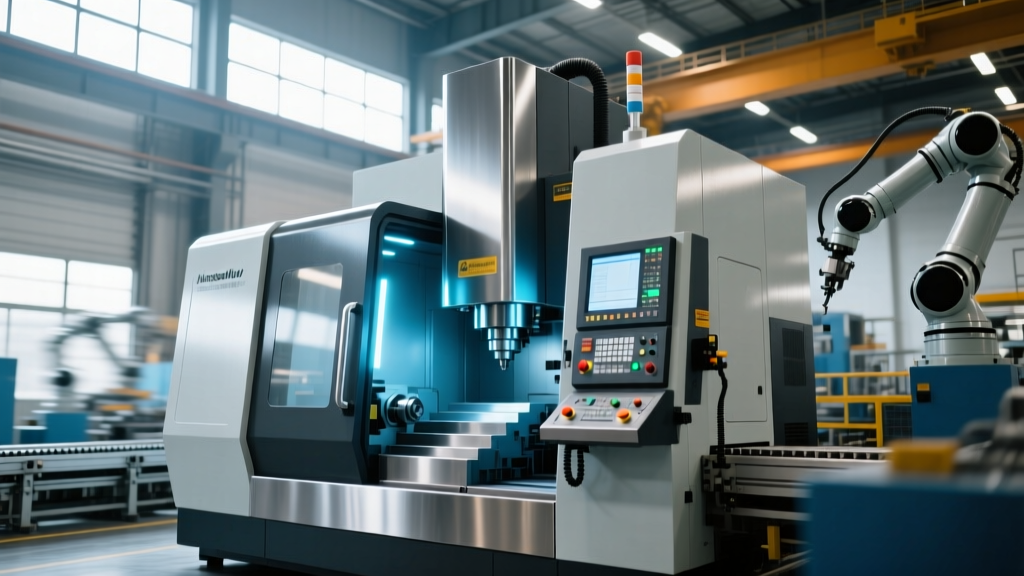
| 5-Axis CNC Router | Hutch Door/Window Trimming | Spindle RPM & Z-axis clearance | Toolpath verification, chatter mitigation |
| Automated Orbital TIG Welder | 304 SS Milk Replacer Troughs | Pulse width & Argon shielding purity | Weld puddle monitoring, oxidation (sugaring) identification |
| Industrial Thermoformer | BPA-Free PP Calf Bottles | Platen temperature zoning | Draw ratio calculation, webbing prevention |
Plastics Processing: Rotational Molding and CNC Routing
Calf hutches must withstand extreme temperature fluctuations, direct UV exposure, and physical impact from livestock. To meet these demands, contract manufacturers utilize carousel rotational molding machines capable of processing linear low-density polyethylene (LLDPE) with 8% cross-linking for impact resistance. The Plastics Industry Association emphasizes that equipment selection for rotational molding must prioritize oven airflow uniformity over raw BTU output.
Training Operators on Thermal Management
Operators must be trained to monitor the selection criteria that govern the machine's thermal dynamics. If the contract molder was selected for its high-volume cooling fans (measured in CFM), operators need to understand how ambient humidity affects the cooling cycle. Training protocols require operators to use handheld infrared thermal cameras to scan the mold surface post-oven. If the hutch roof reads 410°F while the base reads 380°F, the operator must adjust the minor axis rotation speed to redistribute the resin pool before the cooling phase begins, preventing wall-thickness variations that compromise structural integrity.
CNC Routing for Sanitary Edge Finishing
Post-molding, hutch doors and ventilation windows are trimmed using 5-axis CNC routers. The selection criteria for these machines center on spindle RPM stability and Z-axis clearance to accommodate the deep draws of hutch geometries. Operators are trained to recognize "chatter"—high-frequency vibrations that leave micro-grooves in the HDPE. These grooves harbor bacteria and violate sanitary standards for calf housing. Best practices dictate that operators must manually verify toolpath simulations and adjust feed rates by 5-10% when cutting recycled-content HDPE, which exhibits varying hardness levels.
Metal Fabrication: Sanitary Welding for Calf Nutrition
Calf milk replacers are highly acidic and prone to bacterial colonization if equipment surfaces are compromised. Contract manufacturing equipment for stainless steel feeding troughs relies on automated orbital TIG welders. The critical selection criterion for this machinery is pulsed current capability and integrated argon shielding gas delivery systems.
"Upskilling operators to understand the metallurgical selection criteria of their welding equipment transforms them from button-pushers into process engineers. This is critical in agricultural manufacturing where sanitary failures directly impact livestock mortality rates."
— Guidelines adapted from the Society of Manufacturing Engineers (SME) workforce development frameworks.
Preventing Sugaring and Sanitary Violations
Operators must be trained to identify "sugaring"—the granular oxidation that occurs on the backside of a stainless steel weld when argon shielding is insufficient. Sugaring creates a porous surface that traps milk proteins and pathogens, directly violating USDA APHIS Animal Welfare and sanitary guidelines for livestock feeding environments. Training modules require operators to conduct dye penetrant testing on sample welds and adjust the welder's internal purge gas flow rates (typically 15-20 CFH) based on the specific joint geometry of the trough.
The Operator Training Framework for Equipment Selection
To institutionalize this knowledge, calf raising equipment manufacturers should implement a phased onboarding framework for new contract machinery.
- Phase 1: Criteria Deconstruction (Classroom)
Before touching the machinery, operators review the OEM specification sheets. They must articulate why the machine's torque, thermal capacity, or axis travel was deemed necessary for the specific calf equipment SKU they will produce. - Phase 2: IoT Dashboard Calibration (Shop Floor)
Modern contract equipment features IoT telemetry. Operators are trained to set custom alarm thresholds on the HMI (Human-Machine Interface). For example, setting an alarm if the thermoformer's platen temperature deviates by more than ±3°F from the 340°F setpoint required for BPA-free polypropylene. - Phase 3: Failure Mode Simulation (Practical)
Supervisors intentionally introduce edge cases—such as feeding resin with a higher melt flow index (MFI) or using slightly warped stainless steel blanks. Operators must use their knowledge of the machine's selection criteria to adjust parameters (e.g., reducing oven dwell time by 12%) rather than halting production.
Budgeting for Training and Equipment Lifecycle
Allocating budget for advanced operator training yields measurable ROI in agricultural manufacturing. Untrained operators running complex rotational molding contract equipment typically generate scrap rates of 11-14% due to improper cycle timing and resin distribution. Facilities that implement criteria-based training programs consistently reduce scrap rates to below 3.5% within the first 90 days. Furthermore, understanding the mechanical limits and selection criteria of the machinery reduces unplanned downtime by preventing operators from overriding safety interlocks or forcing cycle times beyond the equipment's engineered thermal recovery limits.