Batch vs Continuous Systems for an Oilfield Equipment Manufacturer
How an oilfield equipment manufacturer chooses between batch and continuous heat treatment and coating systems for API-spec downhole tools.
When an oilfield equipment manufacturer scales production of API-certified downhole tools, blowout preventers (BOPs), and drill string components, the choice between batch and continuous manufacturing equipment dictates both metallurgical integrity and unit economics. In 2026, with industrial energy volatility and stringent traceability requirements, selecting the right thermal processing and material handling architecture is a high-stakes capital decision.
This analysis breaks down the technical and financial trade-offs of batch versus continuous manufacturing systems—specifically focusing on heat treatment, quenching, and surface coating lines used to produce high-strength OCTG (Oil Country Tubular Goods) and downhole hardware.
Defining the Architectures
Batch Manufacturing: Processing discrete lots of components in sealed environments (e.g., Sealed Quench Furnaces, Pit Furnaces) where the entire load undergoes the same thermal cycle simultaneously.
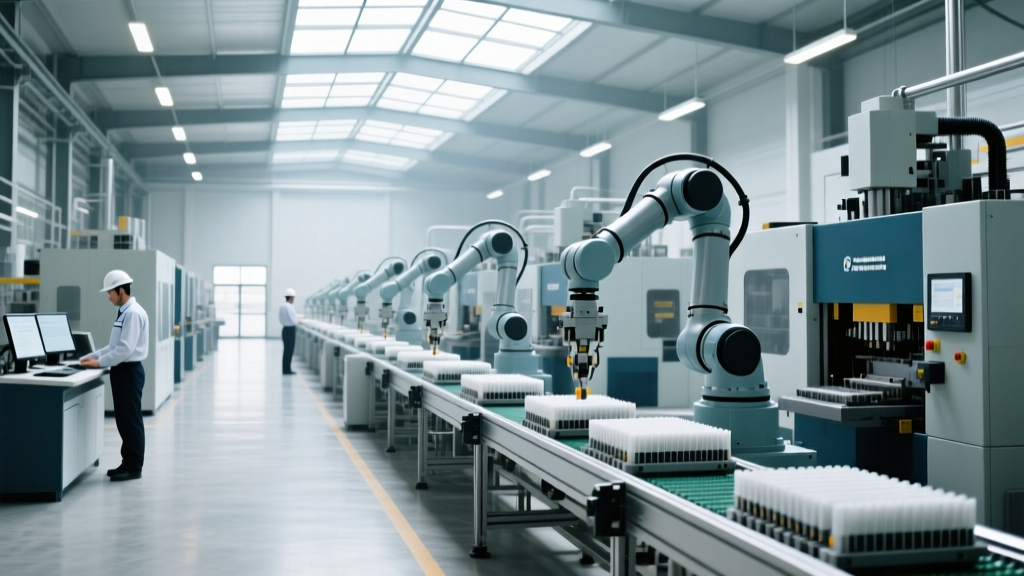
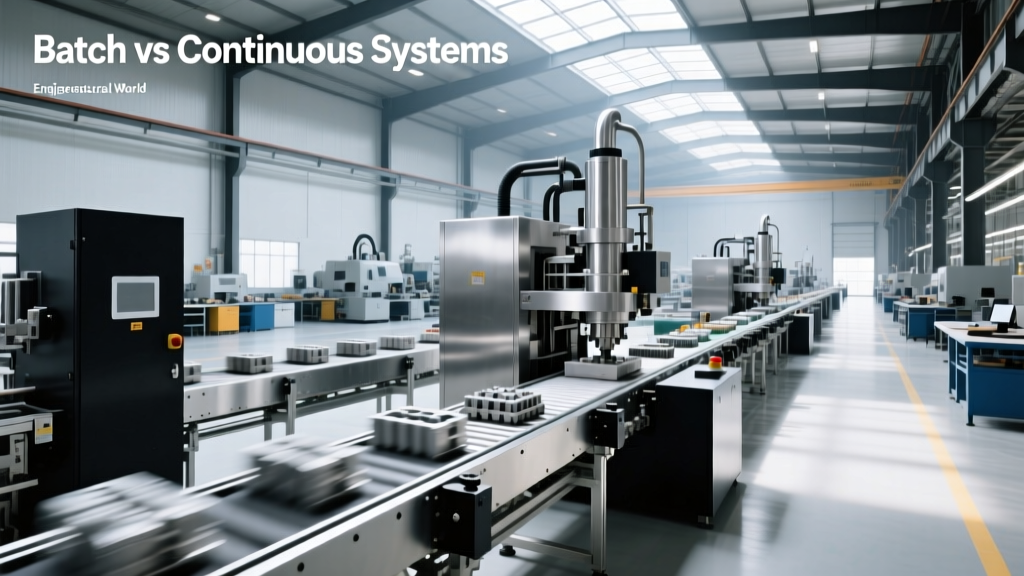
Continuous Manufacturing: Moving components through a series of fixed thermal or chemical zones on an automated conveyance system (e.g., Roller Hearth Furnaces, Continuous Pusher Lines, Automated Dip-Coating), allowing uninterrupted material flow.
The Case for Batch Processing in Complex Downhole Tooling
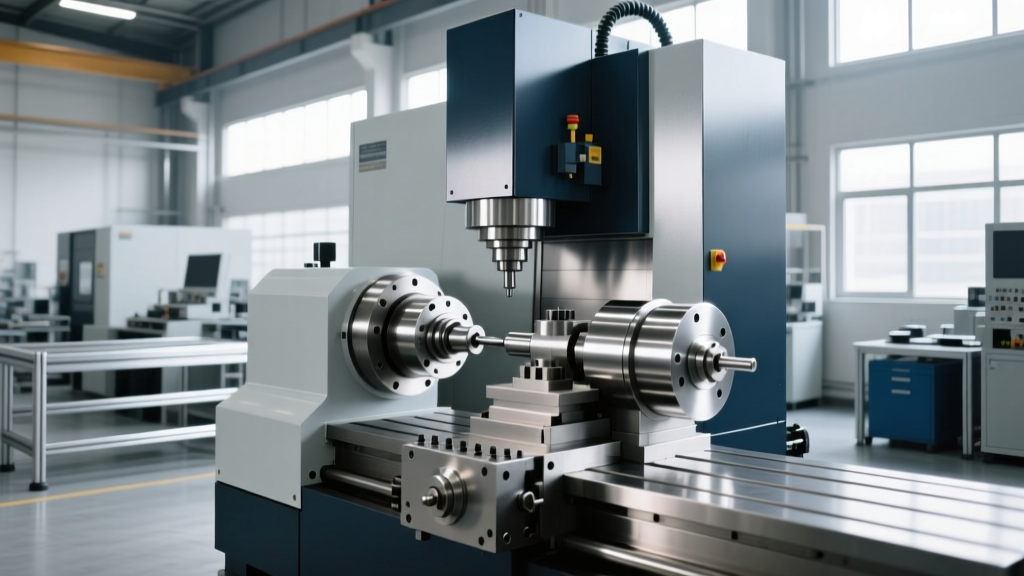
Batch equipment remains the backbone for manufacturing complex, high-mass components like BOP bodies, valve blocks, and heavy-wall drill collars. The primary advantage lies in atmosphere control and soak-time precision, which are critical when heat treating modified alloys like 4145H or 17-4PH stainless steel.
Sealed Quench Furnaces (SQF) and Pit Furnaces
For an oilfield equipment manufacturer producing API 7-1 drill stem elements, vertical pit furnaces are often mandatory. A standard 32-foot drill collar cannot physically navigate the horizontal constraints of most continuous lines without severe sagging or roller-mark defects. Batch pit furnaces suspend these components vertically, eliminating gravitational warping during the austenitizing phase (typically 1550°F to 1600°F).
- CapEx Range: $250,000 to $550,000 per SQF unit; $400,000 to $850,000 for deep pit furnaces.
- Atmosphere Precision: Endothermic gas generators maintain precise carbon potentials (±0.05%), preventing decarburization on critical sealing surfaces.
- Flexibility: A single batch furnace can process a load of Inconel 718 downhole motors in the morning and 4140 steel stabilizers in the afternoon, simply by adjusting the programmable logic controller (PLC) recipe.
However, batch processing suffers from inherent bottlenecks. The heat-up and cool-down phases of the furnace structure itself consume massive amounts of natural gas, and the physical transfer of the hot load to the quench tank introduces a 15- to 30-second delay that can compromise the formation of a uniform martensitic structure in thick-walled sections.
Continuous Manufacturing for High-Volume OCTG Components
When the product mix shifts toward high-volume, uniform-geometry components—such as tubing, casing, pup joints, and continuous wireline cables—continuous manufacturing equipment dramatically lowers the cost-per-ton. Modern roller hearth furnaces and continuous induction upsetting lines utilize IoT-enabled thermal imaging to monitor part surface temperatures in real-time, adjusting zone outputs dynamically.
Roller Hearth and Pusher Furnaces
Continuous roller hearth furnaces move pipes through pre-heat, austenitize, and quench zones at a calculated linear speed (e.g., 3 to 12 feet per minute). This ensures every foot of pipe experiences the exact same time-temperature profile, a critical requirement for achieving the yield strengths mandated by API 5CT specifications.
| Parameter | Batch Systems (SQF / Pit) | Continuous Systems (Roller Hearth) |
|---|---|---|
| Initial CapEx | $250k – $850k | $2.1M – $4.8M |
| Throughput | 800 – 3,000 lbs / cycle | 2,000 – 15,000 lbs / hour |
| Energy Efficiency | Low (High thermal mass cycling) | High (Steady-state thermal profile) |
| Part Geometry Limit | Complex, heavy, variable shapes | Uniform, linear, cylindrical |
| Quench Uniformity | Variable (Edge vs. Core cooling) | Highly Uniform (Continuous spray/immersion) |
According to data published by the U.S. DOE Advanced Manufacturing Office, continuous thermal processing lines can reduce specific energy consumption (SEC) by 25% to 40% compared to batch alternatives, primarily by eliminating the thermal cycling of heavy refractory linings and utilizing advanced waste-heat recuperators.
Case Study: Hybridizing the Production Line
A mid-sized Texas-based oilfield equipment manufacturer recently restructured its metallurgy division to address a bottleneck in API 6A wellhead equipment production. The facility previously relied entirely on large batch car-bottom furnaces for both raw forgings and finished machined components.
"Our batch furnaces were starving our CNC machining centers. We were waiting 18 hours for a stress-relief cycle on a single load of valve bodies, while our continuous coating line sat idle waiting for parts. By installing a continuous induction heat-treat line specifically for our tubular pup joints and couplings, we freed up the batch furnaces exclusively for complex BOP forgings. Overall OEE (Overall Equipment Effectiveness) increased by 31% in the first year."
This hybrid approach highlights a critical strategy: continuous equipment should be deployed for high-volume, predictable geometries (tubulars, rods, wire), while batch equipment is reserved for complex castings, forgings, and low-volume/high-mix custom downhole tools.
Decision Matrix: Which System Fits Your Production Line?
Use the following framework to determine the optimal equipment architecture for your specific manufacturing cell:
- Choose Batch if: Your product mix includes complex 3D geometries (e.g., frac valves, BOP rams), your lot sizes are under 5,000 lbs, and you require frequent changes in metallurgical recipes (e.g., switching between carburizing and carbonitriding).
- Choose Continuous if: You produce linear components exceeding 50,000 lbs per month, your part cross-sections are uniform, and you require tight dimensional tolerances post-quench (continuous spray quenching minimizes the asymmetric distortion common in batch tank dunking).
- Choose Hybrid if: You manufacture both downhole tools and surface tubulars. Utilize continuous induction upsetting and quenching for the tubulars, and route the heavy-walled forgings to sealed quench batch furnaces.
Regulatory and API Compliance Considerations
Regardless of the equipment chosen, an oilfield equipment manufacturer must comply with API Standards, specifically API Specification Q1 for quality management and the thermal processing requirements outlined in API 6A and API 7-1. Furthermore, adherence to AMS2750E (Pyrometry) is non-negotiable for aerospace and high-grade oilfield alloys.
Continuous systems inherently excel at digital traceability. Modern continuous lines integrate laser-etched part tracking with zone-specific thermocouple data, automatically generating a digital heat-treat certificate for every linear foot of pipe. Batch systems require rigorous load-mapping and the placement of witness coupons, as outlined by ASM International Heat Treating guidelines, to prove that the core of the densest part in the center of the load achieved the required critical cooling rate.
Summary Action Plan for 2026 CapEx Budgets
Before approving a $3M+ continuous line, conduct a 12-month value-stream mapping of your thermal bottlenecks. If your batch furnaces are spending more than 30% of their time heating up and cooling down rather than soaking parts, a continuous system will yield an ROI within 36 months through natural gas savings and increased throughput. If your bottleneck is CNC machining rather than heat treatment, upgrading to a high-efficiency batch vacuum furnace will improve surface finish quality and reduce post-heat-treat machining costs without the massive footprint of a continuous line.