Underground Mining Maintenance & Heavy Equipment Movers Los Angeles
Master underground mining equipment maintenance schedules and prep protocols for heavy equipment movers in Los Angeles to ensure safe, DOT-compliant transit.
Underground Fleet Upkeep and Southern California Logistics
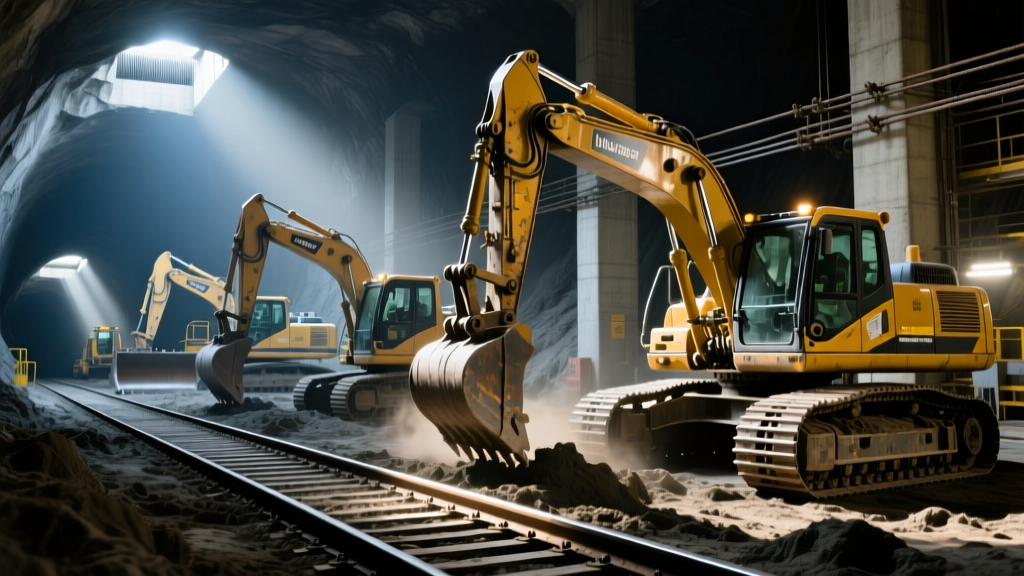
Subterranean extraction and tunneling projects in Southern California—ranging from aggregate mining in the Mojave Desert to deep-bore metro transit expansions—rely on highly specialized, high-capital fleets. Load Haul Dumpers (LHDs), drill jumbos, and underground scalers operate in abrasive, high-humidity, and heavily constrained environments. When these machines require major powertrain overhauls, ROPS/FOPS recertification, or complete site relocations, operators must bridge the gap between subterranean maintenance schedules and surface-level logistics. Coordinating with heavy equipment movers Los Angeles dispatchers requires meticulous pre-transport maintenance preparation to ensure compliance with California Highway Patrol (CHP) and Caltrans regulations.
Deferred maintenance on underground gear does not just impact production rates; it creates severe safety hazards during highway transit. A 55-ton LHD with compromised articulation locks or over-pressurized hydraulic reservoirs can shift on a lowboy trailer, leading to catastrophic load failures on congested corridors like the I-15 or I-10. This guide details the exact OEM service intervals for core underground equipment and the mandatory pre-transport maintenance protocols required for safe relocation.
OEM Service Schedules: LHDs and Drill Jumbos
Underground equipment operates under severe duty cycles. Unlike surface earthmovers, subterranean machines ingest highly particulate-laden air and endure constant high-torque cycling in tight drifts. Below are the critical maintenance benchmarks for industry-standard models.
| Equipment Model | Interval | Critical Service Action | Est. Cost (Parts/Labor) |
|---|---|---|---|
| Caterpillar R2900G (LHD) | 250 Hours | Engine oil (Cat DEO), axle breathers, brake cooling screen purge | $850 - $1,150 |
| Sandvik LH517 (LHD) | 500 Hours | Drop-box fluid change (TO-4), hydraulic suction strainer inspection | $2,400 - $3,100 |
| Epiroc Boomer E2 (Jumbo) | 1,000 Hours | Boom cylinder re-packing, rock drill accumulator nitrogen charge | $4,500 - $6,200 |
| MacLean SR3 (Scaler) | 2,000 Hours | ROPS/FOPS structural NDT (Non-Destructive Testing), pivot pin replacement | $8,000 - $12,500 |
According to NIOSH mining safety research, articulation joint failure is a leading cause of underground crush incidents. If an LHD's center hinge bearing exhibits more than 0.050 inches of radial play, the machine must not be operated or transported without mechanical stabilization. Heavy haul transit will exacerbate this play, potentially snapping the chassis frame under dynamic highway loads.
Pre-Transport Maintenance: Prepping for the Lowboy
When contracting heavy equipment movers Los Angeles transport authorities require strict adherence to oversized load parameters. Underground equipment is exceptionally dense, often exceeding standard legal weight limits even when stripped of attachments. Proper maintenance prep is required to reduce weight, secure moving components, and prevent environmental spills.
1. Mechanical Lock-Out Procedures
Never rely on hydraulic steering locks during highway transit. Hydraulic fluid expands under the intense thermal load of a Southern California summer, and internal cylinder bypass can allow the machine to pivot. Maintenance crews must:
- Install the factory-hardened steel articulation lock bar.
- Secure the lock bar with Grade 8 bolts and safety wire.
- Depressurize the steering hydraulic system completely by cycling the joystick after engine shutdown.
- Physically chain the boom and bucket to the chassis frame using 5/8-inch Grade 70 transport chains, bypassing the hydraulic lift cylinders entirely.
2. Fluid Management and Weight Reduction
A fully fueled and hydraulically topped-off Sandvik LH517 can weigh over 100,000 lbs, requiring specialized multi-axle modular trailers. To utilize standard 3-axle lowboys, maintenance teams must perform strategic fluid draining:
- Fuel Tanks: Drain diesel to 10% capacity. A 150-gallon tank adds roughly 1,050 lbs of dead weight.
- Hydraulic Reservoirs: Drain to the minimum safe level to prevent sloshing and over-pressurization, capturing the fluid in certified ISO tanks for reuse at the destination site.
- DEF (Diesel Exhaust Fluid): Drain completely to prevent crystallization and tank damage during transit vibration.
3. ROPS/FOPS and Canopy Inspection
Underground machines feature heavily reinforced canopies to protect against falling rock. Before transport, maintenance supervisors must conduct a visual and ultrasonic thickness (UT) test on the ROPS mounting points. Micro-fractures around the canopy welds can propagate when the machine is subjected to the high-frequency harmonic vibrations of highway travel. Any canopy showing structural fatigue must be unbolted and transported flat on a separate trailer.
Navigating SoCal Logistics: Route Planning & Permit Costs
The logistical reality of moving subterranean gear through the Los Angeles basin is defined by strict routing constraints. Heavy equipment movers Los Angeles logistics managers utilize must be intimately familiar with the Caltrans Single Trip Permit system. Subterranean LHDs are typically too wide (often exceeding 10 feet) and too heavy for standard legal limits.
'Transporting an underground LHD from a Palmdale aggregate site to a Vernon repair facility isn't just about hooking up a trailer. It requires a calculated route survey to avoid low-clearance overpasses on the CA-138 and securing CHP escorts for the I-15 corridor. The maintenance team's job is to ensure the machine's footprint is as compact and rigid as physically possible before the rig arrives.' — Fleet Logistics Director, Southern California Aggregate Operations (2026)
Cost Breakdown: Relocation vs. On-Site Repair
When deciding whether to perform a 2,000-hour major overhaul on-site or transport the machine to a specialized Los Angeles repair yard, operators must weigh the logistics costs against facility capabilities.
- Caltrans Oversize Permits: ~$150 - $300 per trip (via the Caltrans Transportation Permits portal).
- Heavy Haul Rates: $14 - $22 per loaded mile for oversized mining equipment requiring pilot cars.
- CHP Escort Fees: $120 - $180 per hour, per officer.
- Total Transit Cost (100 miles): $3,500 - $5,500 each way.
If the required repair involves specialized clean-room hydraulic testing or proprietary Sandvik/Caterpillar diagnostic software only available at authorized SoCal dealerships, the $7,000+ round-trip transport cost is easily justified by the reduction in diagnostic downtime.
Post-Transport Recommissioning Protocol
Once the heavy equipment movers Los Angeles crews deliver the machine to its new subterranean entry point or repair facility, the maintenance cycle resets. The machine cannot simply be driven off the trailer. A strict recommissioning protocol must be followed to comply with MSHA safety regulations and OEM warranties.
Checklist: Post-Transit Recommissioning- Visual Undercarriage Audit: Inspect all tie-down points, axle housings, and drop-boxes for stress cracks induced by highway harmonic vibration.
- Fluid Re-integration: Refill hydraulics and fuel. Prime the hydraulic pumps manually before cranking the engine to prevent dry-cavitation and pump scoring.
- Brake System Bleed: Underground wet-disc brakes can trap air during transit angles. Bleed the SAHR (Spring Applied, Hydraulic Release) brake circuits to ensure full clamping force.
- Articulation Calibration: Remove the mechanical lock bar, start the engine, and cycle the steering lock-to-lock 10 times to purge trapped air from the steering cylinders.
FAQ: Relocation & Service Schedules
How often should underground LHDs undergo full powertrain teardowns?
Under typical hard-rock mining conditions, a complete powertrain and driveline teardown is scheduled between 12,000 and 15,000 operating hours. However, in highly abrasive environments or where tramming distances exceed 1,500 feet, this interval compresses to 9,000 hours.
Can standard surface excavators be modified for underground use?
No. Surface equipment lacks the specialized ventilation scrubbers, fire-suppression systems, and low-profile ROPS canopies mandated for subterranean use. Attempting to modify a surface loader for underground use violates MSHA regulations and voids all OEM insurance and warranty coverage.
What is the most common transport damage to underground drill jumbos?
Boom cylinder drift and hydraulic hose abrasion. If maintenance crews fail to mechanically chain the booms to the chassis, the continuous vibration of highway transit will cause the cylinders to micro-drift, stretching and snapping hydraulic lines and damaging the boom pivot pins.