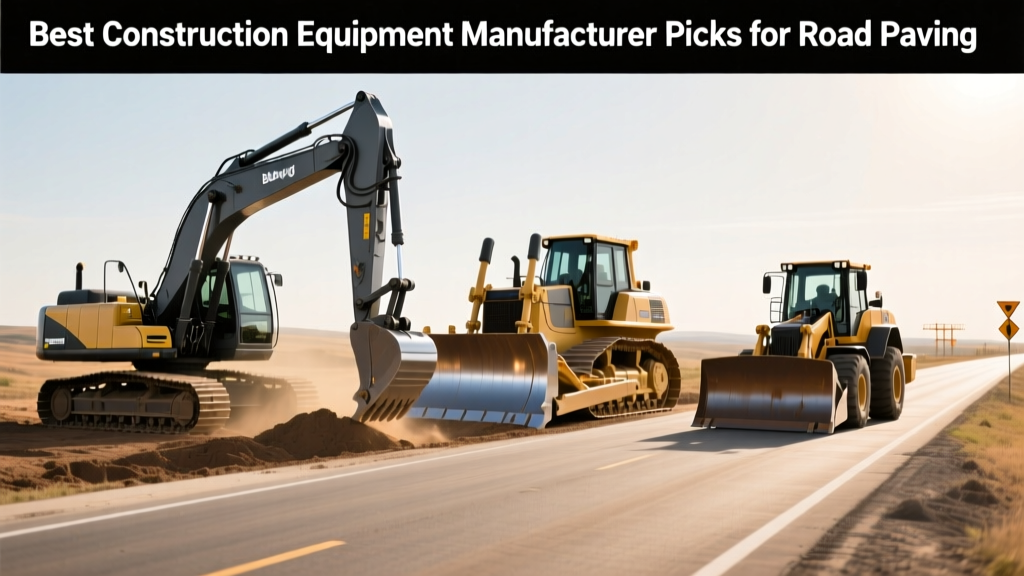
Best Construction Equipment Manufacturer Picks for Road Paving
Compare top construction equipment manufacturer options for road paving. Analyze asphalt pavers, rollers, and milling machines with 2026 pricing.
Paving equipment encompasses heavy machinery designed to lay, compact, and finish asphalt or concrete surfaces for infrastructure projects. The primary categories include asphalt pavers, compaction rollers, and cold milling machines. This guide is engineered for civil engineering contractors, fleet managers, and procurement officers seeking to optimize their road construction operations in 2026.
- Asphalt pavers distribute mix at rates up to 400 tons per hour.
- Top manufacturers include Caterpillar Inc., Volvo Construction Equipment, and Wirtgen Group.
- Equipment selection must align with project scale, compaction density requirements, and milling depth.
Core Types of Paving Equipment
Road construction requires a synchronized sequence of machinery to achieve structural integrity. The Federal Highway Administration mandates strict compaction and smoothness standards that dictate specific machine usage.
Asphalt Pavers
An asphalt paver receives hot mix asphalt from a dump truck and distributes it evenly across the roadbed. Modern commercial pavers feature screed widths ranging from 3 meters to 15 meters. High-production models can lay up to 400 tons of material per hour.
Definition: An asphalt paver is a self-propelled construction machine that receives, conveys, distributes, and partially compacts hot mix asphalt. It utilizes a heated screed to establish the precise initial grade, thickness, and cross-slope of a paved surface before final roller compaction.
Compaction Rollers
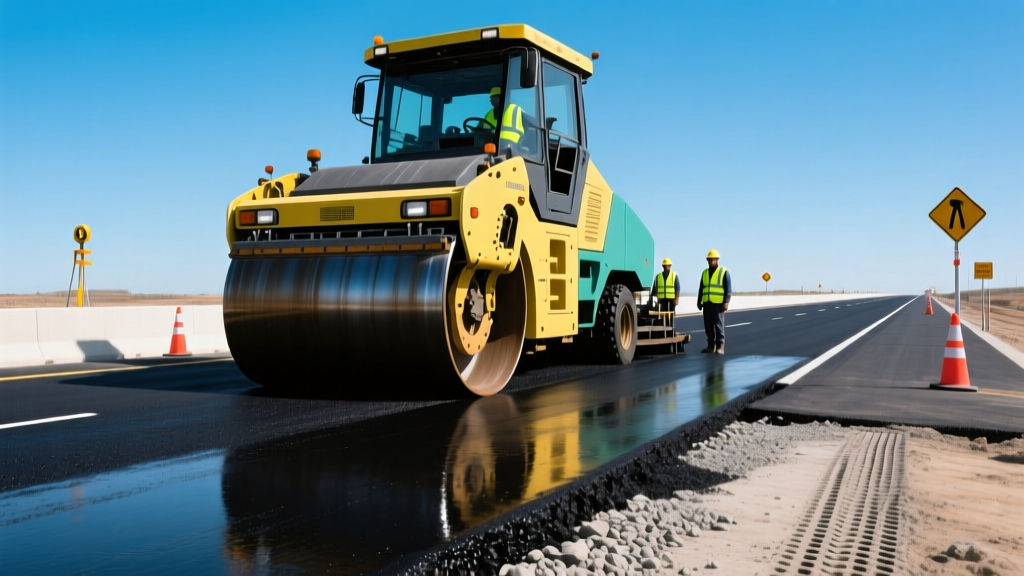
Compaction rollers follow the paver to compress the asphalt mat to the required density. Vibratory tandem rollers typically weigh between 10 tons and 15 tons. Achieving a target density of 98% is critical to prevent premature pavement failure, according to the Asphalt Institute.
Cold Milling Machines
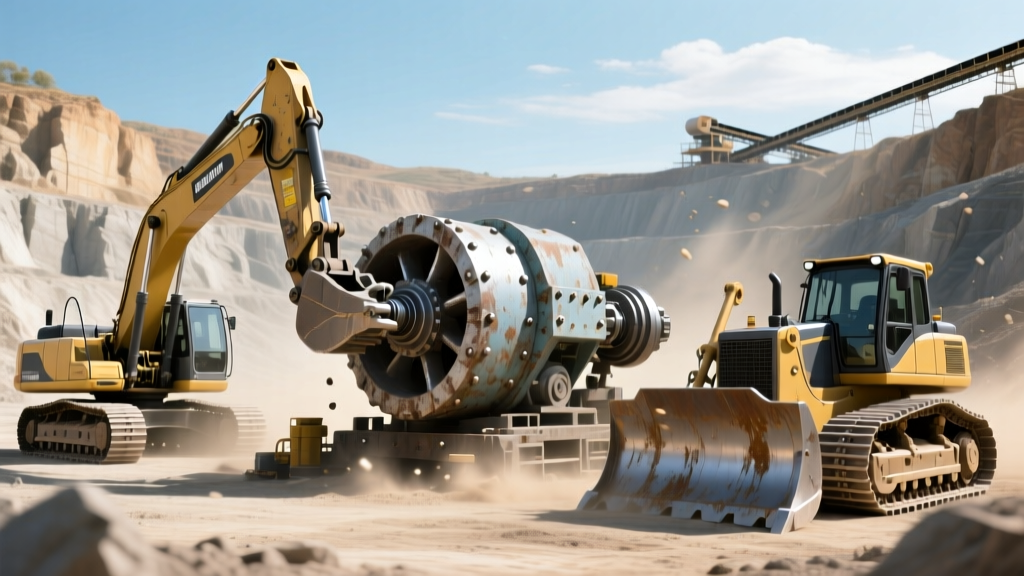
Before laying new asphalt, crews must remove deteriorated surfaces using cold milling machines. These machines utilize rotating carbide-tipped drums to grind away existing pavement. Standard highway mills can cut up to 300 millimeters deep in a single pass.
Top Paving Equipment Manufacturers in 2026
The global market is dominated by manufacturers integrating telematics and autonomous guidance systems into their fleets. Procurement officers must evaluate dealer support networks alongside machine specifications.
Caterpillar Inc.
Caterpillar Inc. produces the Cat AP series pavers and CB series vibratory rollers. Their 2026 lineup features integrated 3D grade control systems that reduce material waste by 12%. The average price for a mid-sized Cat asphalt paver is approximately $450,000 USD.
Volvo Construction Equipment
Volvo Construction Equipment focuses on fuel efficiency and operator ergonomics. Their P-series pavers utilize electric-assist hydraulics to lower emissions on urban job sites. Volvo's telematics platform provides real-time compaction mapping directly to the operator's display.
Wirtgen Group
The Wirtgen Group, a subsidiary of John Deere, leads the cold milling and slipform paving segments. Their W-series milling machines offer automated depth control via sonic sensors. Wirtgen equipment is the industry standard for high-volume highway rehabilitation projects.
Paving Equipment Selection Framework
Choosing the correct machinery prevents project delays and cost overruns. Use the decision matrix below to match your project parameters with the appropriate equipment class.
| Project Scale | Required Paver Class | Required Roller Weight | Estimated Daily Output |
|---|---|---|---|
| Residential Driveways | Compact (3-5 meters) | 3 to 5 tons (Static) | 500 square meters |
| Municipal Streets | Commercial (5-8 meters) | 8 to 10 tons (Vibratory) | 2,500 square meters |
| Interstate Highways | Highway (10-15 meters) | 12 to 15 tons (Vibratory) | 10,000+ square meters |
Frequently Asked Questions
What equipment is used for paving?
Paving operations require a combination of cold milling machines for surface removal, asphalt pavers for material distribution, and vibratory compaction rollers for densification. Pneumatic-tired rollers are also used for intermediate compaction to seal the asphalt mat.
Who makes the best asphalt pavers?
Caterpillar Inc., Volvo Construction Equipment, and Vögele (part of the Wirtgen Group) manufacture the most reliable asphalt pavers. Vögele holds a dominant market share in highway-class pavers due to their advanced screed heating and leveling technologies.
How much does paving equipment cost?
Equipment costs vary significantly by class. A commercial asphalt paver costs between $300,000 and $500,000 USD. A heavy-duty vibratory compaction roller ranges from $150,000 to $250,000 USD, while large cold milling machines can exceed $800,000 USD.
Strategic Fleet Procurement
Selecting the right paving equipment requires balancing initial capital expenditure with long-term productivity and compaction accuracy. By matching machine specifications to your specific project scale, you ensure compliance with Federal Highway Administration standards. Review your upcoming project pipeline and consult with local dealer representatives to schedule equipment demonstrations this quarter.