Heavy Equipment Parts Manufacturers for 2026 Renewable Builds
Guide to sourcing heavy equipment parts manufacturers for 2026 wind and solar construction, covering failure modes, OEM vs aftermarket, and specs.
Constructing utility-scale renewable energy infrastructure demands heavy machinery operating at the absolute limits of mechanical engineering. Whether hoisting 110-meter wind turbine blades or grading thousands of acres of abrasive desert terrain for solar arrays, fleet managers face a unique challenge: maintaining uptime in environments that aggressively accelerate component wear. As global capacity targets accelerate through 2026, identifying reliable heavy equipment parts manufacturers has transitioned from a routine procurement task to a critical path strategy for project viability.
Fleet downtime on a remote wind farm or isolated solar site does not merely cost repair dollars; it disrupts highly sequenced construction schedules. According to deployment data tracked by the National Renewable Energy Laboratory (NREL), the logistical sequencing of turbine and panel installation leaves zero margin for crane or dozer failure. This guide details the specific machinery profiles used in renewable construction and provides a rigorous framework for vetting component suppliers.
Core Equipment Profiles in Renewable Construction
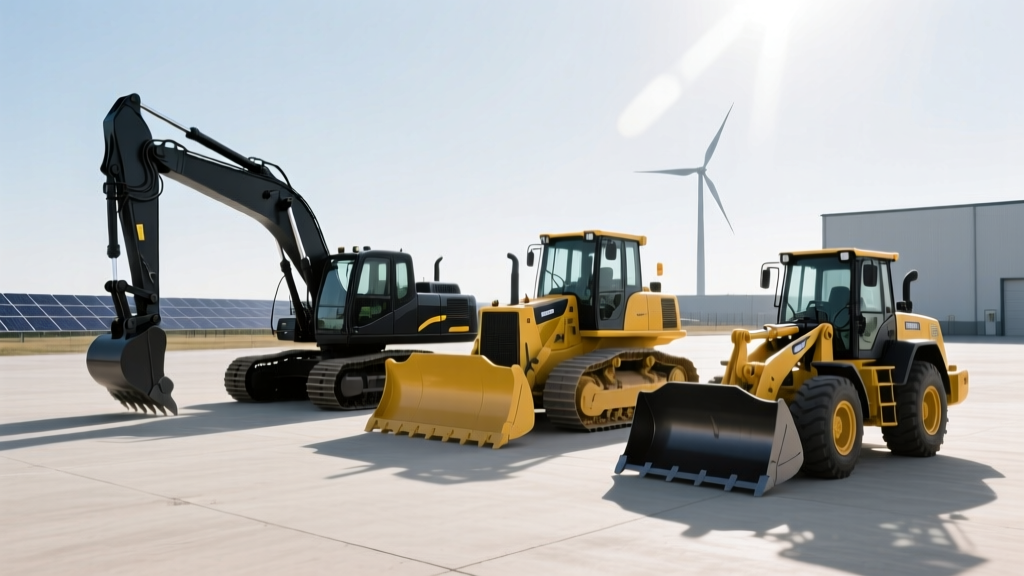
Renewable energy sites require specialized heavy equipment that differs vastly from standard commercial building or road construction fleets. Understanding the primary machines dictates which aftermarket and OEM component suppliers you must vet.
| Sector | Primary Machinery | Key Wear Components | Avg. Daily Downtime Cost |
|---|---|---|---|
| Onshore Wind | Liebherr LR 13000 Crawler Cranes, Goldhofer Blade Transporters | Slewing ring bearings, planetary gearboxes, high-tensile rigging | $18,000 - $25,000 |
| Utility Solar | Cat D6 XE Dozers (LGP), Sennebogen Material Handlers | Hydraulic cylinder seals, undercarriage rollers, ground engaging tools (GET) | $4,500 - $8,000 |
| Geothermal | Bauer BG 45 Drilling Rigs, Mud Pumps | Kelly bars, drill bits, high-pressure fluid ends | $12,000 - $20,000 |
While solar downtime costs less per day than wind, utility-scale solar farms often require moving millions of cubic yards of earth to achieve a <2% grade tolerance. A failed final drive motor on a primary dozer during the wet season can cause soil compaction issues that delay piling installation by weeks, triggering liquidated damages clauses with EPC (Engineering, Procurement, and Construction) contractors.
Vetting Heavy Equipment Parts Manufacturers for Extreme Environments
Sourcing components for renewable energy fleets requires looking past standard catalog offerings. The environmental extremes of green energy sites demand rigorous metallurgical and engineering standards from your suppliers. When evaluating heavy equipment parts manufacturers, procurement teams must audit three specific capabilities:
1. Metallurgical Certification and Coating Technologies
Standard hydraulic cylinder rods will fail rapidly in abrasive environments. For solar construction in regions like the Mojave Desert or the Middle East, silica dust infiltrates standard wiper seals, scoring the rod and destroying the hydraulic fluid integrity. Premium parts manufacturers mitigate this by offering High-Velocity Oxygen Fuel (HVOF) thermal spray coatings, which provide a surface hardness exceeding 1,200 HV (Vickers). Always require ASTM G65 abrasion test data from prospective suppliers before signing fleet-wide contracts.
2. Corrosion Protection Standards (Offshore & Coastal Wind)
Offshore and coastal wind projects expose crane slewing rings and hoist winches to relentless salt spray. Manufacturers must adhere to ISO 12944-9 standards for offshore corrosion protection. If a manufacturer cannot provide documented proof of C5-M (Marine) or CX (Extreme) coating thickness and salt-spray chamber testing (minimum 4,000 hours to ISO 9227), their structural and rotational parts will suffer spalling and micro-pitting within the first 18 months of operation.
3. Precision Tolerances for High-Load Lifting
Wind turbine nacelles routinely weigh between 300 and 500 metric tons. The planetary gearboxes and main hoist brakes on crawler cranes must be machined to exacting tolerances. The Association of Equipment Manufacturers (AEM) frequently updates guidelines on load-testing and component traceability. Require full material traceability certificates (EN 10204 Type 3.1 or 3.2) for any load-bearing aftermarket part.
OEM vs. Premium Aftermarket: A Decision Matrix
Fleet managers must balance the capital expenditure of OEM parts against the lead-time advantages of the aftermarket. Use this framework to categorize your procurement strategy for renewable builds:
OEM Direct (Liebherr, Caterpillar, etc.)
- Best For: Proprietary electronics, main hoist winches, proprietary final drives.
- Pros: Guaranteed fitment, preserves OEM warranty, integrated telematics compatibility.
- Cons: 16-24 week lead times for complex gearboxes; highest cost tier.
Premium Aftermarket (ESCO, SKF, Timken)
- Best For: Ground Engaging Tools (GET), slewing bearings, hydraulic seals, undercarriage components.
- Pros: Often superior metallurgy to OEM (e.g., ESCO's patented lip systems), 4-8 week lead times, 20-30% cost savings.
- Cons: Requires rigorous engineering vetting to ensure load-rating parity.
Budget / Uncertified Aftermarket
- Best For: Non-critical cosmetic parts, standard fasteners, cabin interiors.
- Pros: Immediate availability, lowest cost.
- Cons: Catastrophic failure risk under dynamic renewable loads; violates OSHA construction standards for crane and hoist modifications.
Failure Modes & Targeted Sourcing Strategies
To build a resilient 2026 supply chain, anticipate the specific failure modes inherent to renewable construction and source accordingly.
Solar Farm Undercarriage Attrition
Utility solar sites require continuous, low-speed, high-torque tracking over rocky, unprepared terrain. Standard undercarriage rollers experience rapid flange wear. Sourcing fix: Partner with manufacturers that forge rollers from boron steel and utilize induction-hardened tread surfaces. Specify dual-durometer polyurethane seals to prevent fine silt ingress, which turns into a grinding paste inside standard floating face seals.
Wind Farm Transport Driveline Shock
Transporting 80-meter turbine blades up mountain switchbacks places immense torsional shock on multi-axle trailer drivelines and tractor PTOs. Sourcing fix: Source heavy-duty universal joints and slip splines from manufacturers specializing in mining and forestry equipment, where shock-load ratings exceed standard highway transport specs by a factor of three.
Strategic Procurement: Building a 2026 Supplier Network
Do not wait for a breakdown to identify your component suppliers. Implement the following procurement architecture before mobilizing to a renewable site:
- Pre-Mobilization Teardown Analysis: Strip and inspect critical wear components (e.g., crane hoist brakes, dozer final drives) 90 days before site mobilization. Measure against OEM discard limits to forecast immediate aftermarket needs.
- Establish Forward-Staging Caches: For remote wind sites, negotiate consignment stock agreements with premium heavy equipment parts manufacturers. Keep $150,000 worth of high-failure-rate items (hoses, seals, GET, filters) in a sea-can on-site, billed only upon consumption.
- Telematics-Driven Reordering: Utilize machine payload and hydraulic pressure telemetry to predict pump degradation. When system pressure drops by 8% over baseline, automatically trigger purchase orders for seal kits and replacement swashplates before catastrophic failure occurs.
Frequently Asked Questions
How do I verify the load rating of an aftermarket slewing ring?
Demand the manufacturer's Finite Element Analysis (FEA) reports and physical static load test certificates. Cross-reference the dynamic load rating (C) and static load rating (C0) against the specific crane's load chart for the exact boom angle and radius used in your turbine lifts.
What is the standard lead time for planetary gearboxes in 2026?
Due to ongoing global constraints on specialized bearing steels and precision machining capacity, lead times for heavy-duty planetary gearboxes currently range from 18 to 26 weeks. Always maintain a rebuilt exchange unit in your regional depot.
Can I use standard highway transport parts on wind blade trailers?
No. The extreme articulation and torsional twist required to navigate wind farm access roads will shear standard highway-rated kingpins and suspension components. Always source heavy-haul and off-highway rated components from specialized trailer manufacturers.