Budgeting for Back Up Alarms for Heavy Equipment in Quarries
Analyze the true cost of back up alarms for heavy equipment in quarries. Compare broadband, tonal, and radar systems for aggregate fleet budgeting.
The Hidden Costs of Reversing Safety in Aggregate Processing
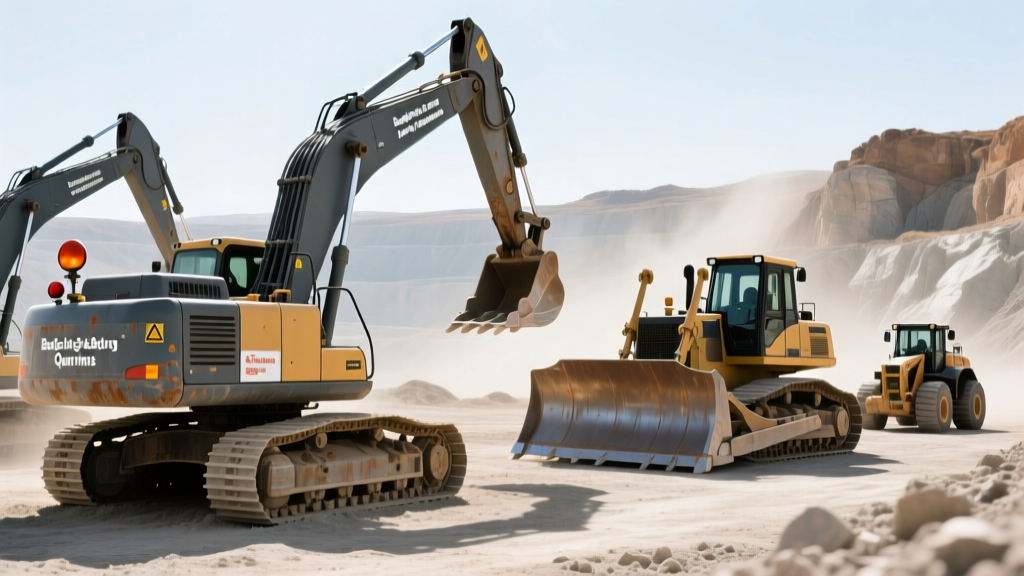
Aggregate processing sites are uniquely hostile environments for electronic components. Primary jaw crushers, cone crushers, and vibrating screens generate continuous ambient noise levels exceeding 105 dB(A), while limestone dust, silica particulates, and daily high-pressure washdowns rapidly destroy standard electronics. When budgeting for back up alarms for heavy equipment in a quarry or mining operation, the initial hardware purchase price is only a fraction of the Total Cost of Ownership (TCO).
Fleet managers and site safety directors often fall into the trap of purchasing standard tonal ('beep-beep') alarms at $60 per unit, only to face compounding costs from alarm fatigue, dust ingress failures, and MSHA compliance violations. This cost analysis breaks down the financial realities of equipping a mid-sized aggregate fleet—comprising articulating haul trucks, wheel loaders, and excavators—with modern reversing safety systems.
⚠️ The 'False Economy' of Standard Tonal Alarms
Standard tonal alarms emit a single, high-pitched frequency that bounces off quarry walls, stockpiles, and processing structures. This creates severe echo confusion, making it impossible for ground workers to pinpoint the exact location of a reversing loader. Furthermore, the constant 112 dB tonal noise contributes heavily to site-wide 'alarm fatigue,' causing workers to unconsciously tune out the warning, directly increasing the risk of fatal backing incidents.
Total Cost of Ownership (TCO) Matrix: Tonal vs. Broadband vs. Radar
To accurately forecast safety budgets, we must evaluate the hardware, installation, maintenance, and liability costs over a standard 5-year equipment lifecycle. The following matrix compares the three primary technologies used in modern quarry fleets.
| System Type | Hardware Cost (Per Unit) | Installation Labor | 5-Year Maintenance/Replacement | 5-Year TCO |
|---|---|---|---|---|
| Standard Tonal (e.g., Generic 112dB) |
$50 - $90 | $120 | $240 (Replaces 2-3x due to dust/water) | $410 - $450 |
| Broadband (White Noise) (e.g., Brigade bbs-tek) |
$180 - $280 | $120 | $0 (IP69K sealed, survives 5+ years) | $300 - $400 |
| Radar-Triggered / Smart (e.g., PreView Radar) |
$550 - $850 | $250 | $150 (Sensor recalibration/wiring) | $950 - $1,250 |
While broadband alarms carry a higher initial hardware cost, their sealed acoustic chambers and directional sound propagation eliminate the need for frequent replacements, resulting in a lower 5-year TCO than cheap tonal alternatives. Radar-triggered systems represent the highest upfront investment but eliminate alarm fatigue entirely by only sounding when a human or obstacle is detected in the blind spot.
Quarry-Specific Failure Modes & Budgeting for Durability
When specifying back up alarms for heavy equipment in aggregate environments, you must budget for the physical realities of the site. Standard commercial-grade alarms fail in quarries due to three primary vectors:
- Particulate Ingress: Crusher dust and silica are microscopic and highly abrasive. They infiltrate standard speaker cones, muffling the output by up to 40% within three months, rendering the alarm non-compliant with MSHA audibility standards.
- High-Pressure Washdowns: Aggregate equipment is frequently cleaned with high-pressure steam and water to prevent material buildup on chassis and undercarriages. Standard IP65 or IP67 rated alarms will suffer catastrophic water ingress during these washdowns.
- High-Frequency Vibration: Equipment operating near vibrating screens and jaw crushers is subjected to continuous harmonic vibration, which loosens standard spade-terminal wiring connections and fractures rigid circuit boards.
The IP Rating Cost Premium
To mitigate these failures, quarry fleets must specify IP69K-rated alarms. The IP69K designation ensures protection against high-pressure, high-temperature steam jet washdowns. Expect to pay a 30% to 50% premium for IP69K-rated broadband alarms compared to standard IP65 models. This premium is immediately offset by the elimination of mid-year replacement labor and hardware costs.
Smart Integration: The Financial Case for Radar and AI
According to the National Institute for Occupational Safety and Health (NIOSH), backing incidents remain a leading cause of fatalities in mining and quarrying. The traditional response—making alarms louder—has reached a regulatory and physiological limit. The modern solution is radar-triggered alarms and AI camera integration.
'In a high-noise quarry environment, adding more tonal alarms doesn't increase safety; it increases acoustic clutter. By transitioning our wheel loaders to radar-triggered broadband alarms, we reduced site-wide decibel exposure by 14% while simultaneously decreasing near-miss backing incidents to zero over an 18-month period.'
— Regional Safety Director, Midwest Aggregate Producer
Systems like the PreView Side Defender and Backup Radar utilize solid-state radar sensors that are impervious to dust, mud, and heavy rain. While the hardware costs between $550 and $850 per machine, the ROI is realized through liability reduction and operational efficiency. Operators no longer experience the 'startle effect' of constant beeping when reversing near static stockpiles, allowing for faster, more confident maneuvering in tight loading zones.
5-Year Budget Projection: 20-Machine Quarry Fleet
To provide a concrete budgeting framework, consider a mid-sized aggregate operation upgrading a fleet of 20 machines (10 haul trucks, 6 wheel loaders, 4 excavators) from failing tonal alarms to modern safety systems.
Scenario A: Upgrading to IP69K Broadband Alarms
- Hardware (20 units @ $230 avg): $4,600
- Installation (20 units @ $120 labor): $2,400
- 5-Year Maintenance/Replacements: $0 (Sealed units)
- Total 5-Year Investment: $7,000 ($350 per machine)
Scenario B: Upgrading to Radar-Triggered Smart Alarms
- Hardware (20 units @ $700 avg): $14,000
- Installation & Calibration (20 units @ $250): $5,000
- 5-Year Maintenance (Sensor checks/wiring): $3,000
- Total 5-Year Investment: $22,000 ($1,100 per machine)
While Scenario B requires a significantly higher initial CapEx, it fundamentally alters the site's safety profile, drastically reducing the risk of catastrophic liability events. For high-traffic loading zones where ground personnel and heavy machinery interact closely, Scenario B is the recommended budget allocation.
Regulatory Compliance and the Cost of Fines
Budgeting for back up alarms must also account for the cost of non-compliance. Under MSHA regulation 30 CFR § 56.14132, mobile equipment must be equipped with an audible backup alarm that is distinguishable from surrounding noise. MSHA inspectors routinely use decibel meters at the operator's ear and at the rear of the machine to verify compliance.
If a standard tonal alarm is muffled by crusher dust and fails the audibility test, the resulting citation carries immediate financial penalties, often compounded by 'unwarrantable failure' designations if the site lacks a documented daily inspection and maintenance log for safety alarms. Furthermore, in the event of a backing fatality, the Occupational Safety and Health Administration (OSHA) and MSHA will scrutinize the site's acoustic environment. Evidence that a site ignored broadband or radar technology in favor of cheap, non-directional tonal alarms can lead to severe civil liabilities and six-figure wrongful death settlements.
Strategic Procurement Recommendations
When drafting your annual heavy equipment safety budget, mandate the following specifications for all reverse alarm procurements:
- Acoustic Profile: Broadband (white noise) spectrum between 700Hz and 4kHz to ensure directional localization and eliminate echo bounce off quarry walls.
- Ingress Protection: Minimum IP68, with IP69K strongly preferred for machines subjected to weekly steam washdowns.
- Output Level: Self-adjusting decibel output (e.g., 87 dB to 112 dB) that automatically scales 5 dB above the ambient site noise, preventing excessive noise pollution during quiet periods while ensuring audibility when crushers are running.
- Warranty: Minimum 3-year manufacturer warranty covering vibration and water ingress failures.
By shifting the procurement focus from initial unit cost to 5-year TCO and risk mitigation, quarry operators can build a safety budget that protects both their workforce and their bottom line.