Maintaining the Grain Cleaner in Heavy Equipment Grain Attachments
Optimize uptime with our exact service schedule for the grain cleaner in heavy equipment grain attachments. Includes hydraulic, sieve, and bearing specs.
Integrating a grain cleaner in heavy equipment grain attachments transforms standard wheel loaders and telehandlers into high-capacity, mobile cleaning stations. At commercial grain terminals and large-scale farming operations in 2026, loader-mounted rotary screen cleaners and aspirator units process upwards of 8,000 bushels per hour. However, the violent shaking action, extreme dust ingress, and high-pressure hydraulic demands of these attachments create a brutal operating environment. Neglecting the precise maintenance intervals of the shaker shafts, hydraulic gerotor motors, and screen tensioning mechanisms will result in catastrophic bearing failure or screen blinding during peak harvest.
Cost of Downtime Reality Check: At a modern 10,000-bushel-per-hour elevator, a two-hour unplanned stoppage due to a blown shaker bearing or ruptured hydraulic seal costs approximately $1,400 to $1,800 in truck demurrage fees, delayed logistics, and idle labor. Preventive maintenance yields a 14:1 ROI compared to reactive repairs.Daily Pre-Shift Inspections: The 15-Minute Protocol
Operators must perform a strict visual and physical inspection before engaging the auxiliary hydraulics. The grain cleaner in heavy equipment grain attachments is subjected to severe vibration, which loosens hardware and fatigues hydraulic hoses rapidly.
- Hardware Torque Check: Inspect the four main shaker shaft mounting bolts. These endure continuous oscillating loads. Verify they are torqued to 145 ft-lbs (for Grade 8, 3/4-inch hardware). Look for rust streaks around the bolt heads, a primary indicator of loosening and fretting corrosion.
- Hydraulic Hose Routing: Check the auxiliary supply and return lines where they pass through the loader arm pivot points. Ensure anti-abrasion sleeves are intact. Look for micro-weeping at the JIC O-ring face seal (ORFS) fittings, which indicates O-ring extrusion from pressure spikes.
- Screen Blinding Assessment: Visually inspect the primary rotary screen for embedded grain or chaff. If processing high-moisture corn (above 15% moisture), the internal beater brush must be engaged to prevent the 10x10 mesh from blinding.
50-Hour Service Interval: Sieves, Brushes, and Bearings
Every 50 operating hours, the attachment requires targeted mechanical servicing. This interval aligns with standard loader greasing schedules but requires specific attention to the cleaner's unique components.
Screen Tension and Metallurgy
Most heavy-duty rotary cleaners utilize 304-grade stainless steel wire cloth to resist corrosion from treated seed or high-moisture grain. Over time, the tensioning springs lose their preload. Measure the screen deflection at the center of the 48-inch span; it must not exceed 3/16-inch to 1/4-inch. If deflection is greater, adjust the lateral tensioning bolts equally. A slack screen will whip against the internal beater brush, prematurely destroying the bristles and tearing the wire cloth.
Bearing Lubrication Specifics
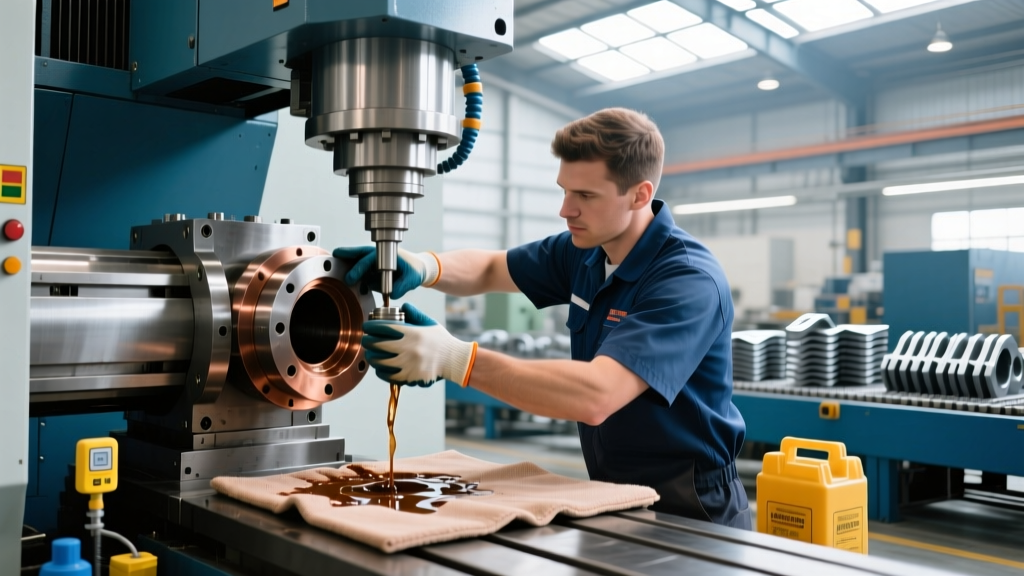
The shaker shaft is typically supported by heavy-duty spherical roller bearings (such as the SKF 22215 E/C3 series). Crucial Specification: Use only an NLGI #2 Lithium-Complex EP2 grease. Never use molybdenum disulfide (moly) fortified grease on high-speed shaker bearings. The solid moly particles can cause the rolling elements to skid rather than roll during high-frequency oscillation, leading to internal raceway spalling. Inject exactly 2.5 grams (roughly two full strokes of a standard manual grease gun) per bearing. Over-greasing will blow out the labyrinth seals, allowing abrasive grain dust to enter the bearing housing where it acts as a lapping compound.
WARNING: High-Pressure WashdownsNever direct a high-pressure wand (above 1,500 PSI) at the shaker bearing seals or hydraulic motor shaft seals during end-of-shift cleaning. The water pressure will easily bypass the lip seals, contaminating the hydraulic fluid and emulsifying the bearing grease. Use low-pressure, high-volume water and specialized foaming degreasers for the screen drum.
Hydraulic Motor and Auxiliary Circuit Integration
The grain cleaner in heavy equipment grain attachments is typically driven by a hydraulic gerotor or gear motor requiring 15 to 22 GPM at 2,500 to 3,000 PSI. Wheel loaders like the Cat 950 or John Deere 644K provide ample flow, but improper circuit integration is the leading cause of motor failure.
According to hydraulic fluid maintenance standards outlined by Machinery Lubrication, maintaining fluid cleanliness is paramount when using auxiliary attachments that operate in high-dust environments. The quick-disconnect couplers (e.g., Pioneer 5670 series) used to mate the cleaner to the loader are prime entry points for silica dust. Always use threaded dust caps, not just push-on plastic plugs, when the attachment is disconnected.
The Case Drain Mandate
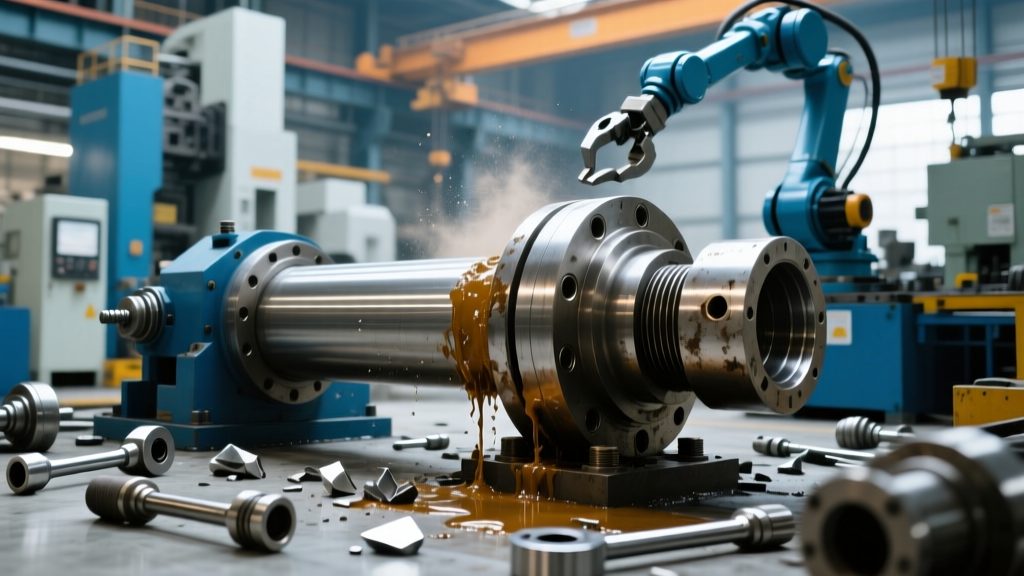
If your cleaner utilizes a gerotor motor, it must have a dedicated case drain line routed directly to the hydraulic tank, bypassing the return filter. If the attachment is plumbed with only a pressure and return line, the backpressure in the loader's return circuit (which can spike to 250 PSI when oil passes through a clogged return filter or cold oil cooler) will blow out the motor's internal shaft seal within hours. If you notice hydraulic oil weeping from the cleaner motor's front seal, check the case drain line for kinks or verify it was not improperly capped during installation.
250-Hour and 500-Hour Deep Service Matrix
Extended service intervals require partial disassembly and fluid analysis. Adhere strictly to the following matrix to maintain warranty compliance and operational reliability.
| Component | Interval | Action Required | Specification / Tolerance |
|---|---|---|---|
| Internal Beater Brushes | 250 Hours | Measure bristle length; replace if worn. | Replace when bristles are < 1.25 inches from base. |
| Hydraulic Case Drain Filter | 250 Hours | Replace inline case drain filter element. | 10-micron absolute, beta ratio ≥ 200. |
| Drive Chain / Belt Tension | 250 Hours | Check deflection on secondary drive. | 1/2-inch deflection at mid-span under 15 lbs force. |
| Shaker Shaft Eccentric Weights | 500 Hours | Inspect keyways and set screws. | Apply medium-strength threadlocker (Loctite 243). |
| Rotary Screen Wire Cloth | 500 Hours | Inspect for fatigue cracking at crimps. | Replace if > 5% of screen area is compromised. |
Troubleshooting Common Failure Modes
When the grain cleaner in heavy equipment grain attachments underperforms, operators often incorrectly adjust the loader's hydraulic flow, masking the root mechanical issue. Use this diagnostic framework to isolate the fault.
Symptom: Uneven Cleaning and Grain Loss Over the Screen
Root Cause: Screen blinding or incorrect stroke angle. If processing wheat or milo, ensure the screen mesh is upgraded to a 14x14 configuration. If the mesh is correct, check the eccentric weights on the shaker shaft. If one weight has slipped on the keyway, the stroke will become elliptical rather than linear, causing grain to pool on one side of the drum and spill over the discharge chute without passing through the sieve.
Symptom: Hydraulic Motor Cavitation (Screaming Noise)
Root Cause: Starved suction line. Loaders often utilize 3/4-inch auxiliary hoses, but high-flow grain cleaners require a minimum 1-inch ID suction line to prevent vacuum-induced cavitation at the gerotor motor inlet. Furthermore, as noted in University of Minnesota extension guidelines on grain handling systems, ensuring equipment operates within engineered parameters prevents cascading mechanical failures. If cavitation persists, install a 2-psi charge check valve in the return line to maintain positive case pressure.
Symptom: Excessive Attachment Vibration Transferring to the Loader
Root Cause: Failed isolation mounts. The cleaner drum is isolated from the main attachment frame by polyurethane shear mounts. Over time, exposure to UV light and hydraulic oil spills degrades the elastomer. If the durometer of the mount drops below 70 Shore A, or if visible cracking exceeds 1/8-inch depth, replace all four mounts simultaneously to maintain balanced harmonic dampening. Failure to do so will transfer destructive resonant frequencies directly into the loader's quick-tach carriage, accelerating fatigue cracking on the loader arms.
Sourcing Replacement Components
When rebuilding the grain cleaner in heavy equipment grain attachments, avoid generic replacement screens. OEM-spec 304 stainless steel screens with full-length crimped wires cost between $850 and $1,400, whereas cheaper carbon-steel alternatives ($400) will corrode and lose tension within a single wet harvest season. Similarly, replacement hydraulic gerotor motors (e.g., Char-Lynn or Danfoss equivalents) range from $1,200 to $2,100. Always verify the exact cubic inch per revolution (CIR) displacement of the old motor; installing a higher-displacement motor to 'get more torque' will drop the RPM below the required 450 RPM threshold, causing the screen to stall under heavy grain loads. For deeper insights into preventing premature bearing failures during these rebuilds, consult the bearing lubrication guidelines published by Machinery Lubrication to ensure proper installation and greasing techniques are followed.