Heavy Equipment Service Technician Salary: 2026 Tech & AI Premiums
Discover how AI, telematics, and EV powertrains are driving the 2026 heavy equipment service technician salary, creating new tech-premium pay tiers.
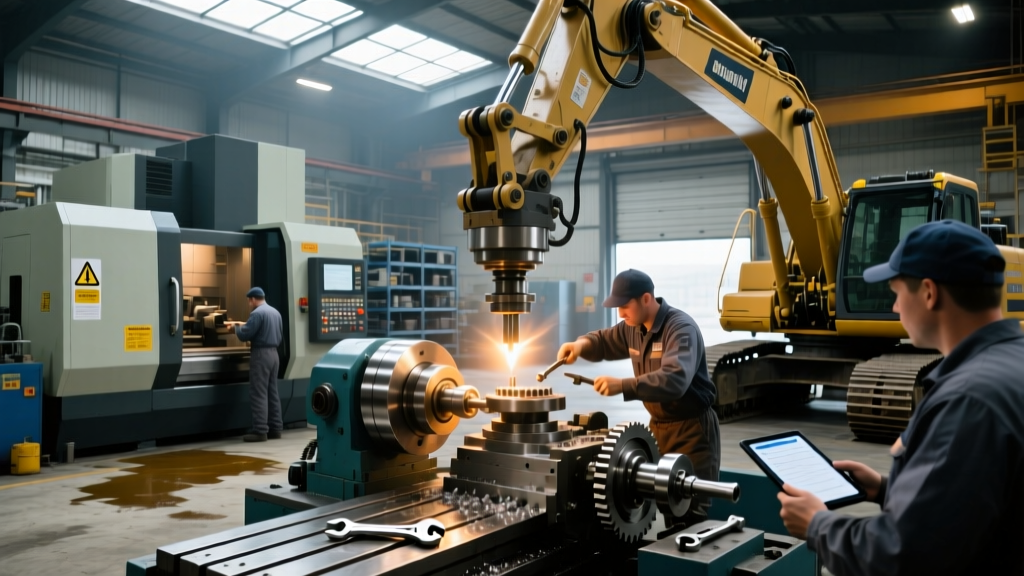
The traditional grease-and-wrench archetype of the heavy machinery mechanic is obsolete. In 2026, the heavy equipment service technician salary is increasingly dictated by digital fluency, high-voltage safety certifications, and telematics analytics. As original equipment manufacturers (OEMs) integrate edge computing, CAN bus multiplexing, and battery-electric powertrains into earthmoving and lifting equipment, the labor market has bifurcated. Technicians who rely solely on mechanical intuition are seeing wage stagnation, while those who master proprietary diagnostic software and high-voltage protocols are commanding unprecedented premiums.
2026 Salary Baseline vs. Tech Premium
National Average (Mechanical Focus): $64,500 - $78,000
Tech-Integrated Specialist (Telematics/HV): $92,000 - $125,000+
Market aggregates reflect Q1 2026 compensation data for mid-to-senior level technicians in the commercial construction and mining sectors.
The Bifurcation of the Heavy Equipment Service Technician Salary
According to the Bureau of Labor Statistics, the median pay for mobile heavy equipment mechanics has historically tracked closely with general manufacturing and diesel service roles. However, 2026 market dynamics reveal a stark divergence. Fleet managers are no longer paying just for wrench time; they are paying for downtime prevention. A technician who can physically replace a hydraulic main pump is valuable. A technician who can analyze Cat Connect or John Deere JDLink telematics data to predict swashplate degradation three weeks before a catastrophic failure is indispensable. This shift from reactive repair to predictive maintenance has created a "tech premium" in compensation structures, often adding $25,000 to $40,000 in annual earning potential for those holding advanced OEM software certifications.
Four Tech Innovations Driving Salary Premiums
To understand where the compensation ceiling is moving, it is necessary to examine the specific technologies forcing shops to restructure their pay scales.
1. Telematics and Predictive AI Diagnostics
Modern excavators and wheel loaders generate terabytes of operational data. Technicians who can navigate OEM-specific platforms—such as Caterpillar Electronic Technician (Cat ET) or Volvo VCADS Pro—to interpret complex fault codes command higher hourly rates. For instance, diagnosing an intermittent Selective Catalytic Reduction (SCR) fault requires more than swapping a Diesel Exhaust Fluid (DEF) dosing module. It requires analyzing SPN 3251 (Diesel Exhaust Fluid Pressure) data logs over a 48-hour cycle to identify micro-leaks or crystallization patterns. Shops pay a premium for technicians who can perform this level of digital forensics, as it prevents unnecessary parts swapping and reduces machine downtime by an average of 18%.
2. High-Voltage Electric & Hydrogen Powertrains
The proliferation of battery-electric compact equipment (e.g., the Volvo ECR25 Electric or the Cat 301.9 EV) and hydrogen fuel-cell prototypes has introduced severe safety and technical complexities. Working on 400V to 800V DC architectures requires specialized training. Technicians must adhere to strict lockout/tagout (LOTO) procedures and utilize specialized PPE. The NFPA 70E Standard for Electrical Safety in the Workplace dictates rigorous arc-flash risk assessments and the use of Category 2 arc-rated clothing and Class 0 rubber insulating gloves rated for 1000V. Because of the liability and specialized knowledge required, high-voltage (HV) certified technicians routinely negotiate a 20% to 35% wage premium over their diesel-only counterparts.
3. Augmented Reality (AR) Remote Assistance
Field service technicians are increasingly utilizing AR headsets, such as the Microsoft HoloLens 2 or Trimble XR10, to overlay 3D hydraulic schematics directly onto a machine's valve bank. More importantly, AR enables junior field techs to stream their point-of-view to senior master technicians at a central hub. Technicians who are certified in AR-guided repair workflows and spatial mapping are highly sought after by national rental fleets and large-scale mining operations, as they drastically reduce the need to fly master mechanics to remote job sites.
4. Automated Fluid & Wear Analysis Robotics
While not a repair tool per se, the integration of IoT-enabled inline fluid analysis sensors means technicians must now interpret real-time spectrometry data. Understanding the parts-per-million (PPM) thresholds of iron, copper, and silica in hydraulic oil allows techs to schedule component rebuilds precisely when needed. Mastery of tribology data interpretation is now a line item on senior technician job descriptions, directly correlating with higher base salaries and performance bonuses.
Competency Matrix: Traditional vs. Tech-Integrated Roles
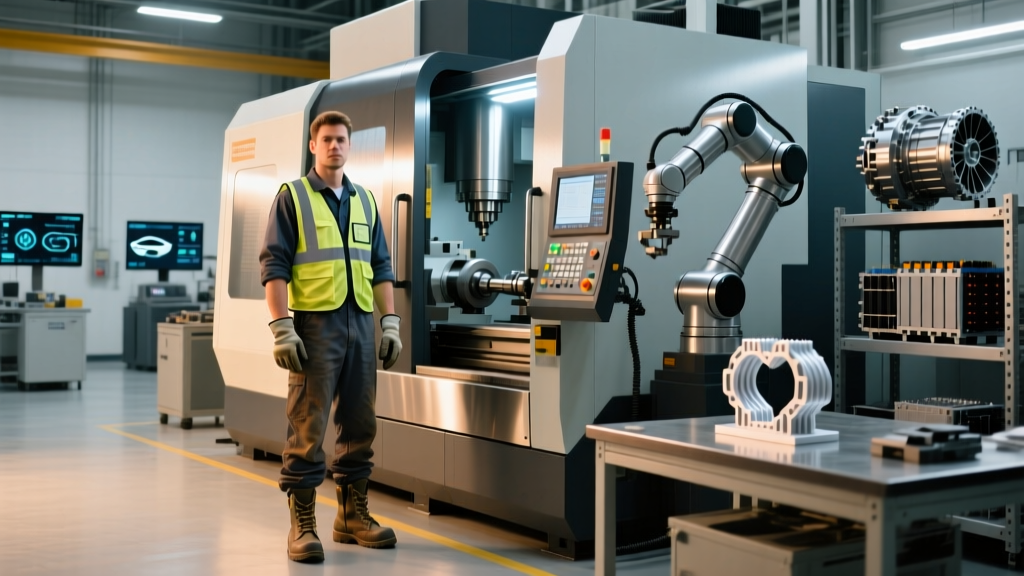
The following matrix illustrates the divergence in daily operations, tooling, and compensation between legacy mechanics and modern mechatronic specialists.
| Competency Domain | Traditional Mechanic | Tech-Integrated Specialist |
|---|---|---|
| Primary Diagnostics | Visual inspection, mechanical gauges, manual multimeters. | OEM proprietary software, CAN bus sniffers, oscilloscopes, telematics dashboards. |
| Powertrain Focus | Tier 4 Final diesel engines, mechanical transmissions, standard hydraulics. | High-voltage DC inverters, battery thermal management, hydrogen fuel cells, electro-hydraulics. |
| Safety Protocols | Standard OSHA fall protection, basic LOTO, hearing/eye protection. | NFPA 70E arc-flash compliance, HV insulated tooling, dielectric testing. |
| 2026 Salary Range | $64,500 – $78,000 | $92,000 – $125,000+ |
How to Capture the Tech Premium: A Certification Roadmap
Technicians looking to elevate their heavy equipment service technician salary must strategically acquire certifications that prove digital and electrical competency. Follow this progression to maximize market value:
- Master the OEM Digital Ecosystems: Do not settle for basic familiarity. Achieve "Master Certified" status in at least one major OEM platform (e.g., John Deere Service Advisor, Cat ET, or Komatsu VHMS). This proves you can manipulate ECM parameters and perform forced DPF regenerations safely.
- Obtain High-Voltage Safety Credentials: As noted by the U.S. Department of Energy, the transition to electric heavy machinery requires specialized electrical knowledge. Complete an NFPA 70E compliance course and obtain an OEM-specific High Voltage Safety certification (e.g., Volvo CE HV Safety or Crown Equipment Fast-Fix EV training).
- Learn CAN Bus Multiplexing: Enroll in a course covering SAE J1939 protocols. Understanding how the engine ECM communicates with the transmission TCM and the implement controller over a twisted-pair wire network is the single most lucrative diagnostic skill in modern heavy equipment repair.
- Develop Data Literacy: Learn to read and interpret telematics API outputs. Being able to export a CSV file of machine fault logs and identify the exact sequence of events leading to a derate condition makes you a critical asset to fleet managers.
"The skills gap in heavy equipment repair is no longer about finding people who can swing a hammer. It is about finding technicians who can read a J1939 data stream and safely isolate an 800-voltage battery pack. Those who possess both mechanical aptitude and digital fluency are writing their own paychecks."
— Fleet Maintenance Director, Top 50 North American Earthmoving Contractor (2026)
Regional Salary Variations Driven by Tech Hubs
Geography continues to play a critical role in compensation, but the map has shifted. While traditional oil and gas hubs in West Texas still pay well for diesel mechanics, the highest tech-premium salaries are clustering around regions with aggressive emissions mandates and high-tech infrastructure projects.
- California & Pacific Northwest: Strict CARB (California Air Resources Board) regulations have forced massive adoption of battery-electric and hydrogen heavy equipment in ports and urban construction. HV-certified techs in these regions frequently exceed $130,000 annually.
- Nevada & Arizona (Mining Sectors): The push toward autonomous haulage systems (AHS) and tele-remote loading requires technicians who understand LiDAR calibration, radar alignment, and high-bandwidth mesh networks. These specialized roles command heavy retention bonuses.
- Midwest (Precision Agriculture & Earthmoving):strong> The integration of GPS-guided grading and automated machine control (e.g., Trimble Earthworks, Topcon) means technicians must also be proficient in calibrating GNSS receivers and IMU sensors on excavators and dozers.
Strategic Advice for Shop Managers and Technicians
For Technicians: Stop negotiating your salary based purely on years of experience. In 2026, a technician with five years of experience and deep J1939/HV certifications is vastly more valuable than a 20-year veteran who refuses to use a laptop. Document the downtime hours you have saved your employer through predictive telematics analysis and use that ROI data during your annual compensation review.
For Shop Managers & Fleet Owners: If your compensation structure is still based on a flat "mechanic" rate, you will lose your best talent to OEM dealerships and tech-forward national rental companies. Implement a tiered pay scale that explicitly rewards the acquisition of software certifications, high-voltage safety clearances, and AR proficiency. Investing an extra $25,000 a year in a tech-integrated specialist will yield a 300% ROI through reduced machine downtime, fewer misdiagnosed electrical faults, and extended component life via precise fluid and telemetry analysis.